Sigmund Freud and the Jewish mystical tradition

 64
64

Sigmund Freud and the Jewish mystical tradition

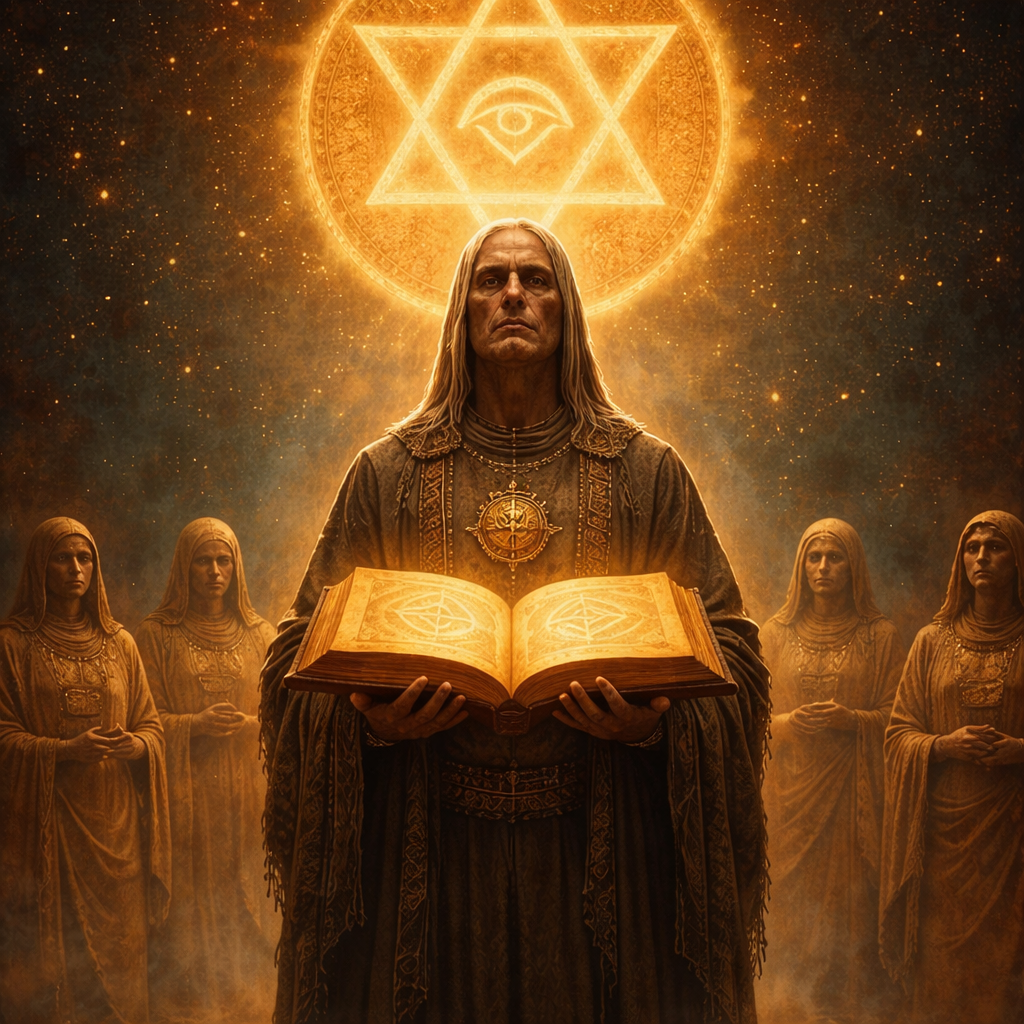

Review by Evander Ashcroft (Alchemy & Hermeticism Editor) — David Bakan's 'Sigmund Freud and the Jewish Mystical Tradition' is a groundbreaking work of profound esoteric scholarship. It meticulously unearths the often-overlooked Kabbalistic and Hasidic influences that subtly, yet undeniably, shaped the foundational concepts of Freudian psychoanalysis. Bakan illuminates how concepts like the unconscious, primal drives, and even the Oedipal complex find resonant echoes in Jewish mystical thought, particularly in its understanding of the soul's descent and ascent. This book is essential reading for anyone seeking to grasp the deeper, spiritual underpinnings of psychoanalytic theory, offering a rich, interdisciplinary perspective that will appeal to scholars, practitioners, and curious seekers alike.
📝 Description
64
David Bakan's 1958 book connects Sigmund Freud's psychoanalytic theories to Jewish mystical traditions.
David Bakan's 1958 study, 'Sigmund Freud and the Jewish Mystical Tradition,' examines the connections between psychoanalysis and Jewish mysticism. Bakan argues that core Freudian ideas find parallels and perhaps origins within Kabbalistic and Hasidic thought. He points to the Golem myth, the concept of the divine spark, and archetypal symbols as examples of esoteric concepts that resonate with psychoanalytic themes such as the unconscious and repression. The book aims to show how these mystical traditions might have influenced or at least prefigured elements of Freud's theories. Bakan explores these links by tracing specific concepts through both religious and psychological frameworks. It is written for readers interested in understanding the historical and cultural influences on psychoanalytic thought. The work seeks to bridge the gap between psychological inquiry and a rich spiritual heritage. It suggests that certain fundamental human insights appear across different historical periods and intellectual disciplines.
This book is not a simple overview of either Freud or Jewish mysticism. Instead, it proposes a direct lineage and conceptual overlap. Bakan's analysis is detailed, drawing specific parallels between the esoteric language of Jewish texts and the technical language of psychoanalysis. He investigates how concepts like the Oedipus complex might be understood through a mystical lens. The intention is to offer a new perspective on the development of psychoanalytic theory, suggesting that its roots extend into areas not typically associated with its founder. The book invites a deeper consideration of the sources of psychological understanding, linking the modern study of the mind to ancient spiritual practices.
This work situates psychoanalysis within the broader context of Jewish esoteric traditions, primarily Kabbalah and Hasidism. It treats these mystical systems not as mere historical curiosities but as active sources of psychological insight. Bakan suggests that the symbolic language and conceptual frameworks developed within Jewish mysticism, particularly concerning creation, soul, and hidden divine forces, provide a fertile ground for understanding Freudian concepts. The book treats these traditions as part of a continuous stream of thought about the human condition, demonstrating how ancient spiritual ideas can inform modern psychological theories. It highlights the symbolic resonance between mystical narratives and the psychoanalytic exploration of the inner world.
💡 Why Read This Book?
Uncover the hidden spiritual lineage of psychoanalysis. This book reveals how ancient Jewish mystical traditions, including Kabbalah, provided fertile ground for Freudian concepts. Ideal for seekers of hidden knowledge, scholars of religion and psychology, and practitioners interested in the esoteric dimensions of the human psyche.
⭐ Reader Reviews
Honest opinions from readers who have explored this book.
❓ Frequently Asked Questions
What is the central argument of the book?
The central argument is that Sigmund Freud's psychoanalytic theories are deeply influenced by the concepts and symbolic language found within the Jewish mystical tradition, particularly Kabbalah and Hasidism.
How does the book connect Freud to Kabbalah?
Bakan draws parallels between Freudian concepts like the unconscious, repression, and the Oedipus complex and corresponding ideas within Kabbalistic literature concerning the soul, divine emanations, and hidden spiritual forces.
Is prior knowledge of Kabbalah required to understand this book?
While some familiarity can enhance the reading experience, Bakan provides sufficient context and explanation to make the complex ideas accessible to readers without prior deep knowledge of Kabbalah.
Who is the intended audience for this book?
The book is aimed at scholars of psychology and religious studies, psychoanalysts, students of mysticism, and anyone interested in the intersection of esoteric traditions and modern thought.
What are some of the key Jewish mystical concepts discussed?
Key concepts include the Ein Sof (the Infinite), the Sefirot (divine emanations), the Golem myth, the concept of the soul's journey, and the interplay of divine and human forces.
🔮 Key Themes & Symbolism
Psychoanalytic Archetypes in Kabbalah
This theme explores how foundational psychoanalytic concepts, such as the unconscious, primal drives, and the Oedipus complex, find striking parallels and potential origins within the rich symbolic language and cosmology of Kabbalah. Bakan argues that the intricate mapping of the human psyche in Freud's work can be seen as a modern reinterpretation of ancient mystical understandings of the soul's structure, its descent into materiality, and its inherent divine spark. The book studies how the symbolic narratives and esoteric teachings of Jewish mysticism offered a framework for understanding the deeper meaning of human experience long before the advent of modern psychology.
The Golem and the Creation of Man
A central thread in Bakan's analysis is the myth of the Golem, a creature animated from inanimate matter, often seen as an allegory for human creation and the potential for hubris. This theme investigates how the Golem narrative, deeply embedded in Jewish folklore and mystical thought, speaks to Freudian ideas about the artificial construction of the self, the primal urge to create, and the inherent dangers of unchecked ambition. The book examines how the animating force behind the Golem can be understood as a precursor to psychoanalytic explorations of the life instincts and the fundamental drives that shape human behavior and identity.
The Mystical Roots of the Unconscious
This theme posits that the Freudian concept of the unconscious, a repository of repressed desires and primal energies, has deep antecedents in Jewish mystical traditions. Bakan highlights how Kabbalistic and Hasidic thought, with their emphasis on hidden divine realms, secret knowledge, and the soul's complex architecture, provided a conceptual landscape that foreshadowed the modern understanding of the unconscious mind. The book explores how these traditions viewed the inner life as a vast, often inaccessible territory, populated by forces that influence human actions and perceptions, thus laying a spiritual and philosophical groundwork for psychoanalytic inquiry.
💬 Memorable Quotes
Direct passages from the work, attributed to the author.
“The unconscious is the mystic's secret.”
— This suggests that the hidden realms explored by mystics are akin to the unconscious mind, a source of profound, often unacknowledged, truths about the self.
“The Golem is man's creation, man's mirror.”
— This implies that the act of creating the Golem reflects human nature, desires, and perhaps even our own limitations and aspirations.
“Kabbalah is the science of the soul.”
— This positions Kabbalah not merely as a set of beliefs, but as a systematic and profound exploration of the human spirit and its connection to the divine.
“Freud dreamt of ancient mysteries.”
— This poetic statement suggests that Freud's psychological theories, perhaps unconsciously, tapped into or reinterpreted ancient mystical understandings of the human condition.
“The hidden is the most powerful.”
— This aphorism underscores the wide impact and influence of that which is not immediately apparent, whether in the psyche or in esoteric traditions.
🌙 Esoteric Significance
Tradition
This book primarily engages with the esoteric traditions of Kabbalah and Hasidism, two prominent branches of Jewish mysticism. It explores their complex cosmologies, symbolic language, and clear insights into the nature of the soul, divine emanations, and the hidden forces that govern existence. Bakan argues that these ancient traditions offer a rich conceptual precursor to many of Freud's revolutionary ideas about the inner workings of the human psyche, bridging the gap between ancient spiritual wisdom and modern psychological science.
Symbolism
Central to Bakan's argument is the interpretation of key symbols within Jewish mysticism. This includes the divine emanations (Sefirot) as a model for psychological structures, the Golem myth as a reflection of creation and artificial self, and the concept of 'ayin' (nothingness) as a parallel to the primal void of the unconscious. The book studies how these potent symbols, imbued with millennia of esoteric meaning, offer a symbolic language that can be understood through a psychoanalytic lens, revealing hidden layers of psychological truth.
Modern Relevance
The modern relevance of 'Sigmund Freud and the Jewish Mystical Tradition' lies in its enduring challenge to disciplinary boundaries and its invitation to integrate spiritual and psychological understanding. In an age increasingly aware of the limitations of purely materialist perspectives, Bakan's work offers a compelling case for the perennial wisdom found in esoteric traditions. It provides a framework for exploring the deeper, often spiritual, dimensions of human consciousness and behavior, encouraging a more holistic approach to self-understanding and well-being.
👥 Who Should Read This Book
This useful volume is essential for psychoanalysts and psychotherapists seeking to broaden their theoretical horizons and understand the potential spiritual underpinnings of their practice. Scholars of religious studies, Jewish history, and comparative mythology will find it a rich source of interdisciplinary insight. For students of esoteric traditions, particularly Kabbalah, it offers a novel perspective on the enduring relevance of ancient wisdom. Moreover, any seeker of deeper self-knowledge, curious about the profound connections between the mind, spirit, and ancient traditions, will find this book a deeply rewarding and thought-provoking read.
📜 Historical Context
Written in the mid-20th century, David Bakan's 'Sigmund Freud and the Jewish Mystical Tradition' emerged during a period of intense intellectual and cultural ferment. Psychoanalysis, spearheaded by Freud, was rapidly gaining traction and reshaping understandings of the human mind. Simultaneously, there was a growing academic and popular interest in exploring the rich, often overlooked, philosophical and spiritual traditions of Judaism, particularly Kabbalah. This era saw a burgeoning desire to connect seemingly disparate fields of knowledge, seeking deeper, unifying principles. Bakan's work was a significant contribution to this interdisciplinary wave, challenging the prevailing view of Freud as a purely secular thinker and revealing the profound resonance between his groundbreaking psychological insights and the ancient esoteric wisdom of his Jewish heritage.
📔 Journal Prompts
How do you see parallels between your own inner world and the concepts of the unconscious explored in this book?
Reflect on a time you felt a 'hidden' influence shaping your thoughts or actions. Could this relate to mystical or psychoanalytic ideas?
Consider the Golem myth. In what ways do you or others 'create' in a way that might be seen as a mirror to your own being?
What does the idea of 'secret knowledge' or 'hidden wisdom' mean to you in your personal or spiritual journey?
How might understanding the symbolic language of ancient traditions enrich your understanding of modern psychological theories?
🗂️ Glossary
Kabbalah
A complex system of Jewish mysticism that explores the nature of God, the universe, and the human soul through symbolic interpretation of the Torah and esoteric teachings.
Ein Sof
The Kabbalistic concept of God as infinite, unknowable, and beyond all attributes or descriptions; the primordial, absolute being.
Sefirot
The ten divine emanations or attributes through which God creates and sustains the universe, often depicted as a tree or a diagram in Kabbalistic thought.
Golem
A legendary anthropomorphic being, typically created from inanimate matter and brought to life through mystical means, prominent in Jewish folklore and mysticism.
Hasidism
A spiritual movement within Orthodox Judaism founded in the 18th century, emphasizing joy, mysticism, and the immanence of God in everyday life.
This book appears in 1 collection
🔮 Readers Also Liked
Browse all →









More by David Bakan
All books →
From the “Kabbalah” Collection
View all →





More Free Kabbalah & Jewish Mysticism Books
View all →