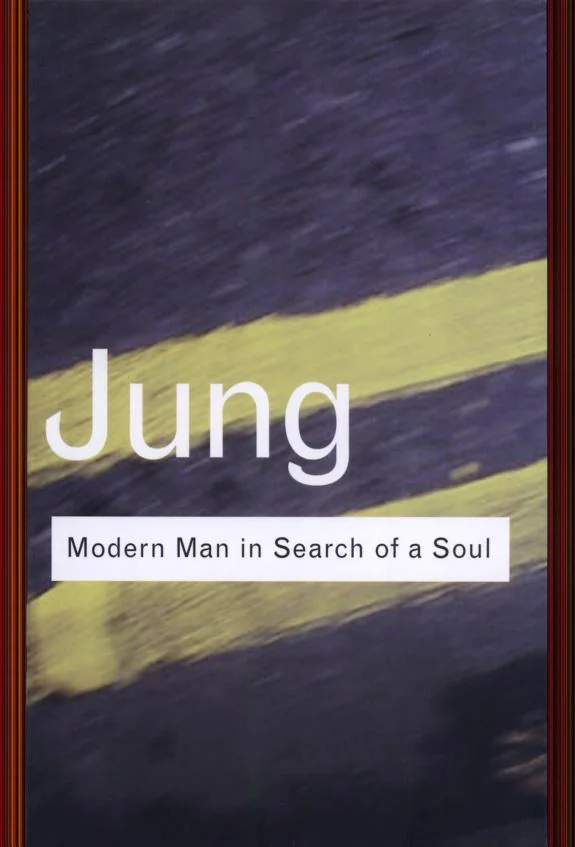
Modern Man in Search of a Soul
 83
83

Modern Man in Search of a Soul
Jung’s enduring relevance is often attributed to his willingness to confront the spiritual void felt by modern individuals. In *Modern Man in Search of a Soul*, this confrontation is palpable, particularly in his discussion of the 'neglected religious function of the psyche.' While his prose can occasionally feel dense, especially when detailing the mechanics of dream analysis, the core arguments about the necessity of meaning and the symbolic language of the unconscious remain potent. The chapter on the 'Goetheanum address' offers a particularly striking articulation of how a society disconnects from its psychic roots. However, the book's dated language and some of its more speculative pronouncements on collective phenomena might require careful contextualization for contemporary readers. Despite these minor hurdles, it provides an accessible, if challenging, window into Jung's revolutionary ideas about the soul's quest for integration.
📝 Description
83
Carl Jung published "Modern Man in Search of a Soul" in 1933, addressing the spiritual void of his time.
This collection of essays and lectures from 1933 by Carl Gustav Jung delves into the psychological and spiritual dimensions of human experience. Jung, a Swiss psychiatrist, confronts fundamental questions about life's meaning and humanity's place in the cosmos through the framework of analytical psychology. The volume is particularly suited for individuals wrestling with existential concerns, those interested in the connections between psychology and spirituality, and anyone seeking to comprehend the unconscious mind. It speaks to those who find conventional religious structures inadequate and are searching for alternative avenues to personal fulfillment.
Jung's work emerged during a turbulent period following World War I, offering a critique of the era's dominant materialism and rationalism. His theories, while related to psychoanalysis, developed distinct paths, emphasizing concepts like the collective unconscious and archetypes. This book places his ideas within the context of 20th-century psychological thought and his own engagement with Gnostic and alchemical traditions.
Jung's exploration of the psyche engages directly with esoteric traditions, particularly alchemy and Gnosticism, which he saw as symbolic systems mirroring psychological processes. He viewed these ancient systems not as mere historical curiosities but as active repositories of unconscious human truths. The book connects these historical forms of mystical thought to the modern individual's search for meaning, suggesting that the symbolic language of these traditions offers a way to understand the deeper layers of the unconscious mind and its archetypal contents. This approach places Jung's analytical psychology within a lineage of thought concerned with inner transformation and spiritual development.
💡 Why Read This Book?
• You will learn how Jung conceptualized the 'religious function' of the psyche, distinct from organized religion, offering a framework for personal spiritual inquiry that moves beyond dogma. • You will gain an understanding of Jung's concept of the 'shadow' and its role in psychological projection, learning to identify and integrate repressed aspects of yourself as outlined in his 1933 essays. • You will explore the mechanics of dream analysis as a tool for self-discovery, receiving practical guidance on interpreting symbolic imagery that arises from the unconscious, as detailed in the work’s significant sections on this topic.
⭐ Reader Reviews
Honest opinions from readers who have explored this book.
❓ Frequently Asked Questions
What is the main focus of Carl Jung's 'Modern Man in Search of a Soul'?
The book primarily focuses on the psychological and spiritual emptiness experienced by modern individuals and explores how analytical psychology, particularly Jung's concepts of the collective unconscious and individuation, can provide a path towards psychic wholeness and meaning.
When was 'Modern Man in Search of a Soul' first published?
The collection of essays and lectures that forms 'Modern Man in Search of a Soul' was first compiled and published in 1933.
Does this book discuss dream interpretation?
Yes, a significant portion of the book is dedicated to explaining Jung's approach to dream analysis, viewing dreams as vital messages from the unconscious that offer guidance for psychological development.
Is 'Modern Man in Search of a Soul' suitable for beginners to Jungian psychology?
Yes, it is often considered an excellent introduction to Jung's core ideas, presenting his theories in a more accessible format than some of his more technical works, though some concepts require careful attention.
What does Jung mean by the 'collective unconscious' in this book?
Jung posits the collective unconscious as a shared, inherited layer of the human psyche containing archetypes—universal patterns and images—that influence our thoughts, feelings, and behaviors across cultures and time.
How does 'Modern Man in Search of a Soul' relate to religious thought?
The book examines the psychological need for meaning and symbolic experience, which Jung often linked to religious impulses, analyzing how these manifest in individuals and societies, irrespective of formal religious affiliation.
🔮 Key Themes & Symbolism
The Spiritual Void
Jung directly addresses the perceived spiritual vacuum in modern life, arguing that the decline of religious belief has left many individuals adrift, disconnected from the symbolic and mythic dimensions essential for psychological health. He posits that this void fuels neurosis and a pervasive sense of meaninglessness, necessitating a reconnection with the psyche's inherent 'religious function.' The book explores how this function manifests in dreams, art, and the individual's quest for purpose.
Individuation and Wholeness
Central to Jung's work is the concept of individuation, the lifelong process of becoming a distinct, integrated whole. This involves confronting and integrating all aspects of the self, including the unconscious, the shadow, and archetypal influences. 'Modern Man in Search of a Soul' frames this journey as the ultimate goal of psychological development, leading to a more authentic existence and a deeper understanding of one's unique place in the world.
The Language of the Unconscious
Jung emphasizes the importance of the unconscious mind, particularly through the interpretation of dreams and symbols. He argues that dreams are not random but contain profound messages about our psychic state and potential development. The book explains how understanding these symbolic communications, often rooted in the collective unconscious, is crucial for reading through the complexities of the inner world and achieving psychic balance.
Archetypes and the Collective Unconscious
This volume introduces the idea of the collective unconscious, a transpersonal layer of the psyche shared by all humanity, containing universal patterns known as archetypes. Figures like the Mother, the Hero, and the Wise Old Man are discussed as fundamental psychic structures that shape human experience and meaning-making. Jung suggests that recognizing these archetypal forces is key to understanding both individual behavior and broader cultural phenomena.
💬 Memorable Quotes
Direct passages from the work, attributed to the author.
“The greatest and most central moments of the lesser and the greater world are not determined by our will and our endeavors, but by ways which are hidden from us.”
— This statement highlights Jung's belief in a guiding principle or fate that operates beyond conscious human control. It suggests that significant life events are often orchestrated by forces we cannot fully grasp, urging a surrender to the unfolding of the psyche and the universe.
“Neurosis is an expression of the soul's striving to find itself.”
— Jung reframes psychological suffering not merely as pathology, but as a signal from the soul. This interpretation suggests that distress is a powerful catalyst for self-discovery and the pursuit of authenticity, driving individuals toward the process of individuation.
“The dream is a direct expression of the situation of the unconscious.”
— This core Jungian idea emphasizes the diagnostic and therapeutic value of dreams. It positions dream imagery as a literal manifestation of the unconscious state, offering direct clues to unresolved conflicts or developmental needs.
“The primitive man is not the least bit logical, but he is superstitious. The civilized man is logical, but he is not superstitious.”
— This observation contrasts the modes of thought in different cultural stages. Jung suggests that while civilization prioritizes logic, it often loses touch with the symbolic and intuitive reasoning characteristic of more 'primitive' or instinctual modes of being.
💡 Key Ideas
Editorial paraphrase of the work's core concepts — not direct quotes.
Man's task is to discover the meaning of his own existence.
This paraphrased concept underscores Jung's focus on existential inquiry. It posits that a primary human drive is the search for personal significance and purpose, a quest that analytical psychology aims to support by useful the inner landscape.
🌙 Esoteric Significance
Tradition
Jung's work, particularly as presented in this volume, bridges analytical psychology with esoteric traditions, especially Hermeticism, Gnosticism, and alchemy. He sought to understand the symbolic language and transformative processes described in these ancient systems through the lens of modern psychology. While not strictly an esoteric practitioner, Jung legitimized the study of these traditions by demonstrating their psychological underpinnings and their relevance to the individual's quest for wholeness.
Symbolism
Key symbols explored include the 'Self' (often represented by mandalas or divine figures), symbolizing psychic totality and the goal of individuation. The 'Shadow' represents the darker, repressed aspects of the personality, confronting which is essential for integration. Jung also frequently references alchemical symbols, viewing the processes of transformation described in alchemy as metaphors for psychological change and the refinement of the soul.
Modern Relevance
Contemporary thinkers in depth psychology, transpersonal psychology, and integral theory continue to build upon Jung's foundations. His concepts are widely referenced in fields like mythology studies, comparative religion, and even in therapeutic modalities that emphasize the symbolic and spiritual dimensions of healing. Modern spiritual seekers often turn to Jung for a framework that integrates psychological insight with a broader understanding of the human quest for meaning.
👥 Who Should Read This Book
• Individuals experiencing existential questions or a sense of spiritual disconnect: You will find a framework for understanding this malaise and a path toward finding personal meaning through self-exploration. • Students of psychology and comparative religion: You will gain insight into a major divergence from Freudian psychoanalysis and explore the psychological significance of myth, symbol, and religious experience. • Seekers of personal growth and self-understanding: You will learn about Jung's concepts of the unconscious, archetypes, and individuation, providing tools for deeper self-awareness and psychological integration.
📜 Historical Context
Published in 1933, 'Modern Man in Search of a Soul' emerged during a period of profound societal anxiety and intellectual reassessment in Europe. The trauma of World War I and the rise of totalitarian regimes had shaken faith in progress and rationalism. In this climate, Jung’s work offered a compelling alternative to purely materialistic or behaviorist explanations of the human psyche, such as those championed by Sigmund Freud and B.F. Skinner. While Freud focused on repressed sexuality and personal history, Jung expanded the scope to include the collective unconscious and archetypal patterns, drawing inspiration from mythology, alchemy, and Gnosticism. The book’s reception was significant, providing a more spiritual and symbolic interpretation of human motivation that resonated with many seeking meaning beyond the prevailing scientific and political orthodoxies.
📔 Journal Prompts
The psyche's need for a God, as discussed by Jung.
The mechanics of dream analysis and its symbolic language.
The process of individuation and achieving wholeness.
Archetypal patterns emerging in personal life.
The modern individual's search for soul.
🗂️ Glossary
Individuation
The psychological process by which a person becomes an individual; that is, a separate, indivisible whole. It is the lifelong journey of integrating conscious and unconscious aspects of the self to achieve psychic wholeness and authenticity.
Collective Unconscious
A theoretical layer of the human psyche inherited and shared by all members of the human species, containing archetypes and instincts that influence behavior and perception.
Archetype
Universal, archaic patterns and images that derive from the collective unconscious and are the psychic conditions of man's spiritual or mental life. Examples include the Mother, the Hero, the Shadow.
Shadow
The unconscious or repressed aspect of the personality that the conscious ego does not identify in itself. Integrating the shadow is a key part of individuation.
Anima/Animus
The unconscious feminine aspect in the male psyche (anima) and the unconscious masculine aspect in the female psyche (animus). They are archetypes that influence relationships and personal development.
Psychic Energy
Jung's concept of libido, understood not just as sexual energy but as a generalized life force or psychic potential that fuels psychological processes and motivations.
Self
The archetype of wholeness, representing the totality of the psyche, both conscious and unconscious. It is often symbolized by mandalas, circles, or divine figures and is the goal of the individuation process.
This book appears in 1 collection
🔮 Readers Also Liked
Browse all →









From the “Jungian Psychology” Collection
View all →







More Free Occult Philosophy Books
View all →