Humanistic Trends in Some Principal Upanishads
 82
82

Humanistic Trends in Some Principal Upanishads
Namita Kar’s exploration of humanistic themes within the principal Upanishads offers a valuable corrective to interpretations that sideline the existential and ethical dimensions of these foundational texts. The strength of the work lies in its focused application of a humanistic framework, revealing how concepts like *Atman* and *Moksha* are presented not just as metaphysical abstractions but as deeply personal quests for fulfillment and understanding. Kar skillfully draws connections between ancient Indian thought and enduring human concerns. However, the book occasionally feels constrained by its specific thesis, sometimes interpreting passages through a predominantly humanist lens that might overlook other valid theological or cosmological readings. A particularly insightful section examines the Brihadaranyaka Upanishad's dialogues on the nature of self, framing them as early articulations of self-awareness as a primary human goal. While the academic rigor is commendable, the prose can be dense, requiring sustained attention from the reader. Kar’s work is a significant scholarly contribution for those seeking a specific, human-centered perspective on the Upanishads.
📝 Description
82
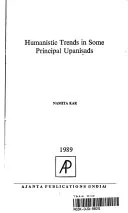
Namita Kar's 1989 book examines humanistic trends in key Upanishads.
Namita Kar's "Humanistic Trends in Some Principal Upanishads," published in 1989, analyzes the philosophical ideas within important Vedic texts. The study focuses on how these scriptures address human experience and ethical questions, moving past ritualistic or cosmological views. Kar argues that ancient Indian texts articulate concepts of self-knowledge, moral action, and liberation as fundamentally human pursuits. The book engages directly with the Brihadaranyaka and Chandogya Upanishads, identifying common ideas about an individual's search for meaning and understanding in the world.
This work is suitable for academics in comparative philosophy, religion, and Eastern studies. Students and practitioners of Vedanta and Hinduism will find a deeper engagement with the Upanishads here, beyond introductory explanations. Those interested in the history of philosophical humanism, especially in non-Western contexts, will appreciate Kar's analysis. The book appeals to readers who value careful academic study of spiritual texts, with an emphasis on their ethical and existential implications.
Emerging in 1989, Kar's work arrived as Eastern philosophies gained traction in Western academia. Building on earlier introductions to Vedanta, such as those by Swami Vivekananda, it offers a more detailed academic examination. The book engages with the long tradition of interpreting Upanishadic texts, specifically highlighting the humanistic elements often overshadowed by theological or metaphysical discussions. It contributes to a scholarly understanding of these foundational scriptures by focusing on their relevance to human existence.
💡 Why Read This Book?
• Gain a nuanced understanding of the humanistic dimensions within foundational Vedic texts, moving beyond purely ritualistic interpretations, as explored through Kar's analysis of the Brihadaranyaka Upanishad. • Appreciate the ethical and existential significance of concepts like *Atman* and *Moksha* as presented in the Upanishads, particularly how they relate to human potential and the pursuit of wisdom. • Understand the historical reception and academic discourse surrounding the Upanishads in the late 20th century, positioning Kar's 1989 publication within broader trends in Eastern philosophy scholarship.
⭐ Reader Reviews
Honest opinions from readers who have explored this book.
❓ Frequently Asked Questions
What specific Upanishads does Namita Kar focus on in "Humanistic Trends"?
The book primarily analyzes key Upanishads such as the Brihadaranyaka Upanishad and the Chandogya Upanishad, examining their philosophical and ethical content through a humanistic lens.
When was "Humanistic Trends in Some Principal Upanishads" first published?
Namita Kar's work was first published in 1989, placing it within a period of growing academic interest in comparative philosophy and Eastern spiritual traditions.
What does the book mean by 'humanistic trends' in the Upanishads?
It refers to the emphasis on human experience, ethical conduct, self-knowledge, and the pursuit of liberation as central goals within these ancient Indian texts, rather than solely focusing on ritual or cosmology.
Is this book suitable for beginners in Vedic philosophy?
While valuable, the book is geared more towards scholars and students with some existing familiarity with Vedic texts and philosophical concepts due to its academic approach.
How does this book differ from other studies of the Upanishads?
It distinguishes itself by applying a specific humanistic framework to interpret the Upanishads, highlighting their relevance to human existential concerns and ethical development.
What is the significance of the concept of Atman as discussed in the book?
Kar explores the Upanishadic concept of Atman (the self) not just as a metaphysical entity but as the core of individual consciousness and the subject of the quest for self-realization and ethical understanding.
🔮 Key Themes & Symbolism
Self-Realization as Human Imperative
The work posits that the Upanishads present the realization of *Atman* not merely as a theological doctrine but as the ultimate human potential. Kar highlights passages where the pursuit of self-knowledge is depicted as the central endeavor of a meaningful human life, distinct from external achievements or ritualistic obligations. This theme underscores the intrinsic value placed on inner understanding and consciousness within the Vedic philosophical framework.
Ethical Dimensions of Liberation
Kar's analysis emphasizes that *Moksha*, or liberation, is intricately linked to ethical development and moral conduct. The Upanishads, as interpreted here, suggest that freedom from suffering and ignorance is achieved not solely through intellectual grasp but through disciplined living and the cultivation of virtues. This perspective frames liberation as the culmination of a well-lived human life, aligning spiritual goals with ethical responsibility.
The Upanishads as Philosophical Dialogues
The book treats the Upanishadic texts not as monolithic pronouncements but as rich dialogues and explorations of fundamental human questions. Kar focuses on the narrative and interrogative structures within texts like the Brihadaranyaka Upanishad to reveal how ancient seers grappled with consciousness, existence, and the human place in the cosmos. This approach emphasizes the intellectual and existential inquiry embedded within these scriptures.
Consciousness and the Human Condition
A central thread is the exploration of consciousness (*caitanya*) as the defining aspect of the human condition. The Upanishads, through Kar’s lens, are shown to be profound inquiries into the nature of awareness, the limitations of sensory perception, and the possibility of transcending ordinary consciousness. This focus on the inner landscape positions the texts as early explorations of subjective experience and existential awareness.
💬 Memorable Quotes
Direct passages from the work, attributed to the author.
“The quest for self-knowledge is presented as the fundamental human pursuit.”
— This highlights the Upanishadic view that understanding one's true nature (*Atman*) is the core objective of human existence, transcending mere material or social concerns.
“Liberation is intrinsically tied to ethical living and moral discipline.”
— This interpretation emphasizes that spiritual freedom (*Moksha*) is not achieved in isolation but is a consequence of virtuous action and self-control, integrating ethics with spiritual aims.
“Upanishadic dialogues reveal early humanistic concerns about existence.”
— This suggests that the ancient texts engage with profound questions about life, death, and meaning from a perspective that values human experience and rational inquiry.
“Consciousness is the defining characteristic of the human being.”
— This points to the Upanishadic focus on the nature of awareness as central to understanding what it means to be human, exploring its depths and potential.
“The identity of Atman and Brahman forms the basis of existential understanding.”
— This signifies the core Vedantic tenet that the individual soul is identical with the ultimate reality, providing a framework for understanding one's place in the cosmos.
🌙 Esoteric Significance
Tradition
While the Upanishads are foundational to the Vedic and Hindu traditions, Kar's humanistic approach aligns with broader esoteric interests in self-knowledge and liberation that transcend specific religious dogma. Her work connects to esoteric lineages that prioritize inner gnosis and the realization of the divine within the human being, such as certain schools of Hermeticism or Neoplatonism that explored the microcosm reflecting the macrocosm.
Symbolism
Key symbols like *Atman* (the inner self) and *Brahman* (the ultimate reality) are central. Kar interprets these not just as abstract concepts but as symbols representing the profound identity between the individual consciousness and the universal principle, a core tenet in many esoteric traditions focused on realizing divine immanence. The concept of *Moksha* (liberation) functions as a symbol for the ultimate human potential and freedom from illusion.
Modern Relevance
Contemporary thinkers and practitioners in fields like transpersonal psychology, integral philosophy, and modern Vedantic studies continue to draw upon the Upanishads for insights into consciousness, ethics, and the human search for meaning. Kar's work provides a scholarly bridge, making these ancient texts accessible through a lens relevant to modern existential and psychological inquiries.
👥 Who Should Read This Book
• Scholars of comparative religion and philosophy: To gain a focused perspective on the humanistic elements within the Upanishads and their place in global philosophical discourse. • Students of Vedanta and Hinduism: To deepen their understanding of core concepts like Atman and Moksha through an ethical and existential lens, as presented in Kar's analysis. • Readers interested in the history of ethics and humanism: To explore how ancient Indian philosophical traditions articulated concerns about human potential, self-knowledge, and moral conduct.
📜 Historical Context
Namita Kar's "Humanistic Trends in Some Principal Upanishads" (1989) emerged during a period of burgeoning academic interest in non-Western philosophies, building on the groundwork laid by earlier scholars and spiritual movements. The mid-to-late 20th century saw a significant expansion of Indological studies, moving beyond purely philological or theological analyses to engage with the philosophical and ethical dimensions of texts like the Upanishads. This contrasted with earlier Orientalist approaches that sometimes exoticized or misunderstood Eastern traditions. Kar’s work fits within this evolving academic landscape, offering a focused humanistic interpretation. Contemporaries involved in comparative philosophy, such as those publishing in journals like Philosophy East and West, were also exploring cross-cultural ethical frameworks. While not directly engaging with a specific named antagonist school, Kar implicitly addresses interpretations that might overemphasize ritual or cosmological aspects at the expense of the texts' existential and ethical content.
📔 Journal Prompts
The Upanishadic emphasis on *Atman* as the core of human identity.
The concept of *Moksha* as ethical culmination.
The humanistic implications of ancient Indian philosophical dialogues.
Reflecting on consciousness as the defining aspect of the human condition.
Connecting the Upanishadic pursuit of self-knowledge to personal ethical development.
🗂️ Glossary
Atman
The Sanskrit term for the individual self, soul, or innermost essence. In Upanishadic thought, it is often equated with Brahman, the ultimate reality.
Brahman
The ultimate reality, the supreme cosmic spirit, or absolute consciousness in Hindu philosophy. The Upanishads explore the relationship and identity between Atman and Brahman.
Moksha
Liberation or release from the cycle of birth, death, and rebirth (samsara). It represents the ultimate spiritual goal in many Indian traditions, often understood as freedom from suffering and ignorance.
Upanishads
Ancient Sanskrit texts of the Vedas that form the core of Hindu philosophy. They are considered teachings on the nature of reality, the self, and the path to liberation.
Vedas
The oldest scriptures of Hinduism, comprising hymns, rituals, and philosophical discussions. The Upanishads are considered the concluding part (Vedanta) of the Vedas.
Brihadaranyaka Upanishad
One of the principal and oldest Upanishads, known for its philosophical dialogues, discussions on the nature of reality, self, and consciousness.
Chandogya Upanishad
Another major Upanishad, notable for its teachings on the identity of Atman and Brahman, and its use of illustrative analogies and dialogues.