Jung and Tarot
 72
72

Jung and Tarot



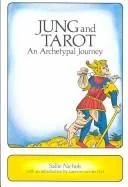
Sallie Nichols' 'Jung and Tarot' stands as a monumental achievement in esoteric literature, offering a rigorous yet profoundly insightful examination of the Tarot through the lens of Jungian psychology. Nichols masterfully connects the archetypal imagery of the cards to the deep structures of the collective unconscious, revealing their potent psychological and spiritual significance. Her prose is both scholarly and evocative, guiding the reader through complex concepts with clarity and grace. This book is an indispensable resource for anyone seeking to understand the Tarot beyond superficial fortune-telling, offering a pathway to profound self-awareness and spiritual growth. It is a cornerstone for serious practitioners, Jungian enthusiasts, and seekers of ancient wisdom.
📝 Description
72
Sallie Nichols published 'Jung and Tarot' in 1980, linking the cards to Jungian psychology.
Sallie Nichols' 1980 book, 'Jung and Tarot,' examines the Tarot deck through the lens of Carl Jung's psychological theories. Nichols argues that the Tarot's imagery represents archetypes found in the collective unconscious, rather than serving solely as a tool for fortune-telling. She analyzes how each card's symbolism can unlock deeper understanding of the human psyche.
The book encourages readers to engage with the Tarot's symbolic language to explore their own inner world. Nichols connects the ancient imagery of the cards to modern psychological concepts, suggesting a bridge between mystical traditions and contemporary thought. It presents the Tarot as a system for self-reflection and understanding universal human experiences.
This work situates the Tarot within a Western esoteric tradition that seeks to understand the universe and human consciousness through symbolic systems. Nichols draws upon Jung's concept of archetypes, which are universal patterns of the psyche, and applies them to the imagery of the Tarot. This approach aligns with esoteric practices that view symbols not just as representations, but as active forces or keys to inner knowledge. The book bridges the gap between psychological inquiry and the ancient art of divination, suggesting a shared root in humanity's quest for meaning.
💡 Why Read This Book?
Uncover the hidden language of the soul through the archetypal power of the Tarot, as revealed by Jungian psychology. This book is essential for seekers of profound self-knowledge, scholars of esoteric traditions, and practitioners aiming to deepen their intuitive understanding and application of Tarot symbolism for personal transformation and spiritual insight. Explore the timeless wisdom encoded within the cards.
⭐ Reader Reviews
Honest opinions from readers who have explored this book.
❓ Frequently Asked Questions
What is the primary connection between Jung and the Tarot explored in this book?
The book posits that the Tarot's archetypal imagery resonates deeply with Carl Jung's theories of the collective unconscious and archetypes, suggesting the cards are symbolic representations of universal psychological patterns and stages of individuation.
Is this book suitable for beginners to Tarot?
While it delves into complex psychological theories, Nichols presents the material accessibly. Beginners will gain a deeper, more meaningful understanding of Tarot symbolism beyond simple interpretations.
What makes this book unique compared to other Tarot guides?
Its unique strength lies in its rigorous application of Jungian psychology, offering a profound, analytical framework for understanding the Tarot's enduring mystical power and its relevance to the human psyche.
What kind of esoteric insights can one expect from this book?
Readers can expect insights into the archetypal forces governing human experience, the process of individuation, and the Tarot's role as a symbolic map of the soul's journey towards wholeness.
Does the book offer practical methods for using the Tarot?
Yes, by providing a deep understanding of the cards' psychological and symbolic meanings, the book implicitly guides readers toward more profound and insightful practical applications in their readings.
🔮 Key Themes & Symbolism
Archetypal Resonance of the Tarot
This theme examines how the Tarot's imagery serves as a potent conduit to the collective unconscious, mirroring Jung's archetypes such as the Hero, the Wise Old Man, and the Shadow. Nichols argues that the cards are not merely random symbols but are deeply embedded in the universal human experience, offering clear insights into the patterns of consciousness and the journey of individuation. The book elucidates how recognizing these archetypes within the Tarot can illuminate personal growth and understanding.
The Tarot as a Symbol of Individuation
Nichols presents the Tarot as a symbolic map of the individuation process, the lifelong journey towards psychological wholeness and self-realization. Each card, from the Fool's leap into the unknown to the World's completion, represents a stage or challenge in this transformative path. By interpreting the cards through a Jungian lens, readers can gain a deeper appreciation for their own life's unfolding narrative and the psychological work required to integrate the disparate aspects of the self into a unified whole.
Bridging Ancient Symbolism and Modern Psychology
A central tenet of 'Jung and Tarot' is its ability to bridge the ancient, mystical traditions of the Tarot with the modern scientific and psychological frameworks developed by C.G. Jung. Nichols demonstrates that the seemingly arcane wisdom of the Tarot is, in fact, a sophisticated system of psychological understanding that predates modern psychology. This synthesis offers a compelling argument for the enduring relevance of symbolic systems in comprehending the human condition and the mysteries of the psyche.
💬 Memorable Quotes
Direct passages from the work, attributed to the author.
“Archetypes are the psychic inheritance of mankind.”
— Highlighting Jung's concept, this emphasizes that the universal patterns found in the Tarot are not personal but shared across humanity, forming the foundation of our collective experience.
“The journey of the Fool is the journey of life itself.”
— This suggests that the Tarot's Major Arcana can be seen as a symbolic progression through the various stages and challenges inherent in the human experience of growth and transformation.
“Symbolism is the language of the unconscious.”
— This underscores the book's approach, asserting that understanding the Tarot's visual language is key to accessing and comprehending the deeper, often hidden, messages of our psyche.
💡 Key Ideas
Editorial paraphrase of the work's core concepts — not direct quotes.
The Tarot is a mirror of the soul.
This quote captures the book's core thesis: the Tarot's cards reflect the inner landscape and psychological states of the individual, serving as a tool for self-exploration.
Individuation is the process of becoming who one truly is.
This quote defines the ultimate goal of Jungian psychology, which Nichols applies to the Tarot, portraying the cards as guides on this profound path of self-discovery and integration.
🌙 Esoteric Significance
Tradition
This work is deeply rooted in the esoteric tradition of Western Psychology and Hermeticism, particularly through its integration of Carl Jung's analytical psychology with the symbolic language of the Tarot. It draws upon the alchemical principle of transformation and the Hermetic dictum 'as above, so below' to interpret the Tarot's correspondence with the inner workings of the human psyche and the broader cosmos.
Symbolism
The Tarot's symbolism, as interpreted through a Jungian lens, becomes a collection of archetypal images. Key symbols like the Fool (innocence, potential), the Magician (willpower, manifestation), the High Priestess (intuition, the unconscious), and the World (completion, integration) are explored for their profound psychological and spiritual meanings, revealing universal patterns of growth, challenge, and individuation.
Modern Relevance
In an age often characterized by disconnection and existential searching, 'Jung and Tarot' offers a timeless framework for self-understanding and spiritual exploration. Its emphasis on archetypal patterns and the process of individuation provides a powerful guide for navigating modern life's complexities, fostering psychological integration, and unlocking a deeper connection to the self and the collective human experience through the enduring wisdom of the Tarot.
👥 Who Should Read This Book
This clear text is a vital resource for a diverse audience. Tarot practitioners seeking to deepen their understanding beyond mere fortune-telling will find a profound psychological framework. Students of Jungian psychology will discover a practical and symbolic application of complex theories. Spiritual seekers yearning for a deeper connection to their inner world will find the Tarot a powerful mirror for self-discovery. Even those new to the Tarot will benefit from Nichols' clear exposition, gaining an appreciation for its rich symbolic language and its potential for personal growth and transformation.
📜 Historical Context
Published in 1985, Sallie Nichols' 'Jung and Tarot' emerged during a period of renewed interest in both Jungian psychology and esoteric studies. The late 20th century saw a surge in individuals seeking deeper meaning and alternative frameworks for understanding the self and the universe, moving beyond purely materialistic or reductionist viewpoints. This era was marked by a cross-pollination of ideas between psychology, spirituality, and ancient wisdom traditions. Nichols' work tapped into this zeitgeist, providing a rigorous intellectual foundation for the intuitive practices of Tarot reading, thereby legitimizing it within a more academic and psychologically informed discourse. The book helped to solidify the Tarot's place not just as a divinatory tool, but as a significant psychological and spiritual resource.
📔 Journal Prompts
Reflect on the 'Fool's Journey' within your own life. What 'leaps of faith' have you taken, and what lessons did they impart?
Identify an archetype (e.g., Shadow, Anima/Animus) present in your life and explore how it manifests in the Tarot cards you draw.
How does the concept of 'individuation' resonate with your personal aspirations and life path? Which Tarot cards seem to symbolize this process for you?
Consider the 'High Priestess' archetype. How do you currently access or neglect your intuition and inner wisdom?
Journal about a time when a Tarot reading provided clear insights into a personal challenge. Connect the card's symbolism to your experience.
🗂️ Glossary
Archetype
In Jungian psychology, a universal, archaic pattern and image that derives from the collective unconscious and is the psychic counterpart of an instinct. Examples include the Mother, the Hero, and the Trickster.
Collective Unconscious
A term coined by Carl Jung to describe the part of the unconscious mind that is common to all human beings. It contains archetypes and instincts inherited from our ancestors.
Individuation
The lifelong psychological process of differentiation of the self, by which an individual becomes a whole, integrated personality. It involves conscious realization of one's potential and integration of unconscious elements.
Shadow
The 'dark side' of personality, the repressed, rejected, or unknown aspects of the self. Integrating the shadow is crucial for wholeness.
Synchronicity
The acausal connecting principle that explains meaningful coincidences, where two or more events occur in a meaningful manner without a causal relationship.
This book appears in 3 collections
🔮 Readers Also Liked
Browse all →
More by Sallie Nichols
All books →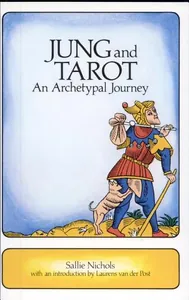
From the “Tarot” Collection
View all →
More Free Divination & Tarot Books
View all →