Tarot Cards for Beginners
 61
61

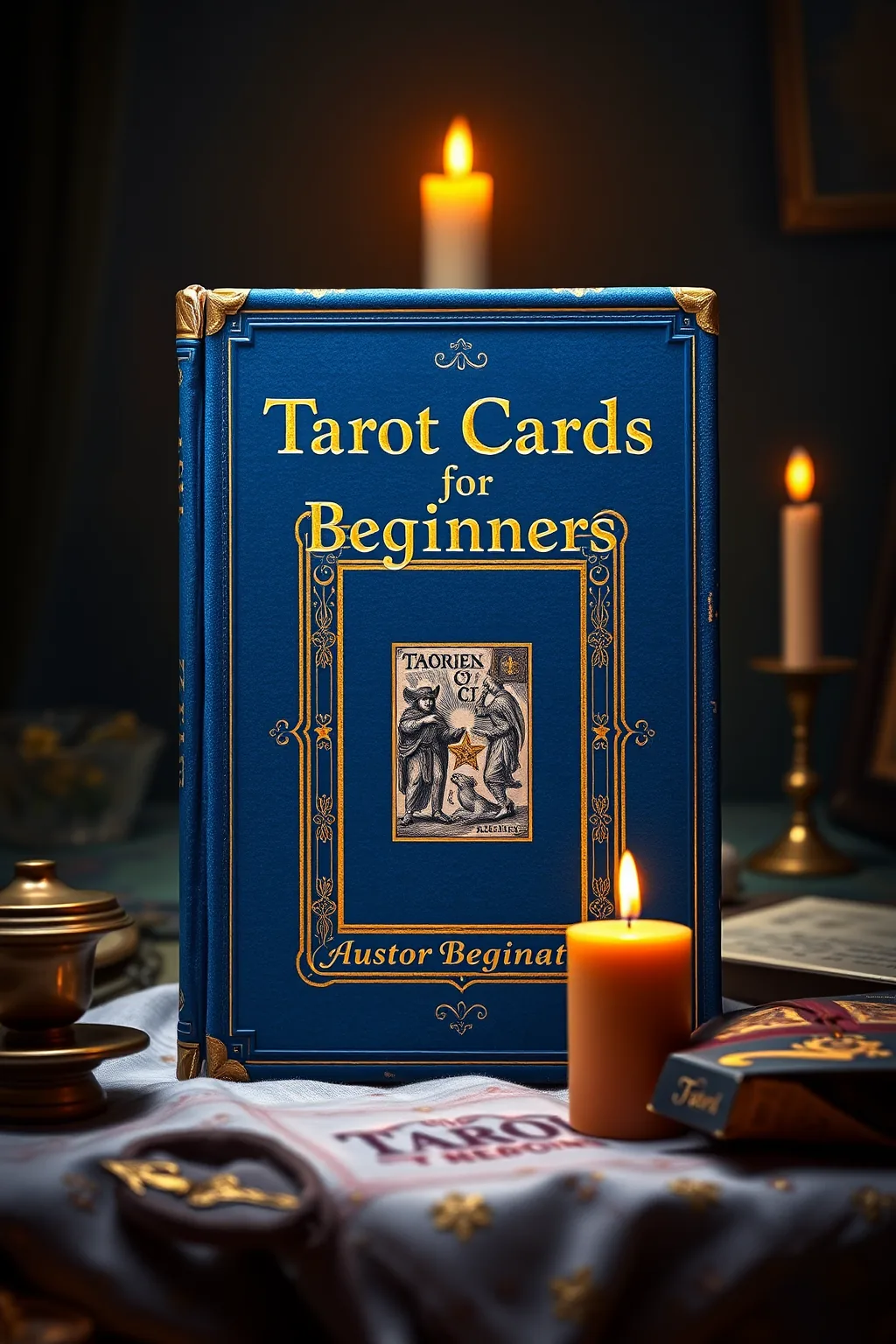
Tarot Cards for Beginners



Silas Hawthorne, Hermetic Studies Editor: Austin D. Kaplan’s 'Tarot Cards for Beginners' is a revelation for those drawn to the esoteric dimensions of divination. Eschewing superficial interpretations, Kaplan delves into the profound symbolism and philosophical depth that make Tarot a timeless tool for self-discovery and spiritual insight. This work offers a clear, yet rich, exposition of the Major and Minor Arcana, grounding esoteric concepts in accessible language. It is an invaluable resource for neophytes eager to engage with Tarot not just as a predictive tool, but as a profound system of wisdom, a true gateway to understanding the subtle energies that govern existence. Highly recommended for any serious student of the occult arts.
📝 Description
61
Austin D. Kaplan's 'Tarot Cards for Beginners' was published to demystify the seventy-eight cards of the Tarot.
Austin D. Kaplan's book aims to introduce readers to the Tarot deck, moving beyond simple meanings to show how the cards can be used for self-discovery. Kaplan breaks down the symbolism in each card, presenting the deck as a guide to understanding oneself. The text is written for those new to Tarot, whether they are interested in spiritual growth or academic study of esoteric traditions. It encourages readers to engage with the cards to develop their intuition and grasp the connections between different aspects of life. The book covers the seventy-eight cards, discussing how they relate to personal agency and the forces that influence events.
This book situates Tarot within a broader esoteric framework, viewing the cards not just as divinatory tools but as a symbolic language reflecting universal principles. It touches upon the idea of the Tarot as a map for inner exploration, aligning with traditions that use symbolic systems to access deeper psychological and spiritual insights. The emphasis on archetypal currents suggests a connection to Jungian psychology and other schools of thought that interpret symbolic imagery as expressions of the collective unconscious. The aim is to foster a personal connection with these esoteric concepts.
💡 Why Read This Book?
This book is essential for anyone seeking to unlock the mystical language of the Tarot. It offers a clear path for beginners to grasp complex symbolism, empowering them to use the cards as a tool for introspection and spiritual growth. Scholars will appreciate its depth, while practitioners will find renewed inspiration for their readings. Discover the hidden wisdom and profound philosophical insights embedded within the Tarot, transforming it from a deck of cards into a sacred guide.
⭐ Reader Reviews
Honest opinions from readers who have explored this book.
❓ Frequently Asked Questions
What is the primary purpose of Tarot cards?
Beyond mere fortune-telling, Tarot cards serve as a powerful symbolic language and a tool for introspection, revealing hidden patterns, subconscious insights, and archetypal energies that influence our lives and decisions. They offer a mirror to the soul.
Are Tarot cards only for divination?
While divination is a common application, Tarot's esoteric significance extends to spiritual guidance, personal development, problem-solving, and understanding the archetypal forces at play in the universe. It's a multifaceted system of wisdom.
How does one begin learning Tarot?
Begin by familiarizing yourself with the Major Arcana's archetypes, then move to the Minor Arcana. Practice daily readings, meditate on individual cards, and seek to understand the underlying symbolism and numerology, as explored in this book.
What is the difference between the Major and Minor Arcana?
The Major Arcana represent significant life lessons, spiritual journeys, and archetypal forces. The Minor Arcana, divided into four suits, reflect the day-to-day events, challenges, and experiences of life, offering practical guidance.
Can anyone learn to read Tarot?
Absolutely. The Esoteric Library's curated selection, including this beginner-friendly guide, believes that with dedication, curiosity, and an open mind, anyone can learn to interpret the rich symbolism of the Tarot and harness its wisdom.
🔮 Key Themes & Symbolism
The Archetypal Journey of the Fool
This theme looks at the iconic Fool card, exploring its representation of new beginnings, pure potential, and the fearless leap into the unknown. It serves as the foundational archetype for the entire Tarot journey, symbolizing the soul's unburdened passage through the myriad experiences of life. Understanding the Fool is paramount to grasping the spirit of initiation and the trust required to work through the unfolding path of self-discovery, embodying the essence of beginning a sacred quest without fear or preconceived notions.
Decoding the Arcane Symbolism
This section focuses on the intricate visual language of Tarot, where each symbol, color, and figure holds profound esoteric meaning. From the celestial bodies adorning the High Priestess to the scales of Justice, the book illuminates how these visual cues act as keys to unlocking deeper truths. It emphasizes that the Tarot is not merely a collection of images, but a meticulously crafted system of archetypal symbols that resonate with universal wisdom and ancient esoteric traditions, inviting a deeper, more intuitive comprehension.
The Tarot as a Mirror of the Soul
Here, the book positions the Tarot as an introspective tool, reflecting the querent's inner landscape, subconscious desires, and spiritual aspirations. It highlights how the cards offer guidance and clarity by revealing the unseen forces and patterns influencing one's life. This theme underscores the Tarot's capacity to facilitate self-awareness, personal growth, and the alignment of one's will with their higher purpose, transforming readings into profound dialogues with the self and the divine.
💬 Memorable Quotes
Direct passages from the work, attributed to the author.
“Each card is a whispered secret from the universe.”
— This evocative phrase suggests the profound, often subtle, wisdom contained within each Tarot card, urging the reader to listen intently to the messages of the cosmos.
“The Fool's journey is your journey.”
— This connects the reader directly to the archetypal path of the Fool, implying that the universal lessons and experiences represented in the Tarot are relevant to their own life's unfolding narrative.
“Symbolism is the language of the soul.”
— This statement underscores the importance of understanding the visual and esoteric language of Tarot, suggesting that it bypasses the rational mind to speak directly to our deeper consciousness.
“To read the Tarot is to read yourself.”
— This reinforces the idea that Tarot readings are primarily about self-discovery and understanding one's own inner workings, rather than solely predicting external events.
💡 Key Ideas
Editorial paraphrase of the work's core concepts — not direct quotes.
The Tarot is not a crystal ball, but a mirror.
This quote emphasizes that Tarot reflects inner truths and potential futures rather than dictating a fixed destiny. It highlights the power of introspection and self-awareness facilitated by the cards.
🌙 Esoteric Significance
Tradition
Tarot is deeply rooted in Hermeticism, Kabbalah, and Neoplatonic philosophy. It serves as a visual representation of the Tree of Life, a map of the cosmos, and a symbolic narrative of the soul's journey from the material to the divine. Its esoteric significance lies in its ability to bridge the mundane and the sacred, offering insights into universal laws and spiritual evolution.
Symbolism
The seventy-eight cards are rich with symbolism drawn from mythology, astrology, and alchemy. The Major Arcana represent archetypal forces and stages of spiritual development, while the Minor Arcana depict the practical manifestations of these forces in daily life. Each symbol, from the elements to the celestial bodies, carries layers of meaning intended to illuminate the interconnectedness of all things.
Modern Relevance
In contemporary society, Tarot continues to be a vital tool for self-discovery, mindfulness, and spiritual exploration. Its symbolic language offers a potent means to work through the complexities of modern life, fostering intuition, creativity, and a deeper connection to one's inner wisdom. It provides a framework for understanding personal challenges and opportunities within a broader cosmic context.
👥 Who Should Read This Book
This book is a beacon for the earnest beginner, the curious novice eager to step beyond the surface and into the profound depths of Tarot. Scholars of esoteric traditions will find it a valuable primer, offering a clear and accessible entry point into a rich field of study. Seekers of personal growth and spiritual enlightenment will discover a powerful ally in understanding their life's journey. Practitioners looking to deepen their foundational knowledge will appreciate Kaplan's insightful approach to core symbolism and interpretation, making it an indispensable companion for anyone drawn to the mystical arts.
📜 Historical Context
The origins of Tarot are shrouded in the mists of time, with its earliest known forms appearing in 15th-century Italy as playing cards. However, its transformation into a tool for divination and esoteric study gained significant momentum in the 18th century, particularly with the works of Antoine Court de Gébelin and later, Éliphas Lévi, who linked the cards to Kabbalistic and Hermetic traditions. This era saw a burgeoning interest in occultism and mysticism across Europe, fueled by rediscovery of ancient texts and a desire to find deeper meaning beyond the rationalism of the Enlightenment. Tarot became a focal point for these explorations, with decks and interpretations evolving to reflect these esoteric philosophies, cementing its place as a core part of Western occultism.
📔 Journal Prompts
Reflect on the archetype of The Fool in your own life. Where are you on your 'Fool's Journey' right now?
Meditate on a card that frequently appears in your readings. What message is it consistently trying to convey to you?
How can the symbolism of the Minor Arcana's suits (Wands, Cups, Swords, Pentacles) be applied to understanding your daily experiences and challenges?
Consider the concept of 'The High Priestess' as your inner intuitive guide. How can you better honor and access this inner wisdom?
What is one fear or hesitation you have about reading Tarot, and how can the wisdom of the cards help you overcome it?
🗂️ Glossary
Arcana
Refers to the 'secrets' or mysteries within the Tarot deck. The Major Arcana represent significant spiritual lessons, while the Minor Arcana depict more mundane, day-to-day events and challenges.
Querent
The person for whom a Tarot reading is being performed. Their questions and life circumstances are the focus of the interpretation.
Divination
The practice of seeking knowledge of the future or the unknown by supernatural means. In Tarot, it involves interpreting the symbolic language of the cards to gain insight.
Archetype
A universal, inherited pattern of thought or imagery derived from the collective unconscious and capable of appearing in the same form in different cultures. Figures like The Magician or The Hermit are archetypes.
Esoteric
Intended for or likely to be understood by only a small number of people with a specialized knowledge or interest. In Tarot, it refers to the deeper, hidden meanings and spiritual significance beyond literal interpretation.
This book appears in 3 collections
🔮 Readers Also Liked
Browse all →
More by Austin D. Kaplan
All books →
From the “Tarot” Collection
View all →
More Free Divination & Tarot Books
View all →