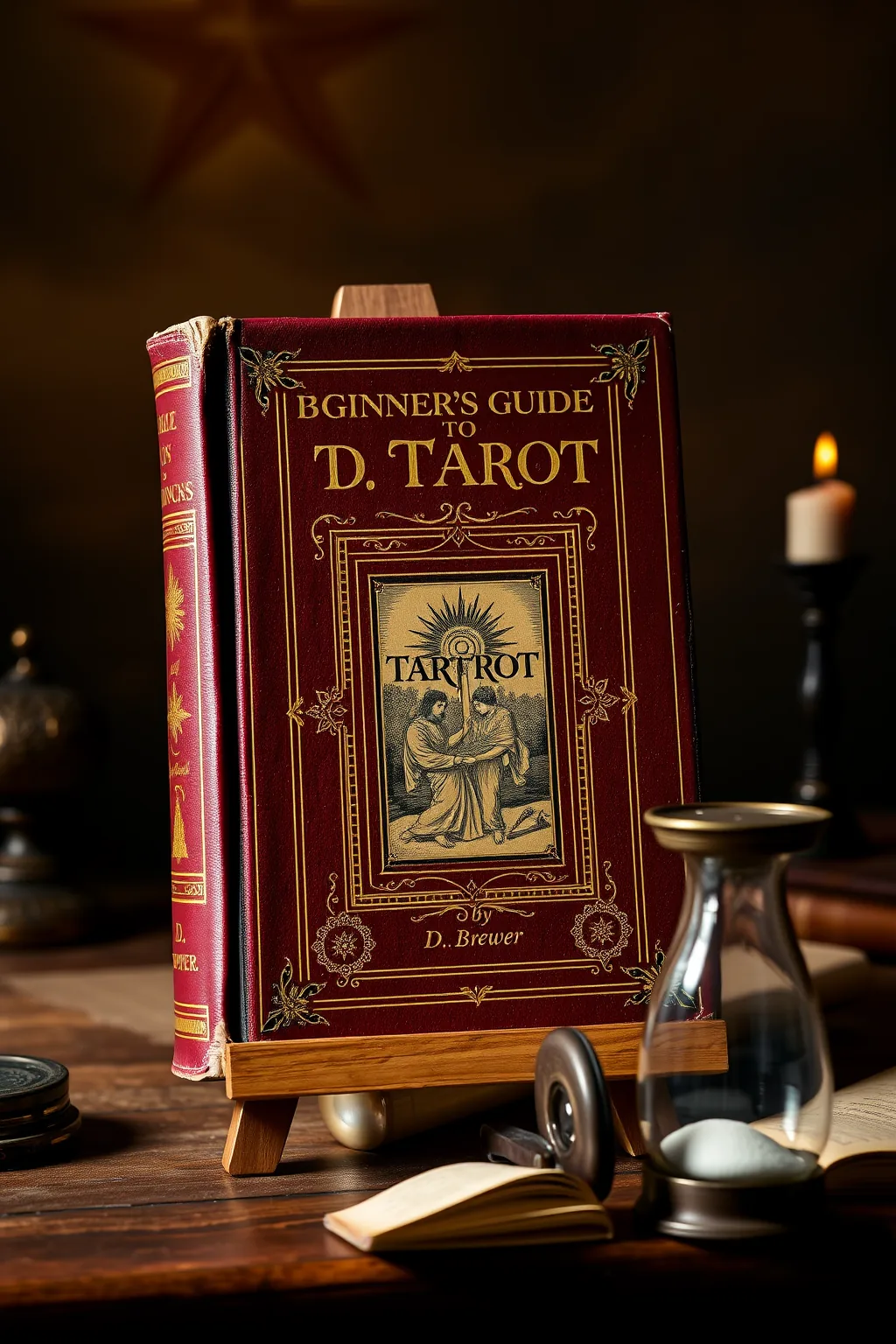
Beginner's Guide to Tarot
 61
61

Beginner's Guide to Tarot



Evander Ashcroft (Alchemy & Hermeticism Editor) — D. Brewer's "Beginner's Guide to Tarot" is a remarkably accessible yet deeply resonant exploration of this ancient divinatory art. Brewer masterfully navigates the esoteric landscape, presenting complex symbolism with clarity and grace, eschewing arcane jargon for profound, intuitive understanding. This work doesn't just teach card meanings; it unveils the Tarot as a mirror to the soul and a map of the human condition. It’s an indispensable primer for neophytes yearning for authentic connection with the archetypal currents, and a valuable refresher for seasoned practitioners seeking renewed clarity. A true gem for the modern mystic.
📝 Description
61
D. Brewer's "Beginner's Guide to Tarot" demystifies the symbolic language of the cards for new practitioners.
This book serves as an introduction to understanding the Tarot. It moves beyond simple prediction to examine the symbolism, numerology, and astrological connections present in both the Major and Minor Arcana. Brewer aims to make the often-complex system accessible to those new to the practice. The text encourages self-discovery and the development of intuition through the use of the cards.
It is written for individuals interested in using the Tarot for personal reflection and spiritual development. The guide intends to show how symbolic insight can enhance understanding of life's influences. The book invites readers to engage with the Tarot as a means of gaining esoteric knowledge and transforming perception.
This guide situates Tarot within a broader esoteric tradition that views the cards as a symbolic language reflecting universal principles. It connects the imagery and structure of the deck to concepts found in numerology and astrology, traditions often employed in Western esotericism for divination and self-understanding. The book treats the Tarot not just as a divinatory tool, but as a system for accessing inner wisdom and understanding patterns of destiny.
💡 Why Read This Book?
Uncover the profound symbolism and archetypal wisdom embedded within the Tarot deck. This guide offers a clear, intuitive path to understanding the cards not just for prediction, but for deep self-reflection and spiritual growth. Ideal for seekers, burgeoning practitioners, and those drawn to the mystical arts who wish to unlock a powerful tool for personal insight and inner transformation.
⭐ Reader Reviews
Honest opinions from readers who have explored this book.
❓ Frequently Asked Questions
What is the primary purpose of the Tarot?
The Tarot's primary purpose extends beyond simple fortune-telling; it serves as a powerful tool for self-discovery, introspection, and understanding the archetypal forces at play in life. It offers insights into challenges and opportunities, guiding personal growth and spiritual awareness.
Is this book suitable for absolute beginners?
Absolutely. "Beginner's Guide to Tarot" is specifically designed for those with no prior experience, breaking down complex concepts into easily digestible lessons and providing a supportive framework for learning.
How does the Tarot connect to esoteric traditions?
The Tarot is deeply interwoven with various esoteric traditions, including Kabbalah, Hermeticism, and Jungian psychology, drawing upon their symbolic languages and philosophical underpinnings to represent universal truths and archetypal patterns.
Can the Tarot be used for more than just reading the future?
Yes, the Tarot is exceptionally versatile. It can be used for meditation, exploring psychological states, problem-solving, creative inspiration, and understanding karmic patterns, offering a holistic approach to personal development.
What is the significance of the Major and Minor Arcana?
The Major Arcana represent significant life lessons, spiritual journeys, and archetypal experiences, while the Minor Arcana detail the practical, everyday challenges and opportunities encountered in the material world, both working in tandem to form a complete narrative.
🔮 Key Themes & Symbolism
The Archetypal Landscape
This theme explores the Tarot as a symbolic map of the human psyche, mirroring universal archetypes and life stages. Brewer guides readers to recognize these archetypes within the cards and, more importantly, within themselves. It highlights how the Tarot serves as a potent mirror, reflecting inner truths and external circumstances through a rich lexicon of imagery and narrative. Understanding these archetypes fosters deeper self-awareness and a more profound connection to the collective unconscious, transforming personal challenges into pathways for growth and wisdom.
The Language of Symbolism
Fundamentally, the Tarot is a language of symbols, each card a glyph carrying layers of meaning derived from ancient mythologies, astrology, and numerology. This section looks at deciphering this visual vocabulary, from the celestial influences on the suits to the profound numerological significance of each card. Readers will learn to interpret the intricate details within each illustration, understanding how colors, figures, and actions contribute to the overall message. This deep dive into symbolism empowers practitioners to move beyond rote memorization towards intuitive understanding and nuanced readings.
Tarot as a Path to Inner Wisdom
Brewer presents the Tarot not merely as a predictive tool, but as a profound instrument for spiritual development and self-realization. This theme emphasizes the Tarot's capacity to illuminate the shadow aspects of the self, guide ethical decision-making, and foster intuitive development. By engaging with the Tarot's wisdom, readers are encouraged to cultivate a deeper connection with their inner knowing, transforming everyday experiences into opportunities for spiritual insight. It's about using the cards as a catalyst for personal transformation and aligning with one's higher purpose.
💬 Memorable Quotes
Direct passages from the work, attributed to the author.
“Each card whispers an ancient truth.”
— This highlights the profound, timeless wisdom embedded within the Tarot's imagery and symbolism, suggesting that by listening carefully, we can access clear insights into the human condition and the universe.
“Symbolism is the language of the soul.”
— This profound statement underscores the idea that symbols bypass the rational mind, speaking directly to our intuition and subconscious, facilitating a deeper understanding of ourselves and the mysteries of existence.
“Read the cards, then read yourself.”
— This emphasizes the dual nature of Tarot reading: first, understanding the card's message, and second, applying that insight to one's own life and inner landscape for meaningful personal growth.
💡 Key Ideas
Editorial paraphrase of the work's core concepts — not direct quotes.
The cards are not a crystal ball, but a mirror.
This quote emphasizes the Tarot's role in introspection rather than passive prediction. It suggests the cards reflect our inner state and the potential outcomes of our present path, empowering us to make conscious choices.
The Fool's journey is your own.
This quote connects the archetypal journey of The Fool to the reader's personal life path, implying that every new beginning and every leap of faith is part of a universal cycle of growth and experience.
🌙 Esoteric Significance
Tradition
The Tarot is deeply embedded within Western esoteric traditions, drawing heavily from Hermeticism, Kabbalah, and Neoplatonism. Its structure mirrors the mystical journey of the soul, with the Major Arcana representing stages of spiritual ascent and the Minor Arcana reflecting the dynamics of the material world as influenced by elemental and astrological forces. This book positions the Tarot as a key to unlocking these ancient philosophical frameworks.
Symbolism
The symbolic richness of the Tarot is outstanding. Each card is a complex range woven from archetypal imagery, numerological values, astrological correspondences, and mythological references. From the cosmic dance of the Star to the earthly grounding of the Pentacles, the symbols act as keys to understanding universal principles, psychological states, and the intricate interplay between the seen and unseen realms, offering clear insights into life's mysteries.
Modern Relevance
In our fast-paced, often disconnected world, the Tarot offers a vital anchor to introspection and intuitive wisdom. Its symbolic language transcends cultural barriers, providing a framework for navigating personal challenges, fostering emotional intelligence, and cultivating a deeper sense of purpose. As a tool for self-discovery and empowerment, the Tarot remains remarkably relevant, offering guidance and clarity for those seeking meaning and connection in the modern era.
👥 Who Should Read This Book
This guide is an essential companion for the earnest seeker venturing into the mystical arts for the first time. It is equally valuable for students of esotericism looking to deepen their understanding of archetypal symbolism and its connection to ancient traditions. Experienced practitioners may find it a refreshing perspective, offering clarity and new avenues for intuitive interpretation. Whether you are drawn by a desire for self-knowledge, a curiosity about divination, or a yearning to connect with a timeless source of wisdom, this book provides the foundational keys to unlock the Tarot's profound potential.
📜 Historical Context
The Tarot, with its roots tracing back to 15th-century Italy, has evolved from a simple game into a profound tool of esoteric inquiry. Its journey through history has seen it adopted and adapted by various mystical and occult traditions, most notably in the 18th and 19th centuries with figures like Antoine Court de Gébelin and Eliphas Lévi, who linked it to Kabbalistic and Hermetic philosophies. The Rider-Waite-Smith deck, created in the early 20th century, became a central influence, popularizing decks with richly illustrated scenes on the Minor Arcana, making them more accessible for divinatory purposes. This book emerges within a contemporary resurgence of interest in ancient wisdom, placing the Tarot at the forefront of personal development and spiritual exploration, bridging historical esoteric thought with modern psychological insights.
📔 Journal Prompts
Reflect on the journey of The Fool. Where are you currently at the beginning of a new path in your life?
Choose a card from the Minor Arcana that speaks to a current challenge. How does its symbolism offer guidance?
Consider the relationship between the number and imagery of a card. What deeper meaning emerges from this connection?
How can the archetypes presented in the Major Arcana be seen in your daily interactions or personal relationships?
If the Tarot is a mirror, what truth is a specific card revealing about your inner landscape today?
🗂️ Glossary
Arcana
Referring to the two divisions of the Tarot deck: the Major Arcana (22 cards representing significant life lessons and spiritual journeys) and the Minor Arcana (56 cards detailing everyday experiences and challenges).
Archetype
Universal, primordial images or patterns of thought that are part of the collective unconscious, representing fundamental human experiences and motivations, as often depicted in Tarot cards.
Divination
The practice of seeking knowledge of the future or the unknown by supernatural means, often through the interpretation of omens or symbols, such as those found in the Tarot.
Esoteric
Intended for or likely to be understood by only a small number of people with a specialized knowledge or interest; relating to mystical, spiritual, or occult subjects.
Symbolism
The use of symbols to represent ideas or qualities; the study or interpretation of symbols and their meanings, which is fundamental to understanding the Tarot.
This book appears in 3 collections
🔮 Readers Also Liked
Browse all →
![SQL [asterisk] forms operator's reference card](/img/thumb/sql-asterisk-forms-operator-s-reference-card-oracle-corporation.webp)
More by D. Brewer
All books →
From the “Tarot” Collection
View all →

More Free Divination & Tarot Books
View all →