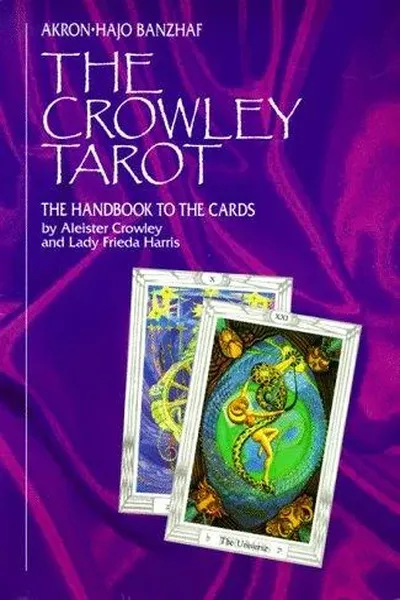
Palmistry and the Occult Arts
 61
61

Palmistry and the Occult Arts



Alaric Kestrel, Metaphysical Studies Reviewer: J. W. Frings' "Palmistry and the Occult Arts" is a seminal work that transcends the superficial. It masterfully interweaves the practice of palmistry with the broader spectrum of esoteric disciplines, presenting a cohesive and deeply insightful perspective. Frings' prose is both authoritative and accessible, guiding readers through complex concepts with clarity. The book excels in its exploration of the symbolic language of the hand and its resonance with astrological and elemental energies. Essential reading for serious practitioners and scholars of divination and occult philosophy, it offers a profound understanding of a practice often misunderstood. This is not merely a how-to, but a philosophical journey.
📝 Description
61
Published in 1928, J. W. Frings' "Palmistry and the Occult Arts" connects hand reading to broader esoteric traditions.
J. W. Frings' "Palmistry and the Occult Arts" examines chiromancy as a system of knowledge interwoven with other occult practices. The book details how the lines and mounts of the palm are interpreted not just for prediction, but as a reflection of cosmic influences and an individual's inherent destiny.
Frings traces the connections between palmistry and ancient divinatory methods, elemental correspondences, and spiritual energies. It moves beyond simple fortune-telling to consider self-knowledge, the relationship between fate and personal agency, and the underlying structure of reality. The text aims to help readers interpret the subtle signs of the universe and understand the deeper forces at play in life. It is written for those interested in uncovering hidden insights and expanding their understanding of occult philosophy.
This work situates palmistry within a lineage of Western esotericism that views the human body as a microcosm reflecting universal laws. It aligns with traditions that see physical marks as symbolic language, connecting them to astrological correspondences, elemental theories, and magical principles. Frings' approach treats chiromancy not as isolated superstition, but as a coherent system of occult knowledge, suggesting its practice is tied to understanding the subtle energies that shape both the individual and the cosmos.
💡 Why Read This Book?
Unravel the profound connection between your palms and the cosmos. "Palmistry and the Occult Arts" offers not just techniques, but a deep dive into the philosophical underpinnings of chiromancy, revealing its place within the ancient occult traditions. Ideal for seekers of self-knowledge, students of esoteric wisdom, and practitioners looking to enrich their understanding of divination.
⭐ Reader Reviews
Honest opinions from readers who have explored this book.
❓ Frequently Asked Questions
What is the primary focus of 'Palmistry and the Occult Arts'?
The book focuses on the ancient art of palmistry, exploring its techniques and interpretations through the lens of broader occult and metaphysical principles, revealing its connection to symbolism and cosmic energies.
Is this book suitable for beginners in palmistry?
Yes, while rich in esoteric depth, the book provides clear explanations suitable for those new to palmistry, offering a foundational understanding within a mystical context.
What occult traditions are discussed in relation to palmistry?
The book touches upon various esoteric traditions, including elements of Hermeticism, astrology, and ancient divination practices that inform and enrich the interpretation of palm lines.
Does the book only cover fortune-telling?
No, it goes beyond simple prediction, delving into the philosophical significance of palmistry for self-understanding, personal growth, and the exploration of life's deeper meanings.
Where can I find more books on related subjects?
You can explore our curated collection at Esoteric Library, featuring works on divination, occult philosophy, and metaphysical studies for continued learning.
🔮 Key Themes & Symbolism
The Hand as a Cosmic Mirror
Explore the profound concept of the palm as a microcosm reflecting the macrocosm. This theme explores how the lines, mounts, and shapes of the hand are believed to be inscribed with celestial influences and karmic patterns. It posits that the hand is a living map of the soul's journey, an intricate document of spiritual evolution and potential, connecting the individual directly to the energetic flows of the universe.
Symbolism and Esoteric Correspondences
Uncover the rich symbolic language embedded within palmistry. This theme examines how specific lines, mounds, and markings correspond to planetary energies, elemental forces, and archetypal patterns. It reveals the hidden meanings behind seemingly simple lines, transforming them into a profound system of communication that bridges the physical and the metaphysical, offering insights into character, destiny, and spiritual purpose.
Palmistry within the Occult Tradition
Understand palmistry not as an isolated practice, but as an integral component of ancient occult arts. This theme situates chiromancy within the broader context of Hermeticism, divination, and spiritual philosophy. It illustrates how its principles interweave with other esoteric disciplines, providing a holistic approach to understanding the self and the universe, and highlighting its historical significance as a tool for spiritual illumination.
💬 Memorable Quotes
Direct passages from the work, attributed to the author.
“To read the hand is to consult the silent wisdom of the stars.”
— This highlights the astrological connection inherent in palmistry, suggesting that the hand serves as a conduit or reflection of celestial influences and cosmic destiny.
“Within the curve of every finger lies a universe of potential.”
— This suggests that each digit on the hand holds significant symbolic meaning, representing different facets of human capability, personality, and spiritual development.
“The occult arts seek to unveil the hidden order; palmistry is a key to that grand design.”
— This positions palmistry as a crucial tool within the broader scope of occult studies, instrumental in deciphering the underlying structure and purpose of existence.
“Know thyself, not just through introspection, but through the lines that map thy soul.”
— This encourages a dual approach to self-discovery, advocating for the use of palmistry as a complementary method to internal contemplation for a more complete understanding of one's inner self.
💡 Key Ideas
Editorial paraphrase of the work's core concepts — not direct quotes.
The lines upon our palms are not mere accidents of flesh, but divine calligraphy.
This quote emphasizes the sacred and meaningful nature of palm lines, suggesting they are divinely inscribed messages rather than random occurrences, hinting at preordained paths or spiritual guidance.
🌙 Esoteric Significance
Tradition
This work is deeply rooted in the Hermetic and Neoplatonic traditions, which view the universe as an interconnected web of correspondences. It aligns with ancient Mesopotamian and Greco-Roman practices of divination, seeing the human form, particularly the hand, as a sacred text imbued with divine intelligence and cosmic patterns. It bridges the gap between the physical manifestation of the body and the unseen spiritual forces that shape our destiny and character.
Symbolism
Key symbols include the major and minor lines (Life, Head, Heart, Fate, etc.) representing distinct aspects of human experience and energy flow. The mounts (Venus, Jupiter, Saturn, etc.) symbolize archetypal energies and influences. Finger shapes and overall hand structure further contribute to a rich symbolic vocabulary, allowing for a nuanced interpretation of an individual's inner world and external path, akin to astrological charting.
Modern Relevance
In an age often dominated by rationalism, 'Palmistry and the Occult Arts' offers a vital counterpoint, reminding us of the intuitive and symbolic dimensions of human experience. It provides tools for introspection, self-awareness, and a deeper connection to life's mysteries. For modern seekers, it serves as a guide to understanding personal potential, navigating life's challenges, and fostering a more holistic and spiritually informed perspective on existence and personal growth.
👥 Who Should Read This Book
This book is a treasure for a diverse range of readers. Aspiring practitioners of divination will find a robust foundation in chiromancy. Spiritual seekers looking for deeper self-understanding and a connection to ancient wisdom will be captivated by its philosophical depth. Students of occultism and comparative religion will appreciate its contextualization within broader esoteric traditions. Even those curious about the metaphysical dimensions of the human body and destiny will discover a compelling and insightful exploration that transcends mere fortune-telling.
📜 Historical Context
Written during a period of resurgent interest in the occult and metaphysical sciences, 'Palmistry and the Occult Arts' by J. W. Frings emerges from a rich tradition of mystical inquiry. The late 19th and early 20th centuries saw a flourishing of esoteric societies and a widespread fascination with ancient wisdom, divination, and the exploration of consciousness beyond material reality. Authors like Frings sought to synthesize disparate streams of occult knowledge, presenting them in a structured and accessible manner for a growing audience eager to explore alternative spiritual paths. This era was characterized by a desire to find deeper meaning and hidden connections in a rapidly changing world, and books like this served as vital guides for those seeking enlightenment and a more profound understanding of existence.
📔 Journal Prompts
Reflect on a prominent line in your dominant hand. What does its perceived meaning suggest about your current life path or core strengths?
Consider the shape of your palm and fingers. How do these physical characteristics resonate with your personality traits or perceived life challenges?
Jot down three symbols or correspondences from the book that particularly intrigue you. How might these relate to your personal journey?
Meditate on the concept of the hand as a 'cosmic mirror.' What new perspectives does this offer on your own life and experiences?
Explore the intersection of fate and free will as suggested by palmistry. Where do you see these forces at play in your life, and how does your hand reflect this?
🗂️ Glossary
Chiromancy
The art and practice of reading the palm of the hand to interpret character and predict future events, considered a form of divination.
Mounts
The fleshy, raised areas on the palm beneath the fingers and thumb, each associated with a planet and representing specific character traits and potentials.
Hermeticism
A philosophical and religious tradition based on the writings attributed to Hermes Trismegistus, emphasizing divine wisdom, cosmic unity, and the interconnectedness of all things.
Esoteric
Intended for or likely to be understood by only a small number of people with a specialized knowledge or interest; relating to hidden meanings or spiritual truths.
Macrocosm
The universe considered as a complex whole, in contrast to the microcosm, which refers to an individual person or a smaller part of the universe.
This book appears in 1 collection
🔮 Readers Also Liked
Browse all →






More by J. W. Frings
All books →


From the “Divination” Collection
View all →









More Free Divination & Tarot Books
View all →