Jewish ethics, philosophy ang mysticism
 61
61

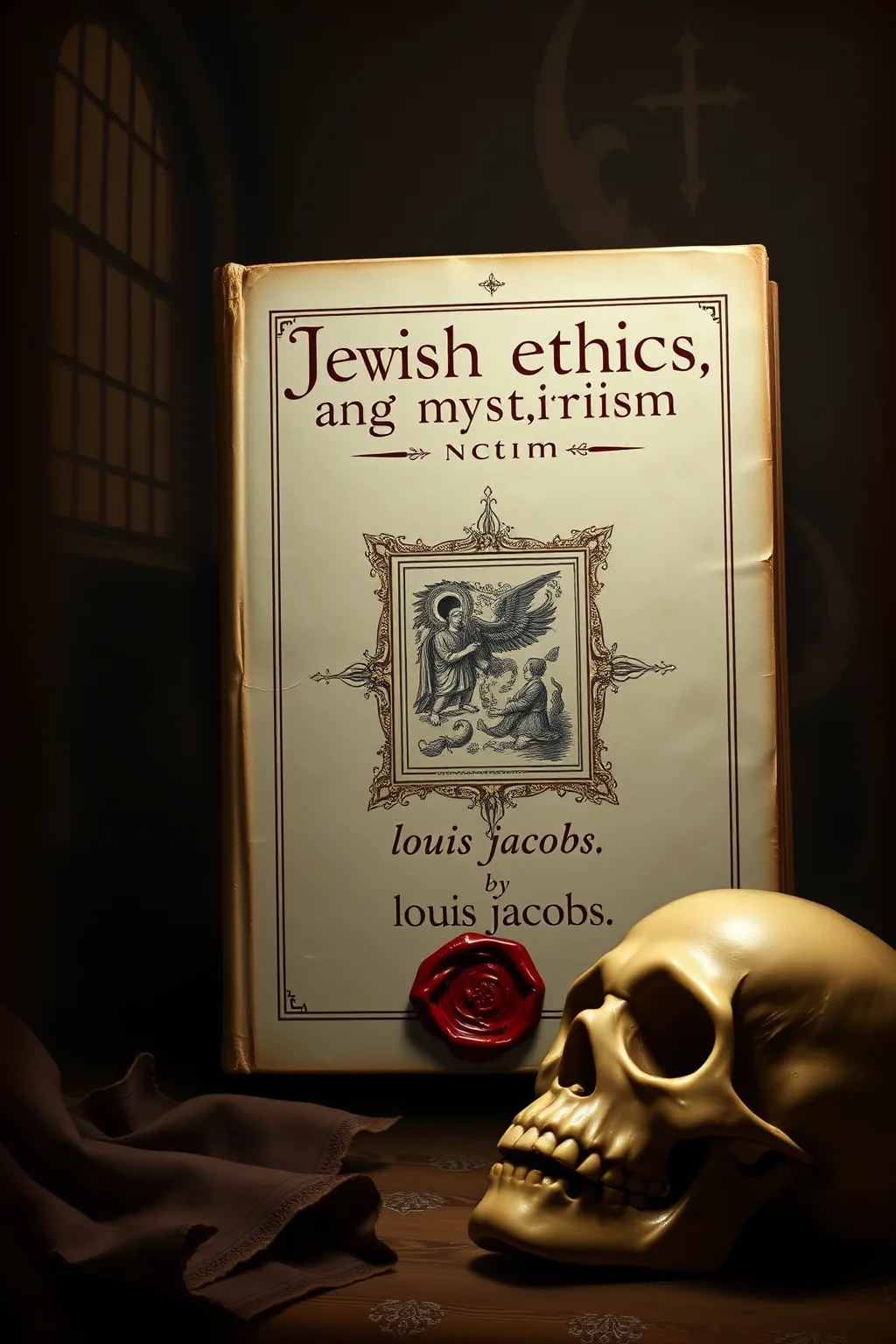
Jewish ethics, philosophy ang mysticism


Silas Hawthorne, Hermetic Studies Editor, writes: "Louis Jacobs' 'Jewish Ethics, Philosophy and Mysticism' stands as a beacon for those navigating the labyrinthine corridors of Jewish spiritual thought. Jacobs possesses a rare gift for rendering complex Kabbalistic concepts accessible without sacrificing their inherent mystery. He masterfully interweaves ethical frameworks with philosophical inquiry, revealing the mystical heart that beats beneath the surface of Jewish observance. This work is not merely an academic treatise but a profound invitation to contemplation, offering potent insights into the divine immanence and transcendent nature of existence. Essential reading for scholars and seekers alike, it illuminates the enduring power of Jewish esotericism."
📝 Description
61
Louis Jacobs published "Jewish Ethics, Philosophy and Mysticism" in 1961.
This book examines the ethical, philosophical, and mystical dimensions of Jewish tradition as interpreted by Louis Jacobs. He analyzes key texts and concepts, discussing the ethical frameworks that have guided Jewish life and the philosophical questions that have occupied its thinkers. Jacobs also addresses the mystical traditions within Judaism, including Kabbalah, and their relationship to broader ethical and philosophical concerns. The work aims to clarify these often complex areas for the reader, showing how they form a cohesive whole within Jewish thought. It covers topics such as the nature of God, human responsibility, and the quest for spiritual closeness.
Jacobs' work engages with the esoteric currents within Judaism, primarily through his treatment of Kabbalah. He seeks to understand and explain mystical traditions that have often been considered recondite or accessible only to initiates. By situating these mystical elements alongside ethical and philosophical discussions, he suggests a connected understanding of Jewish spiritual life. This approach aims to make the deeper, sometimes hidden, aspects of Jewish belief and practice more comprehensible to a wider audience, bridging the gap between scholarly inquiry and spiritual seeking.
💡 Why Read This Book?
Uncover the profound spiritual and philosophical dimensions of Judaism. This book offers a clear yet deep exploration of Kabbalistic wisdom, ethical principles, and the intellectual heritage of Jewish thought. It is ideal for seekers of spiritual truth, scholars of comparative religion, and practitioners interested in the mystical underpinnings of Jewish tradition. Engage with ancient insights that resonate with modern life and discover pathways to deeper understanding and spiritual growth.
⭐ Reader Reviews
Honest opinions from readers who have explored this book.
❓ Frequently Asked Questions
What is Kabbalah?
Kabbalah is the esoteric tradition of Jewish mysticism, seeking to understand the divine nature and the creation of the universe through symbolic interpretation of religious texts and mystical practices. It explores hidden meanings and divine emanations.
How does this book approach Jewish ethics?
The book examines Jewish ethical teachings not just as moral codes, but as integral to the spiritual path, often linking ethical action to the pursuit of divine consciousness and the rectification of the world.
Is this book suitable for beginners?
Yes, while it delves into complex topics, Louis Jacobs' accessible writing style makes it suitable for both those new to Jewish mysticism and experienced scholars seeking a comprehensive overview.
What philosophical questions are addressed?
The book tackles fundamental philosophical inquiries concerning the nature of God, free will, the purpose of creation, the problem of evil, and the human quest for meaning, all within the Jewish intellectual tradition.
What is the role of mysticism in Jewish life according to this book?
Mysticism is presented as a vital dimension of Jewish life, offering a direct, experiential connection to the divine and providing a framework for understanding the deeper, symbolic meanings behind rituals and commandments.
🔮 Key Themes & Symbolism
The Kabbalistic Tree of Life
Study the profound symbolism of the Sephirot, the ten divine emanations on the Kabbalistic Tree of Life. This section explores how these divine attributes function as pathways between the Infinite and the finite, shaping our understanding of creation, divine will, and the spiritual journey. Jacobs illuminates the intricate relationships between the Sephirot, revealing their role in the manifestation of the cosmos and offering insights into achieving spiritual harmony and divine connection through contemplative practice and ethical living.
Ethical Imperatives and Divine Connection
Discover how Jewish ethics are not merely a set of rules, but a profound path to spiritual ascent. This theme explores the interconnectedness of righteous action, compassion, and justice with the pursuit of divine knowledge and closeness. Jacobs demonstrates how fulfilling ethical commandments serves to align the individual with the divine will, fostering a deeper communion with God and contributing to the cosmic order. It underscores the mystical significance of human deeds in the grand range of existence.
Philosophical Foundations of Faith
Unravel the rational and contemplative underpinnings of Jewish faith. This section examines the philosophical inquiries that have shaped Jewish thought, examining concepts of God's unity, providence, the soul's immortality, and the meaning of suffering. Jacobs bridges the gap between intellectual reasoning and spiritual intuition, showcasing how philosophical exploration can deepen one's understanding of mystical truths and strengthen the foundation of belief, offering a robust framework for navigating existential questions.
💬 Memorable Quotes
Direct passages from the work, attributed to the author.
“Mitzvot (commandments) are the channels of divine grace.”
— This emphasizes the transformative power of performing Jewish commandments, framing them not as mere obligations but as sacred acts that facilitate the flow of divine energy and blessing into the world and the individual.
“The soul's journey is a return to its divine source.”
— This speaks to the mystical understanding of the soul's origin and ultimate destiny, portraying life as a spiritual pilgrimage aimed at re-establishing unity with the divine from which it emanated.
“Wisdom is found in the silence between words.”
— This profound statement points to the limitations of literal understanding and the necessity of intuitive, contemplative insight to grasp deeper spiritual truths that transcend linguistic expression.
“Love of God is expressed through love of creation.”
— This connects the divine commandment to love God with the ethical imperative to love fellow beings and the natural world, suggesting that true devotion is demonstrated through compassionate action and reverence for all existence.
💡 Key Ideas
Editorial paraphrase of the work's core concepts — not direct quotes.
The Shekhinah, the Divine Presence, is immanent in the world.
This quote highlights the Kabbalistic concept of God's pervasive presence, suggesting that the divine is not distant but intimately involved in all aspects of creation, accessible through spiritual awareness.
🌙 Esoteric Significance
Tradition
This book is deeply rooted in the esoteric tradition of Kabbalah, the mystical dimension of Judaism. It explores concepts such as the divine emanations (Sephirot), the nature of the soul, the hidden meanings of Torah, and the practice of contemplation aimed at achieving divine union. It represents a significant contribution to the understanding and dissemination of these ancient, often recondite, spiritual teachings.
Symbolism
The work examines the strong symbolism inherent in Jewish mysticism, from the intricate diagrams of the Kabbalistic Tree of Life to the symbolic interpretations of biblical narratives and rituals. These symbols are presented not as mere decorative elements but as keys to unlocking profound spiritual truths about God, creation, and the human condition, serving as a language for expressing the ineffable.
Modern Relevance
Despite its ancient origins, the philosophical and mystical insights presented remain remarkably relevant. The book offers frameworks for understanding life's challenges, the pursuit of meaning, and the nature of consciousness, resonating with contemporary seekers interested in spiritual growth, ethical living, and the deeper dimensions of human experience. It demonstrates the timeless wisdom embedded within Jewish tradition for reading through the modern world.
👥 Who Should Read This Book
This comprehensive volume is an indispensable resource for several distinct groups. For the **spiritual seeker**, it offers a clear yet profound introduction to the mystical heart of Judaism and pathways to deeper connection. **Scholars of religion and philosophy** will find it a rigorous academic exploration, providing valuable insights into Jewish thought and esotericism. **Practitioners** interested in Kabbalah or Jewish contemplative practices will discover rich theoretical underpinnings and inspirational guidance. Even **beginners** curious about the spiritual dimensions of Judaism will appreciate Jacobs' accessible yet authoritative prose, making complex ideas understandable and engaging.
📜 Historical Context
This work emerges from the rich intellectual range of 20th-century Jewish scholarship, a period marked by both profound engagement with ancient traditions and critical re-evaluation. Louis Jacobs, a prominent voice in modern Jewish thought, synthesized centuries of ethical, philosophical, and mystical discourse, particularly drawing from the Kabbalistic renaissance and the intellectual currents of Hasidism and Mussar. The book reflects a desire to make these profound, often esoteric, traditions accessible to a wider audience, bridging the gap between academic study and spiritual seeking. It stands as a proof of the enduring vitality of Jewish mystical thought, offering a nuanced perspective that acknowledges both historical context and contemporary relevance, seeking to illuminate the universal truths embedded within a specific tradition.
📔 Journal Prompts
Reflect on a time you felt the Divine Presence in your daily life. How did this experience shape your understanding of immanence?
Consider a commandment (mitzvah) you observe. How can you approach this practice as a channel for divine grace rather than just an obligation?
Explore the concept of the soul's journey. What does 'returning to its divine source' mean to you personally?
What 'silence between words' in your own life holds spiritual wisdom for you?
How can the act of loving creation (nature, others) be seen as a direct expression of loving God?
🗂️ Glossary
Kabbalah
The esoteric, mystical tradition within Judaism that seeks to understand the divine nature and the creation of the universe through symbolic interpretation and contemplative practices, often focusing on hidden meanings in religious texts.
Sephirot
The ten divine emanations or attributes described in Kabbalah, representing stages or vessels through which God's infinite light is expressed and manifested in the created world. They form the structure of the Kabbalistic Tree of Life.
Shekhinah
The feminine aspect of God's presence in Kabbalistic and Rabbinic literature, often understood as the immanent divine presence dwelling among humanity or within the world, representing God's closeness and aspect that can be perceived.
Mitzvah (plural: Mitzvot)
A commandment or divine ordinance in Judaism. In a mystical context, mitzvot are seen not only as religious obligations but as sacred acts that connect the performer to the divine and contribute to the cosmic order.
Tikkun Olam
A Hebrew phrase meaning 'repair of the world.' It signifies the Jewish concept of social responsibility and the imperative to improve the world through ethical actions, justice, and compassion, often viewed as a cosmic task.
This book appears in 1 collection
🔮 Readers Also Liked
Browse all →








More by louis jacobs
All books →





From the “Kabbalah” Collection
View all →








More Free Kabbalah & Jewish Mysticism Books
View all →