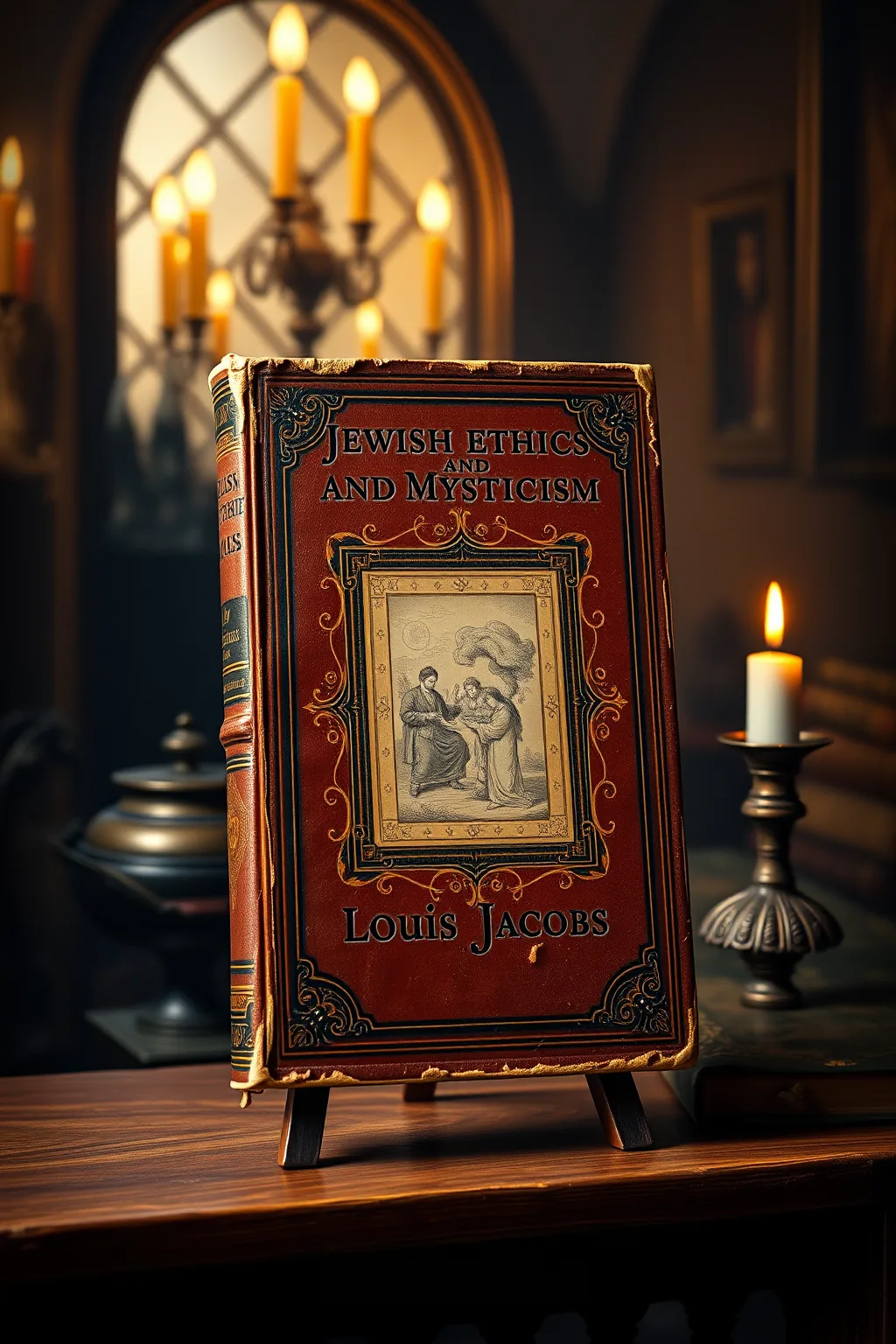
Jewish ethics, philosophy and mysticism
 61
61

Jewish ethics, philosophy and mysticism


Celeste Moreau (Divination & Symbolism Reviewer) — Louis Jacobs masterfully navigates the complex intersection of Jewish ethics, philosophy, and mysticism, offering an indispensable guide for esoteric scholars. His clear exposition of Kabbalistic concepts and their ethical implications reveals profound, often overlooked, connections within Jewish tradition. Jacobs' ability to articulate intricate metaphysical ideas with lucidity makes this work a cornerstone for understanding the spiritual evolution of Judaism. It is particularly valuable for those seeking to grasp the symbolic language and hidden knowledge integral to Jewish mystical practice, offering a rich foundation for further personal exploration.
📝 Description
61
Louis Jacobs' 1999 book examines Jewish ethics, philosophy, and mysticism.
This volume by Louis Jacobs addresses core aspects of Jewish thought, including its ethical frameworks, philosophical arguments, and mystical traditions. Jacobs moves beyond simple religious observance to discuss the esoteric dimensions that have influenced Jewish identity. He examines interpretations of sacred texts and the mystical experiences that have resonated through Jewish history.
The book presents a blend of intellectual analysis and spiritual inquiry. It invites readers to consider the philosophical foundations and the often concealed mystical currents within Judaism. This work is for those wanting to grasp the deeper spiritual and ethical dimensions of Jewish tradition.
Within the broader study of Jewish thought, Louis Jacobs' work engages with elements often considered esoteric. This includes an examination of Kabbalistic concepts and other forms of Jewish mysticism that go beyond exoteric religious practice. The book connects these mystical traditions to the philosophical and ethical discourse, showing how they inform one another and contribute to a more complete understanding of Jewish spirituality.
💡 Why Read This Book?
Embark on a journey to uncover the esoteric heart of Judaism. This book is for the dedicated seeker yearning for deeper spiritual understanding, the diligent scholar desiring to bridge philosophical inquiry with mystical practice, and the seasoned practitioner looking to enrich their knowledge of Kabbalistic thought and its ethical dimensions. Unravel the hidden layers of meaning that define Jewish spiritual heritage.
⭐ Reader Reviews
Honest opinions from readers who have explored this book.
❓ Frequently Asked Questions
What is the primary focus of this book?
The book primarily focuses on the interconnectedness of Jewish ethics, philosophy, and the mystical traditions, particularly Kabbalah, exploring their historical development and philosophical implications.
Is this book suitable for beginners in Jewish mysticism?
While it delves into complex topics, Louis Jacobs' clear writing style makes the foundational concepts accessible to serious beginners interested in Jewish esoteric thought.
Does the book explain Kabbalistic concepts?
Yes, it provides insightful explanations of key Kabbalistic ideas, symbolism, and their philosophical and ethical relevance within Judaism.
What is the 'Esoteric Library' perspective on this book?
Esoteric Library curates this volume for its profound exploration of hidden knowledge, spiritual depth, and the philosophical underpinnings of Jewish mystical traditions.
How does this book connect ethics to mysticism?
It demonstrates how ethical principles in Judaism are deeply intertwined with mystical understandings of the divine, human responsibility, and spiritual ascent.
🔮 Key Themes & Symbolism
The Labyrinth of the Soul: Mystical Dimensions of Jewish Thought
This theme examines the profound spiritual journeys described within Jewish mysticism, exploring concepts of divine immanence, the ascent of the soul, and the hidden pathways to spiritual enlightenment. It examines how mystical experiences offer a unique lens through which to understand humanity's relationship with the divine, revealing a universe rich with symbolic meaning and interconnectedness. The text uncovers the esoteric practices and contemplative traditions that have guided practitioners toward deeper spiritual awareness and union.
Ethical Imperatives: The Moral Compass of the Kabbalah
This section illuminates the intrinsic link between Jewish mystical thought and ethical conduct. It explores how the useful insights of Kabbalah provide a robust framework for moral decision-making, emphasizing the spiritual significance of every action. The text reveals how understanding the divine order and one's place within it directly informs ethical responsibilities, fostering a sense of cosmic stewardship and personal accountability. It showcases the transformative power of ethical living as a path to spiritual growth.
Philosophical Foundations: Reconciling Reason and Revelation
Here, the book navigates the intricate dialogue between Jewish philosophy and its mystical expressions. It investigates how rational inquiry has been employed to understand and articulate profound spiritual truths, often serving as a bridge between intellectual comprehension and intuitive mystical experience. The theme explores the philosophical underpinnings that support mystical beliefs, demonstrating how reason can illuminate the hidden meanings within scripture and tradition, fostering a holistic understanding of the Jewish intellectual and spiritual heritage.
💬 Memorable Quotes
Direct passages from the work, attributed to the author.
“Ethics are the practical application of divine will.”
— This statement underscores the direct connection between ethical behavior and the divine, framing righteous actions as the tangible manifestation of God's intentions in the world.
“To know God is to love Him, and to love Him is to serve Him.”
— This expresses a core tenet of Jewish spirituality, linking divine knowledge with divine love and culminating in devoted service as the ultimate expression of faith.
💡 Key Ideas
Editorial paraphrase of the work's core concepts — not direct quotes.
The mystical experience is the climax of religious life.
This quote highlights the supreme importance of direct, unmediated spiritual encounters in the Jewish tradition, positioning them as the ultimate goal of religious practice and understanding.
Wisdom is the key that unlocks the secrets of the universe.
Emphasizing the power of knowledge and insight, this quote suggests that profound wisdom, particularly esoteric wisdom, holds the potential to reveal the deepest truths and mysteries of existence.
The Zohar reveals the hidden dimensions of Torah.
This quote points to the Zohar, a foundational Kabbalistic text, as a crucial source for understanding the deeper, esoteric meanings and spiritual layers of Jewish scripture.
🌙 Esoteric Significance
Tradition
This book is deeply rooted in the rich esoteric tradition of Kabbalah, the mystical interpretive tradition of Judaism. It explores concepts such as the Sefirot, the Tree of Life, gematria, and the hidden meanings within the Torah, offering insights into the divine emanations and the structure of the cosmos as understood by mystics.
Symbolism
Central to its esoteric significance is the exploration of strong symbolism. Jacobs unpacks the layered meanings embedded within Hebrew letters, scriptural narratives, and ritual practices. These symbols are not merely decorative but are seen as keys to understanding the divine, the human soul, and the interconnectedness of all existence, serving as conduits for spiritual insight and transformation.
Modern Relevance
The esoteric insights presented here offer profound relevance for modern seekers grappling with questions of meaning, purpose, and spiritual connection. In an increasingly secular world, understanding the ancient wisdom of Jewish mysticism provides a powerful framework for personal growth, ethical living, and a deeper appreciation of the spiritual dimensions of life, connecting individuals to timeless truths.
👥 Who Should Read This Book
This volume is a rich source for the dedicated student of Jewish thought. Scholars of religious studies and philosophy will find its rigorous analysis invaluable. Spiritual seekers yearning for a deeper connection to the divine and a more profound understanding of esoteric traditions will be richly rewarded. Practitioners of Jewish mysticism, from novices to the experienced, will discover new avenues for contemplation and practice. It is also highly recommended for anyone interested in the intersection of ethics, philosophy, and spirituality within a historical and cultural context.
📜 Historical Context
This work emerges from a period of significant intellectual ferment within Jewish scholarship, building upon centuries of philosophical and mystical discourse. Written in the latter half of the 20th century, it engages with both classical Jewish texts and modern philosophical thought, seeking to synthesize these seemingly disparate elements. The era was marked by a renewed interest in Jewish mysticism, particularly Kabbalah, following the Holocaust and the establishment of the State of Israel, prompting scholars to re-examine the enduring relevance of Jewish tradition. Jacobs' contribution lies in his ability to present these complex ideas with clarity and nuance, bridging the gap between academic study and spiritual inquiry for a contemporary audience.
📔 Journal Prompts
Reflect on a time you experienced a profound sense of connection; how might this relate to concepts of divine immanence discussed in the text?
Consider a challenging ethical dilemma you've faced. How might Kabbalistic principles offer a new perspective or guidance?
What does the symbolism of the Hebrew alphabet suggest to you about the nature of reality and language?
Explore the idea of 'divine will' in your own life. How does your understanding of ethics align with or diverge from this concept?
How can the pursuit of esoteric knowledge enhance one's ethical responsibilities in the world?
🗂️ Glossary
Kabbalah
The esoteric, mystical tradition within Judaism, focusing on understanding the divine nature and the creation of the universe through symbolic interpretation of scripture and divine emanations.
Sefirot
Ten divine emanations or attributes through which God is said to have created the universe and through which God interacts with creation. They form the 'Tree of Life' in Kabbalistic cosmology.
Gematria
A method of interpreting Hebrew scriptures by assigning numerical values to Hebrew letters and finding connections between words or phrases with the same numerical value.
Torah
The first five books of the Hebrew Bible (Genesis, Exodus, Leviticus, Numbers, Deuteronomy), considered the most sacred part of Jewish scripture and a source of divine law and wisdom.
Ein Sof
The Kabbalistic concept of God as infinite, unknowable, and beyond all description or comprehension; the 'without end' or 'limitless' divine essence.
This book appears in 1 collection
🔮 Readers Also Liked
Browse all →









More by Louis Jacobs
All books →





From the “Kabbalah” Collection
View all →







More Free Kabbalah & Jewish Mysticism Books
View all →