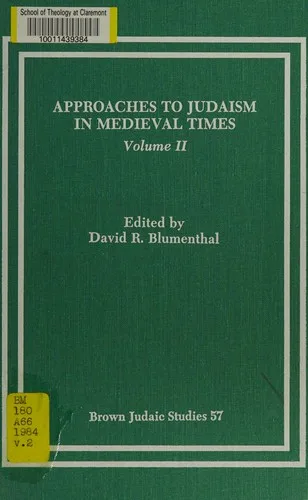
Understanding Jewish Mysticism: A Source Reader

 61
61

Understanding Jewish Mysticism: A Source Reader


Evander Ashcroft (Alchemy & Hermeticism Editor) — David R. Blumenthal's 'Understanding Jewish Mysticism' is an indispensable beacon for navigating the profound depths of Kabbalistic thought. This source reader illuminates the intricate tapestry of Jewish mystical traditions with exceptional clarity, offering direct access to foundational texts that have shaped esoteric discourse for centuries. Blumenthal's scholarly yet accessible approach makes complex concepts of divine emanations, angelic hierarchies, and the soul's mystical journey comprehensible. It is a vital resource for scholars, practitioners, and anyone seeking to grasp the philosophical underpinnings and symbolic language of one of history's most enduring mystical systems. A truly essential addition to any serious occult library.
📝 Description
61
David R. Blumenthal's 1978 'Understanding Jewish Mysticism' collects primary texts with his commentary.
This volume collects key primary source materials in Jewish mysticism, alongside David R. Blumenthal's scholarly analysis. It aims to make accessible the core texts and ideas of a tradition often discussed but seldom presented directly. The selections span various periods and movements within Jewish mysticism, from early Merkavah traditions to later Kabbalistic developments. Blumenthal's introductions and notes guide the reader through these often complex writings, explaining their historical context and theological significance.
The book covers concepts such as divine chariot speculation, the nature of the divine realm, the role of angels, and the soul's relationship to God. It also touches upon the symbolic language and visionary experiences central to Jewish mystical practice. The reader encounters original writings that illustrate the development of mystical thought within Judaism across centuries. This source reader is designed for those who wish to engage directly with the foundational documents of this esoteric tradition.
Jewish mysticism, often referred to as Kabbalah, represents a diverse set of esoteric traditions within Judaism that developed over centuries. These traditions focus on the mystical apprehension of God, the structure of the divine realms, and the interpretation of scripture through symbolic and allegorical methods. Early forms, like Merkavah mysticism, concerned ecstatic ascent to the divine throne. Later Kabbalah, particularly from the medieval period onward, developed complex cosmologies, including the sefirot (divine emanations) and the Zohar's rich symbolic language. This book situates itself within this lineage by presenting the actual texts that shaped these esoteric understandings, allowing direct engagement with the material rather than solely relying on secondary interpretations.
💡 Why Read This Book?
Delve into the foundational texts of Jewish mysticism, gaining direct insight into the minds of ancient sages. Uncover the symbolic language and esoteric practices that define Kabbalistic thought. This book is ideal for seekers of hidden wisdom, scholars of comparative religion, and practitioners aiming to deepen their understanding of spiritual traditions.
⭐ Reader Reviews
Honest opinions from readers who have explored this book.
❓ Frequently Asked Questions
What is the primary focus of this book?
The book's primary focus is to provide a comprehensive introduction to Jewish mysticism by presenting and analyzing primary source texts, offering readers direct engagement with the core ideas and practices of Kabbalah.
Is this book suitable for beginners?
Yes, while it delves into complex concepts, Blumenthal's approach makes it accessible to those new to Jewish mysticism, offering essential context and clear explanations.
What historical periods does the book cover?
It covers a significant span of Jewish mystical history, from early Jewish mysticism (Merkavah) through the development of Kabbalah in the medieval period.
What are some key concepts explored?
Key concepts include divine emanations (Sefirot), angelic realms, the nature of the soul, mystical ascent, and the interpretation of scripture through esoteric lenses.
Does the book include original Hebrew texts?
The book primarily focuses on English translations and scholarly analysis of original texts, making the concepts accessible without requiring prior Hebrew knowledge.
🔮 Key Themes & Symbolism
The Divine Emanations (Sefirot)
This theme explores the concept of the Sefirot, the ten divine emanations that form the structure of God's creative process and the cosmic order. Blumenthal guides readers through ancient and medieval interpretations of these vital attributes, revealing how they are understood as pathways through which the divine light flows into the world, influencing creation and human consciousness. Understanding the Sefirot is crucial for grasping the symbolic cosmology and the interactive relationship between the human and the divine within Jewish mysticism.
The Merkavah and Mystical Ascent
This section explores the early traditions of Merkavah mysticism, focusing on ecstatic visions of the divine chariot (Merkavah) and the arduous journeys of the mystic through celestial palaces. Blumenthal's analysis illuminates the practices and theological underpinnings of these ancient ascents, highlighting the intense spiritual discipline and the quest for direct apprehension of the divine presence. It explores the psychological and spiritual transformations experienced by those who dared to venture into the heavenly realms.
The Zohar and Lurianic Kabbalah
This theme introduces the foundational text of the Zohar and the later, highly influential Lurianic Kabbalah. It examines how these developments expanded upon earlier mystical ideas, introducing concepts like Tikkun (rectification) and the shattering of the vessels. Blumenthal provides access to the rich symbolic language and complex theological narratives that characterize these central movements, offering insights into their wide impact on Jewish thought and practice, and their continued relevance in understanding the dynamics of creation and redemption.
💬 Memorable Quotes
Direct passages from the work, attributed to the author.
“Wisdom is the light that guides the soul through the labyrinth of the cosmos.”
— This highlights the transformative power of knowledge and spiritual insight in working through the complexities of both the external universe and the internal self.
“Through contemplation, the veil between worlds thins.”
— This emphasizes the practice of meditation and deep thought as a method for accessing higher realities or a more profound understanding of existence.
“The letters of the Torah are keys to unlock divine mysteries.”
— This points to the Gematria and other forms of textual exegesis central to Kabbalah, where the literal text holds deeper, symbolic, and mystical meanings.
“The journey inward is the path to the divine.”
— A fundamental mystical principle, this suggests that true spiritual connection and understanding are found not through external seeking, but through introspection and self-awareness.
💡 Key Ideas
Editorial paraphrase of the work's core concepts — not direct quotes.
The divine is not a distant ruler, but an immanent presence.
This quote suggests a core tenet of mystical traditions: that the sacred is not external but woven into the fabric of existence, accessible through inner experience.
🌙 Esoteric Significance
Tradition
This work is a gateway into the esoteric tradition of Kabbalah, a mystical interpretation of Judaism that seeks to understand the divine nature and the relationship between God and creation. It explores the hidden meanings within Jewish scripture and tradition, focusing on concepts like divine emanations (Sefirot), angelic hierarchies, and the soul's journey. The book provides access to practices and theories that aim for a direct, experiential apprehension of the divine, moving beyond exoteric religious observance into the area of spiritual gnosis.
Symbolism
Central to Jewish mysticism is a rich and complex system of symbolism, which Blumenthal expertly deciphers. This includes the symbolic language of the Hebrew alphabet, the numerical values of letters (Gematria), the allegorical interpretations of biblical narratives, and the visual cosmology of the Sefirotic tree. These symbols are not mere decorations but serve as vital conduits for understanding abstract divine concepts, the structure of the cosmos, and the inner workings of the human soul. The book unveils how these symbols act as maps for the mystic's journey.
Modern Relevance
The esoteric insights of Jewish mysticism, as presented by Blumenthal, retain profound relevance today. In an age often characterized by materialism and spiritual disconnection, these traditions offer a framework for exploring the transcendent, finding meaning, and understanding the interconnectedness of all things. The emphasis on inner transformation, the symbolic interpretation of reality, and the quest for divine union resonate with contemporary seekers of wisdom, personal growth, and a deeper connection to the sacred, offering timeless guidance for working through the complexities of modern life.
👥 Who Should Read This Book
This volume is a valuable collection for a diverse audience. **Beginners** seeking an accessible entry point into the profound world of Jewish mysticism will find Blumenthal's clear explanations and curated texts invaluable. **Scholars** of religion, philosophy, and comparative mysticism will appreciate the rigorous scholarship and direct engagement with primary sources. **Spiritual seekers** yearning for deeper insights into the nature of God, the soul, and the cosmos will discover a wealth of contemplative material. **Practitioners** of meditation, Kabbalah, or related esoteric arts will find foundational knowledge to enrich their understanding and practice.
📜 Historical Context
David R. Blumenthal's 'Understanding Jewish Mysticism: A Source Reader' emerges from a collection of Jewish intellectual and spiritual history, spanning from the Hellenistic period to the medieval era. The texts compiled and analyzed within this volume reflect a period of profound theological development and intense spiritual seeking. Early Jewish mysticism, particularly the Merkavah tradition, flourished in the centuries preceding and following the Common Era, driven by a desire to understand divine visions and the celestial realms. The subsequent development of Kabbalah, particularly in medieval Spain and Provence, saw the emergence of sophisticated cosmological systems and mystical practices aimed at understanding God's relationship with creation and the human role in cosmic redemption. This era was marked by both persecution and intellectual flourishing, prompting deep contemplation on the nature of God, the Torah, and the human soul, leading to the creation of texts that continue to inspire and challenge seekers today.
📔 Journal Prompts
Reflect on a moment you felt a profound connection to something larger than yourself. How might the concept of divine emanation relate to this experience?
Consider the power of symbols in your own life. How do they convey meaning or evoke emotion beyond their literal representation?
If the 'veil between worlds' thins through contemplation, what are the obstacles that keep this veil intact for you?
Imagine the Sefirot as aspects of your own personality or consciousness. Which Sefirot do you feel most aligned with, and why?
How can the idea of 'rectification' (Tikkun) be applied to your personal life or to broader societal issues?
🗂️ Glossary
Kabbalah
A mystical tradition within Judaism that explores the divine nature and the relationship between God and creation, often through esoteric interpretations of scripture and symbolic cosmology.
Sefirot
The ten divine emanations or attributes through which God is understood to have created and sustains the universe, forming a central concept in Kabbalistic cosmology.
Merkavah
Refers to the 'chariot' vision described in the Book of Ezekiel, and the early Jewish mystical tradition that focused on ecstatic ascent through celestial realms to behold divine visions.
Tikkun
A central concept in Lurianic Kabbalah, meaning 'rectification' or 'repair,' referring to the cosmic process of mending the brokenness of creation and restoring divine harmony.
Ein Sof
The Kabbalistic term for the 'Infinite' or 'Without End,' representing God in God's absolute, unknowable essence, beyond all manifestation and comprehension.
This book appears in 1 collection
🔮 Readers Also Liked
Browse all →









More by David R. Blumenthal
All books →



From the “Kabbalah” Collection
View all →







More Free Kabbalah & Jewish Mysticism Books
View all →