The Jewish Mystics

 62
62

The Jewish Mystics

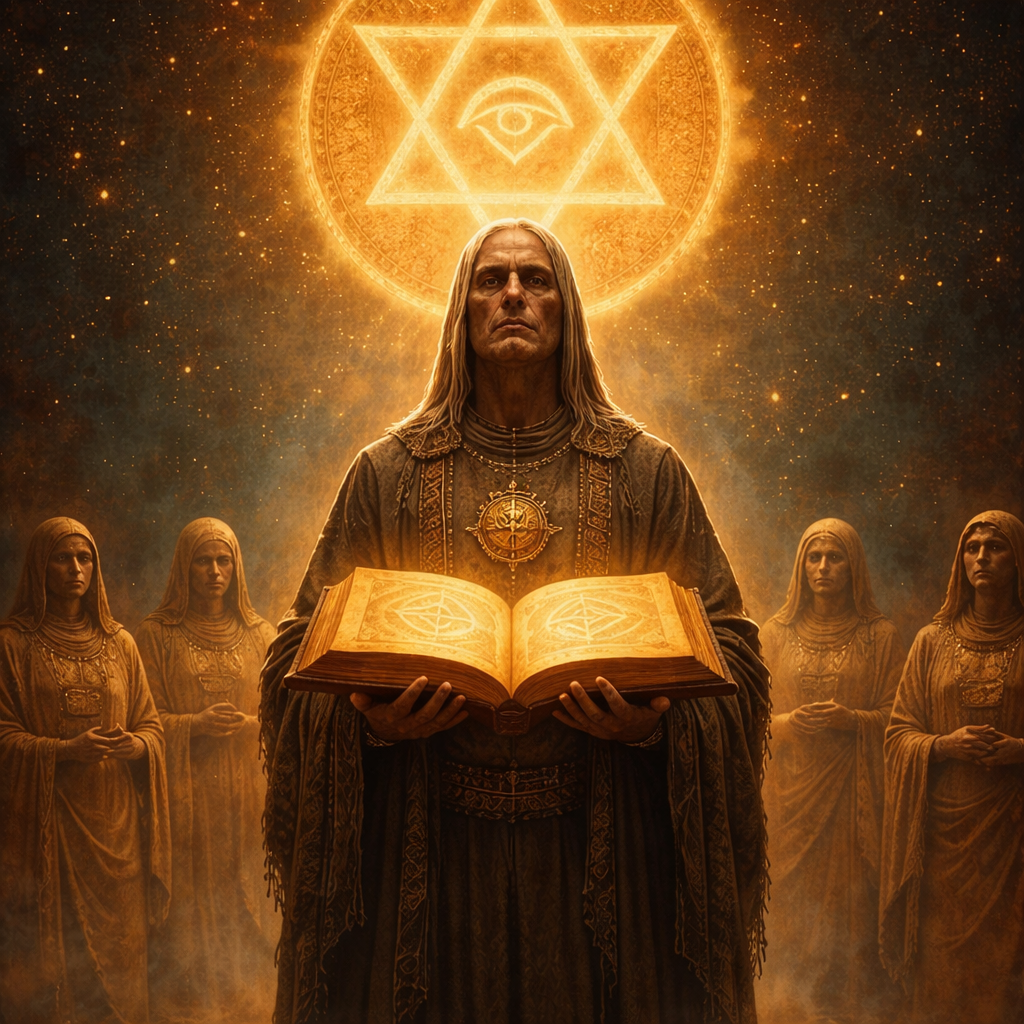

By Balthazar Finch (Senior Critic, Occult Philosophy) — Louis Jacobs' 'The Jewish Mystics' stands as a beacon of clarity in the often-obscured landscape of Kabbalistic thought. He navigates the labyrinthine concepts of divine unity, soul transmigration, and the mystical union with God with an accessible yet scholarly hand. This work is indispensable for anyone seeking to grasp the foundational principles and historical evolution of Jewish esoteric traditions. Jacobs’ ability to distill complex ideas into coherent narratives is remarkable, making this an essential read for students of mysticism, practitioners of contemplative Judaism, and those fascinated by the enduring power of ancient spiritual wisdom.
📝 Description
62
Louis Jacobs' 'The Jewish Mystics' was published in 1999, examining key figures and concepts in Jewish esotericism.
Louis Jacobs' book, 'The Jewish Mystics,' examines the development and core ideas of Jewish mystical traditions. It traces the historical growth of Kabbalah and Hasidism, showing how these movements evolved over time. The book discusses central mystical concepts such as divine emanations, the soul's spiritual journey, and the symbolic meanings found within Jewish religious texts. Jacobs explains the less apparent aspects of Jewish spirituality, highlighting its philosophical depth and ecstatic religious experiences.
This work serves as an introduction for individuals interested in the hidden aspects of Jewish spiritual thought and practice. It presents a blend of intellectual analysis and sincere religious feeling. Readers are encouraged to reflect on the ineffable and the divine, connecting these ideas to their own lives. The book aims to provide insight into the heart of this enduring tradition for both newcomers and those already familiar with the subject.
This book situates itself within the long history of Jewish mysticism, a tradition that seeks direct, experiential knowledge of the divine. It addresses the Kabbalistic understanding of God's hidden nature and the process of creation through divine sefirot, or emanations. The book also touches upon Hasidic thought, which emphasizes divine immanence in the world and the importance of joy and personal connection in religious life. By examining these streams, Jacobs places the reader within a lineage of spiritual inquiry focused on the hidden dimensions of reality and the human soul's relationship with the transcendent.
💡 Why Read This Book?
Embark on an illuminating journey into the profound depths of Jewish spiritual thought. 'The Jewish Mystics' offers a clear and comprehensive exploration of Kabbalah and Hasidism, revealing their intricate symbolism and philosophical richness. Ideal for seekers of hidden wisdom, students of comparative mysticism, and practitioners yearning to connect with the soul of Jewish contemplative traditions.
⭐ Reader Reviews
Honest opinions from readers who have explored this book.
❓ Frequently Asked Questions
What is Kabbalah?
Kabbalah is the esoteric tradition of Jewish mysticism, seeking to understand the nature of God and the universe through mystical contemplation, interpretation of scripture, and the study of divine emanations and spiritual realms.
Who were the early Jewish mystics?
Early Jewish mystics included figures associated with Merkavah mysticism, who focused on visionary ascents to the divine throne, and later Kabbalists who developed complex cosmologies and theosophical systems.
What is the significance of the Sefer Yetzirah?
The Sefer Yetzirah, or 'Book of Formation,' is a foundational text in Jewish mysticism, exploring the creation of the universe through the Hebrew alphabet and divine numbers, considered by many to be one of the earliest Kabbalistic works.
How does Hasidism relate to Kabbalah?
Hasidism is a spiritual revival movement within Judaism that draws heavily on Kabbalistic concepts, emphasizing ecstatic prayer, devotion to God, and the presence of the divine in all aspects of life.
Is this book suitable for beginners?
Yes, Louis Jacobs' clear prose and structured approach make 'The Jewish Mystics' accessible to beginners, while still offering profound insights for those with prior knowledge of the subject.
🔮 Key Themes & Symbolism
The Divine Emanations (Sefirot)
This theme studies the core Kabbalistic concept of the Sefirot, the ten divine attributes or emanations through which God interacts with and creates the universe. It explores their symbolic representation, their interconnectedness, and their role in the mystical understanding of divine presence and cosmic order. Understanding the Sefirot is crucial for grasping the theosophical architecture of Kabbalah, revealing the intricate pathways from the Ein Sof (the Infinite) to the manifest world.
The Ascent of the Soul
Explore the mystical journey of the soul's return to its divine source. This theme examines the various stages and challenges of the spiritual ascent, from purification and contemplation to ecstatic union with the divine. It discusses the techniques and practices employed by Jewish mystics to achieve this transcendence, highlighting the profound psychological and spiritual transformation involved in the quest for divine intimacy.
Symbolism and Sacred Texts
This theme focuses on the body of symbolism woven throughout Jewish mystical literature. It illuminates how seemingly simple Hebrew letters, numbers, and biblical narratives are imbued with profound esoteric meanings. The interpretation of sacred texts is presented not merely as academic study, but as a vital means of unlocking hidden divine knowledge and accessing spiritual truths, revealing the multi-layered nature of divine revelation.
💬 Memorable Quotes
Direct passages from the work, attributed to the author.
“The Zohar is the heart of Kabbalistic literature.”
— This highlights the central importance of the Zohar, the foundational text of Kabbalah, as the primary source for its complex teachings and mystical insights.
“Hasidism sought to bring the divine down to earth.”
— This expresses the core aim of Hasidism: to find and experience God's presence in everyday life through joy, prayer, and devotion.
“The mystic sees the hidden in the manifest.”
— This emphasizes the core skill of the mystic – the ability to perceive the divine and the profound underlying realities that are not immediately apparent to the ordinary senses.
💡 Key Ideas
Editorial paraphrase of the work's core concepts — not direct quotes.
The Kabbalah is not a system of magic, but a system of theosophy.
This quote emphasizes the philosophical and spiritual focus of Kabbalah, differentiating it from practices solely aimed at worldly manipulation and highlighting its pursuit of divine understanding.
Every commandment is a ladder to heaven.
This quote underscores the mystical potential inherent in observing Jewish religious law, viewing each mitzvah as an opportunity for spiritual elevation and connection.
🌙 Esoteric Significance
Tradition
This work is deeply rooted in the esoteric tradition of Kabbalah, the mystical interpretation of Judaism. It explores the theosophical systems, contemplative practices, and visionary experiences that have characterized Jewish mysticism for centuries. Beyond Kabbalah, it also touches upon the practical Kabbalah and ethical dimensions that have influenced Jewish spiritual life, offering a comprehensive view of this hidden current within Judaism.
Symbolism
The esoteric significance lies heavily in its exploration of rich and complex symbolism. From the ten Sefirot representing divine attributes to the mystical meanings embedded in Hebrew letters and biblical narratives, the book unpacks a language of the divine. It reveals how these symbols serve as keys to understanding the structure of reality, the nature of God, and the path of spiritual transformation, offering a profound symbolic map of the cosmos.
Modern Relevance
In an era often characterized by materialism and existential questioning, 'The Jewish Mystics' offers a profound counterpoint. It provides a framework for understanding the spiritual dimensions of life, the pursuit of inner meaning, and the enduring human quest for connection with the divine. The book's exploration of contemplative practices and ethical imperatives remains highly relevant for those seeking wisdom, peace, and a deeper engagement with the transcendent in their modern lives.
👥 Who Should Read This Book
This book is an invaluable resource for a diverse audience. Scholars of religion and Jewish studies will find its rigorous scholarship and comprehensive scope indispensable. Seekers of spiritual wisdom, regardless of their background, will be drawn to its useful insights into the nature of God and the human soul. Practitioners of contemplative disciplines will discover ancient techniques and profound philosophical underpinnings for their practice. Even those new to mysticism will find Louis Jacobs' clear and accessible prose a welcoming gateway into the luminous world of Jewish esoteric thought.
📜 Historical Context
Louis Jacobs' 'The Jewish Mystics' situates its subject within a rich historical continuum, tracing the evolution of Jewish esoteric thought from its ancient roots to its medieval florescence and beyond. The work acknowledges the intellectual and spiritual ferment of periods like the Gaonic era, the emergence of Kabbalah in Provence and Spain during the Middle Ages, and the subsequent development of Hasidism in Eastern Europe. It contextualizes these movements against broader historical shifts, including periods of persecution and intellectual flourishing, demonstrating how the mystical impulse often served as a source of spiritual resilience and profound existential meaning within the Jewish diaspora.
📔 Journal Prompts
Reflect on a time you felt a profound sense of connection to something greater than yourself. What were the circumstances, and how did it feel?
Consider the concept of divine emanations (Sefirot). Which Sefirah resonates most with your current life experience, and why?
Explore the idea of the soul's ascent. What obstacles do you perceive on your own spiritual journey, and what might help you overcome them?
Choose a Hebrew letter or a biblical symbol discussed in the book. Meditate on its potential deeper meanings and how it might apply to your life.
How can the pursuit of divine presence be integrated into the mundane aspects of daily life, as suggested by Hasidic thought?
🗂️ Glossary
Kabbalah
The esoteric tradition of Jewish mysticism, concerned with the divine nature and the creation and existence of the universe.
Sefirot
The ten divine emanations or attributes through which God creates and sustains the universe, central to Kabbalistic cosmology.
Ein Sof
The Kabbalistic term for the Infinite or God in His absolute unknowability, the primordial, unmanifest aspect of the divine.
Zohar
The foundational text of Kabbalah, a mystical commentary on the Torah, written primarily in Aramaic and Hebrew.
Hasidism
A spiritual movement within Orthodox Judaism that arose in 18th-century Eastern Europe, emphasizing ecstatic prayer, joyful worship, and the immanence of God.
This book appears in 1 collection
🔮 Readers Also Liked
Browse all →







More by Louis Jacobs
All books →





From the “Kabbalah” Collection
View all →









More Free Kabbalah & Jewish Mysticism Books
View all →