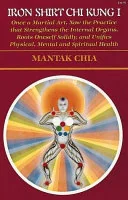
Iron Shirt Chi Kung I
 81
81

Iron Shirt Chi Kung I
Mantak Chia’s Iron Shirt Chi Kung I, first released in 1986, presents a detailed manual for a challenging branch of Taoist internal training. The strength of this work lies in its systematic approach to developing a robust, resilient physique through specific postures and breathing exercises. Chia provides clear, step-by-step instructions for practices like iron shirt conditioning and bone marrow cleansing, aiming to build both physical fortitude and internal energetic capacity. A notable limitation, however, is the dense technicality which may require significant self-discipline and patience from the reader, potentially demanding more than a casual practitioner can commit to initially. The section on iron shirt postures, for instance, while crucial, requires careful attention to detail and consistent practice to yield results. The book's value is in its direct, no-nonsense presentation of these potent techniques for serious students. It’s a manual for building a formidable internal structure.
📝 Description
81
Mantak Chia's 1986 book details the rigorous conditioning for Taoist Iron Shirt Chi Kung.
Published in 1986, Iron Shirt Chi Kung I presents the demanding practices of a Taoist internal martial art. The text details conditioning methods designed to strengthen the body's structure, improve organ health, and build internal power. It moves beyond surface-level physical training, focusing instead on cultivating a resilient body that can withstand impact and channel potent energy.
The book is aimed at martial artists interested in internal styles and energy cultivation, as well as individuals seeking to enhance physical resilience and vitality through disciplined methods. Those with a background in Taoist practices or an interest in the physiological and energetic benefits of chi kung will find substantial instruction here. The work introduces iron shirt conditioning, a method for absorbing and redirecting force, and emphasizes bone marrow cleansing and the circulation of vital energy through the body's meridians.
This work emerged in the 1980s during a period of increased Western interest in Eastern philosophies. While many contemporary books addressed generalized spiritual concepts or external martial arts, Chia's book provided specific, advanced instruction in Taoist internal arts. At a time when detailed, authentic guidance in such specialized practices was less common, Iron Shirt Chi Kung I became a significant resource for practitioners seeking to learn these methods.
💡 Why Read This Book?
• Learn specific iron shirt postures and breathing techniques from Mantak Chia’s 1986 seminal work to develop physical resilience and the capacity to absorb and redirect impact. • Understand the Taoist principles behind bone marrow cleansing, a practice detailed in the book to purify the body and enhance chi circulation for improved health. • Gain practical methods for internal organ massage as described in Iron Shirt Chi Kung I, aimed at strengthening these vital centers and increasing overall vitality.
⭐ Reader Reviews
Honest opinions from readers who have explored this book.
❓ Frequently Asked Questions
What is Iron Shirt Chi Kung and how does it differ from other martial arts?
Iron Shirt Chi Kung is a Taoist internal martial art focused on conditioning the body to withstand impact and develop internal power. Unlike many external arts, it emphasizes strengthening bones, tendons, and internal organs through specific breathing, posture, and chi circulation techniques, as detailed in Mantak Chia’s 1986 book.
Is Iron Shirt Chi Kung I suitable for beginners?
The book provides foundational instruction but is best suited for dedicated individuals with some understanding of chi kung or martial arts. The practices require discipline and correct execution, making it more suitable for those committed to rigorous training.
What are the core benefits of practicing Iron Shirt Chi Kung as described by Mantak Chia?
Practitioners can expect enhanced physical resilience, increased internal strength, improved organ function, and a greater capacity to circulate vital energy (chi). The book outlines methods for developing a strong skeletal structure and a robust energetic system.
When was Iron Shirt Chi Kung I first published, and by whom?
Iron Shirt Chi Kung I was first published in 1986 by Mantak Chia, a significant figure in popularizing Taoist practices in the West.
Does the book cover advanced techniques or is it strictly introductory?
This volume lays the groundwork for advanced practices. It introduces fundamental concepts and exercises for building the internal structure, serving as a prerequisite for further development in iron shirt training as explored in subsequent works.
What specific Taoist concepts are central to Iron Shirt Chi Kung I?
Central concepts include the cultivation and circulation of chi (vital energy), the importance of bone marrow cleansing for purification, and the development of a strong 'iron shirt' to protect the body and channel energy.
🔮 Key Themes & Symbolism
Iron Shirt Conditioning
This core theme involves developing a body that can absorb and redirect kinetic force, akin to iron. Mantak Chia details specific postures, breathing patterns, and impact training methods designed to strengthen bones, tendons, and musculature. The aim is not merely to withstand blows but to develop an integrated internal structure that channels energy efficiently, preventing injury and enhancing martial power. This conditioning goes beyond surface-level toughness, focusing on the deep structural integrity of the practitioner’s physical form.
Bone Marrow Cleansing
A significant aspect of Taoist internal cultivation, bone marrow cleansing is presented as a method for purifying the body at its deepest level. The practice, as outlined in Iron Shirt Chi Kung I, seeks to enhance the production of vital essence and chi within the bone marrow. This process is believed to fortify the skeletal system, improve blood quality, and boost overall vitality and longevity. It represents a profound approach to health that addresses the energetic and physical foundations of being.
Internal Organ Strength
Beyond structural reinforcement, the book emphasizes the cultivation of strong, resilient internal organs. Through specific chi kung exercises and organ massage techniques, practitioners learn to circulate energy within the abdominal and thoracic cavities. This practice is intended to improve the function of vital organs, enhance their ability to process chi, and protect them from external shocks. The health of the internal organs is seen as intrinsically linked to overall physical power and energetic well-being in Taoist philosophy.
Chi Circulation and Development
The fundamental principle of chi kung is the cultivation and circulation of vital energy. Iron Shirt Chi Kung I details how to gather, store, and move chi throughout the body, particularly along the internal pathways of the meridians and within the reinforced structure of the iron shirt. This focus on energy flow is crucial for developing internal power, healing, and achieving a state of balanced energetic health. The book provides practical methods for practitioners to actively engage with their own energetic systems.
💬 Memorable Quotes
Direct passages from the work, attributed to the author.
“The Iron Shirt makes the body strong like steel.”
— This statement captures the primary goal of the Iron Shirt practice: to achieve a level of physical resilience and structural integrity that makes the body exceptionally durable and capable of withstanding significant force.
“Cleanse the marrow to purify the blood.”
— This highlights the Taoist belief in a deep connection between the bone marrow and blood purity. The practice aims to fortify the body from its core, improving overall health and vitality through internal purification processes.
“Develop internal power by circulating chi.”
— This emphasizes that true strength in these practices comes not just from physical conditioning, but from the intelligent cultivation and movement of vital energy (chi) throughout the body.
“The body becomes a vessel for potent energy.”
— This interpretation reflects the idea that through rigorous training, the practitioner's physical form is refined to effectively contain and channel significant amounts of vital energy, enhancing both physical and energetic capabilities.
💡 Key Ideas
Editorial paraphrase of the work's core concepts — not direct quotes.
Your organs are your power centers.
This paraphrased concept underscores the importance placed on the health and energetic capacity of the internal organs as fundamental to overall strength and well-being in Taoist training.
🌙 Esoteric Significance
Tradition
Iron Shirt Chi Kung I is firmly rooted in Taoist internal alchemy and martial arts traditions. It aligns with the broader Taoist pursuit of longevity, health, and spiritual cultivation through harmonizing with natural principles. The work draws upon concepts of chi, jing (essence), and shen (spirit), focusing on the physical cultivation of jing and chi as a foundation for higher states of consciousness, departing from purely spiritual or philosophical interpretations of Taoism.
Symbolism
The 'Iron Shirt' itself is a potent symbol representing an impenetrable, resilient physical and energetic body, capable of withstanding external forces. The concept of 'bone marrow cleansing' symbolizes purification at the deepest physical and energetic level, akin to refining raw ore into precious metal. The internal organs, often depicted in Taoist cosmology as centers of specific energies or emotions, are symbolized here as vital powerhouses that must be fortified and balanced for overall well-being and strength.
Modern Relevance
Contemporary practitioners of internal martial arts, Qigong therapists, and those interested in somatic psychology or bioenergetics draw heavily on the principles outlined in Iron Shirt Chi Kung I. Modern interpretations often integrate Chia's methods with contemporary understandings of physiology, fascial training, and trauma release. Schools and instructors worldwide continue to teach these foundational techniques, adapting them for diverse health and martial applications, demonstrating the enduring utility of this 1986 publication.
👥 Who Should Read This Book
['• Dedicated martial artists seeking to deepen their understanding of internal strength and conditioning, particularly those interested in Taoist systems.', '• Individuals focused on holistic health and vitality who wish to explore ancient methods for strengthening bones, organs, and energy circulation.', '• Students of esoteric Chinese practices looking for detailed instruction in specific chi kung disciplines beyond general wellness exercises.']
📜 Historical Context
The 1980s witnessed a surge in Western engagement with Eastern martial arts and esoteric practices. While various forms of Kung Fu were gaining popularity, Mantak Chia’s Iron Shirt Chi Kung I, first published in 1986, carved a niche by detailing specific, advanced Taoist internal conditioning methods. This era saw a growing distinction between the more widely known external martial arts and the subtler, energy-focused internal systems like Tai Chi and Baguazhang. Chia’s work provided a rare, structured pathway into a specific lineage of Taoist internal strength training, a field often guarded by oral tradition. Contemporary authors like Bruce Lee, though focused on Jeet Kune Do, had already highlighted the importance of conditioning and internal power, creating fertile ground for Chia’s more specialized teachings. The book emerged as a key text for those seeking direct instruction in practices aimed at cultivating profound physical resilience and energetic development.
📔 Journal Prompts
The practice of bone marrow cleansing: what does deep purification mean to you?
Iron Shirt postures: how can structural integrity support energetic flow?
Internal organ massage: reflecting on the connection between physical and energetic health.
Cultivating chi: what are your current methods for developing vital energy?
The concept of 'steel body': how does this resonate with your personal resilience goals?
🗂️ Glossary
Chi Kung (Qigong)
An ancient Chinese practice involving coordinated body postures, breathing, and meditation techniques, used for health, spirituality, and martial arts training. It focuses on cultivating and circulating vital energy (chi).
Iron Shirt
A specific type of chi kung training designed to condition the body, particularly bones, tendons, and organs, to withstand impact and develop formidable internal power and resilience.
Bone Marrow Cleansing
A Taoist practice aimed at purifying and strengthening the bone marrow, believed to be a source of vital essence and chi, leading to improved health, longevity, and resilience.
Chi
The vital life force or energy that flows through all living things in Taoist philosophy. Its cultivation and circulation are central to health, vitality, and spiritual development.
Meridians
Channels or pathways within the body through which chi is believed to flow, according to traditional Chinese medicine and Taoist practices.
Internal Organs
In Taoist practice, the internal organs (e.g., liver, heart, spleen, lungs, kidneys) are considered vital centers for storing and transforming chi and essence, and their health is crucial for overall well-being.
Taoism
An ancient Chinese philosophy and religion emphasizing living in harmony with the Tao (the Way), characterized by principles of balance, nature, and simplicity.
This book appears in 1 collection
🔮 Readers Also Liked
Browse all →








From the “Qi Gong” Collection
View all →



More Free Occult Philosophy Books
View all →