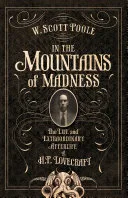
In the Mountains of Madness
 72
72

In the Mountains of Madness
W. Scott Poole's "In the Mountains of Madness" approaches H.P. Lovecraft not just as a writer, but as a cultural force, a project that is both necessary and challenging. Poole excels at demonstrating the sheer breadth of Lovecraft's influence, charting his spectral presence from obscure pulp magazines to contemporary blockbuster films. His analysis of Lovecraft's "cosmicism" is particularly sharp, linking the author's personal anxieties to the existential dread that permeates his fiction. However, the book sometimes struggles to fully reconcile the problematic aspects of Lovecraft's personal beliefs with the enduring appeal of his creations. While Poole acknowledges Lovecraft's racism and xenophobia, the narrative occasionally feels more like an appreciation of the phenomenon than a critical dissection of the man and his often-uncomfortable legacy. A particularly illuminating passage details how later artists have "sanitized" Lovecraft's work, a testament to the author's lasting power, even as it highlights the ethical tightrope walked by his admirers. Poole's work is an essential read for anyone wishing to understand Lovecraft's place in the 20th and 21st centuries, though it leaves the reader contemplating the unresolved tensions inherent in engaging with his oeuvre.
📝 Description
72
W. Scott Poole’s 2016 book examines H.P. Lovecraft’s life and influence.
This biography looks at H.P. Lovecraft, the writer whose cosmic horror stories shaped much of modern genre fiction. Poole's work goes beyond a simple retelling of Lovecraft's life. It places his personal history within the larger story of his lasting impact. The book studies the reclusive writer from Providence, moving past usual interpretations. It analyzes why Lovecraft gained a cult following and how his work spread across different media.
Readers interested in the origins of horror and speculative fiction, especially those curious about the psychology of influential artists, will find this book useful. Fans of Lovecraft hoping for a deeper insight into his life and the cultural effects of his mythos should also read it. Students of literature, cultural historians, and those interested in esoteric thought will appreciate Poole's detailed research and his placement of Lovecraft's work in context. Anyone curious about the connection between a person's life and their cultural legacy will find plenty here.
Poole's biography situates Lovecraft within the early 20th century, a time of significant change in science and society. Lovecraft's writing, from the 1910s to the 1930s, absorbed and responded to the intellectual currents of his day. This included new ideas in psychology and a growing sense of cosmic indifference arising from scientific discoveries. His work appeared alongside pulp magazines like *Weird Tales*, which gave a platform to writers like Clark Ashton Smith and Robert E. Howard. However, Lovecraft's distinct brand of cosmic dread and his specific worldview set him apart, contributing to his later reception within esoteric and occult circles.
💡 Why Read This Book?
• Understand the philosophical underpinnings of "cosmicism" as presented by Poole, gaining insight into how Lovecraft viewed humanity's place in an indifferent universe. • Analyze the direct lineage from Lovecraft's personal anxieties and societal observations in the early 20th century to the pervasive themes in modern horror and sci-fi media. • Examine how Lovecraft's Cthulhu Mythos transcended its origins to become a widespread cultural phenomenon, influencing creative works long after his death in 1937.
⭐ Reader Reviews
Honest opinions from readers who have explored this book.
❓ Frequently Asked Questions
What is "cosmicism" according to H.P. Lovecraft and W. Scott Poole?
Cosmicism, as explored in "In the Mountains of Madness," is Lovecraft's philosophical stance that humanity is insignificant in a vast, indifferent universe. Poole examines how this worldview, shaped by Lovecraft's personal anxieties and the scientific shifts of the early 20th century, forms the bedrock of his cosmic horror.
How did H.P. Lovecraft's personal life influence his writing?
W. Scott Poole's biography details how Lovecraft's reclusive nature, his deeply ingrained prejudices, and his reactions to societal changes in the early 20th century directly fueled the themes of dread, alienation, and the unknown in his stories.
What is the "Cthulhu Mythos" and its significance?
The Cthulhu Mythos is a shared fictional universe created by H.P. Lovecraft and expanded by others. Poole's book analyzes how this collection of lore, featuring ancient deities and forbidden knowledge, has become a powerful cultural phenomenon, influencing countless works of fiction and media.
Did H.P. Lovecraft have contemporaries who influenced or were influenced by him?
Yes, Lovecraft was part of the pulp fiction scene, notably associated with *Weird Tales*. Poole discusses contemporaries like Clark Ashton Smith and Robert E. Howard, exploring how their works interacted with or diverged from Lovecraft's unique vision.
How does "In the Mountains of Madness" address Lovecraft's problematic views?
The book confronts Lovecraft's racism and xenophobia directly, analyzing them not as peripheral traits but as integral elements that shaped his perception of "otherness" and the cosmic horror he depicted, while also examining how his work is reinterpreted today.
When was H.P. Lovecraft alive and writing?
Howard Phillips Lovecraft lived from 1890 to 1937. His most prolific writing period spanned the 1910s through the 1930s, a time of significant technological and social change that Poole contextualizes within the biography.
🔮 Key Themes & Symbolism
Cosmicism and Human Insignificance
Poole dissects Lovecraft's central philosophy: cosmicism. This theme posits that humanity is a minuscule, fleeting presence in a vast, uncaring universe dominated by incomprehensible forces. The book illustrates how Lovecraft's personal anxieties and his era's scientific revelations fueled this bleak outlook, positioning "In the Mountains of Madness" as a crucial text for understanding the roots of existential dread in modern fiction. The work explores how this perspective permeates Lovecraft’s narratives, making his protagonists feel utterly powerless against ancient, alien entities.
The Author as Phenomenon
Beyond biography, Poole analyzes the enduring cult status of H.P. Lovecraft, particularly how his work, despite its problematic origins, has become a pervasive cultural phenomenon. The book investigates the mechanisms by which Lovecraft's mythos, including entities like Cthulhu, has been adopted, adapted, and often sanitized by subsequent generations of artists. This section examines the complex relationship between creator, creation, and audience, especially when the creator's personal views clash with the work's later reception.
Biography and Influence
This theme interlaces Lovecraft's reclusive life in Providence with the far-reaching impact of his literary output. Poole connects Lovecraft's childhood experiences, his social isolation, and his deep-seated prejudices to the specific horrors he conjured. The work explores how these personal elements translated into a unique literary voice that continues to influence horror, science fiction, and even philosophical discourse, demonstrating that understanding the man is key to appreciating the pervasive power of his imagined worlds.
Lovecraft's Problematic Legacy
Poole directly confronts the uncomfortable aspects of Lovecraft's legacy, particularly his overt racism and xenophobia. The book doesn't shy away from how these deeply ingrained beliefs informed his fiction, often casting "otherness" as inherently monstrous. It explores the critical challenge this presents to contemporary fans and scholars, examining how his narratives are engaged with today—whether through critical analysis of their problematic roots or through creative reinterpretations that seek to distance themselves from the author's personal biases.
💬 Memorable Quotes
Direct passages from the work, attributed to the author.
“Lovecraft as a phenomenon.”
— This phrase captures Poole's central argument: that Lovecraft's influence transcends his literary output, becoming a self-perpetuating cultural force. It suggests an analysis of his cult status and widespread impact across various media, moving beyond a simple biographical account.
“His lasting power and influence on the entertainment industry and society as a whole.”
— This highlights the broad scope of Poole's examination, emphasizing that the book traces Lovecraft's reach far beyond literature into film, games, and broader cultural consciousness, underscoring the author's unexpected and persistent relevance.
“Smart, shrewd, and insightful biography.”
— This description suggests Poole's approach is analytical and perceptive, offering a nuanced understanding of Lovecraft's life and work. It implies the biography provides critical depth rather than mere narrative recounting.
“Challenging some of the general views held by Lovecraft.”
— This points to Poole's intention to offer a re-evaluation of Lovecraft, moving beyond hagiography or simple dismissal. It suggests an engagement with common perceptions and a drive to offer a more complex, critical perspective on the author and his legacy.
“Explores the author’s fascinating life.”
— This indicates that the biographical aspect of the book is substantial, looking at the personal history of H.P. Lovecraft. It promises an exploration of the intriguing, often eccentric, details of his existence.
🌙 Esoteric Significance
Tradition
While not strictly adhering to a single esoteric lineage, "In the Mountains of Madness" engages with Lovecraft's work through a lens that touches upon Gnostic themes of cosmic alienation and the insignificance of humanity in a flawed creation. Lovecraft's "cosmicism" echoes Gnostic ideas of a malevolent or indifferent demiurge and a universe fraught with unknowable, terrifying powers. Poole's analysis explores how Lovecraft, through his fiction, tapped into a deep-seated modern anxiety that speaks to ancient esoteric questions about humanity's place and purpose in the grand, often hostile, cosmic order.
Symbolism
The titular "Mountains of Madness" can be seen as a symbolic representation of the unknown and the terrifying depths of cosmic ignorance that Lovecraft's protagonists confront. The Elder Gods, like Cthulhu, symbolize primal, incomprehensible forces that dwarf human existence, representing the ultimate limits of human knowledge and control. The forbidden texts, such as the Necronomicon, function as symbols of dangerous knowledge—esoteric secrets that promise enlightenment but lead only to madness or destruction, reflecting a common trope in occult literature.
Modern Relevance
Contemporary thinkers and practitioners in fields ranging from speculative fiction to certain strains of existential philosophy and even some niche occult circles draw upon Lovecraft's mythos. Poole's work highlights how Lovecraft's concepts of cosmic indifference and humanity's marginal existence continue to inform artistic expression and philosophical inquiry. Modern adaptations often explore the psychological impact of confronting the unknowable, a theme that has found fertile ground in contemporary explorations of consciousness, fear, and the search for meaning in a seemingly absurd universe.
👥 Who Should Read This Book
• Students of horror and speculative fiction seeking to understand the foundational figures and philosophical underpinnings of the genre, particularly the development of cosmic horror. • Cultural historians and literary critics interested in the evolution of 20th-century American literature and the complex interplay between an author's life, their societal context, and their enduring cultural impact. • Readers fascinated by the phenomenon of cult followings and the posthumous rise of an author's influence, especially when grappling with problematic elements within the creator's personal history.
📜 Historical Context
Published in 2016, W. Scott Poole's "In the Mountains of Madness" emerged decades after H.P. Lovecraft's death in 1937, during a period of intense academic and popular re-evaluation of the author. The early 20th century, Lovecraft's writing period, was a time of profound societal shifts, marked by World War I, rapid industrialization, and burgeoning psychoanalytic theories. These currents, along with a growing sense of cosmic indifference suggested by scientific advancements, formed the intellectual backdrop against which Lovecraft developed his unique brand of horror. His work appeared in pulp magazines like *Weird Tales*, fostering a community of writers including contemporaries such as Clark Ashton Smith and Robert E. Howard, though Lovecraft's distinct nihilism and problematic prejudices set him apart. By 2016, Lovecraft had transitioned from a cult figure to a significant cultural touchstone, with scholars like S.T. Joshi having extensively documented his life and work, while critics grappled with the ethical implications of his racism. Poole's biography engages with this complex legacy, situating Lovecraft not just as a writer but as a pervasive cultural force whose influence continues to be debated and analyzed.
📔 Journal Prompts
The concept of cosmicism and humanity's insignificance.
Lovecraft's reclusive life and its connection to his fictional landscapes.
The Cthulhu Mythos as a cultural phenomenon.
Analyzing the influence of early 20th-century societal anxieties on Lovecraft's horror.
The ethical considerations of engaging with Lovecraft's problematic views.
🗂️ Glossary
Cosmicism
A philosophical concept central to H.P. Lovecraft's work, positing that humanity is insignificant in a vast, indifferent universe governed by incomprehensible forces. It emphasizes the terror of realizing one's trivial place in the cosmos.
Cthulhu Mythos
A shared fictional universe created by Lovecraft and expanded by his successors, featuring recurring characters, settings, and cosmic entities like Cthulhu. It explores themes of forbidden knowledge and ancient, alien powers.
Pulp Fiction
Magazines popular in the early to mid-20th century, known for printing genre fiction such as science fiction, fantasy, and horror. *Weird Tales* was a prominent example where Lovecraft published many of his stories.
Weird Tales
A highly influential pulp magazine, active from 1923 to 1954, that published seminal works of fantasy, science fiction, and horror. It was a key venue for H.P. Lovecraft's stories.
Xenophobia
The dislike of or prejudice against people from other countries. Poole examines how Lovecraft's xenophobia was interwoven with his fear of the unknown and alien, often manifesting in his depiction of monstrous 'others'.
Providence
The capital city of Rhode Island, where H.P. Lovecraft spent most of his life. His deep connection to and often idealized portrayal of the city's colonial architecture features prominently in his work.
Necronomicon
A fictional grimoire (spellbook) created by H.P. Lovecraft, appearing in several of his stories. It is depicted as containing forbidden lore and dangerous rituals, symbolizing the perilous pursuit of hidden knowledge.