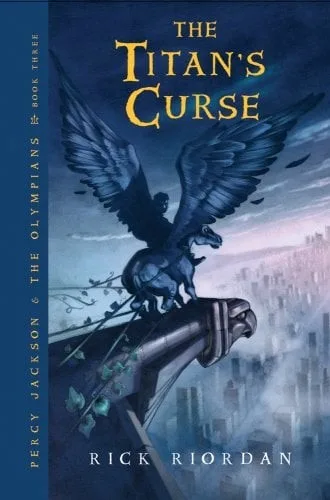
The Titan's Curse
 71
71

The Titan's Curse
Rick Riordan's The Titan's Curse excels in maintaining the breakneck pace and mythological inventiveness established in its predecessors. The introduction of characters like Nico di Angelo and the goddess Zoe Nightshade adds significant depth to the growing ensemble, providing both new perspectives and poignant moments. One particular strength lies in the clever integration of lesser-known monsters and myths, such as the Laistrygonians and the Manticore, which feel fresh rather than rehashed. However, the narrative occasionally strains under the weight of its own intricate plot, with certain chase sequences feeling slightly repetitive. The climactic confrontation, while exciting, relies on a somewhat convenient resolution regarding the fate of Artemis. Despite these minor quibbles, the book solidifies its place as a cornerstone of modern mythological fantasy for young readers, offering a compelling mix of action, character development, and lore.
📝 Description
71
The Titan's Curse, published in 2007, follows Percy Jackson's quest to save friends and a powerful creature.
This third book in the Percy Jackson series, released in 2007, follows Percy Jackson and his friends as they undertake a critical mission. They must rescue their friend Grover Underwood and the goddess Artemis, who have been captured. The quest leads them into danger, facing mythological creatures and the machinations of the Titan Kronos.
The central focus of their mission is the Ophiotaurus, a creature whose entrails hold the power to either destroy or preserve the gods. Percy and his allies race against Kronos's forces, who seek to use the creature for their own destructive ends. The narrative balances high stakes with the personal struggles of its young protagonists.
The book is written for young adult readers aged 9-14 who enjoy adventure stories rooted in mythology. It appeals to those who like quick plots, characters dealing with identity, and a mix of humor and serious challenges. Fans of the series will find this a direct continuation of Percy's developing understanding of his heritage.
Published in 2007, The Titan's Curse arrived during a period of popular resurgence for Greek mythology, particularly within young adult fantasy literature. Rick Riordan's series tapped into this interest by reinterpreting ancient myths within a contemporary American setting. This approach modernized classical lore, making it accessible to a new generation. While many authors were adapting fantasy tropes, Riordan focused specifically on Greco-Roman myths, creating a distinct niche that resonated with readers.
💡 Why Read This Book?
• Gain insight into the complex parentage of demigods and their struggle for identity, as Percy grapples with his divine father Poseidon's influence, a core conflict presented throughout the 2007 publication. • Understand the perilous nature of prophecies and free will, exemplified by the Oracle's cryptic pronouncements which Percy and his allies must interpret and navigate. • Experience the dynamic of found family and loyalty among demigods, as Percy's bond with Annabeth Chase and Grover Underwood is tested against mythological threats.
⭐ Reader Reviews
Honest opinions from readers who have explored this book.
❓ Frequently Asked Questions
What is the significance of the Ophiotaurus in The Titan's Curse?
The Ophiotaurus, a creature with the body of a bull and the tail of a serpent, holds immense power. Its entrails can either destroy the gods or save them, making it a crucial artifact sought by both heroes and villains in the 2007 novel.
Who are the main antagonists in The Titan's Curse?
The primary antagonists are the forces aligned with the Titan Kronos, led by the monstrous general the Manticore (General Argus). They seek to capture the Ophiotaurus to destabilize the Olympian gods.
What role does Artemis play in the story?
Artemis, the goddess of the hunt and the moon, is captured in The Titan's Curse. Her disappearance forces Percy and his friends on a quest to find her and prevent a prophecy from being fulfilled.
Are there new characters introduced in The Titan's Curse?
Yes, the book introduces key new characters, most notably Nico di Angelo, a son of Hades, and Zoe Nightshade, a daughter of Atlas and a lieutenant of Artemis.
How does The Titan's Curse relate to Greek mythology?
The book directly adapts figures, monsters, and plot elements from Greek mythology, such as the Titans, Olympians, the Oracle of Delphi, and various mythical beasts, setting them within a contemporary American context.
What is the main goal of Percy's quest in this book?
Percy's main quest is to rescue Grover Underwood and Artemis, who have both been captured. This mission is intertwined with finding the Ophiotaurus before Kronos's forces can use it.
🔮 Key Themes & Symbolism
Destiny vs. Free Will
The narrative constantly challenges the notion of predetermined fate. Percy and his companions frequently confront prophecies, particularly those issued by the Oracle of Delphi, and must decide whether to accept them, defy them, or interpret them in unexpected ways. This internal conflict highlights the agency of the characters, even within a world governed by divine decree and ancient foretellings. The book explores how choices, especially those made by young heroes like Percy in 2007, can ripple through the fabric of destiny, affecting both mortal and immortal realms.
The Nature of Family
Beyond biological ties, the concept of 'found family' is paramount. Percy's relationships with Annabeth Chase and Grover Underwood form the emotional core, demonstrating profound loyalty and mutual reliance. These bonds are tested rigorously by the dangers they face, yet they consistently provide support and strength. The book also touches upon the complexities of divine parentage, with Percy navigating his relationship with Poseidon and other Olympian gods, exploring how familial legacies, both mortal and divine, shape identity.
Courage in Adversity
The young protagonists consistently face overwhelming odds, battling monstrous creatures and navigating treacherous divine politics. Their courage is not the absence of fear, but the decision to act despite it. Percy, Annabeth, and their allies repeatedly demonstrate bravery, often putting themselves in harm's way to protect others or complete their quests. This theme underscores the idea that heroism is accessible to anyone, regardless of age or power, as long as they possess the will to stand against darkness.
Mythology in the Modern World
Riordan masterfully transplants ancient Greek myths into contemporary America. Gods, monsters, and demigods seamlessly integrate into modern society, creating a unique and accessible mythological landscape. This approach not only makes classical stories relevant to a new generation but also explores how ancient archetypes and conflicts persist and manifest in the 21st century. The book examines the enduring power of myths and their ability to explain human nature and societal dynamics, even when set against a backdrop of smartphones and highways.
💬 Memorable Quotes
Direct passages from the work, attributed to the author.
“I wasn't going to let anybody hurt Annabeth. Not on my watch.”
— This statement highlights Percy's fierce protectiveness over his friend Annabeth. It exemplifies his loyalty and courage, demonstrating his willingness to confront danger head-on to ensure her safety, a recurring motif in his character development.
“The Titan’s Curse was upon us, and I was too young to stop it.”
— This expresses Percy's internal struggle with the weight of responsibility. He recognizes the immense threat posed by Kronos and the Titans but feels inadequate due to his age and experience, underscoring the theme of youthful heroism facing overwhelming odds.
“We were just kids, trying to survive.”
— This simple yet powerful statement reflects the core experience of the demigod characters. Despite their extraordinary circumstances and divine heritage, they often feel like ordinary children thrust into extraordinary and dangerous situations, emphasizing their vulnerability and resilience.
💡 Key Ideas
Editorial paraphrase of the work's core concepts — not direct quotes.
It was eerie, being in the presence of so many gods. But I was starting to get used to it.
This quote captures Percy's developing familiarity with the divine world. Initially awestruck and perhaps intimidated, he acknowledges a growing comfort level with the presence of gods, signifying his increasing integration into the Olympian sphere and his maturation.
Zoe Nightshade was a huntress, and she was not going to let a boy boss her around.
This quote defines Zoe Nightshade's strong, independent personality. It showcases her warrior spirit and her refusal to be subservient, even to a male protagonist like Percy, highlighting the presence of formidable female characters in the narrative.
🌙 Esoteric Significance
Tradition
While not strictly an esoteric text in the vein of Hermeticism or Gnosticism, The Titan's Curse draws heavily from the archetypal narratives and pantheon of Greco-Roman religion, which itself contains layers of mystery and ritualistic practice. It functions as a modern gateway to these ancient traditions for a young audience, presenting mythological figures and their relationships in a narrative format. The series' exploration of demigods—beings born of divine and mortal union—touches upon themes of inherent power, destiny, and the bridge between the mundane and the sacred, concepts often explored in various esoteric lineages.
Symbolism
The Ophiotaurus, a creature with serpentine and bovine features, symbolizes immense, dualistic power—the potential for both creation and destruction. Its entrails represent a potent, primal force that can be harnessed or unleashed. The quest itself, a common motif in esoteric traditions, symbolizes the hero's journey toward self-discovery and mastery. The presence of the Titans, primordial deities representing chaos and older forces, contrasts with the Olympian gods, symbolizing the ongoing cosmic struggle between order and entropy, a theme found in many creation myths.
Modern Relevance
The Titan's Curse, through its accessible adaptation of Greek mythology, has influenced a generation's understanding and appreciation of classical lore. Contemporary thinkers and educators often use the Percy Jackson series as a tool to introduce complex mythological concepts to younger audiences. Practices focused on mythopoetic storytelling and the integration of classical archetypes into personal development or therapeutic contexts can find resonance with the series' themes of divine heritage, destiny, and the hero's journey as depicted in the book.
👥 Who Should Read This Book
• Young readers aged 9-14 with an appetite for adventure and mythology, who will appreciate the fast-paced plot and relatable adolescent protagonists navigating extraordinary circumstances. • Fans of Rick Riordan's previous Percy Jackson books, seeking to continue the saga of Percy, Annabeth, and Grover as they face new challenges and uncover deeper secrets of the Olympian world. • Educators and parents looking for engaging literature that introduces classical Greek mythology in a fun, accessible, and modern context, making ancient stories relevant to contemporary youth.
📜 Historical Context
The Titan's Curse, published in 2007, arrived at a peak moment for the young adult fantasy genre, a landscape increasingly shaped by the global success of series like Harry Potter and The Lord of the Rings film adaptations. Rick Riordan's work distinguished itself by focusing specifically on Greco-Roman mythology, offering a contemporary, Americanized interpretation that resonated strongly with readers. While other authors were exploring their own invented worlds or adapting Norse or Arthurian legends, Riordan anchored his stories in a well-documented, albeit ancient, mythological corpus. This period saw a growing demand for middle-grade and young-adult fiction that could educate as well as entertain. The book's release coincided with a general cultural fascination with mythology, often presented through accessible, action-oriented narratives. While Riordan did not face significant censorship issues for this specific title, the broader trend of fantasy literature for younger audiences was debated in some circles regarding its perceived escapism versus its capacity for moral and cultural education.
📔 Journal Prompts
Percy's internal conflict regarding prophecy and his own choices.
The significance of the Ophiotaurus as a symbol of ultimate power.
Zoe Nightshade's role as a warrior and her relationship with Artemis.
The theme of 'found family' among Percy, Annabeth, and Grover.
Nico di Angelo's initial isolation and his connection to Hades.
🗂️ Glossary
Demigod
An individual who is part mortal and part god. In the context of the book, these are children of Greek gods and human parents, possessing extraordinary abilities but facing mortal limitations.
Titan
The elder generation of Greek deities who ruled before the Olympians. Led by Kronos, they represent a primal, often chaotic, force seeking to reclaim power from their Olympian descendants.
Olympian
The primary gods of the Greek pantheon, residing on Mount Olympus, who overthrew the Titans. Figures like Zeus, Poseidon, and Athena are central to the narrative.
Ophiotaurus
A mythical creature, part bull and part serpent, whose entrails possess the power to either destroy or preserve the gods, making it a highly sought-after artifact.
Manticore
A monstrous creature from Persian mythology, adopted into Greek lore, typically depicted with the body of a lion, a human head, and a scorpion's tail or lion's claws. In the book, it serves as a formidable antagonist.
Oracle of Delphi
In Greek mythology, a priestess (the Pythia) at the Temple of Apollo at Delphi who delivered prophecies. In the book, the Oracle delivers cryptic, often life-altering, prophecies to the demigods.
Huntress
A female hunter, often associated with the goddess Artemis. In the book, Zoe Nightshade is a key Huntress serving Artemis, depicted as a skilled warrior.
🔮 Readers Also Liked
Browse all →








More by Rick Riordan
All books →




More Free Occult Philosophy Books
View all →