The Fantasy Principle
 72
72

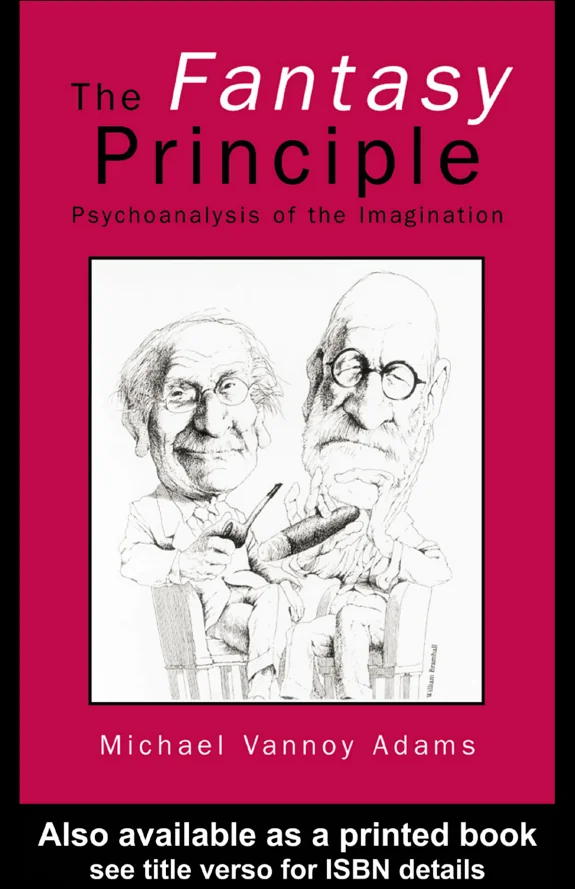
The Fantasy Principle
Michael Vannoy Adams’s "The Fantasy Principle" offers a compelling argument for the primacy of the imaginal in psychoanalytic theory. Adams posits 'imaginal psychology' as a distinct school, moving beyond conventional Freudian or even Jungian frameworks by centering the transformative power of images. The book’s strength lies in its rigorous defense of imagination as a fundamental psychic force, rather than a mere epiphenomenon. A particularly striking passage discusses how the psychic reality of an image can hold more power than objective fact in shaping an individual's narrative. However, the work sometimes feels overly theoretical, lacking extensive clinical case studies that might fully illustrate the practical application of imaginal psychology in therapeutic settings. Adams’s dedication to establishing a new psychoanalytic paradigm is evident throughout. It’s a challenging but rewarding read for those seeking to deepen their understanding of the psyche's symbolic landscape.
📝 Description
72
Michael Vannoy Adams argued in 2004 that the imagination is the core of psychic life, not a secondary faculty.
Michael Vannoy Adams's "The Fantasy Principle" proposes 'imaginal psychology,' a new discipline that places the imagination at the center of the human psyche. Adams contends that images and fantasies are not simply byproducts of experience but are primary forces that actively shape consciousness. He argues for the transformative power of the imaginal in understanding psychological states, creativity, and personal development.
The book addresses analysts, psychologists, and scholars of esoteric traditions who find purely materialistic or reductionist psychological models insufficient. It speaks to those interested in the connections between psychology, mythology, and comparative religion, especially when symbolic meaning is prioritized over observable behavior. The work engages with Jungian thought but seeks to establish a distinct foundation for imaginal approaches to the psyche.
Emerging in the early 2000s, 'The Fantasy Principle' engaged with depth psychology traditions, particularly Jungian archetypal theory. While seeking to establish a new discipline, 'imaginal psychology,' Adams drew upon a long history of esoteric thought that views the symbolic and imaginal realms as potent forces in human experience. This work positions itself against purely empirical or materialist explanations, aligning with traditions that emphasize the reality and efficacy of inner psychic worlds and their generated imagery.
💡 Why Read This Book?
• Gain a new framework for understanding psychic life by exploring Adams's concept of 'imaginal psychology,' which posits the imagination as the central organizing principle of the psyche, distinct from traditional psychoanalytic schools. • Understand the transformative impact of images through specific discussions that highlight how symbolic content actively shapes experience and reality, moving beyond mere representation. • Re-evaluate the role of fantasy in personal development and psychological healing by engaging with Adams's assertion that the imaginal realm is not a diversion but a primary source of psychic energy and meaning.
⭐ Reader Reviews
Honest opinions from readers who have explored this book.
❓ Frequently Asked Questions
What is 'imaginal psychology' as proposed by Michael Vannoy Adams?
Imaginal psychology, as advocated in 'The Fantasy Principle,' is a proposed school of psychoanalysis that centers the imagination and the power of images as the primary drivers of psychic experience and transformation.
When was 'The Fantasy Principle' first published?
'The Fantasy Principle' by Michael Vannoy Adams was first published on March 18, 2004.
How does Adams's work differ from traditional psychoanalysis?
Adams's approach emphasizes the active, formative role of imagination and imagery, contrasting with traditional psychoanalysis that often views fantasy as secondary or as a defense mechanism.
What is the central argument of 'The Fantasy Principle'?
The book argues for the centrality of imagination and the transformative impact of images, suggesting they form the core of psychic life and a basis for a new psychoanalytic school.
Who would benefit most from reading this book?
Psychologists, philosophers, scholars of esoteric traditions, and anyone interested in the symbolic and imaginative dimensions of the human psyche would find this book particularly relevant.
Does the book offer practical therapeutic techniques?
While theoretical in its primary focus, the book lays the groundwork for understanding the therapeutic potential of imaginal work, suggesting that engaging with images can lead to profound psychic shifts.
🔮 Key Themes & Symbolism
Primacy of the Imaginal
The core tenet is that the field of imagination, images, and fantasies constitutes the fundamental reality of the psyche. Adams argues against approaches that reduce psychic life to biological processes or external experiences, positing that the internal imaginal world possesses its own potent agency and transformative capacity. This perspective challenges conventional views where imagination is often seen as secondary or derivative.
Transformative Power of Images
This theme explores how images are not static representations but dynamic forces capable of reshaping consciousness and experience. The book asserts that engaging with, understanding, and even consciously manipulating these images can lead to profound psychological change, healing, and personal evolution. It suggests that the psyche is fundamentally an imaginal construct.
Imaginal Psychology as a School
Adams proposes 'imaginal psychology' as a distinct psychoanalytic discipline. This section details the theoretical underpinnings and potential scope of such a school, differentiating it from existing psychoanalytic traditions. It aims to establish a coherent intellectual framework for understanding the psyche through the lens of its imaginal contents and processes.
Critique of Materialist Psychology
The work implicitly and explicitly critiques psychoanalytic and psychological theories that prioritize empirical, material, or reductionist explanations for mental phenomena. By elevating the imaginal, Adams offers an alternative that embraces subjectivity, symbolism, and the non-rational dimensions of human experience as central to psychological understanding.
💬 Memorable Quotes
Direct passages from the work, attributed to the author.
“The psyche is not a product of biology, but biology is a product of the psyche.”
— This statement captures Adams's radical reorientation, suggesting that consciousness and imagination are primary, and physical existence is, in a sense, a manifestation or projection of this imaginal ground.
“The imaginal is the fundamental reality.”
— This aphorism distills the book's central thesis: that the world of images, fantasies, and symbols holds a more foundational status in understanding human experience than external reality or biological drives.
“Psychoanalysis must affirm the centrality of imagination.”
— This reflects Adams's call to action for the field of psychoanalysis, advocating for a rethinking that places imagination at the forefront of theoretical and clinical inquiry.
“Images possess their own power and agency.”
— This interpretation highlights the book's view of images not as passive reflections but as active forces that influence thought, emotion, and behavior, possessing an inherent capacity for change.
💡 Key Ideas
Editorial paraphrase of the work's core concepts — not direct quotes.
The transformative impact of images is paramount.
This paraphrase emphasizes the book's focus on the dynamic potential of the imaginal realm, asserting that the psychological effects derived from engaging with images are of utmost significance.
🌙 Esoteric Significance
Tradition
Adams's work draws implicitly from traditions that emphasize the power of the imagination and symbol, such as Jungian psychology, Hermeticism, and various forms of Gnosticism, which often posit an imaginal or spiritual reality as primary. It departs from strict adherence by proposing a systematic 'imaginal psychology' as a modern scientific discipline rather than a purely spiritual or mystical path.
Symbolism
The book's focus on 'images' and 'fantasy' points to a deep engagement with symbolic representation. While specific symbols aren't detailed in the blurb, the emphasis on the 'imaginal' suggests a concern with universal archetypes and personal symbolic landscapes that function as carriers of meaning and catalysts for psychic transformation. These images are seen as potent, active forces.
Modern Relevance
Contemporary interest in consciousness studies, the psychology of art and creativity, and depth psychology's resurgence indicates a fertile ground for Adams's ideas. Thinkers exploring the power of narrative, the impact of virtual realities, or the therapeutic applications of guided imagery may find his foundational arguments particularly relevant today.
👥 Who Should Read This Book
• Psychotherapists and counselors interested in expanding their theoretical toolkit beyond conventional models, particularly those exploring symbolic or depth psychology approaches. • Philosophers of mind and consciousness scholars seeking alternative perspectives on the nature of reality and the role of subjective experience. • Students and practitioners of Jungian psychology and comparative mythology who wish to engage with a work that rigorously defends the power of the imaginal realm.
📜 Historical Context
Published in 2004, "The Fantasy Principle" emerged during a period when psychoanalysis was grappling with its identity, facing challenges from neuroscience, cognitive psychology, and various postmodern critiques. Michael Vannoy Adams's work offered a counter-narrative to the increasing scientism within some psychological circles. While figures like Carl Jung had previously explored the symbolic and mythological dimensions of the psyche, Adams sought to establish a more distinct framework, 'imaginal psychology,' independent of established schools. His work engaged with the ongoing discourse on the nature of consciousness and reality, providing an alternative to purely materialistic or behaviorist explanations. The reception within academic psychology was likely varied, with those attuned to depth psychology and symbolic studies finding resonance, while more empirically-minded researchers might have viewed it with skepticism.
📔 Journal Prompts
The centrality of imagination: How does the concept of the 'imaginal' differ from mere daydreaming in your personal experience?
Transformative impact of images: Reflect on a powerful image from a myth, dream, or artwork that significantly shifted your perspective.
Critique of materialist psychology: Consider a personal experience where a purely biological or external explanation felt insufficient to capture its meaning.
Imaginal psychology's scope: How might understanding images as primary psychic agents alter therapeutic approaches?
The psyche as an imaginal construct: Explore the implications of viewing consciousness as fundamentally rooted in imagination.
🗂️ Glossary
Imaginal Psychology
A proposed school of psychoanalysis championed by Michael Vannoy Adams, which asserts the centrality and transformative power of imagination and images in psychic life.
The Imaginal
The field of images, fantasies, symbols, and psychic pictures that Adams posits as the fundamental reality and organizing principle of the psyche.
Psyche
In the context of Adams's work, the psyche refers to the totality of the mind, encompassing consciousness, the unconscious, and particularly its imaginal dimensions.
Centrality of Imagination
The core principle of imaginal psychology, asserting that imagination is not a secondary faculty but the primary force shaping human experience and consciousness.
Transformative Impact
The idea that engaging with and understanding images within the imaginal realm can lead to significant psychological change, healing, and personal development.
Psychic Reality
The subjective experience of images and fantasies as having a real and potent effect on an individual's life and understanding of the world, often more so than objective circumstances.
School of Psychoanalysis
A distinct theoretical and clinical orientation within the broader field of psychoanalysis, characterized by specific concepts, methods, and aims, such as Freudian or Jungian schools.
This book appears in 1 collection
🔮 Readers Also Liked
Browse all →









From the “Jungian Psychology” Collection
View all →






More Free Occult Philosophy Books
View all →