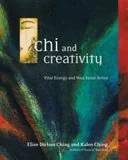
Chi and Creativity
 73
73

Chi and Creativity
Elise Dirlam Ching and Kaleo Ching’s *Chi and Creativity* attempts a direct synthesis of energetic cultivation and artistic generation, a laudable if ambitious goal. The strength of the book lies in its systematic approach, breaking down complex energetic concepts into digestible exercises. The inclusion of self-help acupressure alongside chi kung movement offers a practical, hands-on dimension that many similar texts lack. However, the work sometimes feels overly prescriptive, and the connection between specific energetic exercises and tangible creative breakthroughs could be more explicitly articulated in certain passages. A particular strength is the chapter on guided imagery for unblocking creative channels; it provides clear, actionable steps. While the book offers a solid foundation, its effectiveness hinges on the reader's commitment to consistent practice and their willingness to trust the energetic paradigm it presents. It is a functional guide for those ready to engage with the body's subtle flows to enhance their art.
📝 Description
73
Published in 2007, Chi and Creativity links body energy to artistic expression.
Elise Dirlam Ching and Kaleo Ching's 2007 book, *Chi and Creativity*, provides a practical method for combining the body's subtle energies with artistic creation. The authors present a guide to understanding how physical, energetic, emotional, and creative aspects of the self connect. It includes exercises to build awareness of internal energy flow, often called 'chi' or 'qi' in different traditions.
The book is for people looking for a more complete way to approach personal growth and creative work. It will interest artists, writers, musicians, and anyone facing creative blocks who believes a deeper energetic or emotional issue is involved. Readers interested in self-help, alternative health, and personal change through embodied awareness will find it useful. It is especially good for those who prefer clear instructions and practical techniques.
*Chi and Creativity* appeared when Eastern philosophies and energy work were gaining wider acceptance in Western wellness and self-help communities. The early 21st century saw many authors examining the body's energy systems. Ching's book connects energy practices like Qigong directly with the creative process, a link not often detailed in earlier Western esoteric writings. Its publication predates the easy digital access many of these practices now have, making it a concrete guide for its time.
This book fits within the broader movement of the late 20th and early 21st centuries that integrated Eastern energetic concepts with Western psychological and creative practices. It follows in the tradition of thinkers who saw vital life force, or chi, as central to well-being and expression. While drawing on ancient Chinese medicine and philosophy, Ching and Ching adapt these ideas for a modern audience, specifically addressing the challenges faced by contemporary artists and creatives. Their work is part of a lineage that bridges traditional energetic cultivation with personal development and artistic practice.
💡 Why Read This Book?
• You will learn specific chi kung movements and self-acupressure techniques that directly address energetic blocks, offering a tangible method for clearing creative stagnation that goes beyond conventional advice. • You will gain practical methods for cultivating chi awareness, enabling you to identify how your energetic state influences your creative output, a concept explored in Chapter 3's "Chi Kung Movement and Meditation." • You will discover how to use guided imagery and journaling, as detailed in sections on integrative health, to foster a dialogue between your physical, emotional, and creative bodies, unlocking new avenues for self-expression.
⭐ Reader Reviews
Honest opinions from readers who have explored this book.
❓ Frequently Asked Questions
What is chi and how does it relate to creativity in this book?
Chi, often translated as 'life force energy,' is presented as the vital current that flows through all living beings. In *Chi and Creativity*, this energy is directly linked to the creative impulse. The authors suggest that a balanced and flowing chi can enhance artistic inspiration and productivity, while blockages can lead to creative inertia.
What types of exercises are included in *Chi and Creativity*?
The book features a variety of practical exercises, including chi awareness practices, self-help acupressure techniques, chi kung (Qigong) movements and meditations, guided imagery sessions, and journaling prompts designed to explore the connection between energy and creativity.
Who are Elise Dirlam Ching and Kaleo Ching?
Elise Dirlam Ching and Kaleo Ching are the authors of *Chi and Creativity*. While specific biographical details are less prominent, their work suggests expertise in energetic practices and their application to personal growth and artistic development.
Is this book suitable for beginners in energetic practices?
Yes, the book is structured as a guide for those new to concepts of chi and energetic work. It provides clear instructions for exercises like chi kung and acupressure, making it accessible to beginners interested in exploring these modalities for creative enhancement.
What is the main goal of the exercises presented in the book?
The primary goal is to facilitate a dialogue between the energetic body, physical body, emotional body, and creative spirit. The exercises aim to cultivate self-discovery, promote integrative health, and foster personal transformation by harmonizing one's internal energetic landscape with their creative potential.
When was *Chi and Creativity* first published?
*Chi and Creativity* was first published in 2007. This places its emergence within a period of growing interest in mind-body connections and holistic approaches to wellness and personal development.
🔮 Key Themes & Symbolism
Energetic Body and Creative Flow
The central theme is the direct correlation between the state of one's energetic body, particularly the flow of chi, and their creative capacity. The book posits that a vibrant, balanced chi is essential for inspiration and artistic expression. Stagnant or blocked energy is presented as a primary cause of creative blocks. Through practices like chi kung and acupressure, the authors guide readers to become more aware of their internal energetic currents and to actively cultivate a state conducive to creativity. This approach views creativity not merely as a mental process but as an embodied experience deeply influenced by vital life force energy.
Integrative Health and Self-Discovery
This work emphasizes a holistic approach to well-being, integrating physical, emotional, energetic, and creative aspects of the self. The exercises are designed not only to enhance creativity but also to promote general health and self-understanding. By learning to listen to and work with their energetic and emotional bodies, readers begin a study of self-discovery. The book frames this process as 'integrative health,' suggesting that true vitality comes from harmonizing all these dimensions, leading to profound personal transformation and a deeper connection to one's inner world.
Practical Application of Esoteric Concepts
Rather than remaining purely theoretical, *Chi and Creativity* focuses on practical, actionable techniques derived from esoteric traditions. Concepts like chi, acupressure points, and energetic meridians are translated into accessible exercises for daily practice. The book serves as a bridge, bringing ancient wisdom concerning life force energy into the contemporary context of artistic endeavor and personal development. It provides concrete tools—movements, meditations, and self-administered treatments—that empower individuals to actively engage with and influence their internal states for creative and therapeutic benefit.
The Dialogue Between Bodies
A key concept is the 'dialogue' between the physical, energetic, and emotional bodies, and the creative spirit. The book suggests these aspects are not separate but in constant communication. When this dialogue is harmonious, creativity flows. When it is disrupted, creative blocks or emotional distress can occur. The exercises are designed to facilitate this communication, helping readers understand the messages from each 'body' and how they influence one another. This integrated approach encourages a more conscious and unified sense of self, where creative expression arises from a balanced internal system.
💬 Memorable Quotes
Direct passages from the work, attributed to the author.
“The energetic body, physical body, emotional body, and creative spirit meet and dialogue.”
— This core statement highlights the book's central thesis: that these distinct yet interconnected aspects of human experience are in constant communication, and their harmonious interaction is key to unlocking creative potential and achieving holistic well-being.
“Practical exercises in chi awareness, self-help acupressure, chi kung movement and meditation, guided imagery, journaling, and art.”
— This enumerates the practical toolkit the authors provide. It signifies a hands-on approach, offering readers concrete methods to engage with their energetic and creative selves, moving beyond abstract theory into direct experience and application.
“The adventure is one of self-discovery, integrative health, and personal transformation.”
— This frames the reader's engagement with the book not just as learning a skill, but as starting a profound personal journey. It emphasizes the transformative potential of connecting with one's chi and creative spirit for overall well-being.
“A guide to realms where the energetic body, physical body, emotional body, and creative spirit meet and dialogue.”
— This serves as an invitation to explore the inner landscape. It suggests that the book maps out an internal territory where different facets of the self interact, offering a pathway to understanding these complex relationships.
“Through practical exercises in chi awareness...”
— This emphasizes the actionable nature of the content. The focus is on direct experience and cultivation of chi, rather than passive observation, empowering readers to actively participate in their own energetic and creative development.
🌙 Esoteric Significance
Tradition
The work draws heavily from Taoist principles, particularly the concept of 'chi' (qi) as vital life force energy, and practices derived from Qigong and Traditional Chinese Medicine. It aligns with broader esoteric currents that explore the subtle body and its connection to consciousness and manifestation. While not explicitly adhering to a single Western esoteric lineage like Hermeticism or Kabbalah, it shares the universal esoteric aim of understanding and working with unseen forces for personal growth and empowerment, adapting these principles for contemporary creative individuals.
Symbolism
Key symbols in the book revolve around the concept of flow and blockage. 'Chi' itself acts as a central symbol for vital life force, movement, and potential. The body's meridians, often depicted as pathways, symbolize the channels through which this energy flows. Blockages in these channels are symbolically represented as stagnant areas or dams impeding the natural current. The creative spirit is symbolized by the potential for expression and generation, which the book aims to 'unblock' and direct through the energetic pathways, much like water finding its course.
Modern Relevance
Contemporary practices in somatic experiencing, energy psychology, and even some aspects of mindfulness-based art therapy echo the principles found in *Chi and Creativity*. Thinkers and practitioners exploring the neuroscience of creativity and embodiment often touch upon similar concepts of energetic flow and its impact on cognitive and artistic function. Schools focusing on integrative health and holistic wellness also find resonance, applying these energetic principles to various aspects of life, including professional and artistic endeavors. The book's approach remains relevant for modern artists and creatives seeking embodied methods to overcome blocks and enhance their output.
👥 Who Should Read This Book
• Aspiring and established artists, writers, musicians, and other creatives experiencing blocks or seeking to deepen their creative wellspring. • Practitioners of Qigong, Tai Chi, or acupressure interested in exploring the direct application of these energetic arts to artistic expression and personal development. • Individuals exploring holistic health and integrative wellness, who are curious about the connection between their energetic state, emotional well-being, and creative output.
📜 Historical Context
Published in 2007, *Chi and Creativity* arrived as the burgeoning self-help and alternative wellness industries were increasingly incorporating Eastern energetic practices into Western frameworks. Authors like Deepak Chopra had already popularized concepts of mind-body medicine, while figures such as Donna Eden were making accessible the study of the body’s energy systems. Ching and Ching’s work distinguished itself by specifically linking the cultivation of chi—a concept central to traditional Chinese medicine and Qigong—directly to the artistic process. This was a departure from purely health-focused applications and offered a more specialized path for creatives. While not facing significant controversy or censorship, the book entered a marketplace already populated by various approaches to unlocking creativity, from psychological techniques to more spiritual explorations. Its contribution was the explicit, practical fusion of energetic cultivation with artistic generation, providing a tangible guide for those seeking to enhance their creative output through embodied practices.
📔 Journal Prompts
The flow of chi through your energetic channels and its impact on your current creative project.
Specific acupressure points and their perceived effect on emotional states related to creativity.
The dialogue between your physical sensations and creative impulses during a guided imagery exercise.
Identifying patterns of energetic stagnation and their correlation with creative inertia.
How the practice of chi kung movement has shifted your perception of your creative potential.
🗂️ Glossary
Chi (Qi)
The fundamental vital life force energy believed in many Eastern traditions to animate all living beings. In this context, it is seen as directly influencing physical, emotional, and creative states.
Chi Kung (Qigong)
A system of coordinated body posture and movement, breathing, and meditation used for health, spirituality, and martial arts training. The book utilizes specific forms for cultivating and balancing chi.
Acupressure
A healing technique based on the principles of acupuncture, involving the application of firm pressure to specific points on the body to unblock chi and promote healing or balance.
Energetic Body
A concept referring to the subtle, non-physical aspect of the body through which life force energy (chi) flows. It is considered interconnected with and influential upon the physical, emotional, and mental bodies.
Creative Spirit
The intrinsic impulse or capacity for creation and expression within an individual. The book explores how this spirit is influenced by and interacts with the energetic, emotional, and physical states.
Integrative Health
An approach to wellness that considers the interconnectedness of the physical, mental, emotional, energetic, and spiritual aspects of a person, aiming for holistic balance and well-being.
Guided Imagery
A relaxation technique that involves using visualization and imagination to create a desired mental state or experience. Here, it's used to influence energetic flow and unlock creativity.
This book appears in 1 collection
🔮 Readers Also Liked
Browse all →








From the “Qi Gong” Collection
View all →


More Free Occult Philosophy Books
View all →