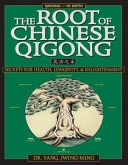
The Root of Chinese Qigong
 74
74

The Root of Chinese Qigong
Jwing-Ming Yang’s "The Root of Chinese Qigong" (1997) offers a rare clarity on a practice often shrouded in mystique. The book’s signal strength lies in its systematic deconstruction of Qigong, presenting the 'what, why, and how' with an almost academic rigor that is exceptionally rare in popular esoteric literature. Yang meticulously separates the genuine principles from the embellishments, grounding the practice in physiological and energetic concepts. A particular passage detailing the subtle internal circulation of Qi through specific meridian pathways, while dense, exemplifies the author's commitment to precise instruction. However, the very thoroughness that makes it valuable can also be a limitation; readers seeking quick, generalized spiritual anecdotes might find the detailed explanations demanding. The work’s adherence to established principles, while a virtue, means it may not offer the novel, esoteric revelations some readers might anticipate from its category. It stands as an indispensable manual for the dedicated student, rather than a casual exploration.
📝 Description
74
Published in 1997, Jwing-Ming Yang's The Root of Chinese Qigong moves beyond exercise to its core principles.
This text examines the fundamental nature of Qi, the vital life force, and its role in maintaining physical, mental, and spiritual equilibrium. Yang explains how Qigong practices cultivate and harmonize this energy, serving as a pathway to enhanced well-being and self-awareness. The book positions Qigong not just as a health regimen but as a comprehensive system for personal development.
Individuals interested in Qigong for improved health, deepening martial arts practice, or spiritual enlightenment will find essential context here. By understanding the 'what' and 'why' of Qigong, readers can set realistic expectations and choose practices aligned with their goals, avoiding common misconceptions. The book details the practical components of Qigong practice: posture, breathing techniques, and mental focus. It explains how these elements gather, circulate, and refine Qi, emphasizing correct execution for efficacy and safety.
The Root of Chinese Qigong situates the practice within its long historical lineage, tracing its development through various dynasties and philosophical schools. It acknowledges the influences of Taoism, Buddhism, and traditional Chinese medicine on Qigong's evolution. This places it within a broader context of Chinese esoteric traditions that seek to cultivate internal energy for physical health, mental clarity, and spiritual cultivation.
💡 Why Read This Book?
• Understand the fundamental mechanics of Qi circulation and how specific breathing techniques, as detailed in the sections on practice, directly influence energy flow, a level of physiological detail not found in general wellness books. • Gain a clear understanding of the historical lineage of Qigong, tracing its roots back through centuries of Chinese philosophy, allowing for informed practice beyond superficial trends. • Learn to set realistic goals by comprehending the 'why' behind Qigong's effectiveness, as explained through its connection to health and longevity, enabling a more focused and rewarding personal development journey.
⭐ Reader Reviews
Honest opinions from readers who have explored this book.
❓ Frequently Asked Questions
What is the primary goal of practicing Qigong according to "The Root of Chinese Qigong"?
The primary goal, as outlined in the book, is to cultivate and harmonize Qi, the vital life force, to achieve physical health, mental clarity, and spiritual development. It aims for a balanced state of being through systematic practice.
How does Jwing-Ming Yang's book differentiate genuine Qigong from imitations?
Yang differentiates genuine Qigong by emphasizing the correct integration of posture, breathing, and mental focus, as detailed in his 'how-to' sections. He stresses the importance of understanding the underlying principles of Qi cultivation for effective and safe practice.
When was "The Root of Chinese Qigong" first published, and what was the context?
The book was first published in 1997. This period saw a growing international interest in traditional Chinese practices, making Yang's detailed explanation of Qigong's principles and history particularly relevant.
Does the book explain specific Qigong exercises or focus on theory?
The book balances theory and practice. It explains the core principles and the 'what' and 'why' of Qigong, while also detailing the 'how' through instructions on posture, breathing, and mental focus for effective practice.
Who is the intended audience for "The Root of Chinese Qigong"?
The book is intended for anyone interested in Qigong, from beginners seeking to understand its fundamentals to practitioners looking to deepen their knowledge. It is particularly useful for those aiming for health, longevity, or spiritual growth through this practice.
What is 'Qi' as explained in "The Root of Chinese Qigong"?
Qi is explained as the fundamental vital life force or energy that animates all living things. The book details how Qigong practices aim to cultivate, circulate, and harmonize this energy within the body for well-being.
🔮 Key Themes & Symbolism
Qi Cultivation Principles
The work meticulously details the fundamental concept of Qi, defining it as the vital life force that underpins all existence. It systematically explains how Qigong practices serve as a method for cultivating, circulating, and refining this energy. The emphasis is placed on understanding the internal mechanisms—posture, breath, and intent—that facilitate Qi flow, distinguishing it from mere physical exercise and aligning it with ancient Taoist principles of vital energy management for health and longevity.
Holistic Health and Longevity
Beyond physical benefits, "The Root of Chinese Qigong" presents Qigong as a comprehensive system for holistic well-being, linking physical health directly to mental clarity and spiritual development. The book explores how harmonizing Qi contributes to longevity by maintaining the body's energetic balance and resilience. It positions the practice as a proactive approach to health, rooted in the ancient Chinese understanding of the body's intricate energetic pathways and their connection to overall vitality.
Historical and Philosophical Foundations
This text anchors Qigong within its rich historical and philosophical context, tracing its lineage through centuries of Chinese culture, particularly Taoism and traditional medicine. It explores how these ancient traditions shaped the understanding and practice of Qi cultivation. By presenting Qigong not as a modern invention but as a refined discipline developed over generations, the book provides a deeper appreciation for its efficacy and its place within a broader esoteric framework.
Mind-Body Integration
A central theme is the profound integration of mind and body required for effective Qigong. The book elucidates how conscious intent, focused breathing, and precise physical movements synergize to influence and direct Qi. This interplay highlights Qigong as a practice that cultivates awareness and control over one's internal state, fostering a unified experience where mental discipline directly impacts physical and energetic well-being, a central to many esoteric disciplines.
💬 Memorable Quotes
Direct passages from the work, attributed to the author.
“Knowing what Qigong is helps you make the right decision; 'is qigong going to be a good choice for me?'”
— This foundational statement underscores the book's purpose: to provide clarity and enable informed choices. It suggests that understanding the core nature of Qigong is the first step toward determining its suitability for individual health or spiritual goals.
“When you know why Qigong is so effective, this will help you set realistic goals.”
— This highlights the importance of comprehending the underlying mechanisms and benefits of Qigong. By grasping the 'why,' practitioners can establish achievable objectives for their training, whether for physical health, martial arts, or personal development.
“When you know how Qigong should be practiced, this will absolutely help you...”
— This emphasizes the critical role of correct technique. Understanding the proper methods of posture, breathing, and mental focus is presented as essential for realizing the true potential and effectiveness of Qigong practice.
“The absolutely best book for revealing the what, the why, and the how of qigong.”
— This claim, from the original blurb, positions the work as a definitive guide. It asserts its comprehensive coverage of Qigong's fundamental aspects, aiming to clarify the practice for a wide audience.
“Secrets for Health, Longevity, and Enlightenment.”
— This phrase from the original blurb captures the ultimate aspirations of Qigong practice as presented in the book. It frames Qigong not just as a physical discipline but as a path to profound personal transformation and well-being.
🌙 Esoteric Significance
Tradition
This work fits within the Taoist esoteric tradition, specifically focusing on the cultivation of internal energy (Qi) as a means of achieving health, longevity, and spiritual development. It aligns with classical Taoist practices aimed at harmonizing the individual with the Tao, the fundamental principle of the universe. While distinct from Hermetic or Kabbalistic lineages, it shares the universal esoteric goal of inner transformation through disciplined practice and energetic manipulation.
Symbolism
The book implicitly engages with the symbolism of Yin and Yang, representing the complementary forces that govern the universe and the body. The concept of the 'Dantian' (energy center) is also symbolically significant, representing the core locus of vital energy. The circulation of Qi itself can be seen as a symbolic journey, mirroring the soul's path toward integration and enlightenment within various esoteric frameworks.
Modern Relevance
Contemporary practices in mind-body medicine, integrated health, and even some forms of martial arts training draw heavily on the principles elucidated in this book. Thinkers and practitioners focusing on bioenergetics, somatic awareness, and the physiological effects of meditative practices often reference the foundational understanding of Qi cultivation that Yang provides. It remains a key text for those exploring the energetic dimensions of health and consciousness.
👥 Who Should Read This Book
• Beginning students of Qigong seeking a comprehensive, factual introduction to the practice's underlying principles and historical context, moving beyond popular misconceptions. • Practitioners of traditional Chinese medicine or martial arts who wish to deepen their understanding of internal energy cultivation and its role in their respective disciplines. • Individuals interested in esoteric traditions and mind-body practices who are looking for a text that bridges ancient wisdom with practical application for health and spiritual growth.
📜 Historical Context
Published in 1997, "The Root of Chinese Qigong" arrived at a key moment for the global reception of traditional Chinese practices. The late 20th century saw a surge of interest in alternative health and spiritual disciplines, partly fueled by a desire to counter the perceived excesses of Western materialism. Qigong, alongside acupuncture and herbal medicine, gained significant traction. This book emerged in dialogue with figures like Kenneth Cohen, who was also popularizing Qigong in the West, and within a broader academic and popular discourse on Chinese philosophy and medicine. While contemporary Western approaches often focused on simplified exercises, Yang’s work offered a more rigorous, historically grounded perspective, drawing directly from classical Taoist texts and traditional medical principles, differentiating it from more superficial interpretations that gained currency.
📔 Journal Prompts
The concept of Qi as a vital life force.
The interconnectedness of posture, breathing, and mental focus in practice.
Realistic goals for health and longevity through Qigong.
The historical lineage of Qigong practices.
The integration of mind and body in energetic cultivation.
🗂️ Glossary
Qi (Chi)
The fundamental vital life force or energy believed to animate all living things and permeate the universe. Qigong aims to cultivate, circulate, and harmonize Qi within the body.
Dantian
Key energy centers within the body, often referred to as energetic reservoirs. The lower Dantian, located below the navel, is considered the primary center for Qi storage and cultivation in many Qigong practices.
Meridians
Specific pathways or channels within the body through which Qi is believed to flow. These are analogous to the circulatory system but for vital energy, crucial in traditional Chinese medicine and Qigong.
TCM
Abbreviation for Traditional Chinese Medicine, a comprehensive system of health and healing that includes acupuncture, herbal medicine, diet, and Qigong, all based on the principles of Qi and energetic balance.
Taoism
An ancient Chinese philosophy and religion emphasizing living in harmony with the Tao (the Way). Its principles heavily influence Qigong, particularly concerning naturalness, balance, and the cultivation of vital energy.
Jing
Often translated as 'essence,' Jing is considered one of the Three Treasures in Taoism, alongside Qi and Shen (spirit). It is the fundamental physical substance and generative energy of the body.
Shen
Translated as 'spirit' or 'mind,' Shen is the third of the Three Treasures. It encompasses consciousness, awareness, and emotional well-being, which are refined and harmonized through advanced Qigong practice.
This book appears in 1 collection
🔮 Readers Also Liked
Browse all →








From the “Qi Gong” Collection
View all →




More Free Occult Philosophy Books
View all →