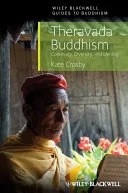
Theravada Buddhism
 81
81

Theravada Buddhism
Kate Crosby's Theravada Buddhism offers a necessary corrective to the often-generalized understanding of this ancient tradition. The work's strength lies in its detailed exploration of Theravada beyond the more widely studied Sri Lankan and Thai contexts, incorporating material from countries like Cambodia and Vietnam. This broadens the scope considerably, revealing the tradition's varied expressions. A limitation, perhaps, is the sheer density of information, which, while comprehensive, can be challenging for absolute beginners. For instance, the discussion of the Pali Canon's transmission and its influence on scriptural interpretation is meticulously researched but requires careful attention. Overall, Crosby provides an academically rigorous and geographically expansive overview that significantly advances the study of Theravada.
📝 Description
81
Kate Crosby's 2013 book examines Theravada Buddhism beyond superficial understandings.
First published in 2013, Kate Crosby's work provides a detailed look at Theravada Buddhism, one of the world's oldest religious paths. It moves past common assumptions to cover the tradition's history, its central teachings, and how it is practiced today. The book is useful for academics, students of religion, and dedicated practitioners who want a deeper view of Buddhist practices, especially those not focused on Sanskrit traditions and how they have spread globally.
Crosby traces the historical development of Theravada Buddhism from its beginnings and follows its spread from South and Southeast Asia to other parts of the world. The text clarifies key Theravada ideas, distinguishing them from those in other Buddhist schools and from popular misunderstandings. It discusses rituals, monastic life, and the roles of lay followers, showing how the tradition remains active and adapts.
This book engages with Theravada Buddhism not merely as a historical or philosophical system, but as a living tradition of contemplation and practice. It addresses the internal logic and experiential dimensions that underpin its doctrines and rituals, placing it within the broader context of contemplative disciplines aimed at understanding the nature of reality and the self. Crosby’s analysis highlights the practical application of these teachings for those seeking spiritual insight and liberation.
💡 Why Read This Book?
• Gain a nuanced understanding of Theravada Buddhism's origins and evolution, moving beyond common stereotypes by examining its development since the 3rd century BCE Sangha. • Discover the diverse practices and adaptations of Theravada across Southeast Asia, learning about its presence in Bangladesh and Vietnam, not just its more familiar contexts. • Grasp core Theravada teachings and their practical application through detailed analysis of monastic life and lay engagement, as presented in the book's exploration of the Vinaya.
⭐ Reader Reviews
Honest opinions from readers who have explored this book.
❓ Frequently Asked Questions
What distinguishes Theravada Buddhism from other Buddhist traditions?
Theravada Buddhism, often considered the oldest surviving school, adheres closely to the earliest recorded teachings of the Buddha found in the Pali Canon. It emphasizes individual liberation through monastic discipline and meditation, differing from Mahayana's emphasis on bodhisattva ideals.
Where is Theravada Buddhism primarily practiced?
Theravada Buddhism is predominantly practiced in Sri Lanka, Cambodia, Thailand, Laos, and Myanmar. Kate Crosby's work also highlights its significant presence and unique developments in countries like Bangladesh and Vietnam.
What are the key texts in Theravada Buddhism?
The central texts are the Pali Canon, comprising the Vinaya Pitaka (monastic rules), Sutta Pitaka (discourses of the Buddha), and Abhidhamma Pitaka (philosophical and psychological analysis). These texts are foundational to understanding Theravada doctrine.
How does Theravada Buddhism approach meditation?
Theravada meditation often focuses on mindfulness (vipassanā) and concentration (samatha). The goal is to develop insight into the nature of reality, leading to the cessation of suffering, as detailed in the practice sections of the book.
Is Theravada Buddhism suitable for Western practitioners?
Yes, Theravada Buddhism offers profound philosophical and meditative practices accessible to Westerners. The book's exploration of its global reach shows its adaptability and relevance beyond its traditional cultural contexts.
What is the historical significance of the 2013 publication date for this book?
The 2013 publication date signifies that Kate Crosby's work engages with contemporary scholarship and offers an updated perspective on Theravada Buddhism, incorporating recent research and field studies from across its geographical spread.
🔮 Key Themes & Symbolism
Pali Canon Focus
The work meticulously examines the centrality of the Pali Canon, distinguishing Theravada from Sanskrit-based Mahayana traditions. Crosby details how this collection of scriptures, preserved in the Pali language, forms the bedrock of Theravada doctrine and practice, influencing monastic codes (Vinaya) and doctrinal analysis (Abhidhamma). The emphasis is on the early teachings attributed to the historical Buddha, Siddhartha Gautama, and their preservation over centuries.
Geographical Diversity
Challenging the notion of Theravada as monolithic, this book uncovers its rich variations across Southeast Asia. It moves beyond the common focus on Sri Lanka and Thailand to include substantial material from Cambodia, Vietnam, and Bangladesh. This comparative approach reveals how local customs and historical influences shape the expression of Theravada, demonstrating its adaptive nature.
Monasticism and Lay Practice
A significant theme is the intricate relationship between monastic discipline (bhikkhus and bhikkhunis) and the devotional and ethical practices of lay followers. Crosby explores how the Vinaya guides the monastic community, while lay participation in rituals, merit-making, and adherence to ethical precepts sustains the tradition, illustrating a dynamic interdependence.
Origins and Evolution
The book traces the historical roots of Theravada from its earliest monastic communities, emerging after the Buddha's parinirvana, through its spread across the Indian subcontinent and into Southeast Asia. It examines key developments and adaptations over two millennia, providing a comprehensive historical arc.
💬 Memorable Quotes
Direct passages from the work, attributed to the author.
“Theravada Buddhism offers a comprehensive introductory overview.”
— This statement highlights the book's foundational role, aiming to present the essential elements of Theravada for those new to its complexities, covering its history, teachings, and current practice.
“Explores Theravada Buddhism’s origins, evolution, teachings, and practices.”
— This expresses the book's methodical approach, promising a deep dive into the tradition's entire lifecycle, from its inception to its contemporary manifestations and core doctrines.
“Considers the practice of Theravada beyond Sri Lanka and Thailand.”
— This signals the book's ambitious scope, promising to reveal the less-understood geographical dimensions and cultural adaptations of Theravada Buddhism in regions often overlooked in Western scholarship.
“Reveals its rich and varied traditions.”
— This suggests that the book will showcase the diversity within Theravada, moving past simplistic categorizations to expose the nuanced and complex ways the tradition is lived and understood globally.
“Corrects common misunderstandings.”
— This indicates the author's intent to address prevalent misconceptions about Theravada Buddhism, offering accurate information and scholarly insights to clarify potentially distorted views.
🌙 Esoteric Significance
Tradition
While Theravada Buddhism is primarily an orthodox, non-esoteric tradition focused on the original teachings of the Buddha, its deep engagement with the mind, consciousness, and liberation from suffering aligns with broader esoteric aims of spiritual transformation. The emphasis on rigorous practice and direct experiential insight through meditation connects it to contemplative traditions found across various esoteric lineages, seeking ultimate reality beyond conventional understanding.
Symbolism
Key symbols within Theravada, such as the Bodhi Tree under which the Buddha attained enlightenment, represent awakening and liberation from the cycle of rebirth (samsara). The Dharma Wheel (Dharmachakra) symbolizes the Buddha's teachings and the path to enlightenment. The lotus flower, prevalent in Buddhist art, signifies purity, spiritual growth, and the ability to rise above worldly defilements.
Modern Relevance
Contemporary mindfulness movements and secularized meditation practices often draw implicitly or explicitly from Theravada techniques, particularly Vipassanā. Thinkers and practitioners exploring contemplative science, Buddhist modernism, and comparative spiritualities frequently engage with Theravada texts and practices as foundational elements for understanding the mind and achieving well-being.
👥 Who Should Read This Book
• Students of comparative religion and Buddhist studies seeking a comprehensive and geographically diverse overview of Theravada, moving beyond introductory texts focused solely on Sri Lanka or Thailand. • Practitioners of meditation interested in the historical and doctrinal underpinnings of Vipassanā and Samatha techniques, gaining context from the Pali Canon and monastic traditions. • Researchers of Southeast Asian cultural history and religious practices looking for detailed insights into the role and evolution of Theravada Buddhism in countries like Cambodia and Vietnam.
📜 Historical Context
Published in 2013, Kate Crosby's work arrives at a time of increased global interest in Buddhist studies, building upon decades of scholarship that began to seriously engage with non-Sanskrit traditions. The mid-20th century saw a burgeoning academic interest in Buddhism, often initially focused on Tibetan and Zen Buddhism. However, scholars like Richard Gombrich, with his foundational work on Theravada in Sri Lanka, paved the way for more nuanced regional studies. Crosby's contribution is significant in its deliberate expansion beyond the well-trodden paths of Sri Lanka and Thailand, incorporating vital material from Cambodia and Vietnam, areas that had received comparatively less attention in Western academic discourse until the late 20th century. This approach positions her work within a broader, more inclusive understanding of Buddhist history, challenging earlier Eurocentric or single-region focused narratives.
📔 Journal Prompts
The Pali Canon's role in preserving early Buddhist teachings.
Theravada's adaptation in Cambodian and Vietnamese contexts.
The Vinaya's influence on monastic discipline.
The concept of liberation (nirvana) within Theravada.
Lay engagement with Theravada rituals and ethics.
🗂️ Glossary
Pali Canon
The standard collection of scriptures in the Theravada Buddhist tradition, believed to contain the teachings of the historical Buddha, Siddhartha Gautama, preserved in the Pali language.
Vinaya Pitaka
The first part of the Pali Canon, dealing with monastic discipline and rules for monks (bhikkhus) and nuns (bhikkhunis) in Theravada Buddhism.
Sutta Pitaka
The second part of the Pali Canon, containing the discourses and teachings attributed to the Buddha and his close disciples.
Abhidhamma Pitaka
The third and final part of the Pali Canon, presenting a systematic analysis of Buddhist doctrine, focusing on the nature of reality and consciousness.
Vipassanā
A type of meditation practice in Theravada Buddhism, often translated as 'insight meditation,' aimed at developing clear awareness of the present moment and understanding the impermanent nature of phenomena.
Samatha
A type of meditation practice in Theravada Buddhism focused on developing concentration and mental tranquility, often a precursor to Vipassanā.
Samsara
The cycle of death and rebirth, a fundamental concept in many Indian religions, including Buddhism, characterized by suffering and impermanence.