Confucianism as a World Religion
 73
73

Confucianism as a World Religion
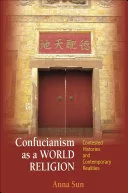
Anna Sun’s "Confucianism as a World Religion" offers a compelling counter-narrative to the prevailing academic and popular dismissal of Confucianism as solely an ethical framework. By foregrounding the late 19th-century Western academic impulse to define "world religions," Sun effectively demonstrates how figures like Friedrich Max Müller and James Legge actively positioned Confucianism within this new discourse. A notable strength is the integration of ethnographic data; the author’s decade of interviews across China provides a vital counterpoint to the Western-centric historical analysis, revealing the complex local understandings of Confucian practice. While the book rigorously reconstructs the historical classification, its exploration of how these Western categorizations subsequently impacted Chinese self-perception could benefit from deeper engagement with post-Mao era intellectual shifts beyond the author's direct fieldwork. Nevertheless, Sun's work is a vital corrective, urging readers to reconsider the boundaries of religious studies. It stands as a significant contribution to understanding the historical construction of religious categories.
📝 Description
73
Anna Sun's 2013 book questions why Confucianism is often excluded from religious studies.
Anna Sun's "Confucianism as a World Religion" argues against the common view of Confucianism as solely a philosophy or ethical system. This perspective, prevalent in China, contrasts with its historical treatment in the West, especially in the late 19th century. The book examines why a tradition so central to East Asian societies was often left out of religious scholarship. It traces how scholars like Friedrich Max Müller and James Legge at Oxford University in the 1880s classified Confucianism as a world religion. Their work placed it alongside other major faiths within a new academic framework, influencing its subsequent study. Beyond historical analysis, Sun includes over a decade of fieldwork in China. Her interviews with individuals provide contemporary perspectives on how Confucian traditions are perceived and practiced today. The book draws on temple architecture, rituals, 19th-century archives, and personal testimonies to show how Confucianism has been understood and lived across time and cultures.
This book engages with the historical categorization of belief systems, a practice that has shaped how traditions like Confucianism are understood within Western academic frameworks. It examines the intellectual currents of the late 19th century when comparative religion emerged as a discipline. By analyzing how Confucianism was adopted, adapted, and sometimes sidelined in this new discourse, Sun reveals the construction of religious categories themselves. This approach situates the book within critical studies of religion, questioning the boundaries and definitions that govern the study of spiritual and ethical traditions.
💡 Why Read This Book?
• Understand the historical circumstances in the 1880s, particularly the work of James Legge at Oxford, that led to Confucianism being categorized as a world religion, challenging common assumptions. • Gain insight into the author’s decade-long ethnographic research across China, providing firsthand accounts that complicate purely academic or historical views of Confucian practice. • Explore the concept of "Confucian temples" not just as historical sites but as living spaces where contemporary interpretations of Confucianism are enacted and debated.
⭐ Reader Reviews
Honest opinions from readers who have explored this book.
❓ Frequently Asked Questions
When was Confucianism first formally classified as a world religion?
The classification of Confucianism as a world religion gained significant traction in the late 19th century, notably through the work of scholars like James Legge at Oxford University around the 1880s.
What is the primary argument of Anna Sun's book?
The book argues that Confucianism, despite often being viewed as a philosophy in China, was historically constructed and has been understood in the West as a world religion, tracing this idea from 19th-century scholarship to contemporary China.
What kind of research does the book include?
The research combines historical archival work, analysis of 19th-century academic discourse, and over a decade of ethnographic fieldwork and interviews conducted by the author throughout China.
Why do many Chinese people not consider Confucianism a religion?
This perception is complex and is explored in the book, often stemming from Confucianism's historical emphasis on social ethics, ritual, and governance rather than explicit theology or divine worship in the way Western religions are typically defined.
Who were key figures in classifying Confucianism as a world religion?
Key figures include Friedrich Max Müller and James Legge, whose academic work in the late 19th century at Oxford was instrumental in establishing this categorization within the burgeoning field of comparative religion.
What role do Confucian temples play in the book's argument?
Confucian temples are examined as physical spaces that represent the historical and ongoing presence of Confucian traditions, serving as sites for both historical study and contemporary practice and debate.
🔮 Key Themes & Symbolism
The Invention of World Religions
The book critically examines the late 19th-century academic project, particularly at Oxford, that sought to define and categorize global religious traditions. Scholars like Friedrich Max Müller and James Legge were central to this endeavor, actively classifying Confucianism alongside Buddhism and Islam. This theme explores how these Western academic frameworks were constructed and the implications they had for understanding non-Western traditions, often imposing external categories onto complex indigenous systems of belief and practice.
Confucian Temples as Sites
Ancient Confucian temples are presented not merely as historical relics but as dynamic spaces embodying the historical and ongoing significance of Confucian thought. The book analyzes the role these temples played in imperial China and how they continue to function, be interpreted, or be repurposed in contemporary society. Their architecture, rituals, and community engagement are explored as tangible manifestations of Confucian traditions that blur the lines between the sacred and the social.
Ethnographic Perspectives on Practice
A core element is the author's decade-long ethnographic research across China. This involves gathering testimonies from individuals about their understanding and practice of Confucianism. This theme highlights the gap between academic classifications and lived experience, revealing how ordinary people engage with Confucian values, rituals, and social norms in ways that may not align with traditional religious definitions, thus offering a ground-level view of a 'world religion'.
Scholarly Debates and Classification
The work looks at the intellectual currents of the late 19th century that spurred the classification of Confucianism as a world religion. It scrutinizes the motivations and methodologies of scholars like Legge and Müller, whose efforts were part of a broader discourse on comparative religion and global cultural hierarchies. This theme investigates the long-term consequences of these classifications on both Western and Chinese understandings of Confucianism.
💬 Memorable Quotes
Direct passages from the work, attributed to the author.
“The late nineteenth century saw the birth of the idea of Confucianism as a world religion.”
— This statement pinpoints the specific historical period and intellectual movement that established the framework for viewing Confucianism through a global religious lens, challenging its prior categorization.
“Why do most Chinese think it isn't [a religion]?”
— This question, posed in the blurb, expresses the central tension of the book: the divergence between Western academic classification and the lived, internal perception of Confucianism within Chinese society.
“From ancient Confucian temples, to nineteenth-century archives...”
— This phrase indicates the book's methodological breadth, spanning historical periods and diverse source materials, from physical structures to scholarly documents, to build its argument.
“...to the testimony of people interviewed by the author throughout China...”
— This highlights the book's ethnographic dimension, emphasizing the inclusion of contemporary, individual voices and experiences gathered over more than a decade of fieldwork.
“...in the new discourse of 'world religions.'”
— This points to the specific academic context of the late 19th century, where the very concept and study of 'world religions' were being formulated, shaping how traditions like Confucianism were understood.
🌙 Esoteric Significance
Tradition
While Confucianism is not typically categorized within Western esoteric traditions like Hermeticism or Kabbalah, its re-evaluation as a 'world religion' has implications for comparative mysticism. Esotericism often focuses on hidden knowledge and inner transformation. By examining Confucianism's rituals, ethical cultivation, and its role in shaping cosmic harmony (as understood through concepts like *Tian*), this work allows for an esoteric reading of its emphasis on self-perfection and social order as paths to a larger, underlying reality.
Symbolism
Key symbols within Confucianism, though not explicitly esoteric, carry profound meaning. The character 'Ren' (仁), often translated as benevolence or humaneness, signifies the ideal ethical state of being and interpersonal connection. The concept of the 'Junzi' (君子) or noble person represents the cultivated individual striving for moral excellence. The cyclical understanding of history and governance, reflected in imperial rituals and temple architecture, can be interpreted esoterically as a reflection of cosmic order and the cyclical nature of existence.
Modern Relevance
Contemporary thinkers exploring the intersection of ethics, politics, and spirituality find resonance in Sun's work. New Confucian movements and scholars seeking to articulate a distinct East Asian philosophical and religious identity draw upon the historical classifications and critiques presented. Furthermore, in a globalized world increasingly interested in diverse ethical systems and philosophies of life, understanding Confucianism's complex identity as both a social philosophy and a 'world religion' is crucial for comparative studies and cross-cultural dialogue.
👥 Who Should Read This Book
['Academic researchers in religious studies and East Asian philosophy seeking to understand the historical construction of religious categories.', 'Students of comparative religion interested in how traditions are defined and classified across different cultural contexts.', 'Individuals intrigued by the philosophical and ethical underpinnings of Chinese society and the nuanced identity of Confucianism.']
📜 Historical Context
Anna Sun's "Confucianism as a World Religion" emerges from the intellectual milieu of the late 19th century, a period marked by the burgeoning field of comparative religion and a Western drive to categorize global belief systems. Scholars like Friedrich Max Müller and James Legge, working at institutions like Oxford University, were instrumental in establishing the concept of "world religions." Legge, in particular, dedicated significant effort to translating and interpreting the Confucian classics, positioning them within this new academic framework. This classification occurred amidst broader colonial and imperial interactions, where understanding and categorizing diverse cultures were intertwined with political and intellectual dominance. The book implicitly engages with Orientalist scholarship, questioning the external imposition of categories. While not explicitly detailing censorship, the very act of classifying Confucianism as a religion distinct from its ingrained role in Chinese governance and social ethics inevitably sparked debate and reinterpretation, both within Western academia and, through subsequent intellectual exchange, in China itself.
📔 Journal Prompts
The late 19th-century classification of Confucianism as a world religion.
The role of ancient Confucian temples in contemporary China.
Testimonies of people interviewed throughout China regarding Confucianism.
The academic discourse surrounding Friedrich Max Müller and James Legge.
The contrast between Western and Chinese perceptions of Confucianism's religious status.
🗂️ Glossary
Confucianism
A system of ethical and philosophical thought originating from the teachings of Confucius, profoundly influencing East Asian culture, emphasizing morality, social harmony, good governance, and personal cultivation.
World Religion
A term originating in 19th-century scholarship used to categorize major global religious traditions, often based on criteria like widespread influence, organized structure, and distinct theological or philosophical tenets.
Friedrich Max Müller
A prominent scholar of comparative mythology and religion in the 19th century, influential in establishing the academic study of world religions and the classification of traditions like Confucianism.
James Legge
A Scottish missionary and sinologist who produced influential translations of Chinese classics, including the Confucian texts, and played a key role in classifying Confucianism as a world religion at Oxford.
Confucian Temples
Structures historically dedicated to the veneration of Confucius and his disciples, serving as centers for education, ritual, and the perpetuation of Confucian values and governance.
Ethnography
The scientific description of the customs of individual peoples and cultures, often involving immersive fieldwork and direct interaction with communities.
Discourse
Written or spoken communication or debate, particularly concerning a specific subject; in this context, the academic and intellectual conversations shaping the understanding of religion.