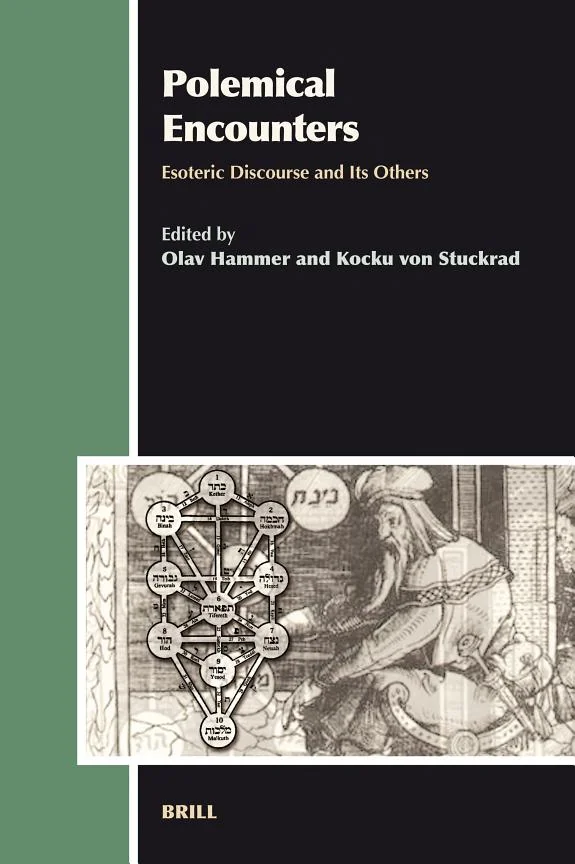
Polemical Encounters
 74
74

Polemical Encounters
Olav Hammer and Kocku Von Stuckrad’s Polemical Encounters offers a vital corrective to studies that treat esoteric traditions as isolated phenomena. By focusing on the polemical structures that have both constituted and contested these currents, the book illuminates the dynamic, often contentious, historical development of Western esotericism. The strength lies in its consistent focus on discourse and identity formation, particularly how external criticism and internal debates have solidified esoteric identities. A limitation, however, is that the dense academic prose, while precise, can make accessible the complex arguments for specialists rather than a broader audience. The discussion of how groups like the Kabbalists engaged with and were perceived by broader religious communities in early modernity, for instance, is particularly illuminating, demonstrating the constant negotiation of boundaries. This collection is an essential scholarly contribution to understanding the social and intellectual history of Western esotericism.
📝 Description
74
Olav Hammer and Kocku Von Stuckrad examine how Western esotericism is built on argument and disagreement.
This volume analyzes the role of critical discourse in shaping Western esotericism. Rather than simply classifying esoteric traditions, the authors investigate the argumentative structures and controversies that have defined their identities and how they are received. The book traces these polemical encounters from Kabbalah in late antiquity and early modernity, through debates about Christian and Jewish mysticism, to the formation of esoteric identities in modern culture.
It acknowledges that esotericism has seldom existed in isolation. Instead, its definition has often stemmed from opposition and internal disputes. This is particularly evident in the centuries after the Reformation and during the Enlightenment's rationalist critiques. The work examines concepts such as 'heretical discourse,' 'interconfessional polemics,' and the 'legitimization of esoteric identity.' It shows how groups distinguished themselves from dominant religious or philosophical systems, and how these external pressures, along with internal divisions, contributed to the creation of distinct esoteric traditions and their historical paths.
This book situates Western esotericism not as a static collection of beliefs, but as a dynamic field constantly negotiated through debate and opposition. It highlights how internal conflicts and external critiques, from early Kabbalistic arguments to Enlightenment rationalism, have been instrumental in forging the identities of esoteric movements. By focusing on these polemical exchanges, Hammer and Von Stuckrad reveal how historical controversies have actively shaped the very traditions they study, demonstrating that conflict is an integral part of esoteric history.
💡 Why Read This Book?
• Gain insight into the construction of esoteric identities by examining the polemical discourse surrounding movements from Kabbalah to modern occultism, understanding how external debate solidified internal beliefs. • Understand the historical relationship between esoteric traditions and dominant religious or philosophical systems, specifically through the lens of "interconfessional polemics" in early modern Europe. • Analyze the strategies employed by esoteric groups to "legitimize" their practices and beliefs in the face of criticism, a process detailed from late antiquity through contemporary cultural contexts.
⭐ Reader Reviews
Honest opinions from readers who have explored this book.
❓ Frequently Asked Questions
What historical periods does Polemical Encounters cover regarding Western esotericism?
The book examines the historical development of Western esotericism from late antiquity through to the present day, analyzing polemical discourse across these eras.
How does the book define "esotericism" in the context of its historical polemics?
It defines esotericism not as a fixed set of beliefs, but as currents that have been continually shaped by and have responded to critical, often polemical, discourse throughout history.
Which specific esoteric traditions are discussed in relation to polemical encounters?
The volume engages with traditions such as Jewish and Christian Kabbalah, and explores the broader phenomenon of "heretical discourse" within European history.
What is the significance of "polemical discourse" for the study of esotericism?
Polemical discourse is presented as crucial for understanding both the internal identities of esoteric groups and the external controversies they have faced, demonstrating how opposition shapes self-definition.
Who are the primary authors of Polemical Encounters?
The book is authored by Olav Hammer and Kocku Von Stuckrad, and was first published in 2007.
What academic fields would find Polemical Encounters most relevant?
It is highly relevant for scholars and students of religious studies, history, sociology of religion, and those specializing in Western esoteric traditions.
🔮 Key Themes & Symbolism
Identity Through Opposition
This theme examines how esoteric groups historically defined themselves not just by their internal doctrines but by their opposition to, and critiques from, external religious, philosophical, and societal forces. The book illustrates how "polemical discourse" acted as a crucible, forging distinct esoteric identities by setting boundaries against dominant paradigms. From the early debates surrounding Kabbalah to later interactions with Enlightenment rationalism, the constant negotiation with perceived adversaries played a critical role in solidifying what it meant to be part of a specific esoteric current.
Heretical Discourse and Control
The volume analyzes how esoteric movements were frequently categorized as "heretical" by established religious authorities. This "heretical discourse" was not merely descriptive but a tool of control and exclusion. The book explores how this labeling impacted the trajectory of various esoteric traditions, forcing them into secrecy, marginalization, or into developing sophisticated arguments for their legitimacy. The interconfessional polemics of early modernity, where different Christian denominations also contested each other's esoteric interpretations, are a key focus.
Legitimization Strategies
A central concern is how esoteric traditions have sought "legitimization" throughout Western history. This involves understanding the arguments, appeals to authority (ancient texts, rediscovered wisdom), and rhetorical strategies employed to gain acceptance or at least tolerance. The book traces these efforts from the attempts to integrate esoteric elements within established mystical frameworks to modern attempts to present esotericism as a valid alternative to mainstream science and religion.
Internal Polemics
Beyond external attacks, Polemical Encounters also addresses the internal conflicts and debates that have characterized esoteric traditions. Schisms, differing interpretations of foundational texts, and disputes over leadership or practice all contribute to the historical record. These internal polemics, alongside external pressures, reveal the dynamic and often contentious nature of esoteric movements, shaping their evolution and diversification over centuries.
💬 Memorable Quotes
Direct passages from the work, attributed to the author.
“Western esotericism has repeatedly been the issue of polemical discourse.”
— This foundational statement highlights that the study of esotericism cannot ignore the conflicts, debates, and criticisms that have surrounded these traditions throughout their history, emphasizing their dynamic interaction with broader society.
“The volume engages the polemical structures that underlie both the identities within and the controversy about esoteric currents.”
— This points to the book's analytical framework, which focuses on the argumentative patterns and rhetorical strategies used both by esoteric groups to define themselves and by their critics to challenge them.
“From Jewish and Christian kabbalah through heretical discourse and interconfessional polemics in early modernity...”
— This phrase outlines the historical scope and specific examples of polemical engagement, indicating the book's exploration of key traditions and periods where such controversies were particularly intense.
“...to the legitimization of esoteric identity in modern culture.”
— This signifies the book's trajectory towards contemporary issues, examining how esoteric movements continue to strive for recognition and acceptance in the modern world, often through engaging with or countering prevailing cultural narratives.
“The 12 chapters... engage the polemical structures.”
— This indicates the structured, in-depth approach of the collection, with each chapter contributing to a comprehensive analysis of how argumentation and conflict have shaped the field of Western esotericism.
🌙 Esoteric Significance
Tradition
This work significantly contributes to the academic understanding of Western esotericism, particularly its sub-traditions like Kabbalah. It frames these traditions not as static bodies of knowledge but as dynamic historical phenomena constantly negotiated through discourse and conflict. By focusing on "polemical structures," it offers a framework that transcends specific doctrines, applicable to Hermeticism, Gnosticism, and later occult movements, highlighting their shared experience of being defined against dominant paradigms.
Symbolism
While not focused on symbolic interpretation per se, the book implicitly examines how symbols within esoteric traditions (e.g., certain Kabbalistic diagrams or alchemical imagery) became points of contention or markers of identity. The "heretical discourse" surrounding these traditions often targeted their perceived deviation from orthodox symbolic language. The "legitimization" of esoteric identity frequently involved reinterpreting or reclaiming symbolic meanings that were contested by external authorities.
Modern Relevance
Contemporary scholars of religion, cultural theorists, and researchers of alternative spiritualities draw on Polemical Encounters to understand the ongoing debates surrounding esotericism. Thinkers in fields like the sociology of knowledge and the study of conspiracy theories find resonance in its analysis of how marginalized ideas are constructed and defended. The work remains relevant for understanding modern esoteric movements' efforts to gain legitimacy in a secularized, scientifically-oriented world, mirroring the historical strategies examined.
👥 Who Should Read This Book
• Researchers in religious studies and history: To understand the intellectual battles and definitional struggles that have characterized Western esoteric traditions from antiquity to the present. • Students of comparative religion: To analyze how marginal or heterodox spiritual movements negotiate their identities in relation to dominant religious and philosophical systems. • Advanced practitioners of esoteric arts: To gain a critical perspective on the historical context and societal reception of their chosen paths, understanding the roots of common controversies.
📜 Historical Context
Published in 2007, Polemical Encounters emerged during a period of increasing academic interest in Western esotericism, moving beyond earlier, often dismissive, treatments. The work situates itself within the burgeoning field of esoteric studies, offering a sophisticated analysis of the intellectual and social forces that shaped these traditions. It contrasts with earlier scholarship that might have focused solely on doctrines or biographical accounts. The authors engage with the legacy of the Enlightenment, which often marginalized esoteric thought as superstition, and the subsequent resurgence of interest in the occult and alternative spiritualities in the late 19th and 20th centuries. The volume's exploration of "interconfessional polemics" in early modernity, particularly the religious debates following the Reformation, highlights a crucial era where esoteric interpretations were contested within and between established Christian traditions. Contemporaries like Antoine Faivre, a pioneer in the academic study of Western esotericism, were also exploring the boundaries and definitions of the field, making Hammer and Von Stuckrad's work a significant contribution to this ongoing scholarly conversation.
📔 Journal Prompts
The construction of "esoteric identity" through "polemical discourse."
The role of "heretical discourse" in shaping historical esoteric movements.
Strategies for "legitimization" employed by esoteric traditions across centuries.
The impact of "interconfessional polemics" on esoteric interpretations in early modernity.
How external controversy has shaped the internal "identities within" esoteric currents.
🗂️ Glossary
Polemical Discourse
Argumentative or controversial communication, often aggressive in tone, used to attack, defend, or refute a particular belief system, doctrine, or group. In this context, it refers to the debates surrounding esoteric traditions.
Western Esotericism
A broad category encompassing diverse spiritual, mystical, and philosophical traditions in the Western world that often stand outside mainstream religious or scientific paradigms, including Hermeticism, Kabbalah, alchemy, and various occult movements.
Late Antiquity
The historical period generally spanning from the 3rd to the 6th century CE, bridging the Roman Empire and the early Middle Ages, a formative era for many Western religious and philosophical ideas.
Kabbalah
A system of Jewish mysticism and esoteric interpretation of the Torah, which profoundly influenced Western esotericism and is examined in the book for its historical polemical encounters.
Heretical Discourse
Language and argumentation used by dominant religious or intellectual authorities to label and condemn beliefs or practices deemed to deviate from established orthodoxy, often serving to marginalize or suppress alternative viewpoints.
Interconfessional Polemics
Controversial disputes and arguments occurring between different established religious denominations or confessions, particularly relevant in the context of early modern Europe following the Reformation.
Legitimization
The process by which a group, idea, or practice gains acceptance, validity, or recognition, especially in the face of doubt, criticism, or established opposition.
This book appears in 1 collection
🔮 Readers Also Liked
Browse all →





From the “Western Esotericism” Collection
View all →




More Free Sacred Texts & Gnosticism Books
View all →