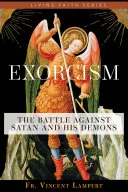
Exorcism: The Battle Against Satan and His Demons
 75
75

Exorcism: The Battle Against Satan and His Demons
Father Vincent P. Lampert’s "Exorcism: The Battle Against Satan and His Demons" arrives at a moment when popular culture seems increasingly fascinated with the infernal. As a seasoned exorcist, Lampert brings an insider's perspective, though the book functions more as a theological exposition than a collection of personal accounts. His strength lies in clearly articulating Catholic doctrine regarding the fallen angels and their alleged machinations, drawing directly from scripture and tradition. A particularly salient point is his explanation of how the devil's primary goal is separation from God, framing exorcism not as a sensational spectacle but as a ministry of divine mercy and restoration. However, the work's limitation is its inherent confessional focus; it operates entirely within the presuppositions of Catholic faith, offering little engagement with broader philosophical or psychological perspectives on evil and suffering. While it thoroughly covers the Church's teaching, readers seeking comparative religious or critical analyses might find it narrowly focused. Nevertheless, for its intended audience, it serves as a robust defense of a specific theological position. It stands as a clear articulation of Catholic belief on a contentious subject.
📝 Description
75
Father Vincent P. Lampert published Exorcism: The Battle Against Satan and His Demons in 2020.
Published in 2020, Father Vincent P. Lampert's book examines Catholic teachings on Satan and demonic influence. It functions as a theological and pastoral guide, detailing the Roman Catholic Church's view of spiritual warfare between good and evil. The work intends to help believers identify and resist negative spiritual forces.
This book is mainly for Catholics who want a clearer grasp of the Church's position on demonology and the rite of exorcism. It also suits those interested in the historical and theological aspects of spiritual combat from a specific religious viewpoint. Readers curious about the practical application of exorcism as conducted by the Catholic Church will find useful information here.
Lampert's text connects to a long history of Christian thought on demonic opposition, from early Church writings to medieval discussions of witchcraft. Published recently, it addresses current conversations about the occult and a renewed interest in the devil, presenting these as reasons for stronger faith and watchfulness.
This work is situated within the Catholic tradition's engagement with the supernatural, particularly the active opposition attributed to Satan and his demons. It follows a lineage of theological and pastoral writings that address the reality of evil spiritual entities and the Church's prescribed methods for combating their influence. Lampert's approach reflects a contemporary expression of this ongoing spiritual struggle, emphasizing prayer, sacraments, and divine grace as the primary means of defense, aligning with devotional and mystical practices within Catholicism.
💡 Why Read This Book?
• Learn about the Catholic Church's specific theological framework for understanding demonic influence, as articulated by Father Lampert, a recognized exorcist, providing concrete doctrine on spiritual warfare. • Gain insight into the sacramental ministry of exorcism within Catholicism, exploring the Church's official rites and the role of priests, as detailed in the text's pastoral guidance. • Understand the Catholic perspective on the devil's tactics and the spiritual defenses available to believers, such as prayer and sacraments, directly from a source published in 2020 reflecting contemporary Church concerns.
⭐ Reader Reviews
Honest opinions from readers who have explored this book.
❓ Frequently Asked Questions
What is the primary purpose of Father Vincent P. Lampert's book "Exorcism: The Battle Against Satan and His Demons"?
The book's primary purpose is to present authentic Catholic teaching on the devil and his demons, explaining the nature of spiritual warfare and the ministry of exorcism as understood by the Roman Catholic Church. It aims to equip believers with knowledge to guard against evil.
Who is Father Vincent P. Lampert and what is his background relevant to this book?
Father Vincent P. Lampert is an ordained Catholic priest and a seasoned exorcist. His practical experience in performing exorcisms lends authority and a pastoral perspective to his theological explanations within the book, which was first published in 2020.
Does the book "Exorcism: The Battle Against Satan and His Demons" describe specific exorcism cases?
While the book discusses the ministry of exorcism and the theological underpinnings, it focuses more on presenting Catholic doctrine and teachings rather than detailing specific, sensationalized accounts of individual exorcism cases. It offers a window into the merciful ministry.
What is the book's stance on the increase of attention given to the devil?
The book posits that an increase in attention to the devil and his ways corresponds with a decrease in faithful practice among some Christians. It views this as a sign that individuals must be more vigilant and on guard against spiritual attack.
What are the main spiritual defenses against demonic influence according to the book?
According to the book, the primary spiritual defenses include prayer, the sacraments (particularly the Eucharist and Reconciliation), divine grace, and adherence to Catholic teachings. It stresses the importance of maintaining a strong relationship with God.
Is "Exorcism: The Battle Against Satan and His Demons" suitable for non-Catholics?
The book is written from a distinctly Catholic theological perspective. While non-Catholics interested in demonology, spiritual warfare, or comparative religion might find it informative, its content and arguments are framed within Catholic doctrine and practice.
🔮 Key Themes & Symbolism
Spiritual Warfare Doctrine
The work meticulously outlines the Catholic understanding of spiritual warfare as an ongoing conflict between humanity and Satan, supported by scripture and Church tradition. It defines the devil's aims as destruction and separation from God, positing that this battle is intensified in contemporary times due to perceived declines in faith. Lampert emphasizes that this is not merely a theological concept but a lived reality for many, requiring constant vigilance and spiritual fortitude from believers.
The Ministry of Exorcism
A significant focus is placed on the sacrament of Exorcism, presented not as a sensational event but as a ministry of divine mercy. The book details the Church's authority, vested in ordained priests, to perform exorcisms. It describes the rite as a structured, prayerful intervention aimed at freeing individuals believed to be oppressed or possessed by demonic forces, restoring them to the grace of God.
Nature of Demonic Influence
Lampert explores various levels of demonic influence, from subtle temptation and infestation to possession. The text seeks to differentiate between psychological distress and genuine demonic activity, providing a framework for understanding these phenomena within a Catholic worldview. It highlights the devil's cunning tactics and the importance of discerning spiritual attacks from natural or psychological causes.
The Role of Faith and Sacraments
Central to the book's argument is the power of faith and the sacraments as the primary bulwarks against demonic forces. It stresses that a robust Catholic faith, nourished by regular participation in Mass, confession, and prayer, is the most effective defense. Divine grace, accessed through these means, is presented as the ultimate weapon in the battle against Satan and his demons.
💬 Memorable Quotes
Direct passages from the work, attributed to the author.
“Because the devil seeks to destroy and separate us from God, all Catholics must be on guard.”
— This statement expresses the book's core premise: the devil is an active adversary whose primary objective is to sever the connection between individuals and the divine. It serves as a call to awareness and a reminder of the necessity for constant spiritual vigilance within the Catholic faith.
“Providing a window into the merciful ministry of exorcism, Fr. Lampert equips C”
— This excerpt suggests the book aims to explain the practice of exorcism, portraying it not as an act of condemnation but as an expression of God's mercy, facilitated by the Church. It implies the author intends to educate readers on the compassionate and restorative aspects of this specific ministry.
“At a time when many Christians no longer practice their faith, there has been an increase in the attention given to the devil and his devious ways.”
— This observation frames the contemporary interest in the devil as a symptom of spiritual decline. The author connects a perceived weakening of Christian adherence with a heightened focus on malevolent spiritual forces, implying a need for renewed faith and engagement with traditional practices.
“Fr. Vincent P. Lampert, a seasoned exorcist, presents authentic Catholic teaching on the devil and his plan against humanity.”
— This highlights the author's credentials and the book's primary function: to deliver official Catholic doctrine regarding Satan. It assures the reader that the content is grounded in established Church teachings rather than speculative or personal interpretations.
“The devil seeks to destroy and separate us from God.”
— This concise statement defines the fundamental objective attributed to Satan within the theological framework of the book. It underscores the adversarial nature of the spiritual battle and the ultimate stakes involved: maintaining one's relationship with the divine.
🌙 Esoteric Significance
Tradition
While rooted in mainstream Catholic theology, the book touches upon themes that resonate with certain esoteric traditions' interest in spiritual hierarchies and the nature of evil. However, it strictly adheres to Catholic dogma, departing from the syncretic or more speculative approaches found in Hermeticism or Gnosticism. Its significance lies in presenting a formalized, institutionalized approach to combating malevolent spiritual forces, distinct from individualistic or magical practices.
Symbolism
The primary symbolism revolves around the Cross of Christ, representing divine victory over evil, and the authority of the priesthood, symbolized by sacred vestments and liturgical actions. Light versus darkness is a pervasive motif, with God and His grace representing illumination against the shadows cast by Satan. The concept of 'possession' itself can be seen as a dark mirror to spiritual 'indwelling' by the Divine.
Modern Relevance
Contemporary interest in exorcism, often sensationalized in popular media, finds a counterpoint in Lampert's book, which emphasizes the pastoral and merciful aspects. Thinkers exploring the psychology of belief, the sociology of religion, or those within conservative Christian circles interested in spiritual warfare might engage with its arguments. It provides a specific theological framework for understanding perceived spiritual malaise in modern society.
👥 Who Should Read This Book
• Devout Catholics seeking to deepen their understanding of Church teachings on the devil, demons, and the sacrament of exorcism, offering clear theological explanations. • Individuals interested in comparative religion and demonology, providing a specific confessional perspective on spiritual warfare distinct from other traditions. • Pastoral counselors and theological students examining the historical and contemporary role of exorcism within religious institutions, offering insights into its practice and doctrine.
📜 Historical Context
Published in 2020, Father Lampert's work emerges during a period of renewed popular interest in the occult and supernatural phenomena, often fueled by media portrayals. Theologically, it stands firmly within the tradition of Roman Catholicism, directly engaging with doctrines concerning demonology and spiritual warfare that have been present since the early Church. This tradition includes figures like St. Augustine, whose writings grappled with the nature of evil and angelic beings, and later figures like Thomas Aquinas. Lampert's book can be seen as a contemporary articulation of these long-standing beliefs, countering what he perceives as a modern neglect of these spiritual realities. It implicitly responds to secularizing trends and a rise in psychological explanations for phenomena previously understood through a religious lens. While not directly engaging with contemporary critics like Richard Dawkins or secular philosophers of religion, the work's emphasis on faith and sacraments positions it as a confessional defense against such worldviews, asserting the continued relevance of traditional exorcism practices.
📔 Journal Prompts
The devil's objective to separate us from God: How does this concept influence your daily spiritual practices?
Reflect on the 'merciful ministry of exorcism' as presented in the book. What does this mercy entail?
Consider the 'spiritual warfare' described. Identify one area in your life where vigilance against temptation is needed.
Analyze the book's emphasis on prayer and sacraments as defenses. How can these be strengthened in your routine?
Examine the 'authentic Catholic teaching' on the devil. What specific aspect challenges or confirms your existing beliefs?
🗂️ Glossary
Exorcism
In Catholicism, a ritual rite performed by a Catholic priest with the authority of the bishop, intended to expel evil spirits from a person or place believed to be possessed or afflicted by them.
Demon
A fallen angel who, according to Catholic theology, rebelled against God under the leadership of Satan and is now considered an enemy of God and humanity, actively seeking to lead souls astray.
Satan
The chief demon, often identified with Lucifer, who is believed to be the primary adversary of God and humanity, responsible for tempting individuals and orchestrating evil in the world.
Spiritual Warfare
The concept of a continuous battle between spiritual forces of good (God, angels) and evil (Satan, demons) for the souls of humanity. Within Catholicism, this involves prayer, sacraments, and adherence to divine will.
Possession
A state where a demon is believed to have taken control of a person's body, influencing their actions, speech, and thoughts, while the soul may or may not be directly harmed.
Infestation
Demonic influence affecting a place (like a house) or objects, often characterized by strange noises, disturbances, or a generally oppressive atmosphere, rather than direct control over a person.
Divine Grace
The free and undeserved help that God gives to humans to respond to His supernatural call to become His adoptive children, overcome sin, and attain eternal life. It is seen as essential in resisting evil.