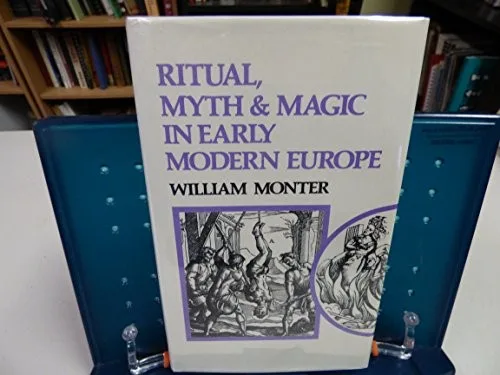
Ritual, myth, and magic in early modern Europe
 61
61

Ritual, myth, and magic in early modern Europe

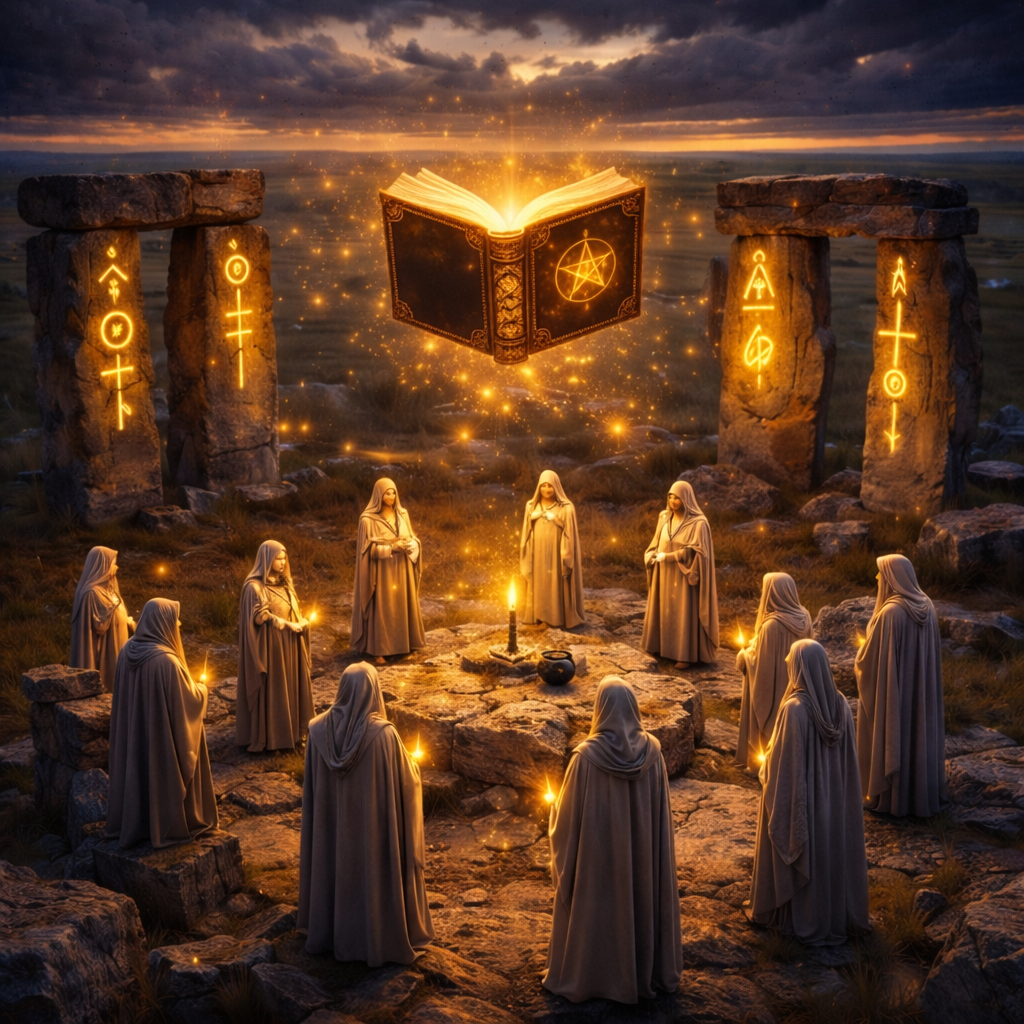

Celeste Moreau, Divination & Symbolism Reviewer — E. William Monter's 'Ritual, Myth, and Magic in Early Modern Europe' is an indispensable volume for anyone seeking to decipher the arcane underpinnings of Western spiritual history. Monter masterfully excavates the forgotten rituals and pervasive superstitions that coexisted with established religious dogma, revealing a Europe deeply influenced by magical thinking. His rigorous scholarship illuminates the symbolic language of the era, offering profound insights into the psychological and social functions of ritual. This work is essential for scholars of religion, magic, and history, as well as for practitioners who wish to ground their understanding in historical context. A truly illuminating exploration.
📝 Description
61
E. William Monter's 1983 book examines magic, myth, and ritual in early modern Europe.
Published in 1983, E. William Monter's study, 'Ritual, Myth, and Magic in Early Modern Europe,' investigates the beliefs and practices that characterized the period. Monter looks at how sacred rituals and potent myths influenced spiritual life, moving beyond a simple historical narrative to consider how people engaged with the spiritual. The book examines the symbolism used in daily life and the forces people tried to control through magic and ceremony.
Monter details the relationship between official religious teachings and the secret magical traditions that were common. He shows how these clandestine practices existed alongside, and sometimes interacted with, established doctrines. The work is for readers interested in understanding the origins of Western esotericism, revealing a time when the boundaries between the ordinary and the mystical were less defined and the search for hidden knowledge was significant.
This book situates itself within the study of Western esotericism by examining the historical conditions that allowed magical beliefs and practices to coexist with, and sometimes challenge, dominant religious and intellectual frameworks in early modern Europe. It demonstrates how individuals and communities sought alternative means of understanding and influencing the world, often through systems of knowledge and ritual that operated outside of official institutions. The focus on magic, myth, and ritual in a specific historical context provides a foundation for understanding the development and expression of esoteric thought.
💡 Why Read This Book?
Uncover the hidden spiritual currents of early modern Europe. This book is essential for seekers of esoteric knowledge, scholars of history and religion, and practitioners of ritual arts. It provides critical context for understanding the evolution of magical beliefs and practices, revealing the profound influence of ritual and myth on societal structures and individual consciousness. Gain a deeper appreciation for the mystical dimensions of our past.
⭐ Reader Reviews
Honest opinions from readers who have explored this book.
❓ Frequently Asked Questions
What is the primary focus of this book?
The book primarily focuses on the intricate relationship between ritual, myth, and magic in early modern European society, exploring how these elements shaped beliefs, practices, and social structures.
Who is E. William Monter?
E. William Monter was a distinguished historian specializing in early modern European history, with a particular focus on witchcraft, gender, and religious and social history.
Does the book discuss specific magical practices?
Yes, the book examines various magical practices and beliefs prevalent in early modern Europe, including folk magic, ceremonial magic, and their integration or conflict with official religious doctrines.
Is this book suitable for beginners in esoteric studies?
While scholarly, the book offers accessible insights into historical esoteric themes, making it valuable for beginners interested in the roots of Western magical traditions, provided they approach it with an open and curious mind.
What is the historical period covered?
The book specifically covers the early modern period in Europe, generally spanning from the late 15th century to the late 18th century, a time of significant religious and social upheaval.
🔮 Key Themes & Symbolism
The Intertwined Nature of Ritual and Belief
This theme examines how formalized rituals, both religious and folk, served as conduits for expressing and reinforcing deeply held beliefs about the cosmos, humanity's place within it, and the forces that govern existence. It explores the symbolic power embedded in ceremonies, their role in community cohesion, and how they provided a framework for understanding both the sacred and the seemingly mundane aspects of life. The negotiation between official religious rites and popular devotional practices, often infused with magical elements, is central to this examination.
The Pervasive Influence of Myth and Folklore
This exploration uncovers the enduring power of myths, legends, and folklore in shaping the worldview of early modern Europeans. It examines how these narratives provided explanations for the inexplicable, offered moral guidance, and contributed to a shared cultural consciousness. The book highlights how mythological archetypes and folk tales permeated daily life, influencing perceptions of nature, the supernatural, and human destiny, often serving as a foundation for magical beliefs and practices that sought to interact with these perceived realities.
The Spectrum of Magic and Superstition
This theme investigates the broad spectrum of magical thinking and practices that characterized early modern Europe, from learned ceremonial magic to widespread folk superstitions. It analyzes the social and religious contexts in which these beliefs flourished, the anxieties they addressed, and the attempts by authorities to control or eradicate them. The book illuminates how magic was not a fringe activity but often an integrated aspect of life, reflecting a desire to understand and influence the hidden forces of the world.
💬 Memorable Quotes
Direct passages from the work, attributed to the author.
“The enchanted world was never truly banished.”
— This implies that despite the rise of rationality, the belief in magical forces and a spiritually imbued universe persisted, influencing perceptions and actions.
“Myth provides the language for the ineffable.”
— This highlights the role of mythical narratives in articulating and communicating experiences, emotions, and concepts that transcend ordinary language.
“Superstition was often the practical application of untested theories.”
— This suggests that many superstitious beliefs arose from attempts to explain phenomena or achieve desired outcomes through methods that lacked empirical validation, yet held practical significance.
“Ceremony is the theatre of the sacred.”
— This metaphor emphasizes how elaborate rituals and ceremonies create a dramatic and symbolic space for experiencing the divine or supernatural.
💡 Key Ideas
Editorial paraphrase of the work's core concepts — not direct quotes.
Ritual is the skeleton upon which belief is fleshed out.
This quote suggests that rituals provide structure and form to abstract spiritual or magical beliefs, making them tangible and actionable in the lives of individuals and communities.
🌙 Esoteric Significance
Tradition
This work is deeply relevant to the study of Western Esotericism, particularly its roots in Hermeticism, Neoplatonism, and Renaissance magic. It illuminates how these philosophical and magical traditions influenced popular beliefs and practices, and how they were shaped by the socio-religious context of early modern Europe. The book provides essential historical grounding for understanding the evolution of esoteric thought and its persistent presence within European culture.
Symbolism
The book explores the rich symbolic language prevalent in early modern Europe, from alchemical imagery and astrological signs to the symbolic meaning embedded in religious icons and folk rituals. It reveals how these symbols were not mere decorations but potent tools for understanding the cosmos, communicating hidden knowledge, and influencing spiritual and material realities. The interpretation of these symbols offers a key to unlocking the worldview of the era.
Modern Relevance
Understanding the rituals, myths, and magic of early modern Europe offers useful insights into enduring human desires: the search for meaning, the need for connection to the sacred, and the impulse to influence one's destiny. It provides historical context for contemporary interest in spirituality, folklore, and the occult, demonstrating that many modern esoteric pursuits have deep roots in this transformative historical period. The book encourages a critical yet open-minded examination of belief systems.
👥 Who Should Read This Book
This book is a treasure for a diverse readership. **Scholars** of history, religious studies, and cultural anthropology will find Monter's rigorous research and insightful analysis indispensable. **Seekers** of esoteric knowledge will gain a foundational understanding of the historical development of Western magical traditions and the cultural landscape that nurtured them. **Practitioners** of various spiritual and magical arts will discover the historical antecedents of their practices and a richer appreciation for the symbolic universe they engage with. **General readers** with an interest in the fascinating, often hidden, aspects of European history will be captivated by its exploration of belief and ritual.
📜 Historical Context
Early modern Europe (roughly 1450-1750) was a period of profound transformation, marked by the Renaissance, the Reformation, the Scientific Revolution, and the burgeoning of global exploration. This era witnessed intense religious fervor, the establishment of powerful nation-states, and a growing intellectual curiosity that simultaneously challenged and integrated ancient beliefs. It was a time when the lines between magic, religion, and early science were often blurred. The anxieties surrounding witchcraft, the desire to understand the cosmos, and the search for divine favor fueled a rich range of rituals, myths, and magical practices that coexisted with, and often contested, the doctrines of established churches. Monter's work captures this complex, often contradictory, spiritual and intellectual milieu.
📔 Journal Prompts
Reflect on a personal ritual that holds deep meaning for you. How does it connect you to something larger?
Consider a myth or story from your childhood. What underlying beliefs or values does it convey?
How might the anxieties of early modern Europeans regarding the unknown be mirrored in contemporary societal fears?
Explore the concept of 'enchantment' in your own life. Where do you perceive it?
If you were to create a symbolic artifact representing a personal belief, what would it be and why?
🗂️ Glossary
Esotericism
A broad category of spiritual or philosophical traditions that are concerned with hidden knowledge or the pursuit of spiritual enlightenment, often understood as accessible only to a select group of initiates.
Hermeticism
A philosophical and religious tradition based on writings attributed to Hermes Trismegistus, emphasizing divine wisdom, cosmology, and the interconnectedness of the universe, often associated with alchemy and astrology.
Neoplatonism
A philosophical system derived from Plato's philosophy, emphasizing the spiritual and mystical, particularly the concept of a transcendent, ultimate reality (The One) from which all existence emanates.
Alchemy
An ancient tradition that sought to purify, mature, and perfect certain objects. It was historically a precursor to modern chemistry and involved symbolic and spiritual interpretations alongside material transformations.
Witchcraft
In the context of early modern Europe, this refers to the alleged practice of magic intended to cause harm, often associated with pacts with demonic forces, and the subject of widespread persecution.
This book appears in 4 collections
🔮 Readers Also Liked
Browse all →




From the “Ritual Magic” Collection
View all →




More Free Magic & Ritual Books
View all →