Images of the Immortal
 77
77

Images of the Immortal
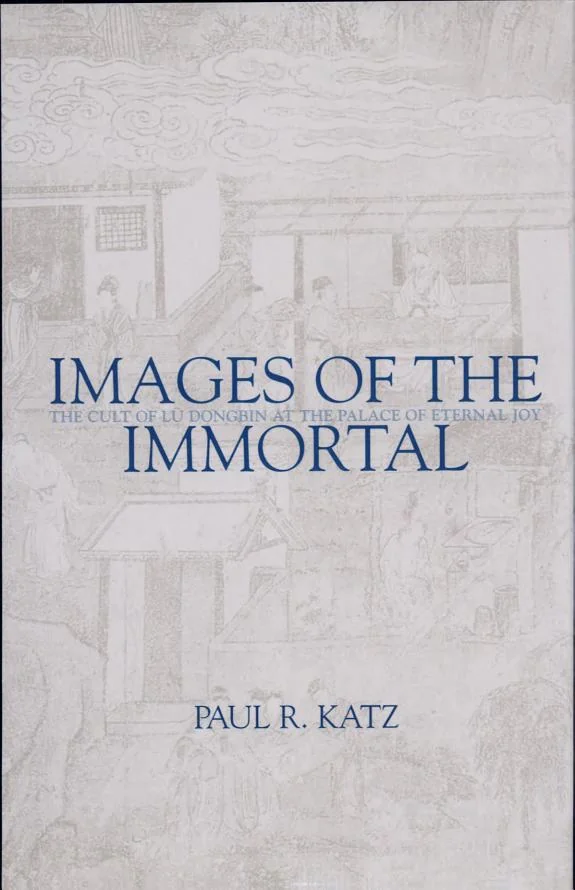
Katz's "Images of the Immortal" offers a rigorous examination of the Palace of Eternal Joy and its relationship to the deity Lu Dongbin. The author's meticulous analysis of various historical texts and their production processes, particularly his focus on 'textuality,' provides a nuanced understanding of how religious narratives evolve. A particularly striking aspect is the discussion of how the site itself became a locus for cultural diversity, actively shaping rather than merely reflecting beliefs. However, the dense academic prose, while precise, may present a barrier for readers less familiar with the specialized terminology of textual analysis and Chinese religious history. The book's strength lies in its detailed scholarly approach, but a slightly more accessible synthesis of its core arguments could have enhanced its broader appeal. It is a valuable contribution to the study of Chinese religious sites and legendary figures.
📝 Description
77
Paul R. Katz's 1999 book examines the Palace of Eternal Joy and its role in shaping Lu Dongbin's legend.
Paul R. Katz's "Images of the Immortal" focuses on the Palace of Eternal Joy (Yongle Gong), a significant cult site in late imperial China. The book analyzes how this site contributed to the legendary status of the deity Lu Dongbin. Katz draws upon various historical accounts of the Palace to understand its function in shaping Lu's narrative.
The work is suited for academics specializing in Chinese religion, history, and cultural studies. It will also interest those drawn to Taoist lore and the development of religious legends, particularly how sacred places act as both containers and creators of cultural stories. Katz's study, published in 1999, engages with late imperial China's religious landscape and the rise of Lu Dongbin's cult. It considers how written accounts and physical religious sites influenced each other.
Key concepts include 'textuality,' the creation and spread of written materials, as applied to the Palace's history. The book shows the Palace as a dynamic location that mirrored and produced varied cultural interpretations of Lu Dongbin's myth.
This book is situated within the study of Chinese religious traditions, specifically Taoism. It examines the historical development of a deity's cult and the physical manifestation of religious devotion through a specific site. The work investigates how narratives surrounding immortals and deities are constructed and perpetuated over time, touching on the interplay between textual sources and lived religious practice. It offers insight into the historical processes that shaped religious beliefs and practices in late imperial China.
💡 Why Read This Book?
• Gain insight into the concept of 'textuality' as it pertains to religious sites, understanding how texts about the Palace of Eternal Joy were produced and transmitted, a crucial element for analyzing historical religious narratives. • Learn about the specific role of the Palace of Eternal Joy (Yongle Gong) in the development of Lu Dongbin's legend, moving beyond simple hagiography to understand a cult site's active role in legend-making. • Explore how a single religious site, the Palace of Eternal Joy, can reflect and simultaneously produce cultural diversity, offering a model for understanding the dynamic relationship between belief, place, and society in late imperial China.
⭐ Reader Reviews
Honest opinions from readers who have explored this book.
❓ Frequently Asked Questions
What is the Palace of Eternal Joy (Yongle Gong) and why is it significant?
The Palace of Eternal Joy, or Yongle Gong, is a substantial cult site in China dedicated to the popular deity Lu Dongbin. Its significance lies in its role as a focal point for the development and dissemination of Lu's legend and as a center that both reflected and generated cultural diversity.
Who was Lu Dongbin, and what is his connection to the Palace of Eternal Joy?
Lu Dongbin was one of late imperial China's most popular deities, often associated with Taoism. The Palace of Eternal Joy was a major cult site specifically established and maintained to venerate him, playing a crucial part in shaping and propagating his extensive legend.
What does Paul R. Katz mean by 'textuality' in the context of this book?
In "Images of the Immortal," Katz uses 'textuality' to refer to the processes by which historical texts concerning the Palace of Eternal Joy were produced, transmitted, and interpreted. It emphasizes examining the origins and evolution of these textual accounts.
How did the Palace of Eternal Joy contribute to cultural diversity?
The book argues that the Palace of Eternal Joy was not just a passive site but an active agent in producing cultural diversity. It did so by attracting various groups and interpretations, and by the diverse ways its history and Lu Dongbin's legend were presented in different texts.
What historical period does "Images of the Immortal" primarily focus on?
The book concentrates on late imperial China, a period characterized by significant religious activity and the flourishing of popular cults. It analyzes how the cult of Lu Dongbin and the associated Palace of Eternal Joy functioned within this specific historical milieu.
What is the scholarly approach of Paul R. Katz in this study?
Katz employs a rigorous scholarly approach, focusing on the critical analysis of primary source texts related to the Palace of Eternal Joy. He emphasizes understanding the historical context, production, and reception of these texts to illuminate the site's cultural impact.
🔮 Key Themes & Symbolism
Cult Site as Narrative Engine
The book posits that the Palace of Eternal Joy was more than a mere structure; it actively participated in the construction of Lu Dongbin's legend. By analyzing diverse historical accounts, Katz demonstrates how the site's very existence and varied textual representations fueled the deity's narrative, transforming it over time and across different communities. This challenges static notions of religious sites, presenting them as dynamic centers of cultural production.
The Dynamics of Textuality
Central to Katz's analysis is the concept of 'textuality.' He meticulously traces the processes involved in creating and disseminating texts about the Palace of Eternal Joy. This includes examining who produced these texts, for what audiences, and under what historical conditions. By focusing on these production processes, the book reveals how textual variations contribute to the complex understanding of a religious figure and his cult.
Lu Dongbin's Evolving Legend
"Images of the Immortal" offers a detailed exploration of how the legend of Lu Dongbin, a prominent deity in late imperial China, was shaped and reshaped. The Palace of Eternal Joy served as a critical nexus for this evolution. The work illustrates how the deity's attributes, miracles, and historical associations were continually reinterpreted through textual and material evidence linked to the cult site.
Cultural Diversity and Religious Sites
A significant contribution of the book is its examination of how religious sites like the Palace of Eternal Joy fostered and reflected cultural diversity. Katz shows that the varied histories and interpretations associated with the Palace indicate a dynamic religious landscape where different groups engaged with Lu Dongbin and his cult in unique ways, leading to a collection of belief and practice.
💬 Memorable Quotes
Direct passages from the work, attributed to the author.
“The Palace of Eternal Joy... stressed the ways in which the site both reflected and produced cultural diversity.”
— This highlights the active role of the cult site in shaping beliefs and practices, suggesting it was not merely a passive recipient of existing cultural norms but a generative force within the religious range of late imperial China.
“Katz analyzes the texts in terms of the textuality - the processes by which they were produced, transmitted...”
— This points to the book's methodological core: a deep dive into the origins and evolution of textual accounts related to Lu Dongbin and his shrine, emphasizing the 'how' and 'why' behind their creation.
“This study focuses on the Palace's role in the development of Lu's legend.”
— This concise statement frames the book's primary objective: to understand how a specific religious site, the Palace of Eternal Joy, was instrumental in the formation and expansion of the lore surrounding the deity Lu Dongbin.
“The Palace of Eternal Joy... is a mammoth cult site dedicated to one of late imperial China's most popular deities, Lu Dongbin.”
— This establishes the subject matter and its significance, introducing the key players—the cult site and the deity—and situating them within their historical and religious context.
“It takes into account the various histories of the Palace presented in different texts...”
— This indicates the book's reliance on comparative textual analysis, acknowledging that multiple, potentially conflicting, historical accounts exist and that understanding these variations is crucial to grasping the site's complex history.
🌙 Esoteric Significance
Tradition
While primarily situated within the academic study of Chinese religions and history, "Images of the Immortal" touches upon Taoist traditions, particularly concerning the veneration of immortals like Lu Dongbin. It examines the development of a popular cult outside the strict confines of established monastic orders, exploring how local practices and beliefs coalesced around a specific deity and his cultic center, influencing the broader range of folk Taoism.
Symbolism
The book implicitly engages with the symbolism inherent in the cult of Lu Dongbin and the Palace of Eternal Joy. Lu himself is often depicted as a scholar-immortal, embodying aspirations for spiritual attainment and worldly success. The Palace, as a 'mammoth cult site,' would have been rich in architectural and ritualistic symbolism, designed to evoke the presence of the divine and facilitate interaction with Lu, thereby reinforcing the sacredness and power attributed to him.
Modern Relevance
Contemporary scholars and practitioners interested in the history of Taoism, Chinese folk religion, and the sociology of religion find Katz's work invaluable. Its focus on the interplay between textual production, cult sites, and the evolution of religious legends provides a framework for understanding similar phenomena in other traditions. Researchers exploring the formation of religious identity and the dynamics of belief in localized contexts continue to draw upon its methodological rigor.
👥 Who Should Read This Book
• Scholars of Chinese history and religion: Gain a deep understanding of the Palace of Eternal Joy's role in shaping Lu Dongbin's legend and the cultural range of late imperial China. • Researchers of religious sites and cults: Learn how to analyze the 'textuality' of sacred spaces and their function in generating and reflecting cultural diversity. • Students of Taoism and Chinese popular religion: Explore the historical development of a major deity's cult and the complex relationship between textual narratives and physical devotion.
📜 Historical Context
Published in 1999, Paul R. Katz's "Images of the Immortal" emerged during a period of increasing academic interest in Chinese religious history and the study of popular cults. The late imperial era (roughly 1300-1900) was a fertile ground for such studies, marked by widespread devotional practices and the proliferation of religious texts and sites. Katz's work engaged with scholarship on Taoism and Chinese Buddhism, often seeking to move beyond purely doctrinal analyses to understand lived religious experience. While scholars like David Johnson were exploring popular culture and morality in Ming China, Katz focused specifically on the textual and material production surrounding a key cult site. The book's detailed examination of 'textuality' offered a sophisticated methodological approach to understanding how religious narratives were constructed and maintained, contributing to a more nuanced view of religious authority and practice in pre-modern China.
📔 Journal Prompts
The textuality surrounding the Palace of Eternal Joy: how do the processes of production and transmission shape our understanding of Lu Dongbin?
Lu Dongbin's legend: in what ways did the Palace of Eternal Joy actively produce cultural diversity rather than just reflect it?
Analyze a specific historical text mentioned in the book concerning Yongle Gong. What insights does its production process offer?
How might the physical architecture and rituals at Yongle Gong have influenced the textual narratives of Lu Dongbin?
Consider the concept of a 'cult site' as presented in the book. How does it differ from a 'temple' or 'monastery' in its function?
🗂️ Glossary
Palace of Eternal Joy (Yongle Gong)
A significant cult site in late imperial China dedicated to the deity Lu Dongbin, serving as a focal point for his veneration and the development of his legend.
Lu Dongbin
One of the most popular deities in late imperial China, a prominent figure in Taoism often depicted as a scholar-immortal whose legend is deeply intertwined with sites like the Palace of Eternal Joy.
Textuality
In the context of Katz's work, this refers to the processes by which historical texts are produced, transmitted, and interpreted, emphasizing the origins and evolution of these accounts.
Late Imperial China
The historical period in China roughly spanning from the Ming Dynasty (1368–1644) to the end of the Qing Dynasty (1644–1912), characterized by significant social, economic, and religious developments.
Cult Site
A location specifically dedicated to the worship or veneration of a deity or saint, often playing a central role in the development and dissemination of religious legends and practices.
Cultural Diversity
The existence of a variety of cultural or ethnic groups within a society. In this book, it refers to the different interpretations and expressions of belief and practice associated with Lu Dongbin and his cult.
Deity
A god or goddess. In "Images of the Immortal," Lu Dongbin is examined as a popular deity whose veneration was central to the functioning of the Palace of Eternal Joy.
This book appears in 1 collection
🔮 Readers Also Liked
Browse all →






From the “Taoism” Collection
View all →




More Free Sacred Texts & Gnosticism Books
View all →