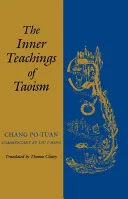
The Inner Teachings of Taoism
 75
75

The Inner Teachings of Taoism
Chang Po-tuan's "Four Hundred Words on the Gold Elixir," as presented with Liu Yiming's commentary, offers a starkly direct approach to Taoist inner alchemy. Unlike many texts that veil their core teachings, this work, originating from the eleventh century, lays out a systematic method for refining one's energetic and spiritual constitution. The clarity provided by Liu Yiming’s nineteenth-century annotations is invaluable, bridging the gap between Chang's foundational principles and their practical application within a more established Neidan framework. A notable strength is the unvarnished presentation of the alchemical process, eschewing flowery language for precise instruction. However, the sheer density of the subject matter, even with commentary, means that readers without prior grounding in Taoist cosmology or energetic anatomy may find initial comprehension challenging. The emphasis on transforming Jing, Qi, and Shen demands sustained study and practice, not passive reading. The Inner Teachings of Taoism serves as an indispensable, if demanding, manual for serious Neidan practitioners.
📝 Description
75
Chang Po-tuan's "Four Hundred Words on the Gold Elixir" from the eleventh century is a core text of Chinese inner alchemy.
This volume presents "Four Hundred Words on the Gold Elixir," an eleventh-century treatise by Chang Po-tuan, a key figure in the development of Taoist inner alchemy. The text focuses on the transformation of consciousness and the refinement of the self through esoteric practices. It is further illuminated by the extensive nineteenth-century commentary of Liu Yiming, providing a dual perspective across centuries.
The work details the principles of Neidan, or internal alchemy, which uses the body as a crucible for spiritual transformation. Central to this is the concept of refining the "three treasures" (Jing, Qi, Shen – essence, vital energy, and spirit) and cultivating the "inner elixir." This state is understood as profound spiritual realization and immortality achieved through focused practice.
Chang Po-tuan authored his work during the Song Dynasty, a time of significant intellectual and spiritual growth in China. His treatise became central to the Quanzhen School, which favored internal methods over external elixirs. Liu Yiming's commentary, from the Qing Dynasty, offers a later, authoritative interpretation within the developed Neidan tradition, ensuring the text's transmission.
This book belongs to the tradition of Chinese alchemy, specifically its internal branch known as Neidan. Unlike earlier forms that focused on external elixirs, Neidan views the human body itself as the laboratory for spiritual purification and longevity. It employs concepts like the 'three treasures'—essence (Jing), vital energy (Qi), and spirit (Shen)—as raw materials to be refined and circulated. The ultimate aim is the creation of an 'inner elixir,' leading to a state of profound spiritual realization and potentially immortality. Chang Po-tuan's text is a foundational exposition of these principles within the Quanzhen School, later elaborated by commentators like Liu Yiming.
💡 Why Read This Book?
• Understand the core Neidan principles of refining Jing, Qi, and Shen as detailed in "Four Hundred Words on the Gold Elixir," providing a specific framework for internal cultivation that differs from external alchemy or other spiritual paths. • Gain insight into the historical development of the Complete Reality School through Chang Po-tuan's eleventh-century work and Liu Yiming's later authoritative commentary, appreciating the lineage of esoteric Taoist thought. • Learn about the symbolic representation of the "Gold Elixir" as an ultimate state of spiritual attainment, offering a concrete esoteric goal for dedicated practitioners of internal alchemy.
⭐ Reader Reviews
Honest opinions from readers who have explored this book.
❓ Frequently Asked Questions
What is the primary focus of "The Inner Teachings of Taoism"?
The book's primary focus is on Taoist inner alchemy (Neidan), specifically through the text "Four Hundred Words on the Gold Elixir" by Chang Po-tuan and its commentary by Liu Yiming, detailing methods for transforming the mind and refining the self.
Who was Chang Po-tuan and when did he live?
Chang Po-tuan was an eleventh-century Chinese alchemist and a founder of the Complete Reality School (Quanzhen) of Taoism. He authored the seminal text "Four Hundred Words on the Gold Elixir."
What is the significance of Liu Yiming's commentary?
Liu Yiming, a nineteenth-century adept, provided lucid commentary on Chang Po-tuan's work, clarifying the esoteric principles of inner alchemy for later generations and ensuring the text's continued relevance and understanding within the Taoist tradition.
What are the 'three treasures' in Taoist alchemy?
In Taoist inner alchemy, the 'three treasures' refer to Jing (essence), Qi (vital energy), and Shen (spirit). The practice involves refining and transforming these elements to achieve spiritual realization.
Is this book suitable for beginners in Taoism?
While foundational, the book delves into advanced concepts of inner alchemy. Beginners might benefit from prior study of basic Taoist philosophy and energetic practices before engaging with the rigorous techniques presented.
Where does "Four Hundred Words on the Gold Elixir" fit within Taoism?
This text is a cornerstone of the Quanzhen (Complete Reality) School, a major lineage within Taoism that emphasizes internal alchemy (Neidan) for spiritual cultivation and immortality, differentiating it from earlier schools focusing on external elixirs.
🔮 Key Themes & Symbolism
Neidan: The Internal Crucible
This work is a primary source for understanding Neidan, or internal alchemy, a sophisticated system within Taoism focused on transforming the practitioner's own body and consciousness. Unlike external alchemy's pursuit of physical elixirs, Neidan utilizes the body's inherent energies—Jing, Qi, and Shen—as the ingredients and the body itself as the furnace. The goal is the cultivation of a spiritualized body and consciousness, often termed the 'immortal body' or the 'Gold Elixir,' signifying profound spiritual realization and liberation from the cycle of rebirth.
The Gold Elixir
The 'Gold Elixir' is not a literal substance but a potent metaphor for the ultimate attainment in Taoist inner alchemy. It represents a state of perfect equilibrium, spiritual purity, and integrated consciousness achieved through rigorous practice. "Four Hundred Words on the Gold Elixir" elucidates the path towards this state, emphasizing the refinement and circulation of vital energies within the practitioner's energetic system. It symbolizes the culmination of the alchemical process, leading to longevity, wisdom, and spiritual freedom.
Three Treasures (San Bao)
Central to Neidan practice are the 'Three Treasures': Jing (essence), Qi (vital energy), and Shen (spirit). Jing is the foundational physical and sexual energy, Qi is the life force that animates the body, and Shen is consciousness or spirit. The Inner Teachings of Taoism describes the alchemical process of transforming Jing into Qi, and Qi into Shen, ultimately purifying and elevating these components to achieve a higher state of being. This hierarchical transformation is the engine of spiritual development.
Commentary as Transmission
The inclusion of Liu Yiming's nineteenth-century commentary alongside Chang Po-tuan's eleventh-century text is crucial. It highlights how esoteric knowledge is transmitted and interpreted across centuries. Liu Yiming’s detailed explanations serve to clarify potentially obscure passages, contextualize Chang’s teachings within a more developed Neidan tradition, and provide practical guidance for practitioners. This layered approach ensures the enduring relevance and accessibility of these profound teachings.
💬 Memorable Quotes
Direct passages from the work, attributed to the author.
“To cultivate the spirit, one must first gather the essence.”
— This highlights the foundational role of Jing (essence) in the Neidan process. It suggests that spiritual cultivation (Shen) is dependent on first consolidating and refining one's fundamental life force (Jing), before it can be transformed into Qi and then Shen.
“The furnace and crucible are within the body.”
— This interpretation points to the core principle of internal alchemy, where the practitioner's own body serves as the vessel and environment for the alchemical transformations of Jing, Qi, and Shen, rather than relying on external apparatus.
“True immortality is the refinement of Qi into Shen.”
— This statement expresses the ultimate goal of inner alchemy: the transformation of vital energy (Qi) into pure consciousness or spirit (Shen), leading to a state of spiritual realization and freedom from the limitations of the physical form.
💡 Key Ideas
Editorial paraphrase of the work's core concepts — not direct quotes.
The elixir is not a thing, but the transformation of oneself.
This paraphrased concept emphasizes that the 'Gold Elixir' is not an external substance to be ingested, but the internal state of being achieved through the alchemical refinement of one's own essence, energy, and spirit.
The path requires diligent practice, not mere intellectual understanding.
This paraphrased concept underscores the practical, experiential nature of Taoist inner alchemy. It stresses that true progress comes from consistent application of the techniques, rather than simply studying the theory.
🌙 Esoteric Significance
Tradition
This work is firmly rooted in the Taoist esoteric tradition, specifically within the lineage of internal alchemy (Neidan). It represents an important development within the Quanzhen School, which synthesized various Taoist practices and philosophical concepts. Unlike Hermetic or Kabbalistic traditions that often focus on external correspondences or symbolic systems, Neidan, as exemplified here, is intensely focused on the direct, internal manipulation and refinement of the practitioner's own vital energies and consciousness.
Symbolism
Key symbols include the "Gold Elixir," representing the ultimate state of spiritual attainment and integrated consciousness achieved through alchemy. The "furnace" and "crucible" are potent symbols for the practitioner's own body, where the alchemical transformation of Jing, Qi, and Shen takes place. The "three treasures" (Jing, Qi, Shen) themselves function as a symbolic hierarchy, representing the foundational essence, animating energy, and luminous consciousness that are refined and elevated.
Modern Relevance
Contemporary practitioners of Qigong, Tai Chi, and various forms of meditation often draw indirectly from the principles laid out in texts like this. Modern scholars of Chinese religion and philosophy also engage with Chang Po-tuan's work to understand the evolution of Taoist thought. Furthermore, Western esotericists exploring cross-cultural paths to spiritual development find in Neidan a sophisticated system of psycho-spiritual technology, offering a different paradigm for self-transformation compared to Western Hermeticism or Gnosticism.
👥 Who Should Read This Book
• Dedicated students of Taoism seeking to understand the sophisticated principles of internal alchemy (Neidan) beyond introductory concepts. • Scholars of comparative religion and Eastern philosophies interested in primary source materials on Chinese esoteric traditions and historical alchemical practices. • Practitioners of mind-body disciplines who wish to deepen their understanding of energy cultivation (Qi) and consciousness transformation (Shen) through a rigorous historical framework.
📜 Historical Context
The eleventh century, when Chang Po-tuan penned "Four Hundred Words on the Gold Elixir," was a dynamic era for Taoism. The Song Dynasty saw a flourishing of both philosophical inquiry and religious practice. Chang's work emerged within the context of the nascent Quanzhen (Complete Reality) School, founded by Wang Chongyang earlier in the same century. This school marked a significant shift, championing internal alchemy (Neidan) as the primary path to spiritual realization and immortality, moving away from the external elixir (Waidan) practices that had characterized earlier Taoism. Chang’s treatise became a foundational text for this movement, emphasizing the body as the locus of transformation. Liu Yiming's detailed commentary in the Qing Dynasty (1644-1912) demonstrates the enduring influence of Chang’s work and the established nature of Neidan by that period, serving as a vital interpretative bridge across centuries of Taoist development.
📔 Journal Prompts
The refining of Jing into Qi, a foundational step.
The symbolic meaning of the 'Gold Elixir' in one's personal path.
Liu Yiming's interpretation of a specific alchemical stage.
The body as the furnace and crucible for transformation.
Cultivating Shen through the refinement of Qi and Jing.
🗂️ Glossary
Neidan
Literally 'internal alchemy.' A branch of Taoist practice focused on transforming the practitioner's own body and consciousness through the refinement of Jing, Qi, and Shen, rather than using external substances.
Jing
Often translated as 'essence.' Refers to fundamental physical and sexual energy, considered the base substance that can be refined into Qi in Taoist internal alchemy.
Qi
Vital energy or life force. It animates the body and is considered the bridge between Jing (essence) and Shen (spirit) in the alchemical process.
Shen
Spirit, consciousness, or mind. The highest of the three treasures, refined from Qi, representing spiritual awareness and illumination.
Quanzhen School
The 'Complete Reality' School of Taoism, founded in the twelfth century. It emphasizes internal alchemy (Neidan) and monasticism as the path to spiritual realization and immortality.
Gold Elixir
A symbolic term in Neidan representing the ultimate state of spiritual attainment, purity, and integration achieved through the alchemical process of refining Jing, Qi, and Shen.
Waidan
External alchemy. Early Taoist practices that involved creating elixirs from minerals and herbs, often with the aim of achieving physical immortality.