The Subtleties of the Inimitable Mulla Nasrudin
 83
83

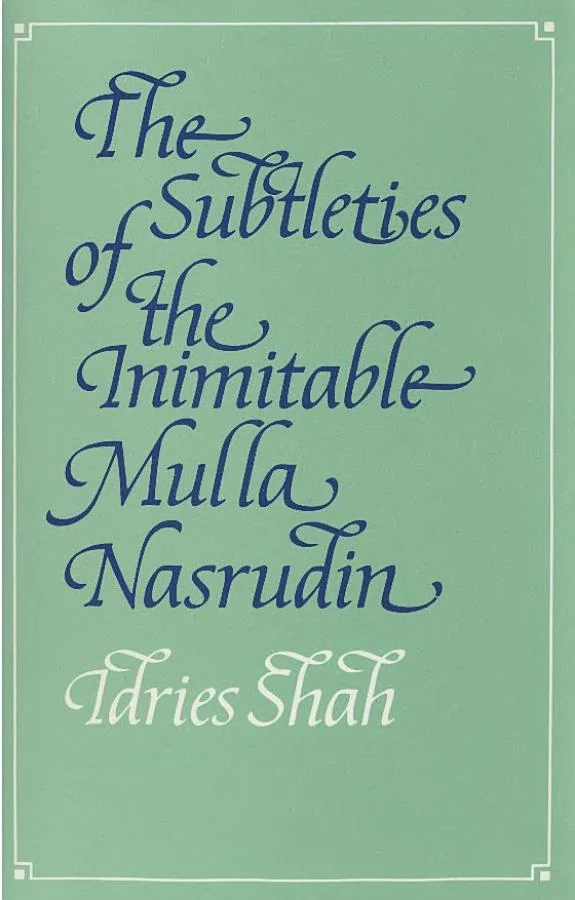
The Subtleties of the Inimitable Mulla Nasrudin
Idries Shah’s 1983 compilation, "The Subtleties of the Inimitable Mulla Nasrudin," offers a potent distillation of a character who embodies the contradictions inherent in human perception. Shah doesn't just retell the jokes; he positions them as pedagogical tools, a method consistent with his broader project of introducing Sufi thought. One notable strength is the sheer economy of each anecdote—a brief setup and punchline that can dismantle complex assumptions. However, the collection's value is intrinsically tied to the reader's willingness to engage beyond the surface humor; without this, the stories risk being perceived as mere curiosities. The passage describing Nasrudin attempting to find his lost key under a streetlight, not because he lost it there but because the light is better, exemplifies this pedagogical approach, illustrating how we often seek solutions in convenient, rather than correct, places. Shah's presentation remains a sharp instrument for those willing to be nudged toward self-awareness.
📝 Description
83
Idries Shah published "The Subtleties of the Inimitable Mulla Nasrudin" in 1983, collecting tales of a paradoxical folk character.
This book gathers anecdotes of Mulla Nasrudin, a character whose stories have circulated for centuries across various cultures. Idries Shah, a scholar of Sufi traditions, selected these tales to show how complex ideas can be conveyed through simple narratives. The collection demonstrates wisdom appearing as foolishness and vice versa, using humor and unusual logic to question common assumptions.
Readers who enjoy folklore, comparative mythology, and the practical side of esoteric philosophy will find value here. The stories work on different levels, offering both amusement and a chance for deeper thought. It is particularly suited for those who want to grasp Sufi psychology and teaching methods through accessible stories.
The narratives often seem illogical but expose underlying psychological truths or philosophical puzzles. They aim to get past the analytical mind and encourage direct understanding. Themes like the balance of wisdom and ignorance, the limits of normal reasoning, and how people deceive themselves are shown through Nasrudin's actions and the responses he provokes.
Published in 1983, this collection arrived during a time when Western interest in Eastern philosophies, especially Sufism, was growing. Idries Shah was a significant figure in bringing Sufi thought to a wider audience. He often differentiated his work from more romanticized views of Eastern spirituality, focusing instead on practical applications. His books, including this one, were presented as an alternative to abstract spiritual theories popular at the end of the 20th century.
💡 Why Read This Book?
• Gain insights into Sufi psychological methods by examining how the Nasrudin tales, first widely published in this form by Shah in 1983, use humor to bypass ordinary reasoning and prompt direct understanding. • Appreciate the function of paradox in learning, as illustrated by Nasrudin's often contradictory actions which challenge conventional logic, a core element Shah highlights from centuries of oral tradition. • Understand the concept of "teaching stories" through concrete examples, learning how seemingly simple anecdotes can carry layers of meaning for personal development, a technique Shah meticulously documented.
⭐ Reader Reviews
Honest opinions from readers who have explored this book.
❓ Frequently Asked Questions
Who is Mulla Nasrudin and why is he called 'inimitable'?
Mulla Nasrudin is a legendary folk character, often depicted as a wise fool, whose tales have been told for centuries across the Middle East and Central Asia. He is 'inimitable' because his paradoxical nature and the varied interpretations of his actions resist simple categorization, embodying a unique blend of wisdom and apparent foolishness.
What makes Idries Shah's collection of Nasrudin stories significant?
Idries Shah, a prominent scholar of Sufi traditions, curated these stories to illustrate Sufi psychological and philosophical concepts. His 1983 publication presented the anecdotes in a structured manner, emphasizing their pedagogical function beyond mere entertainment, a departure from previous compilations.
Are these stories meant to be funny or serious?
The stories are intentionally both. They operate on a surface level of humor, often stemming from Nasrudin's absurd situations. However, their deeper purpose, as presented by Shah, is to serve as teaching devices that provoke thought and self-reflection on human behavior and perception.
What kind of wisdom can be found in Mulla Nasrudin's tales?
The wisdom lies in recognizing common human foibles, self-deception, and the limitations of conventional thinking. Nasrudin’s actions often highlight the gap between appearance and reality, encouraging readers to question their own assumptions and habitual patterns of thought.
Where do the Mulla Nasrudin stories originate?
The origins are complex and debated, but the character and his tales are widely believed to have developed over centuries in various cultures across the Middle East, Central Asia, and the Balkans. They became a significant part of oral tradition before being collected and published.
Is this book suitable for beginners interested in esoteric subjects?
Yes, the accessible narrative style makes it suitable for beginners. While rooted in esoteric traditions like Sufism, the stories themselves are universally understandable and can serve as an engaging introduction to deeper symbolic and psychological exploration.
🔮 Key Themes & Symbolism
The Wise Fool Paradox
The core of the Nasrudin narratives lies in the character's dual nature: simultaneously embodying profound wisdom and comical ignorance. This paradox isn't merely for amusement; it's a deliberate technique to expose the limitations of rigid, conventional thinking. By presenting Nasrudin's actions, which often appear nonsensical, Shah illustrates how societal norms and individual assumptions can obscure truth. The reader is prompted to question which character, Nasrudin or the observers, is truly acting foolishly, thus engaging with the esoteric concept of relative perception.
Bypassing Conventional Logic
Nasrudin's tales frequently employ absurd scenarios or non-sequitur reasoning to circumvent the reader's analytical mind. Idries Shah emphasized this aspect, presenting the stories as tools designed to stimulate direct perception rather than intellectual analysis. A common motif involves Nasrudin applying logic in inappropriate contexts, revealing how our standard modes of thinking can be inadequate for certain problems. This challenges the ego's reliance on intellect and opens a space for intuitive understanding, a hallmark of many esoteric traditions.
Self-Deception and Awareness
Many anecdotes serve as mirrors reflecting common human tendencies toward self-deception and blind spots. Nasrudin often acts out the follies that ordinary people commit but fail to recognize in themselves. Through humor, the book encourages a detached observation of these behaviors. Shah's presentation highlights how recognizing these patterns in the stories can lead to greater self-awareness in one's own life. This process of recognizing the 'fool' within is a fundamental step in many spiritual and psychological disciplines.
The Nature of Teaching
The collection implicitly explores the art of teaching, particularly within the Sufi tradition. Nasrudin's stories are not didactic in a straightforward manner; they are 'teaching stories' that require interpretation and personal engagement. Shah's curation emphasizes this point, showing how wisdom can be transmitted indirectly, embedded within narratives that resonate on multiple levels. This approach contrasts with overt instruction, suggesting that true learning often arises from contemplation provoked by unconventional means.
💬 Memorable Quotes
Direct passages from the work, attributed to the author.
“He was looking for his donkey, and when asked where he had last seen it, he said 'Up there on the hill'. 'Then why are you looking for it down here?' 'Because the light is better here.'”
— This classic Nasrudin vignette illustrates how people often seek solutions not where they are likely to be found, but where it is most convenient or familiar to look, highlighting self-imposed limitations and flawed methodology.
“Nasrudin tied his donkey to a tree and went into the market. When he came out, the donkey was gone. He started to beat the tree.”
— This story points to the human tendency to blame external factors or inanimate objects when faced with loss or misfortune, rather than examining one's own actions or oversights that may have led to the situation.
“Nasrudin was asked how he managed to cut his hair so evenly. He replied, 'I don't. I wait until it grows long enough for two people, then I cut it off.'”
— This reflects a principle of delayed gratification or operating on a larger scale than immediately apparent. It suggests that seemingly simple solutions might involve unconventional timing or a different perspective on the problem's scale.
“A man asked Nasrudin if he was a good shot. 'Yes,' he said. 'I have shot arrows that have not been found.'”
— This response plays on the ambiguity of 'shooting.' It can imply incredible accuracy (hitting targets so far away they are lost) or simply launching arrows without regard for where they land, a humorous commentary on boastfulness versus substance.
“Nasrudin sold a sack of grain. The buyer complained it was underweight. Nasrudin said, 'The grain is sold by measure, not by weight. If you want weight, buy a bird.'”
— This highlights the importance of agreed-upon terms and conditions in any transaction. Nasrudin cleverly deflects the complaint by pointing to the specific terms of sale, demonstrating a sharp wit in defending his position.
🌙 Esoteric Significance
Tradition
This work is deeply rooted in the Sufi tradition, a mystical branch of Islam known for its emphasis on inner transformation and the practical application of spiritual principles. Idries Shah positioned these Nasrudin tales as 'teaching stories' (or 'teaching tales'), a method central to Sufi pedagogy for centuries. Unlike purely devotional or theological texts, Shah's interpretation focuses on the psychological and perceptual insights these stories offer, aligning with Sufism's goal of awakening consciousness and fostering self-knowledge.
Symbolism
The primary symbol is Mulla Nasrudin himself, representing the paradoxical nature of existence and the human psyche – the wise fool. Other motifs include everyday objects and situations (donkeys, markets, wells, streetlights) that become symbolic when viewed through Nasrudin's unconventional lens. For instance, searching for a lost key under a streetlight, not because it was lost there but because it's well-lit, symbolizes seeking solutions in convenient places rather than accurate ones, a common human error.
Modern Relevance
Contemporary thinkers and practitioners in fields like psychology, coaching, and even certain branches of organizational development draw on the principles embodied in Shah's Nasrudin collections. The emphasis on non-linear thinking, recognizing cognitive biases, and using narrative for learning aligns with modern approaches to problem-solving and personal growth. These stories continue to be referenced by those seeking alternative methods of understanding consciousness and human behavior beyond purely rational frameworks.
👥 Who Should Read This Book
• Students of Sufism and Islamic mysticism: To understand a key pedagogical method used for transmitting complex psychological and philosophical ideas in an accessible, non-dogmatic format. • Comparative folklore enthusiasts: To explore a universally recognized folk hero whose tales transcend cultural boundaries and offer insights into shared human experiences and wisdom traditions. • Individuals interested in practical psychology and self-awareness: To engage with narratives that cleverly expose common cognitive biases, self-deception, and the limitations of ordinary thinking through humor.
📜 Historical Context
Published in 1983, "The Subtleties of the Inimitable Mulla Nasrudin" arrived at a time when Idries Shah was actively engaged in presenting Sufi thought to the West. This era saw a surge of interest in Eastern mysticism, often filtered through New Age sensibilities, a trend Shah frequently critiqued. Shah's approach, emphasizing the practical and psychological dimensions of Sufism, stood apart from more mystical or overtly religious interpretations prevalent at the time. His work on Nasrudin, building on centuries of oral and written tradition, aimed to demonstrate Sufi principles through accessible, often humorous, narratives. Contemporaries like Idries Shah’s mentor, Omar Ali-Shah, also played a role in disseminating Sufi teachings. Shah's collections were recognized for their pedagogical value, distinguishing them from simple joke books and positioning them as sophisticated tools for understanding human nature and consciousness.
📔 Journal Prompts
Nasrudin's search for the key under the streetlight: What 'well-lit' areas are you currently searching for solutions?
The practice of Mulla Nasrudin acting foolishly: How might appearing foolish in a specific context reveal a deeper truth?
The 'wise fool' paradox: Identify a situation where apparent foolishness contained unexpected wisdom.
Nasrudin's varied roles (sage, beggar, etc.): Reflect on the fluidity of identity suggested by his characters.
The concept of 'teaching stories': How can a simple anecdote convey a complex message?
🗂️ Glossary
Teaching Story
A narrative, often anecdotal, designed not merely for entertainment but to convey specific psychological, philosophical, or spiritual insights. These stories typically require contemplation to unlock their deeper meaning, bypassing direct intellectualization.
Sufism
The esoteric or mystical dimension of Islam, focused on the pursuit of divine knowledge and love through inner purification and direct experience of God. It emphasizes practical application and psychological development.
Paradox
A statement or situation that appears self-contradictory or logically unacceptable, yet may contain a deeper truth or underlying principle. Mulla Nasrudin often embodies paradoxical qualities.
Cognitive Bias
A systematic pattern of deviation from norm or rationality in judgment. Nasrudin's tales frequently illustrate common human biases, such as confirmation bias or availability heuristic, in humorous ways.
Perception
The way in which something is regarded, understood, or interpreted. Nasrudin's stories often challenge conventional perceptions and encourage readers to consider alternative viewpoints.
Folly
Lack of good sense or judgment; foolishness. In the context of Nasrudin, folly is often a mask for wisdom or a tool for exposing the folly of others.
Anecdote
A short, amusing, or interesting story about a real incident or person. Idries Shah utilized anecdotes as the primary format for his Nasrudin collections.
This book appears in 1 collection
🔮 Readers Also Liked
Browse all →





From the “Sufism” Collection
View all →





More Free Sacred Texts & Gnosticism Books
View all →