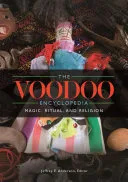
The Voodoo Encyclopedia
 75
75

The Voodoo Encyclopedia
Jeffrey E. Anderson's "The Voodoo Encyclopedia" provides a much-needed corrective to the often-misrepresented world of Voodoo and Vodou. Its primary strength lies in its diligent effort to present these religions as complex, living faiths rather than mere folklore or horror tropes. The inclusion of insights from contemporary practitioners is invaluable, offering an insider's perspective often missing from academic texts. A particular strength is the detailed exploration of the Loa, the spirits central to Haitian Vodou, which Anderson elucidates with clarity. However, the book occasionally leans towards a purely descriptive approach, sometimes lacking a deeper analytical framework to connect the various elements into a cohesive theological argument. The distinction between Voodoo and Vodou, while crucial, could be further emphasized in comparative sections. Ultimately, "The Voodoo Encyclopedia" serves as a solid, informative foundational text for understanding these traditions.
📝 Description
75
Published in 2010, Jeffrey E. Anderson's encyclopedia clarifies Voodoo and Vodou for serious inquiry.
Jeffrey E. Anderson's "The Voodoo Encyclopedia" offers a detailed examination of two distinct but related religious traditions: the Voodoo of the Mississippi River Valley and Haitian Vodou. It moves past sensationalized representations to present these faiths as legitimate religious systems, complete with their own pantheons of deities, organized priesthoods, and active communities. This work is intended for students, researchers, and practitioners who wish to understand the authentic religious and cultural frameworks of Voodoo and Vodou, drawing on the knowledge of contemporary practitioners for a grounded and respectful approach.
The encyclopedia traces the historical development and cultural significance of these faiths, noting their origins and evolution. It specifically highlights the influence of African spiritual traditions and their adaptation in new environments. Anderson emphasizes the difference between the historical "Voodoo" of the American South and contemporary Haitian Vodou. The book systematically covers their theological structures, ritual practices, and ethical systems, serving as a guide to the beliefs and lived experiences of their followers.
This encyclopedia engages with traditions rooted in the syncretic blending of West African religions with Catholicism, particularly in the Caribbean and the American South. It situates Voodoo and Vodou within a broader context of diasporic African spiritual practices that survived and evolved under colonial pressures. By detailing their pantheons, rituals, and social structures, the book provides a scholarly look at living religions often misrepresented in popular culture, aligning with esoteric scholarship that seeks to understand and respect diverse spiritual paths outside mainstream Western frameworks.
💡 Why Read This Book?
• Understand the specific historical context of Voodoo in the Mississippi River Valley, distinguishing it from Haitian Vodou and dispelling common misconceptions rooted in early 20th-century popular culture. • Learn about the Loa, the pantheon of spirits central to Haitian Vodou, and their roles within the religious structure as detailed in the encyclopedia's comprehensive entries. • Gain knowledge of the organizational structure of Vodou communities, including the roles of priests (Houngan and Mambo) and other initiated members, as presented by Anderson.
⭐ Reader Reviews
Honest opinions from readers who have explored this book.
❓ Frequently Asked Questions
What is the difference between Voodoo and Vodou according to the encyclopedia?
Jeffrey E. Anderson's "The Voodoo Encyclopedia" distinguishes "Voodoo" as the faith historically practiced in the Mississippi River Valley, often conflated with sensationalized depictions, and "Vodou" as the distinct, living religion with millions of adherents primarily in Haiti.
Does the book cover zombie lore associated with Voodoo?
While acknowledging the cultural depictions, "The Voodoo Encyclopedia" focuses on Voodoo and Vodou as legitimate religions with a pantheon and priesthood, moving beyond fictional portrayals like those found in zombie films.
Who are the primary deities or spirits discussed in Haitian Vodou?
The encyclopedia details the Loa, the pantheon of spirits central to Haitian Vodou. It explains their roles, characteristics, and relationships within the religious framework, drawing from contemporary practitioner expertise.
Is this book suitable for beginners interested in Vodou?
Yes, "The Voodoo Encyclopedia" is designed as a reference work that introduces the religions of Voodoo and Vodou, making it suitable for those new to the subject seeking factual information beyond popular myths.
When was "The Voodoo Encyclopedia" first published?
Jeffrey E. Anderson's "The Voodoo Encyclopedia" was first published on August 26, 2015, providing a contemporary scholarly resource on these religious traditions.
What kind of information can I expect regarding Vodou practices?
The book explores the history, culture, and religion of Haitian Vodou, including its priesthood, communities of believers, and ritual practices, based on the expertise of contemporary practitioners.
🔮 Key Themes & Symbolism
Religion vs. Folklore
A central theme is the demarcation between Voodoo and Vodou as authentic, complex religions and their reduction to sensationalized folklore or horror tropes in popular culture. The encyclopedia emphasizes the existence of a pantheon of deities, a structured priesthood, and devoted communities of believers, contrasting this reality with the fictionalized zombies and dark magic often associated with the term in Western media. This distinction is crucial for understanding the spiritual and cultural integrity of these traditions.
Pantheon and Spirit Hierarchy
The work systematically examines the Loa, the spirits central to Haitian Vodou. It elucidates their roles, characteristics, and the intricate relationships within this spiritual hierarchy. Understanding the Loa is presented as fundamental to grasping Vodou's theological framework, ritual practices, and the ways in which adherents interact with the divine and spiritual realms.
Historical Evolution and Regional Differences
The encyclopedia traces the historical trajectory of Voodoo, particularly differentiating the Voodoo of the Mississippi River Valley from the more widely practiced Haitian Vodou. It explores how these faiths evolved from African spiritual traditions and adapted to new socio-cultural contexts, highlighting regional variations and the impact of historical events on their development.
Authentic Practice and Practitioner Expertise
A significant aspect is the reliance on and respect for the knowledge of contemporary practitioners. This approach ensures that the information presented is grounded in lived experience and authentic tradition, rather than solely on external academic interpretations. The book aims to reflect the actual beliefs, rituals, and community structures as understood and enacted by those who follow these faiths.
💬 Memorable Quotes
Direct passages from the work, attributed to the author.
“Unlike its fictional depiction in zombie films and popular culture, Voodoo is a full-fledged religion with a pantheon of deities, a priesthood, and communities of believers.”
— This statement directly confronts common misconceptions, asserting the legitimacy and complexity of Voodoo and Vodou as organized religions. It signals the book's intent to provide factual information over sensationalized narratives.
“This compelling reference work introduces the religions of Voodoo, a onetime faith of the Mississippi River Valley, and Vodou, a Haitian faith with millions of adherents today.”
— This highlights the dual focus of the encyclopedia: examining both the historical Voodoo of the American South and the contemporary, widespread practice of Haitian Vodou, establishing the scope of the work.
“Drawing from the expertise of contemporary practitioners, this encyclopedia presents the history, culture, and religion of Haitian Vodou...”
— This indicates the methodological approach of the book, prioritizing insights from living practitioners to offer an authentic and insider perspective on Vodou's religious and cultural dimensions.
“Voodoo is a full-fledged religion with a pantheon of deities, a priesthood, and communities of believers.”
— This concise assertion serves as a foundational argument for the book, defining Voodoo and Vodou by their religious structures and social organization, thereby countering simplistic or dismissive views.
💡 Key Ideas
Editorial paraphrase of the work's core concepts — not direct quotes.
The work explores the history, culture, and religion of Haitian Vodou and Mississi
This paraphrase emphasizes the comprehensive nature of the encyclopedia, covering multiple facets of these traditions and acknowledging the distinct identity of Voodoo in the Mississippi region.
🌙 Esoteric Significance
Tradition
While not strictly aligning with a single Western esoteric lineage like Hermeticism or Kabbalah, "The Voodoo Encyclopedia" engages with the broader field of comparative religion and spirituality, which often intersects with esoteric studies. It provides a critical lens through which to view organized spiritual systems, their cosmologies, and their ritual practices. The work's focus on spirit hierarchies (Loa) and the practitioner-deity relationship can be seen as analogous to concepts found in various magical traditions, offering a comparative perspective on divine interaction.
Symbolism
The encyclopedia likely explores numerous symbols integral to Vodou. For instance, the *veve*, intricate designs drawn to invoke specific Loa, serve as symbolic gateways and representations of spiritual presence. The color symbolism associated with different Loa, such as the association of red and white with Erzulie Freda, conveys specific attributes and emotional tones. The *ase* (or *ashe*), representing life force and spiritual power, is a fundamental concept underlying many rituals and symbolic actions within the tradition.
Modern Relevance
Contemporary practitioners of various spiritual paths, particularly those interested in African diasporic religions, draw heavily on resources like Anderson's encyclopedia. Thinkers and groups exploring syncretic spirituality, shamanism, or comparative theology find value in understanding the structured cosmology and ritual practices of Vodou. It serves as a reference for those seeking to engage respectfully with or study traditions that emphasize direct spiritual experience and community-based practice, informing modern approaches to embodied spirituality and ancestor veneration.
👥 Who Should Read This Book
['• Students of comparative religion and African diaspora studies seeking accurate, non-sensationalized information on Voodoo and Vodou.\n• Researchers needing a foundational reference for the history, theology, and cultural contexts of these faiths, including specific details on the Loa.\n• Individuals curious about the authentic religious practices of Vodou, aiming to dispel myths perpetuated by popular media and understand the role of practitioners.', '• Practitioners of esoteric traditions looking for comparative insights into spirit hierarchies, ritual structure, and the relationship between humanity and the divine, as exemplified by Vodou.\n• Cultural historians interested in the evolution of religious practices from the Mississippi River Valley to contemporary Haiti, understanding adaptation and syncretism.', '• General readers who wish to move beyond fictional portrayals of Voodoo and gain a respectful, informed understanding of its status as a living religion with established doctrines and community structures.']
📜 Historical Context
Published in 2015, Jeffrey E. Anderson's "The Voodoo Encyclopedia" emerged during a period where academic and popular interest in African diaspora religions continued to grow, yet often remained hampered by persistent stereotypes. The late 20th and early 21st centuries saw scholars like Karen McCarthy Brown significantly advancing the understanding of Haitian Vodou, challenging earlier, often ethnocentric, analyses. Anderson's work aligns with this scholarly trend by prioritizing authentic representation. It specifically addresses the historical "Voodoo" of the Mississippi River Valley, a tradition less frequently documented than its Haitian counterpart, and distinguishes it from the pervasive, often negative, popular culture portrayals that have circulated since the early 20th century. The book implicitly engages with the legacy of scholars like Wade Davis, whose work, while popular, sometimes blurred the lines between anthropological observation and sensationalism, a tendency Anderson seeks to counteract.
📔 Journal Prompts
The pantheon of Loa and their distinct attributes.
The historical development of Voodoo in the Mississippi River Valley.
The role of a Houngan or Mambo within a Vodou community.
The symbolic significance of a *veve* in Vodou ritual.
Distinguishing Vodou from its sensationalized fictional counterparts.
🗂️ Glossary
Loa
Spirits or deities central to Haitian Vodou, acting as intermediaries between humanity and Bondye (the supreme creator God). Each Loa has distinct characteristics, domains, and ways of interacting with worshippers.
Vodou
A religion originating in Haiti, synthesizing West African spiritual traditions with elements of Catholicism. It features a complex cosmology, a pantheon of spirits (Loa), and organized community practices.
Voodoo
Often used interchangeably with Vodou, but in "The Voodoo Encyclopedia," it refers distinctly to the faith historically present in the Mississippi River Valley, separate from Haitian Vodou.
Houngan
A male priest in Haitian Vodou, responsible for leading ceremonies, advising congregants, and maintaining the integrity of the religion.
Mambo
A female priestess in Haitian Vodou, holding a similar position of authority and responsibility as a Houngan.
Veve
Intricate symbolic drawings, often created with cornmeal or other powders, used in Vodou ceremonies to invoke and represent specific Loa.
Bondye
The supreme creator God in Haitian Vodou, considered distant and not directly worshipped, but acknowledged as the ultimate source of all.