Herbs that Heal
 73
73

Herbs that Heal
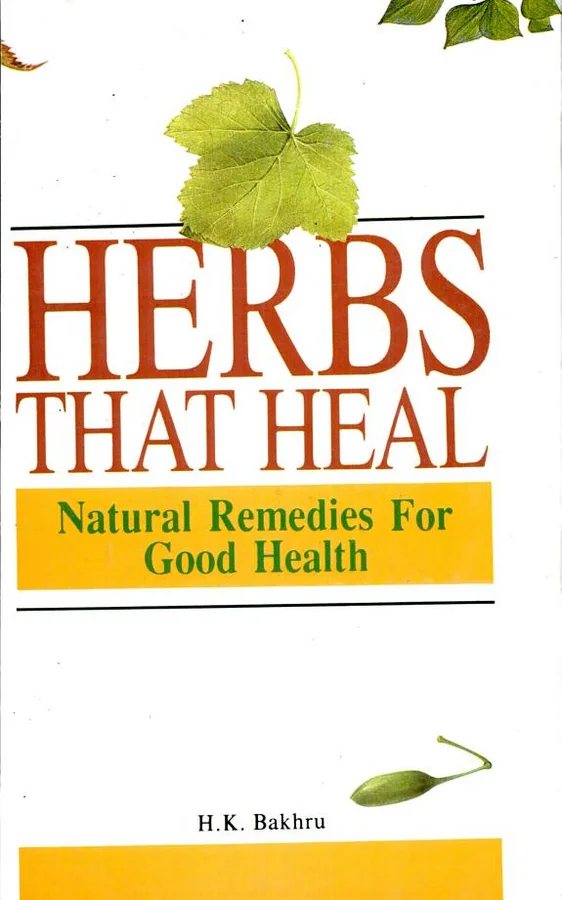
H. K. Bakhru's 'Herbs that Heal' offers a straightforward, encyclopedic approach to phytotherapy. The meticulous cataloging of 107 herbs, divided into those with strong and milder properties, provides a clear framework for understanding their medicinal uses. Its strength lies in its organized presentation, alphabetically by English and trade names, making it a practical reference. However, the work's brevity in describing some of the 41 less potent herbs leaves the reader wanting more detail, a common issue in such comprehensive surveys. A particularly useful section details the use of *Ashwagandha* (Withania somnifera) for its adaptogenic qualities, a concept well-understood in Ayurvedic traditions. While not offering deep theoretical discourse, 'Herbs that Heal' succeeds as a functional compendium of plant-based remedies.
📝 Description
73
H. K. Bakhru cataloged 107 medicinal herbs in 'Herbs that Heal', first published in 1992.
Herbs that Heal, authored by H. K. Bakhru and published in 1992, details the medicinal properties and applications of 107 distinct herbs. The book presents a structured approach to understanding herbal remedies, organized into two main sections that systematically outline each herb's characteristics and uses for a wide range of health concerns.
This volume is suited for anyone interested in phytotherapy, whether they are new to herbalism or studying traditional medical practices. It appeals to readers who appreciate empirical evidence and documented uses of plants for wellness. Those engaged in the study of comparative ethnobotany or historical healing methods will also find this work valuable.
The core ideas focus on the individual therapeutic effects of herbs, their categorization by strength, and their arrangement for straightforward access. The text highlights the direct link between a plant's components and its effectiveness against specific illnesses, constructing a pharmacopoeia based on observed outcomes.
Published in 1992, Herbs that Heal emerged during a period of renewed interest in natural healing and holistic health, offering an alternative to conventional medicine. Bakhru's work connects with the ongoing study of ancient and folk medicinal traditions that gained momentum in the late 20th century. It situates itself within the broader esoteric interest in natural remedies and their efficacy, drawing upon empirical observation and documented uses rather than purely spiritual or metaphysical claims.
💡 Why Read This Book?
• Learn about the distinct healing powers of 66 primary herbs, as detailed in Part I, which provides in-depth descriptions and curative properties for each, offering a focused approach to potent remedies. • Discover 41 additional herbs with milder properties, organized alphabetically by English and trade names in Part II, expanding your repertoire of accessible natural treatments. • Gain practical knowledge on treating diseases using specific plant-based interventions, directly applying the medicinal uses documented for each of the 107 herbs covered in the text.
⭐ Reader Reviews
Honest opinions from readers who have explored this book.
❓ Frequently Asked Questions
What is the primary purpose of H. K. Bakhru's 'Herbs that Heal'?
The book's primary purpose is to catalog and describe the medicinal uses of 107 different herbs for treating various diseases, providing practical information for readers interested in herbal remedies.
How are the herbs organized in 'Herbs that Heal'?
Herbs are organized into two parts: 66 with strong healing powers and 41 with milder properties. Within each part, they are arranged alphabetically by English names and also by popular trade names.
What is the publication year of 'Herbs that Heal'?
The book 'Herbs that Heal' by H. K. Bakhru was first published in 1992.
Does the book discuss the scientific basis of herbal medicine?
While it details medical uses and properties, the book focuses more on documented empirical and traditional applications rather than extensive scientific explanations of pharmacological mechanisms.
Is 'Herbs that Heal' suitable for beginners in herbalism?
Yes, its clear organization and practical focus make it accessible for beginners, while the detailed descriptions offer depth for those with some existing knowledge.
What distinguishes 'Herbs that Heal' from other herbal guides?
Its specific categorization into strong and mild properties, coupled with dual alphabetical indexing (English and trade names), offers a unique organizational structure for quick reference to 107 herbs.
🔮 Key Themes & Symbolism
Phytotherapeutic Efficacy
The core theme is the direct application of plant-derived remedies for disease treatment. Bakhru meticulously categorizes herbs based on their potency, separating those with significant curative powers from those with milder effects. This distinction is crucial for practitioners, allowing for tailored applications depending on the severity and nature of an ailment. The work emphasizes empirical observation and traditional knowledge in identifying which herbs are most effective for specific conditions, presenting a practical pharmacopoeia for accessible healing.
Systematic Botanical Cataloging
A significant theme is the structured organization of information on 107 herbs. The dual alphabetical arrangement—first by common English names and then by popular trade names—ensures accessibility for a wide range of users, whether they know a herb by its botanical classification or its market designation. This methodical approach facilitates quick retrieval of information, making the book a functional reference tool for identifying and understanding the medicinal properties of various plants.
Classification of Herbal Potency
The book's division into Part I (66 herbs with strong healing powers) and Part II (41 herbs with milder properties) highlights the theme of differential potency. This classification reflects an understanding that not all herbs are equally effective for all conditions. It guides the reader in selecting appropriate remedies, suggesting that more potent herbs are reserved for significant ailments, while milder ones can be used for less severe issues or as supportive treatments, promoting a nuanced approach to herbal medicine.
Ethnobotanical Knowledge Preservation
By compiling extensive information on the medical uses of numerous herbs, Bakhru engages in the preservation of ethnobotanical knowledge. The text serves as a repository of traditional wisdom regarding plant-based healing, which might otherwise be lost. It documents how specific plants have been historically employed across different cultures or regions for therapeutic purposes, contributing to the study and continuity of folk medicine practices.
💬 Memorable Quotes
Direct passages from the work, attributed to the author.
“The first part describes, in detail, 66 important herbs with strong healing powers and curative properties.”
— This statement directly outlines the book's foundational structure, emphasizing the detailed exploration of potent herbs, signaling a focus on high-impact remedies for serious conditions.
“The second part describes, in brief, 41 herbs with comparatively milder properties.”
— This highlights the book's comprehensive scope, acknowledging that not all medicinal plants possess the same level of efficacy, and offering a secondary tier of gentler remedies.
“In each part herbs have been arranged alphabetically, according to their English names, as well as by trade names.”
— This describes the practical, user-friendly indexing system designed to ensure that readers can locate information regardless of the name they are familiar with, enhancing the book's utility.
“Herbs that Heal covers 107 herbs and their medical uses in the treatment of diseases.”
— This concise summary expresses the book's entire subject matter: a broad survey of plant-based treatments for a variety of health conditions.
“While there are numerous books on herbs, the...”
— This unfinished sentence from the original blurb suggests an intention to differentiate 'Herbs that Heal' from other existing literature, implying a unique approach or scope not fully elaborated.
🌙 Esoteric Significance
Tradition
While 'Herbs that Heal' is primarily a practical materia medica, its detailed focus on the curative properties of plants can be viewed through an esoteric lens, particularly within traditions that employ botanical sacraments or correspondences. It aligns with Hermetic principles of sympathetic magic and the belief that the natural world holds divine signatures or 'virtues' that can be harnessed for healing. The classification of herbs by potency also echoes alchemical concepts of distillation and refinement, seeking to extract the essential healing essence from the raw plant material.
Symbolism
Within the context of herbalism as a practice, each herb carries symbolic weight. For instance, certain plants might be associated with planetary rulerships (e.g., Sun, Moon, Mars) in traditional astrology, influencing their perceived healing properties and spiritual applications. The very act of gathering and preparing herbs can be seen as a ritualistic engagement with nature's energies, transforming mundane plants into potent remedies through focused intent and knowledge, thereby acting as conduits for vital forces.
Modern Relevance
Contemporary practitioners of herbalism, naturopathy, and functional medicine frequently reference older compendiums like Bakhru's to understand the historical applications and traditional uses of herbs. Its straightforward cataloging method remains relevant for those seeking to build a foundational understanding of phytotherapy. Furthermore, as interest grows in sustainable living and natural wellness, the practical knowledge contained within 'Herbs that Heal' provides a bridge between ancient wisdom and modern application for holistic health seekers.
👥 Who Should Read This Book
• Aspiring herbalists seeking a foundational, alphabetically organized reference for identifying and understanding the medicinal properties of common and less common plants. • Homeopathic practitioners and natural health enthusiasts looking to expand their knowledge of plant-based remedies for everyday ailments and specific conditions. • Students of ethnobotany and comparative medicine interested in cataloged historical uses of herbs across different contexts, as presented in a systematic manner.
📜 Historical Context
Published in 1992, 'Herbs that Heal' emerged during a period of burgeoning interest in alternative and complementary medicine, a trend amplified by figures like Andrew Weil who championed integrative approaches. The late 20th century saw a growing disillusionment with the side effects of pharmaceuticals and a renewed appreciation for traditional healing systems, such as Ayurveda and Traditional Chinese Medicine. Bakhru's work taps into this societal shift, providing a practical reference that complements the theoretical explorations of herbalism gaining traction. While not engaging directly with academic debates, the book's empirical approach aligns with the growing demand for accessible, evidence-based (even if historically derived) natural health solutions, positioning it as a valuable resource for a public seeking to reconnect with plant-based remedies.
📔 Journal Prompts
The classification of herbs by potency, as presented in Part I and Part II of 'Herbs that Heal', invites reflection on dosage and application.
Consider the practical application of herbs described in 'Herbs that Heal' for common household ailments.
Reflect on the organizational structure of 'Herbs that Heal,' specifically its dual alphabetical indexing by English and trade names.
How might the detailed descriptions of curative properties for 66 herbs in Part I inform your understanding of targeted herbal treatments?
Analyze the concept of 'milder properties' as applied to the 41 herbs in Part II of 'Herbs that Heal'.
🗂️ Glossary
Phytotherapy
A branch of pharmacology that uses plant extracts and other plant-derived substances for medicinal purposes. It is essentially treatment with herbs.
Curative properties
The inherent characteristics or constituents of a substance, particularly a plant, that enable it to heal or restore health when used medicinally.
Trade name
A commercial name given to a product, in this context, a specific herb or herbal preparation, by its manufacturer or distributor.
Alphabetically arranged
Organized according to the sequence of letters in an alphabet, used here to list herbs by their English or trade names for ease of reference.
Potency
The strength or effectiveness of a medicinal substance. In 'Herbs that Heal', it refers to the degree to which an herb can produce a therapeutic effect.
Materia Medica
A body of knowledge about the physical properties and medicinal uses of substances used for healing; in this case, specifically concerning herbs.
Ethnobotany
The scientific study of the traditional knowledge and customs of a people concerning plants and their medical, dietary, or other uses.
This book appears in 1 collection
🔮 Readers Also Liked
Browse all →









From the “Homeopathy” Collection
View all →






More Free Occult Philosophy Books
View all →