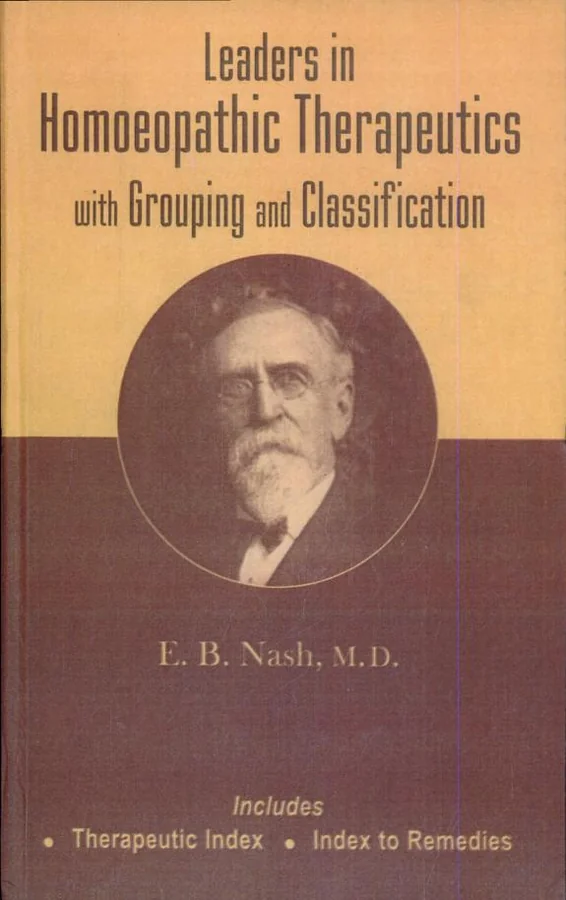
Leaders in Homoeopathic Therapeutics
 81
81

Leaders in Homoeopathic Therapeutics
Eugene Beauharnais Nash's Leaders in Homoeopathic Therapeutics, first appearing around 1902, presents a dense but invaluable compendium for those immersed in the practice of homeopathy. Nash's strength lies in his systematic cataloging of remedies, offering precise symptomology that guides the practitioner towards specific indications. The work's detailed symptom pictures, particularly for lesser-known remedies, are a significant asset. However, the sheer volume of information can be overwhelming for newcomers, and the language, while precise, requires a dedicated reader. A particularly striking aspect is Nash's discussion of the "generative organs" as a key area for many chronic conditions, a focus that reveals much about the therapeutic priorities of his time. The book's utility is undeniable for the dedicated homeopath, though its accessibility could be enhanced. Ultimately, it remains a crucial reference for understanding the historical application of homeopathic therapeutics.
📝 Description
81
Eugene Beauharnais Nash published Leaders in Homoeopathic Therapeutics in the early 20th century.
Eugene Beauharnais Nash's Leaders in Homoeopathic Therapeutics, first released in the early 1900s, serves as a guide to homeopathic medicine. The book details remedies by focusing on their characteristic symptoms and indications. Nash aimed to give practitioners the knowledge needed to choose the correct remedy for individual cases based on the totality of symptoms.
This volume is for homeopathic physicians, students, and serious practitioners of natural medicine. It offers a deeper look into the Materia Medica, going beyond introductory material. Those interested in how therapeutic systems developed and how to apply remedies by matching them to a patient's specific symptom picture will find this work useful. It reflects the clinical experience and theoretical ideas common among leading homeopaths of its time, offering a contrast to the prevailing allopathic methods.
The book's core is the homeopathic principle of "like cures like." It discusses the "Materia Medica Pura," which comes from drug provings conducted on healthy people. These provings establish how remedies affect the body, forming the basis for their use. Nash emphasizes "individualization," adapting treatment to each patient's unique set of symptoms, rather than relying on broad disease categories.
Emerging in the early 20th century, a time of growing interest in scientific inquiry alongside alternative medicine, Nash's work is situated within the broader tradition of vitalistic healing systems. Homeopathy itself, with its emphasis on "like cures like" and potentization, represents a departure from purely materialist medical approaches. This book contributes to a lineage of texts that sought to codify and expand upon these vitalistic principles, reflecting a worldview that sees health and disease as expressions of an underlying vital force.
💡 Why Read This Book?
• Understand the nuanced symptomology of specific remedies, such as Nash's detailed exploration of *Lachesis* indications, providing a depth of knowledge beyond introductory texts. • Grasp the historical evolution of homeopathic practice by examining the therapeutic approaches and remedy selections prevalent in the early 20th century. • Learn to identify characteristic symptoms for chronic disease management, a core principle Nash emphasizes throughout his extensive Materia Medica.
⭐ Reader Reviews
Honest opinions from readers who have explored this book.
❓ Frequently Asked Questions
When was Leaders in Homoeopathic Therapeutics first published?
The first edition of Eugene Beauharnais Nash's Leaders in Homoeopathic Therapeutics was published in August 1902, marking a significant contribution to homeopathic literature during that era.
What is the primary focus of Nash's Leaders in Homoeopathic Therapeutics?
The book's primary focus is on the detailed description of homeopathic remedies, their characteristic symptoms, and their therapeutic indications for treating various ailments based on individual patient presentations.
Who is the author, Eugene Beauharnais Nash?
Eugene Beauharnais Nash (1838-1917) was a prominent American homeopathic physician and author, recognized for his extensive clinical experience and his significant contributions to the homeopathic Materia Medica.
Is this book suitable for beginners in homeopathy?
While it contains invaluable information, the depth and detail might be more suited for students or practitioners with a foundational understanding of homeopathic principles and Materia Medica.
What does 'Materia Medica' refer to in the context of this book?
Materia Medica, in homeopathy, refers to the body of knowledge concerning the effects of substances on the human body, typically derived from drug provings, which Nash meticulously details.
Where can I find the original publication date information?
The original publication date for Leaders in Homoeopathic Therapeutics is cited as August 1902, reflecting its place in early 20th-century medical literature.
🔮 Key Themes & Symbolism
Individualized Symptomology
The core of Nash's work lies in presenting each remedy through its unique symptom profile. He meticulously details the peculiar, strange, and characteristic symptoms that differentiate one remedy from another, emphasizing that effective homeopathic prescribing hinges on matching these specific manifestations to the patient's exact condition. This approach underscores the individualistic nature of homeopathy, moving beyond generalized disease labels to treat the person experiencing the illness.
Materia Medica Pura
Nash draws heavily upon the established principles of the Materia Medica Pura, the compilation of drug provings conducted on healthy individuals. He presents the verified effects of various substances, acting as a guide for practitioners to understand the drug's action within the organism. The book serves as a repository of this knowledge, detailing the physical, mental, and emotional symptoms that arise from exposure to potentized remedies.
Chronic Disease Etiology
A significant portion of Nash's work addresses the treatment of chronic diseases, exploring their underlying causes and the remedies best suited to address them. He examines the miasmatic theory, suggesting deeper, inherited predispositions that manifest as chronic conditions. The text offers insights into remedies that can address these long-standing disturbances, aiming for a cure rather than mere palliation of symptoms.
Therapeutic Application
The practical application of homeopathic remedies is the ultimate goal of this text. Nash provides clear indications for each remedy, outlining when and why a particular substance should be chosen. This focus on clinical utility makes the book an indispensable reference for homeopaths seeking to confidently prescribe and manage patient care, particularly in complex or persistent health issues.
💬 Memorable Quotes
Direct passages from the work, attributed to the author.
“The symptoms of the sick are the language of nature.”
— This statement highlights the homeopathic belief that the totality of a patient's symptoms, both physical and mental, provides the essential clues for selecting the correct remedy. It positions symptoms as direct communications from the body's state.
“The generative organs are the center of the chronic manifestations.”
— This interpretation points to a specific focus within Nash's therapeutic approach, suggesting that disturbances in the reproductive and sexual systems are often central to the expression of deep-seated chronic illnesses.
“The peculiar, strange and characteristic symptoms are the most important.”
— Nash stresses that these unique and uncommon symptoms, which might seem insignificant in conventional medicine, are the most crucial indicators for selecting a highly individualized homeopathic remedy.
“The physician must be able to see the disease in the patient.”
— This concept underscores the importance of accurate case-taking and observation. It means the homeopath must perceive the unique pattern of the illness as it presents in the individual, rather than relying solely on diagnostic labels.
💡 Key Ideas
Editorial paraphrase of the work's core concepts — not direct quotes.
We must know the remedy, then the disease, and then we can cure.
This quote emphasizes the practitioner's need for profound knowledge of the Materia Medica (the remedies) before effectively diagnosing and treating illness. It suggests that understanding the drug's action is paramount to successful intervention.
🌙 Esoteric Significance
Tradition
While primarily a medical text, *Leaders in Homoeopathic Therapeutics* operates within the broader Hermetic and vitalistic traditions that influenced homeopathy's development. Homeopathy's emphasis on "vital force" (vis vitalis) and the energetic nature of remedies aligns with concepts of subtle energies and unseen forces central to Hermetic philosophy. Nash's work, by detailing how minute doses of substances can profoundly affect the human organism, implicitly supports a worldview where material substance holds energetic potential beyond its physical properties.
Symbolism
The potentized remedy itself can be seen as a symbol of transformation and the power of the unseen. In homeopathy, the process of dilution and succussion (vigorous shaking) is believed to increase the energetic potency of a substance, symbolizing the alchemical principle of "like cures like" and the idea that essence can be extracted and amplified. The detailed symptom pictures for each remedy can also be interpreted symbolically, representing archetypal patterns of imbalance within the vital force.
Modern Relevance
Contemporary practitioners of classical homeopathy continue to rely on foundational texts like Nash's work for in-depth Materia Medica study. His systematic approach to remedy indications remains a core part of homeopathic education and practice. Furthermore, the growing interest in holistic health, energy medicine, and personalized therapeutics finds echoes in Nash's emphasis on individualized treatment and the subtle action of remedies, bridging historical practice with modern wellness trends.
👥 Who Should Read This Book
• Homeopathic practitioners and advanced students seeking to deepen their understanding of complex remedy pictures and chronic case management. • Researchers and historians interested in the evolution of 19th and early 20th-century medical practices and alternative healing systems. • Individuals exploring vitalistic philosophies and the energetic principles underlying therapeutic interventions beyond conventional pharmacology.
📜 Historical Context
Eugene Beauharnais Nash's *Leaders in Homoeopathic Therapeutics*, first published in 1902, emerged during a vibrant period for alternative medicine in the United States. Homeopathy, which had gained considerable popularity since its introduction by Samuel Hahnemann in the late 18th century, was a well-established medical system, often practiced by physicians who had previously trained in or were disillusioned with conventional allopathic medicine. This era saw a proliferation of homeopathic journals and texts, as practitioners sought to codify and disseminate their clinical experience. Nash's work contributed to this body of literature, offering a detailed Materia Medica that reflected decades of clinical practice. It existed alongside other influential homeopathic texts of the time, such as those by Kent and Hering, forming a cohesive, albeit diverse, school of thought. While conventional medicine was dominated by emerging germ theory and pharmaceutical interventions, homeopathy maintained a significant following, particularly among those seeking less invasive treatments.
📔 Journal Prompts
The peculiar, strange, and characteristic symptoms: How do these manifest in your own observations of health and illness?
Nash's detailed descriptions of *Lachesis*: Reflect on the symbolic language used to portray its effects.
The concept of 'Materia Medica Pura': What does it imply about the relationship between substance and organism?
Chronic disease manifestations: Consider the historical understanding of their origins as presented by Nash.
Individualization in therapy: How might this principle be applied beyond homeopathic prescribing?
🗂️ Glossary
Homeopathy
A system of alternative medicine based on the principle 'like cures like,' using highly diluted substances that are believed to stimulate the body's healing mechanisms.
Materia Medica
A comprehensive compilation of the known effects of medicinal substances, detailing their symptoms, indications, and contraindications.
Potentization
The process in homeopathy of diluting a substance and vigorously shaking it (succussion) to increase its energetic or curative properties.
Provings
Experiments conducted on healthy human volunteers to determine the effects of a drug or substance, forming the basis of the Materia Medica.
Symptom Totality
The complete set of symptoms, including physical, mental, and emotional characteristics, presented by a patient, used by homeopaths to select a remedy.
Vis Vitalis
Latin for 'vital force'; a concept in vitalistic philosophy and homeopathy referring to the inherent life energy or animating principle of an organism.
Miasm
In homeopathic theory, a chronic, underlying disease tendency or constitutional predisposition that influences susceptibility to illness.
This book appears in 1 collection
🔮 Readers Also Liked
Browse all →









From the “Homeopathy” Collection
View all →








More Free Occult Philosophy Books
View all →