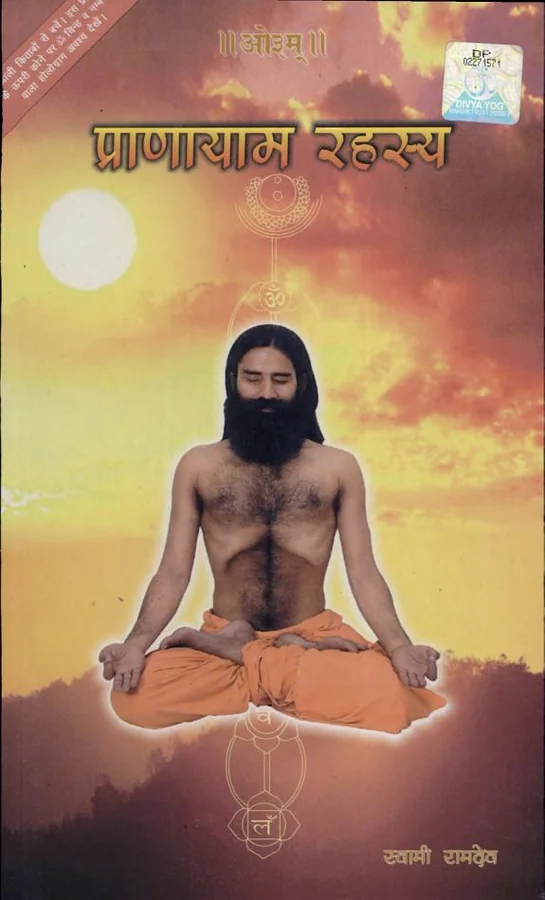
Pranayam Rahasaya (Also Available In English, Panjabi, Gujrati And Marathi)
 76
76

Pranayam Rahasaya (Also Available In English, Panjabi, Gujrati And Marathi)
Swami Ramdev's 'Pranayam Rahasaya' tackles the core of yogic practice: breath. Unlike many texts that treat Prāṇāyāma as a mere adjunct to asana, Ramdev foregrounds its fundamental importance, presenting it as the primary mechanism for controlling vital energy and mental states. The strength lies in its direct, accessible exposition of complex principles, making techniques like Kapalabhati or Nadi Shodhana understandable even to neophytes. A limitation, however, is the occasional tendency towards simplification, which, while aiding accessibility, might obscure the deeper philosophical nuances for advanced practitioners. The emphasis on the physiological and psychological benefits, particularly concerning stress and concentration, is well-articulated, drawing from established yogic lore. The work offers a practical manual rooted in tradition. It serves as a clear, if sometimes unadorned, guide to the power of conscious breathing.
📝 Description
76
Swami Ramdev's Pranayam Rahasaya, published in 2009, explains yogic breath control.
Published in 2009, Pranayam Rahasaya by Swami Ramdev is a guide to Prāṇāyāma, the yogic practice of breath control. The book aims to explain the core principles, importance, and practical uses of these breathing exercises as part of Yoga. It examines the connection between breath, the mind, and vital energy, known as prana.
This book is for people who want to learn and use yogic breathing for their physical, mental, and spiritual health. It suits beginners interested in breath science and experienced practitioners wanting to understand Prāṇāyāma better. Readers interested in Yoga's philosophical ideas, beyond just physical poses (asanas), will find much to read. It also attracts those looking for natural ways to reduce stress, improve focus, and increase energy.
The book discusses Prāṇāyāma not just as exercises but as a method for managing energy. It may describe specific techniques such as Nadi Shodhana, Kapalabhati, and Bhastrika, showing how they work and their benefits.
Prāṇāyāma has ancient roots in yogic traditions, with early mentions in texts like the Hatha Yoga Pradipika. Swami Ramdev's work presents these older practices in a modern context, making them accessible to a wider audience. This approach is part of a modern revival of yogic sciences. It is often presented as a complete system for health and self-discovery, separate from ascetic or monastic paths.
💡 Why Read This Book?
• Learn specific Prāṇāyāma techniques like Nadi Shodhana, understanding their distinct physiological impacts as detailed in the text, offering a tangible method for balancing the nervous system unlike general mindfulness. • Grasp the philosophical link between breath control (Prāṇāyāma) and mental mastery, a core tenet of yogic philosophy, providing a framework for understanding the mind that transcends secular psychology. • Discover the practical application of breathwork for enhancing vitality and reducing stress, directly referencing Swami Ramdev's methods which have gained widespread adoption since the book's 2009 publication.
⭐ Reader Reviews
Honest opinions from readers who have explored this book.
❓ Frequently Asked Questions
What is the primary focus of Swami Ramdev's Pranayam Rahasaya?
The book's primary focus is the fundamental principles, significance, and practical application of Prāṇāyāma, or yogic breathing exercises, as central to the practice of Yoga and overall well-being.
Is Pranayam Rahasaya only available in Hindi?
No, Pranayam Rahasaya was first published in 2009 and is also available in English, Panjabi, and Marathi, making its teachings accessible to a wider linguistic audience.
What are the key benefits of practicing Prāṇāyāma as described in the book?
The book describes benefits such as improved concentration, stress reduction, enhanced vitality, and greater control over mental states by regulating the flow of prana (vital energy) through breath manipulation.
Who is Swami Ramdev and what is his approach to Yoga?
Swami Ramdev is a globally recognized yoga guru known for popularizing yogic practices, particularly Prāṇāyāma, through mass media and public programs, advocating for a holistic approach to health.
Does this book cover different types of Prāṇāyāma techniques?
Yes, the work explores the fundamentals and application of various Prāṇāyāma techniques, likely detailing specific methods and their effects on the body and mind.
What is the significance of 'Prana' in the context of this book?
Prana refers to vital life force or energy, which the book explains is intrinsically linked to the breath. Mastering Prāṇāyāma is presented as the key to controlling and utilizing this vital energy.
🔮 Key Themes & Symbolism
The Science of Breath
This theme centers on Prāṇāyāma as more than just exercise; it's a sophisticated system for managing the body's vital energy, or prana. The book likely details how specific breathing patterns influence physiological processes, from oxygen intake to nervous system regulation. It posits that understanding and controlling breath is fundamental to unlocking higher states of consciousness and achieving physical health, moving beyond superficial interpretations of yogic practices to its core energetic mechanics.
Mind-Breath Interdependence
A core tenet explored is the inseparable link between the breath and the mind. The work elucidates how fluctuations in breathing directly mirror and influence mental states – from anxiety to calmness. By learning to regulate the breath, practitioners are shown how to gain a measure of control over their thoughts and emotions. This theme emphasizes Prāṇāyāma as a primary tool for mental discipline and achieving equanimity, a concept central to yogic philosophy since ancient times.
Holistic Well-being
The book presents Prāṇāyāma as a central to holistic health, integrating physical, mental, and spiritual dimensions. It moves beyond isolated symptom management to address the root of well-being by harmonizing the body's energetic systems. The application of these techniques is framed not merely for therapeutic purposes but as a path toward self-realization, reflecting the comprehensive nature of Yoga as a system for living.
Accessibility of Ancient Wisdom
Swami Ramdev's work is significant for making complex yogic science accessible to a mass audience. The book translates intricate philosophical and practical concepts into understandable terms, often supported by practical demonstrations and guidance. This theme highlights the effort to bridge the gap between ancient esoteric knowledge and modern life, democratizing practices previously confined to specific lineages or monastic settings.
💬 Memorable Quotes
Direct passages from the work, attributed to the author.
“Breath is the bridge between the conscious and subconscious mind.”
— This highlights the profound connection between our physical respiration and our mental landscape. It suggests that by consciously manipulating the breath, one can access and influence deeper layers of consciousness, achieving greater self-awareness and control.
“Mastery of Prāṇāyāma leads to mastery over the mind.”
— This statement underscores the central thesis that the discipline of controlled breathing is the primary pathway to mental stillness and clarity. It implies that external mental chaos can be quelled by internal regulation of the breath.
“Prana flows where the mind goes; the breath follows the mind.”
— This concept illustrates the subtle energetic dynamics at play. It suggests that the direction of our attention influences the flow of vital energy (prana) and is reflected in our breathing pattern, indicating a reciprocal relationship.
“The body is a temple, and breath is its sacred ritual.”
— This metaphor elevates the act of breathing from a mere biological function to a spiritual practice. It implies that conscious, controlled breathing is an act of reverence for one's own physical and energetic being.
“Through regulated breathing, one purifies the nadis and enhances energy flow.”
— This refers to the yogic concept of subtle energy channels (nadis). The interpretation is that specific breathing techniques, as taught in the book, are essential for clearing blockages in these channels, thereby optimizing the circulation of vital energy (prana).
🌙 Esoteric Significance
Tradition
This work aligns with the broader Hindu yogic tradition, specifically the Raja Yoga and Hatha Yoga branches, which emphasize breath control (Prāṇāyāma) as a crucial limb of yoga. While not strictly adhering to esoteric lineages like Kabbalah or Hermeticism, it taps into universal principles of vital energy manipulation (prana) found across many esoteric systems. Its significance lies in translating these ancient, often orally transmitted, techniques into a widely accessible format for modern practitioners seeking energetic and mental refinement.
Symbolism
The central symbol is 'Prana' itself – the vital life force, often symbolized by breath. The 'Nadis' (subtle energy channels) are another key symbolic concept, representing the energetic pathways within the body that Prāṇāyāma aims to purify and balance. The flow of breath through these channels is often visualized as currents of energy, and the practice aims to achieve a state of unimpeded flow, symbolizing harmony and vitality.
Modern Relevance
Contemporary mindfulness and breathwork movements, increasingly integrated into mainstream wellness and therapeutic practices, draw heavily on the principles elucidated in works like this. Thinkers and practitioners focusing on somatic psychology, stress reduction techniques, and bioenergetics find resonance with Ramdev's emphasis on the direct link between breath, nervous system regulation, and mental well-being. The accessibility of the techniques makes it relevant for secular applications of yogic science.
👥 Who Should Read This Book
• Individuals seeking practical, non-pharmacological methods for stress management and mental clarity, as the book offers specific Prāṇāyāma techniques for calming the nervous system. • Aspiring and current yoga practitioners aiming to deepen their understanding beyond asana, focusing on the often-underemphasized but critical limb of Prāṇāyāma as detailed by Swami Ramdev. • Those interested in the energetic and subtle aspects of human physiology, exploring the yogic concept of 'prana' and its manipulation through breath control as presented in the book.
📜 Historical Context
Published in 2009, Swami Ramdev's 'Pranayam Rahasaya' emerged during a period of intense global interest in yoga and alternative wellness practices. While classical yogic texts like the Hatha Yoga Pradipika (c. 15th century) and the Yoga Sutras of Patanjali (c. 400 CE) provided the philosophical and technical foundations, Ramdev's work belongs to a modern movement that sought to popularize these ancient disciplines. This era saw a proliferation of yoga styles and interpretations, with figures like B.K.S. Iyengar and T.K.V. Desikachar also making significant contributions to the global understanding of yoga's practical aspects. Ramdev's approach, however, distinguished itself through its mass appeal and focus specifically on the potent effects of Prāṇāyāma, often presented as a universally accessible path to health and spiritual upliftment, bypassing complex philosophical debates that characterized some academic or traditional circles.
📔 Journal Prompts
The relationship between breath regulation and mental focus.
Specific Prāṇāyāma techniques for energy cultivation.
The concept of 'Prana' and its role in vitality.
Personal experience with altering breathing patterns.
Connecting breath control to emotional equilibrium.
🗂️ Glossary
Prāṇāyāma
The yogic practice of controlling and regulating the breath, considered a fundamental aspect of Yoga for achieving physical, mental, and spiritual balance.
Prana
The vital life force or energy that permeates the universe and sustains all living beings. In yogic philosophy, it is closely associated with the breath.
Asana
Physical postures or exercises in yoga, typically practiced for health, flexibility, and to prepare the body for meditation.
Nadi
Subtle energy channels within the body through which prana is believed to flow. Purification of nadis is a key objective of Prāṇāyāma.
Manas
The mind or consciousness in yogic philosophy. The book explores how Prāṇāyāma influences and controls 'manas'.
Hatha Yoga
A branch of Yoga that focuses on physical postures (asanas) and breathing techniques (prāṇāyāma) to prepare the body and mind for higher states of awareness.
Kapalabhati
A specific yogic breathing technique involving forceful exhalations and passive inhalations, often translated as 'skull shining breath,' known for its cleansing properties.
This book appears in 1 collection
🔮 Readers Also Liked
Browse all →









From the “Yoga” Collection
View all →








More Free Occult Philosophy Books
View all →