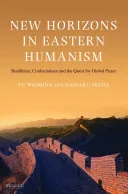
New Horizons in Eastern Humanism
 83
83

New Horizons in Eastern Humanism
The dialogue between Tu Weiming and Daisaku Ikeda in "New Horizons in Eastern Humanism" offers a welcome counterpoint to the often technologically or economically deterministic narratives surrounding China's rise. Their exploration of Confucian humanism is particularly compelling when they discuss "Ren" (仁) not as a static historical concept but as a living ethical imperative for contemporary global citizenship. The strength lies in its ability to connect deep philosophical roots to pressing modern issues. However, the book occasionally feels like a missed opportunity for deeper critique; while it champions Confucian values, it could have more rigorously interrogated potential conflicts or limitations when applied universally, particularly in light of historical criticisms of Confucianism's hierarchical aspects. The discussion around the importance of education as a vehicle for ethical development in Chapter 4 provides a solid anchor for the book's broader humanistic thesis. Ultimately, "New Horizons in Eastern Humanism" serves as a crucial, if somewhat gentle, reminder of philosophy's role in shaping societal direction.
📝 Description
83
Published in 2011, New Horizons in Eastern Humanism examines Confucian humanism's resurgence.
This book is a dialogue between philosopher Tu Weiming and Daisaku Ikeda. It addresses the renewed interest in Confucian humanism and its philosophical roots, particularly as China's global presence grows. The authors look beyond economic or political views to the lasting ethical and cultural values that have shaped Chinese civilization. They propose a humanism grounded in historical Chinese thought, providing a way to understand current East Asian societies and their global interactions.
The work is suited for scholars of East Asian philosophy, comparative religion, and global ethics. It will also interest readers curious about China's intellectual history and how old philosophical ideas influence today's political and economic discussions. Those wanting to grasp the cultural aspects of China's rise, beyond simple observations, will find it valuable. It is also relevant for interfaith and cross-cultural dialogue, especially regarding humanistic values in international affairs.
While not strictly esoteric in the occult sense, this work engages with the deeper philosophical currents of Chinese civilization, which can be considered esoteric in its focus on ancient, often unstated, principles guiding societal development. It contrasts with more superficial analyses of China's rise, instead seeking the enduring ethical and cultural foundations rooted in traditions like Confucianism. The dialogue seeks to uncover a humanism that is not a modern invention but a continuation of millennia-old thought, offering a perspective that might seem hidden or less apparent to those outside the tradition.
💡 Why Read This Book?
• Gain an understanding of "Ren" (仁) as a practical ethical framework for global interaction, moving beyond abstract notions of benevolence to concrete applications in modern society, as detailed in the book's discussions. • Appreciate the historical continuity of Confucian thought, particularly its influence on Chinese culture and governance leading up to and beyond the 2011 publication, offering a perspective often overshadowed by political and economic news. • Explore an alternative to Western-centric philosophical models for societal development, learning how Eastern humanistic values can inform contemporary ethical discourse and cross-cultural understanding.
⭐ Reader Reviews
Honest opinions from readers who have explored this book.
❓ Frequently Asked Questions
What is the central philosophical tradition discussed in "New Horizons in Eastern Humanism"?
The central philosophical tradition is Confucian humanism. The book focuses on its enduring principles and values, particularly "Ren" (仁), and how they remain relevant to China's contemporary global role and ethical development.
Who are the main contributors to this book?
The book features a dialogue between Tu Weiming, a prominent scholar of Confucianism, and Daisaku Ikeda, a Buddhist philosopher and peace activist. Their exchange synthesizes different perspectives on humanism.
When was "New Horizons in Eastern Humanism" first published?
The book was first published on March 31, 2011. This timing is significant, coinciding with a period of heightened global attention on China's economic and geopolitical ascendancy.
How does the book relate to China's economic growth?
It posits that China's global attention is proportional to its economic power, but argues that Confucian humanistic philosophy, not modern capitalism or communism, has historically shaped its soul and continues to influence its politics and finance.
What is the concept of "Ren" (仁) as presented in the book?
"Ren" (仁), translated as benevolence or humaneness, is presented as a core Confucian virtue essential for individual cultivation and social harmony. The book explores its application in contemporary ethical challenges.
Does the book offer a critique of Western philosophical traditions?
While not its primary focus, the book implicitly offers an alternative perspective to Western-centric models of development by highlighting the strengths and adaptability of Eastern humanistic values, particularly Confucianism.
🔮 Key Themes & Symbolism
Revival of Confucian Humanism
The work centers on the resurgence of Confucian humanism as a critical force in understanding contemporary East Asia. It argues that millennia-old philosophical traditions, particularly Confucian ethics, continue to shape China's cultural identity and its engagement with the world. This theme emphasizes that China's global influence is not solely a product of economic or political shifts but is deeply rooted in its philosophical heritage. The book explores how concepts like "Ren" (仁) and "Li" (禮) offer enduring frameworks for ethical living and social order, challenging purely materialistic interpretations of progress.
East-West Philosophical Dialogue
"New Horizons in Eastern Humanism" functions as a significant dialogue between Eastern and Western philosophical perspectives. It presents Confucian humanism not as an isolated tradition but as a vital contributor to global ethical discourse. The authors engage with the universal aspirations of humanism while grounding it in specific East Asian cultural and intellectual contexts. This theme highlights the potential for cross-cultural philosophical exchange to enrich contemporary understanding of human dignity, social responsibility, and the pursuit of peace in an increasingly interconnected world.
Humanism and Global Ethics
The book advocates for a form of humanism that prioritizes ethical development alongside material progress. It posits that the values embedded in traditions like Confucianism offer a pathway toward a more just and harmonious global society. The authors explore how cultivating virtues such as benevolence ("Ren"), righteousness ("Yi"), and propriety ("Li") can address contemporary challenges ranging from international relations to personal conduct. This theme frames Eastern humanism as a crucial resource for building a shared global ethic fit for the 21st century.
Cultural Foundations of Power
This theme examines how cultural and philosophical foundations underpin a nation's global standing, moving beyond purely economic or military metrics. The work suggests that China's growing influence is intrinsically linked to its deep wellspring of humanistic philosophy, which has shaped its societal fabric for centuries. It implies that understanding these cultural underpinnings is crucial for comprehending China's trajectory and its interactions on the world stage. The book uses this lens to interpret contemporary events, advocating for a more holistic view of national power.
💬 Memorable Quotes
Direct passages from the work, attributed to the author.
“The soul of China is Confucianism, not modern Communism or capitalism.”
— This statement captures the book's core argument: that the enduring philosophical traditions, particularly Confucianism, represent the fundamental essence of Chinese civilization, far more so than recent political or economic systems.
“Humanistic culture and values underlie Chinese politics and finance.”
— This highlights the idea that beneath the surface of China's economic and geopolitical power lie deeply ingrained humanistic principles derived from its philosophical past, influencing its contemporary institutions.
“The resurgence of interest in Confucianism reflects a search for ethical grounding.”
— This suggests that the growing attention to Confucian philosophy is not merely academic but signals a broader societal need for ethical frameworks to read through the complexities of the modern world.
“True progress involves both material development and ethical cultivation.”
— This interpretation emphasizes the book's dual focus on societal advancement, arguing that genuine human flourishing requires a balance between economic prosperity and the development of moral character.
“Global attention on China is directly proportional to its increasing power.”
— This observation sets the stage for the book's deeper analysis, noting the correlation between China's growing global presence and the world's focus on its economic and geopolitical might.
🌙 Esoteric Significance
Tradition
While primarily focused on Confucianism, which is often categorized as a philosophy or ethical system, this work touches upon esoteric themes by exploring the spiritual and moral dimensions of human existence that transcend purely material concerns. It aligns with broader esoteric traditions that seek wisdom and transformation through the understanding of fundamental human nature and cosmic order. The emphasis on self-cultivation, ethical perfection, and the interconnectedness of humanity echoes motifs found in various mystical and philosophical lineages that seek to harmonize the individual with the universal.
Symbolism
The concept of "Ren" (仁) itself can be seen as a symbolic core, representing the ideal human state of benevolence and interconnectedness, a foundational principle for ethical living. Another key symbolic element is the emphasis on "Li" (禮), often translated as ritual or propriety. In an esoteric context, Li symbolizes the structured expression of inner harmony and ethical understanding, guiding social interactions and personal conduct to reflect a higher order. The dialogue format itself can symbolize the meeting of different wisdom traditions, seeking synthesis.
Modern Relevance
Contemporary thinkers and movements focused on East-West dialogue, global ethics, and the integration of philosophy into public life draw inspiration from this work. It is relevant to scholars and practitioners interested in applying ancient wisdom to modern challenges, particularly in fields like leadership ethics, cross-cultural psychology, and peace studies. The book's re-articulation of Confucian values speaks to a modern yearning for meaning and ethical guidance that transcends secular materialism, resonating with those seeking holistic approaches to personal and societal well-being.
👥 Who Should Read This Book
• Scholars of East Asian philosophy and comparative religion seeking to understand the intellectual underpinnings of China's global presence beyond economic factors. • Students of global ethics and intercultural studies interested in how Eastern humanistic values can inform contemporary moral and political discourse. • Readers interested in the intersection of philosophy, culture, and geopolitics, looking for a nuanced perspective on China's rise informed by its historical and philosophical traditions.
📜 Historical Context
Published in 2011, "New Horizons in Eastern Humanism" emerged during a period of intense global scrutiny of China's rapidly expanding economic and political influence. Western discourse often focused on market reforms and geopolitical strategies, sometimes neglecting the deep philosophical currents shaping Chinese society. This work directly challenged such reductive views by re-centering Confucian humanism as a primary lens for understanding China's enduring identity and its contemporary global role. It positioned itself against the backdrop of a perceived Western philosophical dominance, offering Eastern perspectives as vital contributions to global ethical thought. The book engaged with the legacy of figures like Confucius, whose teachings had been subject to significant reinterpretation and debate throughout the 20th century, particularly under Mao Zedong's era, before experiencing a revival.
📔 Journal Prompts
The concept of "Ren" (仁) as a foundation for global ethics.
Confucian ideals versus modern economic imperatives.
Ethical cultivation in the context of national ascendancy.
The role of philosophy in shaping geopolitical narratives.
Bridging East Asian humanism with Western ethical frameworks.
🗂️ Glossary
Ren (仁)
A core concept in Confucianism, often translated as benevolence, humaneness, or goodness. It signifies the ideal ethical virtue of empathy and compassion towards others, fundamental for social harmony and individual moral perfection.
Li (禮)
Another key Confucian concept, referring to ritual, propriety, etiquette, and social norms. Li guides human behavior and social interactions, ensuring order and harmony by defining appropriate conduct in various relationships and situations.
Eastern Humanism
A broad term referring to philosophical and ethical traditions originating in Eastern cultures (e.g., Confucianism, Buddhism) that emphasize human dignity, ethical conduct, and the pursuit of wisdom and social harmony, often with a focus on self-cultivation and interconnectedness.
Confucianism
An ethical and philosophical system developed from the teachings of Confucius in ancient China. It emphasizes personal and governmental morality, social justice, sincerity, and the importance of education and self-cultivation.
Geopolitical Power
The influence and power a nation wields on the international stage, encompassing its political, economic, military, and cultural strength, and its ability to shape global affairs.
Yi (義)
In Confucian thought, Yi refers to righteousness or justice. It is the principle of doing what is morally right and appropriate, often seen as complementing Ren and guiding individuals in making ethical decisions.
Self-Cultivation
The process of developing one's character, intellect, and moral qualities through dedicated practice, learning, and reflection. It is a central theme in many Eastern philosophies, including Confucianism, aimed at achieving personal and social betterment.