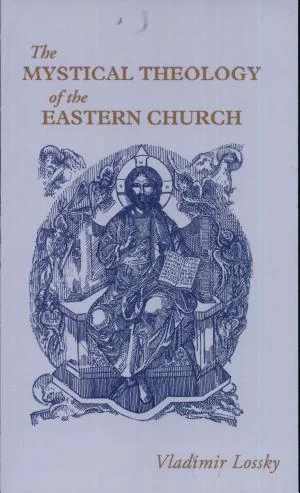
The Mystical Theology of the Eastern Church
 79
79

The Mystical Theology of the Eastern Church
Vladimir Lossky's "The Mystical Theology of the Eastern Church" remains a cornerstone for understanding Orthodox spirituality, not by offering gentle introductions but by presenting a robust, almost polemical, defense of its integrated nature. Lossky masterfully dismantles the perceived dichotomy between theology and mysticism, arguing forcefully that for the East, they are one and the same. His assertion that "theology is experience" is not merely a scholarly claim but a lived reality he endeavors to convey. The strength of the book lies in its unwavering focus on this unity, drawing from patristic sources to illustrate how dogma itself arises from and points toward direct encounter with the divine. A notable limitation, however, is the dense prose, which, while accurate, can present a steep learning curve for those unfamiliar with the specific terminology of Orthodox theology. For instance, his detailed explication of the Palamite controversies, while crucial, requires careful attention. Nevertheless, the passage discussing theosis as a participation in the divine nature, rather than mere imitation, offers a profound and illuminating perspective. Lossky's work is an indispensable, albeit challenging, guide to the heart of Eastern Christian spirituality.
📝 Description
79
Vladimir Lossky's 1976 book argues that Eastern Orthodox theology is inherently participatory, blending doctrine with lived experience.
Vladimir Lossky's "The Mystical Theology of the Eastern Church," published in 1976, examines Orthodox Christian thought. Lossky posits that theology in this tradition is not separate from mystical experience but is a process of knowing God that engages both intellect and spirit. The book analyzes key patristic writings and theological ideas, showing how concepts like God's essence and energies, theosis, and the Church's role are woven into the mystical life of believers. It aims to clarify the unique spiritual outlook of Eastern Christianity for a wider readership.
This work is valuable for students of comparative theology, Eastern Orthodoxy, and Christian mysticism. It also appeals to those interested in the philosophy of religious experience and the history of Christian doctrine. Readers seeking to grasp a non-dualistic faith, where dogma and spiritual practice complement each other, will find much here. The book suits those who appreciate theological analysis that integrates historical and experiential dimensions, moving beyond purely academic or devotional approaches. It offers substantial insights into apophatic theology.
Lossky's work engages with a tradition where theology is not merely intellectual assent but a path of spiritual transformation. It aligns with esoteric Christian streams that emphasize direct experience of the divine, often through contemplative practices. The focus on theosis, or deification, echoes ancient Christian concepts of union with God, a theme present in various mystical traditions. By highlighting apophatic theology, Lossky points to a way of knowing God through negation, a method found in mystical thought across different cultures and eras, suggesting that ultimate reality transcends conceptual grasp.
💡 Why Read This Book?
• Learn how the Eastern Orthodox tradition views theology not as abstract doctrine but as direct spiritual experience, a concept Lossky explicates through the historical Palamite controversies. • Understand the doctrine of theosis, the ultimate goal of Christian life according to Lossky, as a real participation in the divine nature, not just an ethical ideal. • Grasp the practice of apophatic theology as described by Lossky, which emphasizes God's transcendence and the limits of human language in describing the divine.
⭐ Reader Reviews
Honest opinions from readers who have explored this book.
❓ Frequently Asked Questions
What is the primary argument of "The Mystical Theology of the Eastern Church"?
The primary argument is that Eastern Christian tradition inherently integrates theology and mysticism, viewing theological knowledge as inseparable from personal experience of divine mysteries and Church dogma.
Who was Vladimir Lossky?
Vladimir Lossky (1903-1958) was a Russian theologian and philosopher, a significant figure in 20th-century Orthodox theology, known for his work on patristics and mystical theology.
What is 'theosis' as discussed by Lossky?
Theosis, or deification, is presented as the ultimate aim of Christian life in the Eastern tradition, signifying a real participation in the divine nature through grace.
What is apophatic theology?
Apophatic theology, or 'via negativa,' is an approach that describes God by what He is not, emphasizing His transcendence and unknowability in His essence.
When was "The Mystical Theology of the Eastern Church" first published?
The book was first published in 1976, though Lossky's ideas were developed and discussed throughout his academic career.
How does Lossky differentiate Eastern theology from Western theology?
Lossky argues that Eastern theology maintains a closer link between personal experience and dogma, whereas Western traditions, particularly post-Scholasticism, may have introduced sharper distinctions.
🔮 Key Themes & Symbolism
Unity of Theology and Mysticism
Lossky insists that in the Eastern Church, theology is not merely an academic discipline but a lived, experiential reality. This unity is crucial, meaning that understanding Church dogma is intrinsically linked to the personal encounter with divine mysteries. The work explores how the Fathers of the Church did not separate intellectual assent from spiritual practice, viewing both as integral to the journey of salvation and union with God. This perspective challenges Western intellectual traditions that might compartmentalize faith and experience.
Theosis as Divine Participation
A central theme is the concept of theosis, or deification. Lossky clarifies that this is not about becoming God in essence, but about a real participation in the divine nature through grace. It represents the ultimate goal of Christian life, where a believer, through the Holy Spirit, becomes a 'god by grace.' This participation is made possible by the Incarnation of Christ and is experienced within the life of the Church, transforming the human person holistically.
Apophatic Theology and Transcendence
The book extensively discusses apophatic theology, the 'way of negation,' which posits that God is beyond all human comprehension and description. While acknowledging cataphatic theology (affirmative statements), Lossky emphasizes the superiority of apophaticism in approaching the divine essence, which remains utterly transcendent. This approach respects God's absolute otherness and guards against anthropomorphism, fostering humility and awe in the face of the divine mystery. It highlights the limits of reason when confronting the divine.
The Role of the Holy Spirit and the Church
Lossky underscores the vital role of the Holy Spirit as the uncreated energies through which God interacts with creation and humanity. The Church is presented as the living body of Christ, the 'temple of the Holy Spirit,' where these divine energies are accessible and experienced. Membership in the Church is not merely a social or institutional affiliation but the very means by which believers partake in the divine life and are led toward theosis.
💬 Memorable Quotes
Direct passages from the work, attributed to the author.
“The Eastern tradition has never made a sharp distinction between mysticism and theology.”
— This foundational statement expresses Lossky's thesis: for Orthodox Christianity, spiritual experience and doctrinal formulation are not separate paths but interwoven aspects of the same pursuit of God.
“The purpose of the Christian life is theosis, or deification.”
— This interpretation points to the ultimate goal Lossky describes: not mere moral improvement, but a radical transformation and participation in the divine nature through grace.
“The Church is the place where we experience the divine.”
— This interpretation underscores Lossky's view of the Church as the living body of Christ and the primary context for experiencing God's presence and energies.
💡 Key Ideas
Editorial paraphrase of the work's core concepts — not direct quotes.
We know God in His energies, not in His essence.
This paraphrased concept highlights the distinction Lossky draws between God's inaccessible essence and His knowable, active energies through which humanity can encounter Him.
Apophatic theology is the most fitting way to speak of God.
This paraphrased concept reflects Lossky's emphasis on the negative way, stressing God's transcendence and the limitations of human language in describing the divine mystery.
🌙 Esoteric Significance
Tradition
This work is situated within the broader context of Christian Esotericism, specifically focusing on the Eastern Orthodox tradition. While not aligning with Western Hermeticism or Kabbalah, it explores the esoteric dimension inherent within a major world religion. Lossky's emphasis on direct spiritual experience, the unknowability of God's essence, and the transformative process of theosis aligns with perennialist philosophies that see a common mystical core across diverse traditions, albeit expressed through a specific Christian lens.
Symbolism
Key symbolic motifs explored include the 'unknowable essence' and 'uncreated energies' of God, representing divine transcendence and immanence respectively. The concept of the 'Kingdom of God' is not merely a future eschatological state but a present reality accessible through the Church and the Spirit. The 'Jesus Prayer' ('Lord Jesus Christ, Son of God, have mercy on me a sinner') functions as a potent symbol of focused, continuous prayer and union with the divine, encapsulating the mystical path.
Modern Relevance
Contemporary thinkers and practitioners in fields ranging from comparative mysticism to contemplative prayer continue to draw on Lossky's work. His articulation of theosis influences discussions on spiritual transformation and human potential. Modern movements focused on inter-Orthodox dialogue and ecumenism often reference his insights into the unique characteristics of Eastern spirituality. Furthermore, scholars of religious experience and those exploring the intersection of theology and psychology find his rigorous yet experiential approach valuable.
👥 Who Should Read This Book
• Students of comparative religion and theology: Gain a nuanced understanding of a major branch of Christianity distinct from Western traditions, focusing on its integrated spiritual and doctrinal life. • Contemplative practitioners: Explore the theological underpinnings of practices like hesychasm and the Jesus Prayer, understanding their doctrinal roots and ultimate aims as described by Lossky. • Scholars of mysticism: Analyze a significant tradition's approach to divine encounter, transcendence, and the concept of deification, contrasting it with other mystical paths.
📜 Historical Context
Vladimir Lossky's "The Mystical Theology of the Eastern Church," published in 1976, emerged in a mid-20th century landscape where Western theological thought was increasingly engaging with Eastern patristic traditions. Lossky, a prominent Russian émigré theologian, built upon the legacy of thinkers like Georges Florovsky, who championed a return to the early Church Fathers. This period saw a growing interest in Orthodox spirituality as a counterpoint to what some perceived as the over-intellectualized or systematized approaches of Western scholasticism. Lossky's work directly addressed this by articulating the Eastern emphasis on the inseparable nature of theology and mystical experience. He engaged with contemporary theological debates, particularly concerning the Palamite controversies, and offered a distinct perspective on concepts like theosis and apophatic theology, differentiating them from similar ideas in Western thought. The book gained significant traction among scholars and students seeking a deeper understanding of the unique spiritual and theological framework of Eastern Christianity.
📔 Journal Prompts
The distinction between God's essence and energies, as presented by Lossky.
The concept of theosis and its implications for human potential.
Apophatic theology's challenge to language and comprehension.
The role of the Church as a locus of divine experience.
Lossky's argument for the inseparability of theology and mysticism.
🗂️ Glossary
Theosis
The Eastern Orthodox concept of deification or divinization, understood as a process of becoming like God through grace, achieving union with God and participation in the divine nature.
Apophatic Theology
Also known as 'via negativa,' this theological approach emphasizes God's transcendence by describing Him in terms of what He is not, rather than what He is.
Cataphatic Theology
The 'way of affirmation,' which uses positive statements and concepts to describe God, acknowledging His attributes and actions within creation.
Uncreated Energies
The divine operations or activities through which God interacts with the world and humanity, distinct from His utterly transcendent and unknowable essence.
Palamism
The theological system of Gregory Palamas, a 14th-century Byzantine monk and archbishop, concerning the distinction between God's essence and energies.
Patristics
The study of the writings and doctrines of the early Church Fathers, considered foundational to Christian theology and spirituality.
Hesychasm
A contemplative tradition within Eastern Orthodox Christianity emphasizing stillness, prayer, and the attainment of inner peace through the Jesus Prayer.
This book appears in 1 collection
🔮 Readers Also Liked
Browse all →







From the “Mystical Theology” Collection
View all →

More Free Sacred Texts & Gnosticism Books
View all →