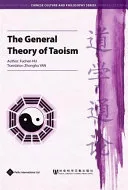
General Theory of Taoism
 72
72

General Theory of Taoism
Hu Fuchen's 'General Theory of Taoism' tackles the monumental task of systematizing a sprawling philosophical and religious tradition. The book's primary strength lies in its methodical presentation, offering a clear breakdown of Taoist concepts that can be genuinely helpful for newcomers. The author's effort to connect Taoism to contemporary Chinese culture, as noted in the original blurb, is a valuable angle often overlooked in Western scholarship. However, the work occasionally feels more like an exhaustive catalogue than an interpretive analysis. For instance, the detailed exposition of the *Yijing*'s (Book of Changes) relationship to Taoist divination, while factually thorough, could benefit from deeper philosophical commentary on the *implications* of this connection for understanding cosmic harmony. The book is a solid reference, but it stops short of offering the kind of critical engagement that would elevate it beyond a comprehensive overview. Ultimately, it serves as a foundational text for understanding the structure of Taoist thought.
📝 Description
72
Hu Fuchen's General Theory of Taoism was published in 2013.
Hu Fuchen's General Theory of Taoism examines a global philosophical and religious tradition. The book breaks down core tenets and conceptual frameworks into an accessible structure. It aims to explain the fundamental principles that shape Taoism's thought and practice.
This volume is suited for students and scholars of Eastern philosophy, religious studies, and Chinese culture. It offers a detailed look at Taoism, covering its theoretical basis and practical applications. Readers interested in comparative religion or the history of philosophical systems will find it valuable.
The book places Taoism as a living tradition with modern relevance, not just a historical artifact. It discusses the tradition's importance for its estimated 400 million followers worldwide, connecting ancient ideas to contemporary society.
This work addresses Taoism, a tradition deeply rooted in ancient Chinese cosmology and philosophy. It engages with concepts like qi, the Tao, yin and yang, and the pursuit of harmony with the natural order. The book situates these ideas within a lineage that has influenced not only religious practice but also medicine, martial arts, and political thought for millennia. It seeks to clarify the theoretical architecture supporting practices aimed at longevity and spiritual realization.
💡 Why Read This Book?
• Gain a structured understanding of Taoist cosmology, moving beyond superficial interpretations to grasp concepts like *Qi* (vital energy) and the *Yin-Yang* dynamic as presented in Chapter 3, "The Universe and the Human Being." • Explore the historical evolution of Taoism from its foundational texts, such as the *Daodejing*, and understand its role in shaping Chinese philosophy and practices over millennia, as detailed in the historical sections. • Appreciate the practical applications of Taoist principles in daily life and governance, learning how concepts like *Wu Wei* (effortless action) are interpreted and applied by contemporary adherents.
⭐ Reader Reviews
Honest opinions from readers who have explored this book.
❓ Frequently Asked Questions
When was General Theory of Taoism first published?
General Theory of Taoism by Hu Fuchen was first published on February 1, 2013, making it a relatively recent scholarly contribution to the study of Taoism.
How many people practice Taoism worldwide according to the book?
The book states that Taoism is followed by as many as 400 million people worldwide, indicating its significant global presence and cultural impact.
What is the main focus of Hu Fuchen's General Theory of Taoism?
The book focuses on outlining the principle theories and categories of Taoism in detail, aiming to provide a comprehensive and user-friendly understanding of this philosophical and religious tradition.
Is General Theory of Taoism suitable for beginners?
Yes, the book is described as comprehensive and user-friendly, making it suitable for individuals new to the study of Taoism who seek detailed information.
What is the significance of Taoism in modern China, as discussed in the book?
Hu Fuchen highlights the significance of Taoism in modern-day China, emphasizing its role in contemporary culture and its enduring influence on the lives of millions.
Does the book cover both philosophical and religious aspects of Taoism?
Yes, the book supplies detailed information covering all aspects of Taoism, encompassing both its philosophical underpinnings and its religious practices and traditions.
🔮 Key Themes & Symbolism
The Nature of the Tao
The work meticulously examines the concept of the Tao, the ineffable fundamental principle of the universe in Taoist philosophy. It explores how the Tao manifests as the source of all existence and the underlying order governing reality. The book likely studies interpretations of the Tao as both the 'nameless' and the 'mother of ten thousand things,' as famously articulated in the *Daodejing*, providing a structured framework for understanding its elusive nature and its role in guiding cosmological and ethical principles.
Yin and Yang Dynamics
A central theme is the exploration of Yin and Yang, the complementary and interdependent forces that shape the phenomenal world. The book details how these forces are not in opposition but are integral to the cosmic balance and the continuous transformation of all things. Readers can expect a thorough analysis of how the interplay of Yin and Yang influences natural phenomena, human physiology, and societal structures, offering a lens through which to understand change and harmony.
Wu Wei and Effortless Action
The principle of *Wu Wei*, often translated as 'non-action' or 'effortless action,' is a critical concept discussed within the text. The work likely explains *Wu Wei* not as passivity, but as acting in accordance with the natural flow of the Tao, minimizing resistance and achieving results through minimal intervention. This theme is crucial for understanding Taoist approaches to governance, personal conduct, and spiritual cultivation, emphasizing spontaneity and naturalness.
Taoism's Cultural Integration
Hu Fuchen emphasizes Taoism's deep integration with Chinese culture, demonstrating how its principles permeate art, medicine, ethics, and social organization. The book likely illustrates how Taoist thought has shaped Chinese identity and worldview, providing context for its enduring relevance. This perspective highlights Taoism as a living tradition interwoven with the fabric of society, rather than an isolated philosophical system.
💬 Memorable Quotes
Direct passages from the work, attributed to the author.
“The Tao that can be told is not the eternal Tao.”
— This opening line from the *Daodejing*, likely referenced in the book, captures the ineffable nature of the ultimate reality. It suggests that any attempt to define or describe the Tao through language is inherently limited, pointing towards a direct, experiential understanding.
“To understand Taoism is to understand the roots of contemporary Chinese culture.”
— This statement, originating from the book's blurb, frames Taoism as foundational to Chinese civilization. It implies that its philosophical and religious tenets are deeply embedded in modern Chinese societal norms, values, and artistic expressions.
“Taoism is followed by as many as 400 million people worldwide.”
— This statistic underscores the global reach and enduring popularity of Taoism. It positions the tradition not as a niche belief system, but as a significant spiritual and philosophical force impacting a substantial portion of the world's population.
“The author outlines the principle theories and categories of Taoism covering each aspect in great detail.”
— This descriptive phrase highlights the book's methodical approach. It suggests a systematic exposition designed to provide readers with a thorough and organized understanding of Taoist thought and practice.
“The work covers all aspects of a philosophical and religious tradition.”
— This indicates the comprehensive scope of the book, suggesting that it addresses both the theoretical, philosophical dimensions and the practical, religious elements of Taoism, offering a holistic view.
🌙 Esoteric Significance
Tradition
While not strictly aligning with Western esoteric lineages like Hermeticism or Kabbalah, Taoism represents a profound indigenous esoteric tradition within China. Its focus on direct experience, the cultivation of internal energies (*Qi*), and the pursuit of longevity or immortality places it within a broad category of spiritual paths concerned with transformation and transcendence. Hu Fuchen's work serves as a guide to this tradition's foundational principles, offering an entry point for those interested in Eastern spiritual philosophies that emphasize natural law and cosmic harmony.
Symbolism
Key symbols likely explored include the *Taijitu* (Yin-Yang symbol), representing cosmic duality and balance, and the *Ba Gua* (Eight Trigrams), used in divination and cosmology to map the patterns of change. The concept of the *Qi* (vital energy) itself functions as a symbolic representation of the fundamental life force that permeates all existence. The book would explain how these symbols are not mere representations but are integral to understanding the dynamic processes of the universe and the human condition.
Modern Relevance
Contemporary thinkers and practitioners in fields ranging from mindfulness and meditation to martial arts and traditional Chinese medicine draw heavily on Taoist principles. Schools of thought focused on natural living, ecological awareness, and non-violent communication often find resonance with Taoist ideals like *Wu Wei*. Furthermore, scholars and spiritual seekers globally continue to explore Taoism's insights into consciousness, the nature of reality, and holistic well-being, making Hu Fuchen's systematic overview highly relevant today.
👥 Who Should Read This Book
• Students of comparative religion and East Asian studies seeking a foundational text on Taoist philosophy and practice, offering detailed explanations of core concepts. • Individuals interested in the cultural and philosophical underpinnings of China, who wish to understand the historical and contemporary significance of Taoism for its 400 million adherents. • Practitioners of alternative healing modalities, martial arts, or mindfulness seeking to deepen their understanding of the theoretical frameworks, such as *Qi* cultivation and *Yin-Yang* balance, that inform their practices.
📜 Historical Context
Published in 2013, Hu Fuchen's 'General Theory of Taoism' emerged during a period of renewed interest in traditional Chinese philosophies, both within China and internationally. The early 21st century saw significant scholarly attention directed towards understanding the deep roots of Chinese culture, with Taoism being a central pillar. This work arrived amidst a broader academic discourse that sought to re-evaluate and contextualize classical Chinese thought in light of modern societal changes. While Confucianism often received more prominent attention in Western academic circles, Hu Fuchen's book aimed to provide a more dedicated and systematic exploration of Taoism's theoretical and practical dimensions. The publication date places it after major shifts in Chinese intellectual history, including the Cultural Revolution's suppression of traditional beliefs and the subsequent period of revival and reinterpretation. The work likely engages with contemporary scholarship, potentially referencing or implicitly responding to interpretations by scholars like Benjamin I. Schwartz or Fung Yu-lan, who significantly shaped the understanding of Chinese philosophy.
📔 Journal Prompts
The Tao's ineffability and its relation to language, as introduced by the *Daodejing*'s opening lines.
Reflecting on the practical application of *Wu Wei* in daily decision-making processes.
Exploring the balance of *Yin* and *Yang* within personal experiences and observed phenomena.
Considering the cultural impact of Taoist principles on contemporary Chinese society.
Analyzing the role of *Qi* as a fundamental energetic force described in the text.
🗂️ Glossary
Tao (Dao)
The fundamental, ineffable principle of the universe in Taoist philosophy. It is the source and underlying order of all existence, often described as the 'Way' or the 'Path'.
Qi (Chi)
Vital energy or life force that animates all things. It is a central concept in Taoism, influencing health, consciousness, and the natural world.
Yin and Yang
Two complementary and interdependent forces whose dynamic interplay governs the universe. Yin is typically associated with passive, dark, and feminine qualities, while Yang embodies active, light, and masculine qualities.
Wu Wei
A core Taoist principle meaning 'non-action' or 'effortless action.' It refers to acting in accordance with the natural flow of the Tao, without force or excessive striving.
Daodejing (Tao Te Ching)
A foundational text of Taoism, traditionally attributed to Laozi. It outlines the principles of the Tao, virtue, and effective living through concise, often paradoxical verses.
Ba Gua (Pa Kua)
The Eight Trigrams, fundamental symbolic representations used in Taoist cosmology and divination, particularly within the *I Ching*. Each trigram combines three lines (broken or unbroken) representing different combinations of Yin and Yang.
I Ching (Yijing)
The 'Book of Changes,' an ancient Chinese divination text and one of the oldest Chinese classics. It is deeply intertwined with Taoist philosophy, using hexagrams to interpret patterns of change and provide guidance.