A. E Waite The Hermetic And Alchemical Writings Of Paracelsus Vol I 1894

 79
79

A. E Waite The Hermetic And Alchemical Writings Of Paracelsus Vol I 1894

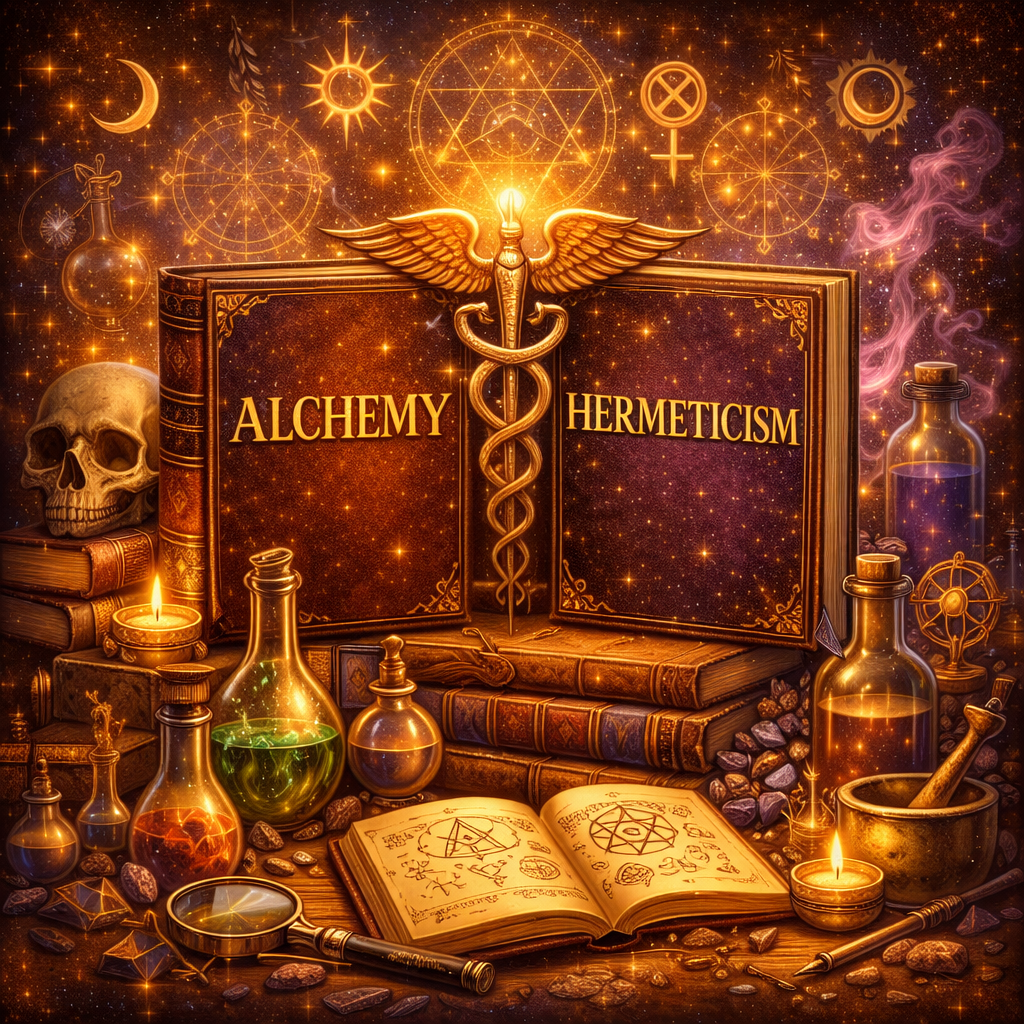

A. E. Waite's translation of Paracelsus's Hermetic and Alchemical Writings is a treasure trove for modern esoteric seekers. Waite's scholarly approach and deep understanding of the occult make this volume an invaluable resource. The book's detailed commentary and translations provide a clear pathway into the complex world of Paracelsus's teachings. For those interested in the philosophical and spiritual dimensions of alchemy, this text is indispensable. The clarity and depth of Waite's interpretations make this book a must-read for anyone exploring the mystical traditions.
📝 Description
79
A. E. Waite published his compilation of Paracelsus's Hermetic and Alchemical Writings in 1894.
This volume collects the alchemical and Hermetic texts of Paracelsus, as curated by A. E. Waite. First issued in 1894, it presents the writings of the 16th-century Swiss physician and alchemist. Waite's edition includes his own annotations, which aim to clarify the complex symbolism and philosophical concepts within Paracelsus's work. The texts cover topics central to Hermetic philosophy and the alchemical tradition of the Renaissance. Readers will encounter discussions on the nature of matter, the spiritual dimensions of transformation, and the symbolic language used by alchemists.
The compilation is structured to allow examination of Paracelsus's views on the microcosm and macrocosm, his theories on celestial influences, and his understanding of the Great Work. Waite's introduction and notes are intended to guide the reader through these dense subjects. The aim is to provide access to primary source material for those interested in the historical and philosophical underpinnings of alchemy. The book focuses on the theoretical and symbolic aspects of Paracelsian alchemy.
This work sits within the tradition of Renaissance Hermeticism, a philosophical and magical current that sought to revive ancient wisdom, particularly that attributed to Hermes Trismegistus. Paracelsus himself was a key figure, blending Neoplatonism, Kabbalah, and early modern science into a unique alchemical system. A. E. Waite, a prominent occult scholar of the late 19th and early 20th centuries, compiled these texts with an eye toward preserving and interpreting this complex lineage for a new generation of students. The book reflects Waite's scholarly approach to the esoteric.
💡 Why Read This Book?
Reading "The Hermetic and Alchemical Writings of Paracelsus Vol. I" today offers readers a unique opportunity to engage with the foundational texts of alchemy and hermeticism. This book provides a deep understanding of the spiritual and philosophical principles that underpin these ancient practices. Modern readers will gain insights into the timeless quest for spiritual enlightenment and the pursuit of inner transformation through alchemical symbolism. This volume is a gateway to the mystical traditions that have shaped Western esotericism.
⭐ Reader Reviews
Honest opinions from readers who have explored this book.
❓ Frequently Asked Questions
What is the significance of Paracelsus's writings in modern esoteric studies?
Paracelsus's writings are foundational to modern esoteric studies, particularly in the fields of alchemy and hermeticism. His ideas on the spiritual nature of alchemy and the pursuit of inner transformation continue to influence contemporary occult practices.
How does A. E. Waite's translation contribute to the understanding of Paracelsus's work?
A. E. Waite's translation and commentary provide a clear and accessible interpretation of Paracelsus's complex writings. Waite's scholarly approach makes these ancient texts relevant to modern readers, bridging the gap between historical esotericism and contemporary spiritual inquiry.
Who should read "The Hermetic and Alchemical Writings of Paracelsus Vol. I"?
This book is ideal for scholars, practitioners, and enthusiasts of alchemy, hermeticism, and esoteric studies. It is also valuable for anyone interested in the philosophical and spiritual dimensions of occult traditions.
🔮 Key Themes & Symbolism
Alchemical Transformation
The book delves deeply into the alchemical process, not just as a physical transformation of matter, but as a spiritual journey towards enlightenment. Paracelsus's writings explore the symbolic language of alchemy, revealing the hidden meanings behind the processes of distillation, fermentation, and purification.
Hermetic Philosophy
Paracelsus's Hermetic writings offer a profound exploration of the mystical underpinnings of alchemy. The text discusses the interconnectedness of all things, the concept of the 'universal medicine,' and the quest for spiritual transcendence through alchemical practices.
Symbolism and Hidden Knowledge
The book is rich in symbolism, requiring readers to decipher the hidden meanings embedded within the text. This symbolism is a key aspect of Hermeticism, inviting seekers to uncover the esoteric truths that lie beneath the surface of the written word.
💬 Memorable Quotes
Direct passages from the work, attributed to the author.
“The art of alchemy is not merely about transforming base metals into gold, but about transforming the soul.”
— Paracelsus emphasizes the spiritual dimension of alchemy, suggesting that the true goal is inner transformation.
“The philosopher's stone is the key to unlocking the secrets of the universe.”
— The philosopher's stone symbolizes the ultimate goal of alchemy, representing the attainment of spiritual enlightenment and understanding of the cosmos.
“Alchemy is the path to immortality.”
— Paracelsus suggests that through alchemical practices, one can achieve spiritual immortality, transcending the limitations of the physical body.
💡 Key Ideas
Editorial paraphrase of the work's core concepts — not direct quotes.
Nature is the mirror of the divine.
This quote reflects the Hermetic belief in the interconnectedness of all things, seeing nature as a reflection of divine wisdom.
The universe is a harmonious whole, where every part reflects the entirety.
This quote underscores the Hermetic principle of correspondence, emphasizing the interconnectedness of all things in the cosmos.
🌙 Esoteric Significance
Tradition
This book belongs to the Hermetic tradition, which emphasizes the pursuit of hidden knowledge and spiritual enlightenment through mystical practices. Hermeticism draws from ancient Egyptian and Greek philosophies, blending them with alchemical symbolism to create a body of esoteric teachings.
Symbolism
Key symbols in this book include the philosopher's stone, the alchemical processes of distillation and fermentation, and the concept of the 'universal medicine.' These symbols represent the quest for spiritual transformation and the interconnectedness of all things in the cosmos.
Modern Relevance
This book remains relevant today for modern practitioners of alchemy and Hermeticism. It provides a foundational understanding of the esoteric traditions that continue to influence spiritual and mystical practices. Contemporary scholars and seekers use this text to deepen their knowledge and practice of alchemical and Hermetic principles.
👥 Who Should Read This Book
This book is ideal for scholars of esoteric traditions, practitioners of alchemy, and spiritual seekers interested in the mystical underpinnings of Western esotericism. Beginners may find the dense symbolism and historical context challenging without prior knowledge, but those with a foundational understanding will find it invaluable. It is also a must-read for anyone interested in the intersection of science and spirituality, offering a unique perspective on the alchemical process.
📜 Historical Context
Published in 1894, A. E. Waite's compilation of Paracelsus's writings came at a time when there was a renewed interest in Western esotericism. The late 19th century saw a revival of occult studies, with figures like Waite playing a key role in preserving and disseminating ancient texts. Paracelsus, a key figure of the Renaissance, had already laid the groundwork for modern alchemy and Hermeticism, making his writings foundational for the esoteric traditions that followed.
📔 Journal Prompts
How does the concept of alchemical transformation relate to your personal spiritual journey?
What symbols in the text resonate with you the most, and why?
How does Paracelsus's view of nature as a mirror of the divine influence your understanding of the natural world?
In what ways can the pursuit of hidden knowledge enhance your spiritual practice?
How does the Hermetic principle of correspondence manifest in your daily life?
🗂️ Glossary
Alchemy
An ancient mystical practice aimed at transforming base metals into gold, symbolizing spiritual enlightenment and the pursuit of hidden knowledge.
Hermeticism
A philosophical and spiritual tradition based on the writings of Hermes Trismegistus, emphasizing the pursuit of hidden knowledge and spiritual enlightenment.
Philosopher's Stone
A legendary alchemical substance said to be capable of turning base metals into gold and granting immortality, symbolizing spiritual transformation.
Universal Medicine
A Hermetic concept referring to a substance or practice that can heal all ailments, both physical and spiritual.
Correspondence
A Hermetic principle stating that the microcosm (the individual) reflects the macrocosm (the universe), emphasizing the interconnectedness of all things.
This book appears in 3 collections
🔮 Readers Also Liked
Browse all →







From the “Hermeticism” Collection
View all →






More Free Alchemy & Hermeticism Books
View all →