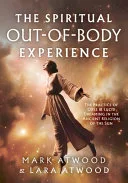
The Spiritual Out-of-Body Experience
 82
82

The Spiritual Out-of-Body Experience
Mark and Lara Atwood's 'The Spiritual Out-of-Body Experience' offers a commendable effort to systematically catalogue and explain a phenomenon often shrouded in mystery and subjective reporting. The authors' clear delineation of techniques, particularly their focus on pre-separation mental states and the concept of the 'astral body,' provides a practical framework. Their discussion of the historical context, referencing figures like Robert Monroe, grounds the work in established research. However, the text occasionally leans towards a prescriptive tone that might feel overly rigid for the inherently fluid nature of OBEs. While the practical advice is sound, the theoretical explanations, particularly concerning the exact mechanics of consciousness detachment, remain speculative, as is inherent to the subject. The section on navigating the 'vibrational states' is particularly well-articulated. Ultimately, this book serves as a valuable, structured primer for the serious aspirant.
📝 Description
82
Published in 2024, The Spiritual Out-of-Body Experience offers a structured guide to non-physical exploration.
Mark and Lara Atwood's 2024 book, The Spiritual Out-of-Body Experience, moves past anecdotal evidence to provide a methodical framework for understanding and practicing conscious detachment from the physical body. It addresses the nature of awareness, the mechanics of astral projection, and the potential benefits for personal and spiritual development. The authors aim to clarify this phenomenon, equipping readers with practical methods to approach out-of-body experiences (OBEs) deliberately.
This work is intended for those with a serious interest in consciousness studies, parapsychology, and esoteric thought. It serves both newcomers to OBEs and experienced practitioners seeking deeper comprehension and control. Individuals involved in lucid dreaming, meditation, or energy work will find relevant connections. The book favors a systematic, research-informed approach over purely speculative or devotional content, and expects readers to engage with complex ideas and practice diligently.
The exploration of out-of-body experiences has ancient roots in shamanic and mystical traditions. In the modern era, figures like Helena Blavatsky and the Theosophical Society in the late 19th century discussed astral travel. The mid-20th century saw renewed interest with early parapsychological research and Robert Monroe's documented OBEs and induction methods. The Atwood's work connects this history to current discussions in cognitive science and philosophy.
💡 Why Read This Book?
• Gain practical techniques for initiating and stabilizing out-of-body experiences, detailed within chapters focusing on 'separation points' and 'vibrational states'. • Understand the historical trajectory of OBE research, including the contributions of figures like Robert Monroe and the Theosophical Society, offering context beyond anecdotal accounts. • Develop a framework for interpreting subjective experiences, focusing on the concept of the 'subtle body' and its relationship to consciousness, enhancing personal understanding.
⭐ Reader Reviews
Honest opinions from readers who have explored this book.
❓ Frequently Asked Questions
What is the difference between an out-of-body experience and a lucid dream?
The Spiritual Out-of-Body Experience distinguishes OBEs from lucid dreams by emphasizing a perceived detachment from the physical body and a distinct sense of presence in an external, non-physical environment, rather than merely being aware within a dream state.
Are there specific mental states that facilitate OBEs according to the book?
Yes, the book details the importance of reaching specific 'vibrational states' and a state of deep relaxation while maintaining conscious awareness, often referred to as the 'separation point', as crucial precursors to an OBE.
What is the 'astral body' as described in this text?
The 'astral body,' or subtle body, is presented as a non-physical counterpart to the physical body, capable of independent movement and perception during an out-of-body experience, serving as the vehicle for consciousness outside the physical form.
Does the book offer guidance on what to do if an OBE feels frightening?
The Atwood's work provides strategies for managing fear, emphasizing the control the experiencer has over their state and environment, and encouraging a rational approach to perceived threats within the non-physical realm.
How does this book relate to the work of Robert Monroe?
The book acknowledges Robert Monroe's pioneering research and techniques for inducing OBEs, integrating some of his findings on vibrational states and the exploration of consciousness while presenting its own systematized approach.
When was 'The Spiritual Out-of-Body Experience' first published?
The Spiritual Out-of-Body Experience was first published on June 19, 2024, making it a contemporary exploration of the subject.
🔮 Key Themes & Symbolism
Consciousness and Subtle Bodies
The work posits that consciousness is not solely confined to the physical brain but can inhabit and operate through a 'subtle body' or 'astral body'. This entity is described as a non-physical vehicle capable of traversing dimensions beyond the physical. The book details methods for discerning this subtle form and learning to direct its movements, emphasizing that maintaining awareness during the separation process is key to a controlled experience, rather than a passive dream-like state.
Techniques for Separation
A central focus is the practical application of techniques designed to facilitate the separation of the subtle body from the physical. This includes exploring preparatory mental and physical states, such as inducing 'vibrational states' that precede detachment. The authors provide structured exercises aimed at achieving the 'separation point' with intention, guiding the reader through the process of achieving conscious disengagement from the physical form and exploring the non-physical environment.
Interpretation and Meaning
Beyond mere technique, the book addresses the subjective nature of out-of-body experiences and the importance of interpretation. It encourages readers to develop their own frameworks for understanding the insights gained and the symbolic language encountered during OBEs. This involves integrating the experiences with personal growth, psychological understanding, and a broader spiritual perspective, moving beyond simple phenomena reporting to personal transformation.
Historical and Theoretical Frameworks
The Atwood's situate their work within a broader historical context of consciousness exploration, referencing early 20th-century researchers and esoteric traditions. They engage with theoretical questions about the nature of reality, the mind-body problem, and the potential for consciousness to exist independently of the physical organism. This provides a foundation for understanding OBEs not as isolated anomalies but as part of a wider spectrum of human experience.
💬 Memorable Quotes
Direct passages from the work, attributed to the author.
“The vibrational state is not an end, but a gateway.”
— This statement highlights the book's view of the vibrational state as a crucial transitional phase, rather than the ultimate goal of an out-of-body experience. It suggests that achieving these sensations is a means to an end—conscious separation and exploration—requiring further intentional action.
“Consciousness can learn to direct the subtle body.”
— This concept underscores the active role of the conscious mind in out-of-body experiences. It implies that OBEs are not random occurrences but events that can be influenced, guided, and controlled through focused mental effort and learned techniques.
“Discernment between dream and departure is paramount.”
— This emphasizes the book's concern with distinguishing genuine out-of-body experiences from vivid dreams. It suggests that clarity in identifying the unique characteristics of astral projection is essential for accurate understanding and effective practice.
“The physical body acts as an anchor, not a prison.”
— This interpretation frames the physical body’s connection to consciousness in a less restrictive way. It suggests that while the body grounds us, it does not fundamentally limit the potential reach or scope of consciousness, which can explore beyond its confines.
“Fear is a common barrier, but understanding is the key.”
— This points to the psychological challenges associated with OBEs, particularly fear of the unknown or loss of control. The interpretation suggests that acquiring knowledge and practical skills, as presented in the book, is the most effective way to overcome these emotional obstacles.
🌙 Esoteric Significance
Tradition
This work situates itself within the broader Western Esoteric tradition, particularly drawing from Hermeticism and Neoplatonism in its conceptualization of consciousness and its separation from the physical form. It echoes Gnostic ideas regarding the soul's journey beyond material limitations. While not strictly adhering to any single historical school, it synthesizes elements of astral projection lore that have circulated through various occult societies since the late 19th century, aiming for a practical, modern interpretation.
Symbolism
A key symbol is the 'subtle body' or 'astral body,' representing the non-physical vehicle of consciousness, distinct from the physical form. The concept of 'vibrational states' functions symbolically as a threshold or liminal space, signifying a shift in energetic frequency that precedes conscious separation. The 'separation point' itself acts as a symbolic gateway, marking the transition from embodied awareness to disembodied exploration.
Modern Relevance
Contemporary practitioners of lucid dreaming, energy healing, and mindfulness meditation often find resonance with the book's methods for cultivating awareness and managing subjective states. Thinkers exploring consciousness outside the confines of neuroscience, and those interested in comparative studies of mystical experiences, can utilize its structured approach. Its emphasis on practical application makes it relevant to individuals seeking direct experience within esoteric frameworks.
👥 Who Should Read This Book
• Aspiring practitioners of astral projection seeking a structured, step-by-step guide to initiating and controlling out-of-body experiences. • Students of consciousness studies interested in empirical and theoretical frameworks for understanding non-physical states of awareness beyond conventional psychology. • Individuals engaged with esoteric traditions who wish to deepen their understanding of subtle bodies and consciousness exploration within a modern context.
📜 Historical Context
Published in 2024, 'The Spiritual Out-of-Body Experience' arrives in an era where consciousness studies are increasingly interdisciplinary, bridging psychology, neuroscience, and esoteric philosophy. Its approach builds upon a long history of exploring non-physical states, notably advanced by figures like Robert Monroe, whose Monroe Institute pioneered research into altered states of consciousness and astral projection from the 1960s onwards. The Atwood's work also implicitly engages with earlier esoteric traditions, such as those explored by the Theosophical Society in the late 19th century, which popularized concepts of subtle bodies and astral planes. While the book does not engage directly with specific academic critiques, its systematic methodology offers a counterpoint to purely intuitive or devotional accounts of OBEs, aligning with a modern scientific-rationalist approach to the paranormal, though it remains firmly within the esoteric framework.
📔 Journal Prompts
Reflect on the concept of the 'subtle body' and its perceived relationship to your physical form.
Analyze the significance of 'vibrational states' as described in the text for initiating conscious separation.
Consider the implications of the 'separation point' for maintaining awareness during non-physical exploration.
Evaluate the historical context provided for understanding contemporary approaches to OBEs.
Explore potential personal interpretations of experiences related to the 'astral body' concept.
🗂️ Glossary
Astral Body
A non-physical, energetic counterpart to the physical body, believed to be the vehicle of consciousness during out-of-body experiences. Also referred to as the subtle body or double.
Separation Point
The critical moment or threshold during the process of an out-of-body experience where consciousness consciously detaches from the physical body.
Subtle Body
An energetic or non-physical body that is considered to be distinct from the physical body, capable of functioning independently. Often used interchangeably with 'astral body'.
Vibrational States
Specific energetic frequencies or sensations often experienced prior to and during the process of astral projection, believed to indicate a shift towards separation from the physical body.
Conscious Awareness
The state of being fully awake, alert, and cognizant of one's surroundings and internal states, particularly crucial for maintaining control during an out-of-body experience.
Projection
The act or process of consciously sending one's consciousness, often via the subtle body, outside of the physical form to explore non-physical environments.
Double
Another term for the subtle or astral body, emphasizing its perceived duplicate nature relative to the physical form, capable of independent existence and movement.