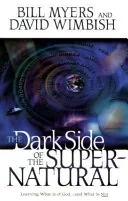
The Dark Side of the Supernatural
 80
80

The Dark Side of the Supernatural
Myers and Wimbish's "The Dark Side of the Supernatural" attempts a broad survey of anomalous phenomena, but its dated approach leaves much to be desired. While it compiles a decent number of anecdotal accounts and historical curiosities, its analysis often feels superficial, lacking the critical depth expected from serious inquiry. The chapter detailing alleged demonic possessions, for instance, presents claims with little rigorous examination, leaning heavily on sensationalism rather than analytical dissection. A notable strength is its compilation of rarer accounts, offering glimpses into lesser-known folklore. However, the book’s primary limitation is its failure to engage with the significant advancements in cognitive science and critical thinking that have occurred since its 1999 publication. It concludes without offering a satisfying framework for understanding these persistent human experiences, leaving the reader with a collection of intriguing but ultimately unexamined tales. This book serves as a historical document of paranormal belief rather than a definitive guide.
📝 Description
80
Published in 1999, The Dark Side of the Supernatural examines paranormal claims beyond scientific understanding.
Bill Myers and David Wimbish's 1999 book, The Dark Side of the Supernatural, examines phenomena often set aside from common belief. It looks at reports of paranormal activity, psychic events, and encounters with forces not explained by standard science. The authors aim to give a full account of these topics, moving past sensationalism to study the core claims and evidence. This work acts as a record of beliefs and experiences that challenge purely materialistic views of the world.
The book is for people interested in the unexplained and the limits of human awareness. It will attract those who question current ideas and want to grasp the range of reported supernatural events. Readers curious about the history of occult studies, parapsychology, and folklore will find much to consider. It is also useful for researchers or skeptics who want to understand the arguments made by those who have experienced or believe in these areas.
The Dark Side of the Supernatural emerged in 1999, a time when public interest in the paranormal grew, partly due to media and the early internet. The book follows a line of occult and esoteric writing that became more popular in the 20th century, influenced by figures like Aleister Crowley. It engages with a period where parapsychology sought recognition as a field of study, often clashing with established science. Its publication predates the extensive online resources for esoteric discussion that exist today, offering a view of that discourse at the time.
💡 Why Read This Book?
• Gain a historical perspective on paranormal discourse prior to the widespread internet era, understanding the types of phenomena discussed around 1999. • Explore accounts of alleged supernatural events compiled by Myers and Wimbish, providing specific examples of phenomena like poltergeists and mediumship. • Understand the book's approach to analyzing claims, which may prompt critical reflection on how evidence for the unexplained is presented and evaluated.
⭐ Reader Reviews
Honest opinions from readers who have explored this book.
❓ Frequently Asked Questions
What specific types of supernatural phenomena are covered in 'The Dark Side of the Supernatural'?
The book covers a range of phenomena including alleged hauntings, poltergeist activity, mediumship, psychic abilities, and encounters with non-human entities. It aims to provide a broad overview of reported experiences that fall outside conventional scientific explanation.
Who are Bill Myers and David Wimbish, the authors of this book?
Bill Myers and David Wimbish are the authors of 'The Dark Side of the Supernatural,' first published in 1999. Information about their specific backgrounds in paranormal research or esoteric studies is often secondary to the content of this particular work.
What is the publication year of 'The Dark Side of the Supernatural'?
The book 'The Dark Side of the Supernatural' was first published in 1999.
Does the book offer scientific explanations for supernatural events?
While the book may touch upon psychological or sociological interpretations, its primary focus is on documenting and exploring reported supernatural phenomena themselves, rather than providing definitive scientific explanations.
Is 'The Dark Side of the Supernatural' considered a primary source for occult studies?
It can be considered a secondary source that documents beliefs and accounts from a specific period (late 20th century). For primary occult studies, one would typically look to older grimoires or foundational texts from specific esoteric traditions.
Where does 'The Dark Side of the Supernatural' fit within the broader study of the paranormal?
Published in 1999, it represents a snapshot of paranormal discourse at the turn of the millennium, reflecting a period where popular interest was high but academic engagement was still often marginalized.
🔮 Key Themes & Symbolism
The Nature of Anomalous Events
This theme centers on the direct investigation and documentation of phenomena that defy conventional scientific understanding. The book studies instances of alleged hauntings, poltergeist activity, and encounters with entities, presenting them as real occurrences that warrant examination. It questions the automatic dismissal of such events, suggesting that a more open-minded approach is necessary to comprehend the full spectrum of reality. The work emphasizes the subjective experience of those who report these events, highlighting the impact on their lives and worldviews.
Perception vs. Reality
A core concept is the examination of the boundary between subjective perception and objective reality, particularly concerning supernatural claims. The authors explore how human consciousness might interact with or interpret events that seem to transcend ordinary physical laws. This includes discussions on psychic phenomena, mediumship, and the potential for consciousness to exist independently of the physical body. The book challenges readers to consider the limitations of current scientific models in explaining all facets of human experience and the world around us.
Historical and Cultural Narratives
The work situates supernatural beliefs within broader historical and cultural contexts, showing how these narratives have evolved and persisted across different societies and eras. It draws upon folklore, historical accounts, and anecdotal evidence to illustrate the enduring human fascination with the unknown. By examining recurring motifs and archetypes in supernatural stories, the book suggests that these phenomena tap into deep-seated aspects of the human psyche and collective unconscious. The compilation serves as a record of these cultural expressions.
Skepticism and Belief
Myers and Wimbish engage with the tension between skeptical dismissal and earnest belief regarding the supernatural. The book presents arguments and evidence from both sides, encouraging a nuanced perspective rather than outright rejection or blind acceptance. It probes the psychological motivations behind both skepticism and belief, and explores the challenges inherent in verifying or refuting extraordinary claims. The work aims to foster critical thinking by presenting a range of viewpoints and encouraging readers to form their own informed opinions.
💬 Memorable Quotes
Direct passages from the work, attributed to the author.
“The veil between worlds is thinner than we often believe.”
— This statement suggests that the boundaries separating the physical, mundane world from domains of supernatural or spiritual activity are not as solid or impenetrable as commonly assumed, implying that such experiences are more accessible than often thought.
“Evidence for the paranormal often lies in the testimony of those who have experienced it directly.”
— This highlights the reliance on eyewitness accounts and personal testimony as primary forms of evidence in supernatural investigations, acknowledging the subjective but often compelling nature of such reports.
“Skepticism is a valuable tool, but it should not preclude open-minded inquiry.”
— This suggests a balanced approach to the paranormal, advocating for critical examination while cautioning against dismissing phenomena outright before thorough investigation.
“The persistence of supernatural beliefs across cultures points to a fundamental aspect of human consciousness.”
— This interpretation posits that the widespread and enduring nature of supernatural narratives indicates they are rooted in essential elements of human psychology or our collective experience of the world.
“Understanding the dark side of the supernatural requires confronting our deepest fears and assumptions.”
— This implies that engaging with phenomena often labeled as 'dark' or frightening necessitates a confrontation with one's own psychological landscape and preconceived notions about reality.
🌙 Esoteric Significance
Tradition
This work does not strictly adhere to a single esoteric tradition like Hermeticism or Kabbalah. Instead, it functions as a compendium of phenomena that often intersect with various occult beliefs, including spiritualism, demonology, and folk magic. It draws from a broad, often unacknowledged, stream of Western esotericism that seeks to understand or document experiences beyond the materialist paradigm. Its significance lies in its attempt to categorize and present these disparate elements within a coherent, albeit popular, framework, reflecting a desire to map the unknown.
Symbolism
While the book itself may not deeply engage in symbolic analysis of specific esoteric traditions, the phenomena it describes are rich with symbolic meaning. Apparitions, for example, can symbolize unresolved issues or psychic residue. Poltergeist activity is often interpreted as a manifestation of repressed energy or psychological turmoil. Encounters with entities, whether benevolent or malevolent, can represent archetypal forces or aspects of the human psyche. These symbols, though not explicitly defined within the book's text, are inherent in the narratives presented.
Modern Relevance
Contemporary interest in the paranormal continues, with communities online actively discussing and sharing experiences akin to those documented in Myers and Wimbish's work. Modern thinkers in consciousness studies and fringe science may find the book a useful historical reference for understanding the evolution of paranormal discourse. Furthermore, its cataloging of phenomena can inform discussions in fields like comparative religion and folklore, highlighting the enduring human engagement with mysteries that lie beyond empirical verification.
👥 Who Should Read This Book
• Individuals curious about the history and range of paranormal claims, particularly those interested in accounts from the late 20th century. • Researchers examining popular belief systems and folklore surrounding the supernatural and unexplained phenomena. • Skeptics and believers alike seeking a compilation of diverse anecdotal evidence and historical narratives about the 'dark side' of the supernatural.
📜 Historical Context
Published in 1999, "The Dark Side of the Supernatural" emerged during a period of heightened public interest in paranormal phenomena, often amplified by popular culture and early internet forums. This era saw a resurgence of interest in subjects previously explored by figures like Charles Fort, who meticulously cataloged unexplained events in the early 20th century. The book's approach reflects a late 20th-century attempt to catalog and analyze these occurrences, often in contrast to burgeoning New Age spiritualities that also gained traction. While parapsychology sought academic legitimacy, works like Myers and Wimbish's often resided in a more popular, less rigorously scientific sphere, engaging with anecdotal evidence and historical accounts. The late 1990s were characterized by a cultural fascination with conspiracy theories and the unexplained, a landscape influenced by television shows and a growing accessibility of information, making this book a product of its time.
📔 Journal Prompts
The persistence of supernatural beliefs across cultures.
Examining the boundary between subjective perception and objective reality.
The role of anecdotal evidence in paranormal investigations.
Confronting assumptions about the nature of reality.
Interpreting phenomena like apparitions and poltergeists.
🗂️ Glossary
Poltergeist
A type of ghost or supernatural entity whose physical interactions with the world are made known by mysterious noises, objects being moved, or physical disturbances. It is often associated with adolescent females.
Mediumship
The practice of certain individuals, known as mediums, to act as intermediaries between the world of the living and the spirits of the dead or other non-physical entities.
Apparition
A ghost or ghostlike image of a person, often seen as a visual manifestation of a deceased individual.
Psychic phenomena
Events or abilities that are believed to occur independently of the known physical senses or natural forces, such as telepathy, precognition, or clairvoyance.
Esoteric
Intended for or likely to be understood by only a small number of people with a specialized knowledge or interest; relating to or concerned with the occult.
Materialistic worldview
A philosophical position that asserts that matter is the fundamental substance in nature, and that all phenomena, including mental states and consciousness, are results of material interactions.
Anecdotal evidence
Evidence based on personal accounts rather than on fact or research. In paranormal studies, it often refers to eyewitness testimony.
This book appears in 1 collection
🔮 Readers Also Liked
Browse all →







From the “Soul Travel” Collection
View all →









More Free Occult Philosophy Books
View all →