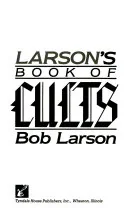
Larson's Book of Cults
 75
75

Larson's Book of Cults
Bob Larson's "Larson's Book of Cults" presents a starkly polemical survey of spiritual movements active in the late 20th century. The book's strength lies in its thoroughness; Larson meticulously details the historical origins and core tenets of dozens of groups, from Mormonism to UFO-based cults, consistently framing them against a Christian theological backdrop. His analysis of Scientology, for instance, highlights its complex hierarchical structure and unique terminology, contrasting it with traditional religious frameworks. However, the work's primary limitation is its unyielding bias. Every analyzed group is presented as fundamentally erroneous, deviating from what Larson establishes as orthodox Christianity. This perspective, while central to the book's purpose, limits its utility as an objective academic resource. A particularly striking passage details the concept of reincarnation as interpreted by various groups, which Larson systematically debunks using scriptural arguments. Ultimately, "Larson's Book of Cults" functions less as a neutral exploration and more as a critical theological defense.
Verdict: A comprehensive, albeit biased, theological critique of 1980s spiritual movements.
📝 Description
75
Bob Larson's 1982 book critically examines religious movements, contrasting them with Christian doctrine.
Published in 1982, Bob Larson's "Larson's Book of Cults" scrutinizes various religious and spiritual groups. Larson analyzes these movements from historical, sociological, and theological viewpoints, specifically noting their differences from established Christian beliefs. His writing style is direct, intending to highlight what he sees as deviations in doctrine and practice.
The book is most useful for those interested in comparative religion, especially from a Christian apologetics standpoint. Readers looking for detailed discussions on groups like Mormonism, Scientology, and movements focused on reincarnation or UFO beliefs will find relevant content. It also addresses theological foundations and the historical progression of less conventional spiritual paths.
"Larson's Book of Cults" appeared in the early 1980s, a time when public concern about new religious movements was growing. Events like the Jonestown massacre in 1978 and the increasing visibility of groups such as Scientology contributed to discussions on cultic behavior and religious manipulation. Larson's work joined a conversation that included authors like Margaret Singer, who also wrote about psychological manipulation within such groups.
While not strictly an esoteric text, "Larson's Book of Cults" engages with the broader discourse surrounding alternative spiritualities that emerged in the late 20th century. The book addresses movements that often incorporated elements from various traditions, including astrology and what Larson perceived as misinterpretations of scripture. His work functions as a critical counterpoint within a period where interest in non-traditional religious and spiritual paths was significant, offering a specific theological framework for understanding these phenomena.
💡 Why Read This Book?
• Gain a specific historical perspective on how movements like Mormonism were critiqued through a Christian apologetics lens in 1982, understanding the era's religious discourse. • Learn about Larson's theological arguments against concepts such as reincarnation and Scientology's doctrines, providing a framework for comparative religious analysis. • Examine the sociological and historical analyses Larson applies to various cults, offering insights into the methods used to deconstruct alternative spiritual groups.
⭐ Reader Reviews
Honest opinions from readers who have explored this book.
❓ Frequently Asked Questions
When was Bob Larson's Book of Cults first published?
Bob Larson's "Larson's Book of Cults" was first published in 1982, reflecting the religious and cultural landscape of the early 1980s.
What theological perspective does Larson's Book of Cults primarily use?
The book primarily uses a Christian theological perspective, analyzing various cults and spiritual movements based on their perceived deviations from orthodox Christian doctrine.
Which specific cults or movements are analyzed in the book?
The book analyzes dozens of prominent cults and movements, including Mormonism, Scientology, Yoga, astrology, and groups focused on UFO beliefs and reincarnation.
Does Larson's Book of Cults offer a neutral viewpoint?
No, the book is written from a specific apologetic viewpoint, aiming to critique and expose perceived errors in belief and practice compared to Christianity.
What kind of analysis does the book employ?
Larson employs historical, sociological, and theological perspectives to analyze the groups discussed, focusing on their origins, doctrines, and practices.
Is Larson's Book of Cults still relevant for understanding contemporary spiritual movements?
While the specific movements discussed are from the early 1980s, the analytical framework and critique of theological deviations can still offer insights into understanding new religious movements.
🔮 Key Themes & Symbolism
Christian Apologetics Framework
Larson's work is fundamentally rooted in Christian apologetics, using biblical scripture and established theological doctrines as the primary benchmark for evaluating other religious movements. The book dissects concepts like reincarnation, astrology, and the teachings of Scientology by contrasting them with what the author posits as orthodox Christian belief. This approach aims to identify and critique deviations, framing the analyzed groups as departing from a divinely revealed truth. The book is less about understanding these movements on their own terms and more about demonstrating their perceived theological inaccuracies from a specific Christian viewpoint.
Sociological and Historical Deconstruction
Beyond theological critique, "Larson's Book of Cults" utilizes sociological and historical analysis to deconstruct the appeal and structure of various spiritual groups. It examines their origins, leadership dynamics, and recruitment strategies, often highlighting elements that the author views as manipulative or controlling. For example, the book might explore the historical development of Mormonism or the organizational structure of Scientology to illustrate how these movements gain and maintain adherents, presenting this information as evidence of their cultic nature.
Critique of Esoteric Concepts
The book directly confronts and critiques concepts often found in esoteric and New Age circles, such as reincarnation, astrology, and certain Eastern religious practices like Yoga. Larson systematically analyzes these beliefs, not as valid spiritual paths, but as errors or deceptions that lead individuals away from Christian faith. The work provides a specific lens through which to view these phenomena, focusing on their divergence from a Christian worldview and questioning their underlying metaphysical claims.
The Concept of Deviation
A central theme is the concept of deviation from what Larson defines as normative Christianity. The book meticulously details how each analyzed group, whether Mormonism, Scientology, or UFO-based cults, purportedly strays from biblical teachings on salvation, the nature of God, and human destiny. This theme serves as the organizing principle for the entire work, providing a consistent measure by which all discussed movements are judged and found wanting.
💬 Memorable Quotes
Direct passages from the work, attributed to the author.
“The book details how each cult deviates from Christianity.”
— This statement expresses Larson's core thesis: that the movements examined are fundamentally at odds with Christian doctrine. It frames his analysis as a comparative study focused on identifying specific points of theological divergence.
“Larson analyzes reincarnation, Mormonism, Scientology, UFOs, and Yoga.”
— This highlights the broad range of topics covered, indicating the book's intent to address diverse spiritual and religious phenomena that emerged or gained prominence in the late 20th century.
“The work examines groups from historical, sociological, and theological perspectives.”
— This points to the many-sided approach Larson takes, suggesting an attempt to provide a comprehensive critique by considering not only the spiritual claims but also the social structures and historical contexts of the groups.
“The analysis focuses on how each cult departs from established Christian doctrines.”
— This reiterates the book's primary objective: to serve as a critique of non-Christian religious and spiritual movements from a specific, conservative Christian viewpoint.
“Larson's Book of Cults was first published in 1982.”
— This factual statement anchors the book within a specific historical period, the early 1980s, suggesting its content reflects the concerns and religious field of that era.
🌙 Esoteric Significance
Tradition
While the book critiques many esoteric traditions, its own framework is deeply rooted in conservative Christian theology and apologetics, rather than a specific esoteric lineage like Hermeticism or Gnosticism. It engages with esoteric concepts such as reincarnation and astrology not to integrate them, but to refute them from a specific doctrinal standpoint. Its significance lies not in contributing to esoteric thought, but in acting as a critical counterpoint to it from a particular religious perspective.
Symbolism
The book does not deeply explore esoteric symbolism in the traditional sense. Instead, it often deconstructs the symbolism and terminology used by the cults it analyzes, such as the hierarchical 'Operating Thetan' levels in Scientology or the scriptural interpretations within Mormonism. These elements are presented as markers of deviation rather than as meaningful symbols within a broader spiritual or occult framework.
Modern Relevance
Contemporary relevance for this work is primarily within Christian apologetics and comparative religion studies that examine historical critiques of new religious movements. While the specific groups and their prominence have shifted, the analytical method of comparing doctrines and examining historical origins against a traditional theological backdrop remains a point of reference for some contemporary Christian thinkers engaging with spiritual pluralism.
👥 Who Should Read This Book
• Students of comparative religion and theology interested in historical critiques of new religious movements from a Christian apologetics perspective. • Researchers examining the religious field of the early 1980s and the discourse surrounding cults during that era. • Individuals seeking to understand specific theological arguments against concepts like reincarnation and Scientology's teachings, as presented by a conservative Christian author.
📜 Historical Context
Published in 1982, "Larson's Book of Cults" emerged during a period of heightened public and religious concern over the proliferation of new religious movements. The late 1970s and early 1980s saw significant media attention on groups like the Unification Church and the Peoples Temple following the 1978 Jonestown massacre, fueling debates about religious freedom versus cultic manipulation. Larson's work entered this discourse, offering a theological critique from a conservative Christian standpoint. It stood in contrast to more secular sociological analyses of cults, such as those by researchers like Margaret Singer, who focused on psychological factors. While not widely cited in academic circles for its neutrality, the book represented a significant voice within evangelical circles advocating for a critical examination of movements perceived as heretical or dangerous, contributing to the ongoing dialogue about defining and identifying 'cults' within the broader religious landscape.
📔 Journal Prompts
Larson's analysis of reincarnation: How does his critique align with or differ from your understanding?
The historical context of Mormonism in the 1980s: What pressures might have shaped its public perception?
Scientology's organizational structure as described by Larson: What parallels exist in other groups?
Theological deviations: Identify one core tenet of a group discussed and contrast it with a Christian doctrine.
The sociological approach to cults: How might this differ from a purely theological critique?
🗂️ Glossary
Cult
In the context of this book, 'cult' refers to a religious or social group with beliefs and practices considered unorthodox or deviant, particularly from established Christian doctrines.
Reincarnation
The belief that after death, the soul begins a new life in a new body, a concept analyzed and critiqued by Larson from a Christian perspective.
Mormonism
The religious tradition and theology of the Latter Day Saint movement, founded by Joseph Smith, analyzed by Larson for its deviations from Christian orthodoxy.
Astrology
The study of the movements and relative positions of celestial bodies interpreted as having an influence on human affairs and the natural world, discussed as a deviation from Christian belief.
Scientology
A body of beliefs and practices created by L. Ron Hubbard, often classified as a cult, examined by Larson for its theological and sociological implications.
UFOs (Unidentified Flying Objects)
Referenced in the context of cults that incorporate extraterrestrial beliefs into their theology or eschatology, analyzed by Larson.
Theological Perspective
An approach that interprets religious phenomena, such as cults, through the lens of religious doctrine, scripture, and established faith traditions, specifically Christianity in Larson's case.
This book appears in 1 collection
🔮 Readers Also Liked
Browse all →








From the “Soul Travel” Collection
View all →









More Free Occult Philosophy Books
View all →