American Saints & Seers
 83
83

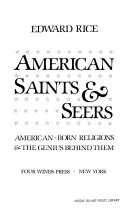
American Saints & Seers
Edward Rice's survey of American spiritual innovation is more than a mere catalog; it's an invitation to reconsider the very definition of religious originality. He deftly sidesteps the well-trodden paths of European religious imports to spotlight those groups that truly forged their own identities on this continent. A particular strength lies in his nuanced portrayal of the Shakers, moving beyond caricature to reveal the profound societal and spiritual underpinnings of their communal life. However, the book occasionally suffers from a breadth that can, at times, feel slightly superficial when covering the sheer diversity of movements. The section on Christian Science, for instance, could benefit from a deeper engagement with Mary Baker Eddy's complex theological architecture. Despite this, American Saints & Seers remains a valuable contribution, offering a refreshing perspective on the diverse spiritual currents that have shaped the American experience.
📝 Description
83
Edward Rice's 1982 book examines unique religious movements that took root on North American soil.
Edward Rice's American Saints & Seers, first published in 1982, looks at distinctive religious movements that developed in North America. The book contrasts these with European religious traditions, showing how American spiritual paths adapted and grew independently. Rice traces how these indigenous developments differed from their European origins.
This work is for anyone interested in the varied spiritual history of the United States and Canada. It is useful for students of American religion, comparative religious studies, and the sociology of belief. Both academic readers and the general public will find insight into how religious ideas change when transplanted to new cultures.
Published in 1982, this book arrived as interest in alternative spiritualities and distinct American cultural identities grew. It documents how North American religious formations, often outside mainstream Christianity, developed their own doctrines and practices. These movements, frequently drawing on a mix of indigenous, European, and even Eastern influences, represent a unique current within the broader history of esoteric thought, separate from but related to European occultism or Eastern mysticism.
💡 Why Read This Book?
• Understand the origins of indigenous American spiritualities, learning how groups like the Shakers, founded by Ann Lee, developed distinct doctrines and practices separate from European religious norms. • Gain insight into the unique characteristics of American religious expression, appreciating how factors specific to the continent shaped beliefs and communal structures for movements like Christian Science. • Discover the foundational figures and philosophies of lesser-known American faiths, recognizing how their distinct American character set them apart from their European antecedents.
⭐ Reader Reviews
Honest opinions from readers who have explored this book.
❓ Frequently Asked Questions
What specific American religious movements are detailed in Edward Rice's "American Saints & Seers"?
The book covers a range of movements, including the Shakers, Mormons (Church of Jesus Christ of Latter-day Saints), Christian Scientists, and various Muslim communities that established themselves on the continent.
What is the primary focus of "American Saints & Seers" regarding these movements?
Its primary focus is on the distinct, indigenous character of these religions, emphasizing how they grew and developed with minimal European influence, forging a unique American identity.
When was "American Saints & Seers" first published?
Edward Rice's "American Saints & Seers" was first published in 1982, offering a look at American religious phenomena from a specific historical vantage point.
Does the book explore the European origins of these religions?
While acknowledging potential European roots, the book's emphasis is on how these religions developed a distinct American character, often diverging significantly from their ancestral European influences.
What makes the religions discussed "American" in the context of this book?
They are considered "American" because they nurtured and grew up on the continent, adapting to its social, cultural, and geographical conditions to form unique spiritual expressions.
Who is the author of "American Saints & Seers"?
The author of "American Saints & Seers" is Edward Rice, who first brought this examination of American religious movements to light in 1982.
🔮 Key Themes & Symbolism
Indigenous American Spirituality
This theme centers on how religious movements originated and evolved intrinsically within the North American continent, developing characteristics markedly different from their European counterparts. It highlights figures like Ann Lee of the Shakers, whose ministry fundamentally shaped a unique communal and spiritual practice. The work explores how these groups, rather than simply transplanting European faiths, synthesized new beliefs and organizational structures that reflected the particular social and geographical field of America.
Religious Syncretism and Adaptation
The book examines the ways diverse religious groups integrated elements and adapted to the American context. It touches upon how communities, such as early Latter-day Saints, formulated doctrines and societal norms that were responsive to frontier conditions and unique prophetic leadership. This theme underscores the dynamic process of religious formation, where external influences are filtered through internal needs and visions, resulting in distinctly American manifestations of faith.
The "American Character" in Faith
This theme examines what constitutes a uniquely "American" religious identity. Rice investigates how movements like Christian Science, founded by Mary Baker Eddy, exhibited traits—such as an emphasis on individualism, practicality, and innovation—that became hallmarks of American spiritual expression. It questions the nature of spiritual originality and how it takes root, differentiating these expressions from the more established religious traditions of Europe.
Counter-Cultural Movements
Rice's work implicitly addresses the counter-cultural aspects of these spiritual communities. Groups like the Shakers, with their celibacy and communal living, stood in stark contrast to prevailing societal norms. The book highlights these movements as forms of social and spiritual dissent, demonstrating how alternative ways of life and belief systems emerged and persisted, challenging mainstream religious and social structures.
💬 Memorable Quotes
Direct passages from the work, attributed to the author.
“Religions that grew up on this continent showing a distinct American character.”
— This captures the core argument: that North America fostered unique spiritual paths, diverging from European models and developing their own indigenous qualities and expressions.
“Little European influence was the distinguishing factor.”
— This highlights the book's focus on the internal development and self-sufficiency of American religious movements, minimizing their reliance on transplanted European doctrines or structures.
“Included are the Shakers, Mormons, Christian Scientists, Muslims, and others.”
— This indicates the broad scope of Rice's study, showcasing the diversity of faiths examined, from communal utopians to distinct monotheistic communities, all within an American context.
“A variety of religions that were nurtured and grew up on this continent.”
— This phrase emphasizes the organic, emergent nature of these spiritual traditions, suggesting they were cultivated by the unique environment and conditions of North America.
“Distinct American character was evident.”
— This points to the unique identity and traits that these religious movements developed, setting them apart and marking them as products of their American milieu.
🌙 Esoteric Significance
Tradition
While not strictly aligned with a single esoteric lineage like Hermeticism or Kabbalah, "American Saints & Seers" speaks to the Theosophical and New Thought movements' interest in spiritual evolution and divine potential within humanity. It explores manifestations of spiritual fervor and prophetic insight that echo the broader esoteric quest for direct experience of the divine, often through unconventional means and societal structures.
Symbolism
The book implicitly touches upon the symbolism of new beginnings and promised lands inherent in many American religious narratives, akin to the spiritual journey of exodus. The communal structures of the Shakers, for instance, symbolize a striving for a perfected, earthly paradise. The emphasis on inner revelation and individual spiritual authority within movements like Christian Science points to a symbolism of direct, unmediated access to divine truth.
Modern Relevance
Contemporary interest in emergent churches, spiritual but not religious movements, and the study of American utopian communities draws directly from the foundational work exemplified in "American Saints & Seers." Thinkers and practitioners exploring alternative spiritual economies, radical communal living, and the intersection of faith and social reform find value in Rice's examination of these pioneering American movements.
👥 Who Should Read This Book
• Students of American religious history seeking to understand the origins and development of indigenous faith traditions distinct from European imports. • Comparative religion scholars interested in how spiritual ideas adapt and transform within specific cultural and geographical contexts, such as North America. • Readers curious about utopian communities and counter-cultural movements, exploring how groups like the Shakers and early Mormons forged unique societal and spiritual structures.
📜 Historical Context
Edward Rice's "American Saints & Seers" emerged in 1982, a period marked by a resurgence of interest in American history and its unique cultural contributions, including its spiritual landscape. The preceding decades had seen significant scholarly and popular engagement with alternative religious movements, fueled in part by the counterculture of the 1960s and 70s. Rice's work contributed to a growing academic and public conversation that sought to define and understand distinctly American forms of religiosity, moving beyond a Eurocentric religious studies paradigm. This was a time when scholars like Martin E. Marty were also examining the pluralism of American faith. The book implicitly engaged with the idea that America was not just a recipient of European religious traditions but a crucible for new spiritual forms, a concept that gained traction as the nation reflected on its own identity.
📔 Journal Prompts
The development of the Shakers' distinct American character.
Edward Rice's portrayal of Mormonism's indigenous growth.
The concept of a 'distinct American character' in religious movements.
Christian Science's divergence from European religious thought.
The influence of the continent on the formation of new faiths.
🗂️ Glossary
Shakers
A religious group officially known as the United Society of Believers in Christ's Second Appearing. Founded in England by Mother Ann Lee, they established numerous celibate, communal societies across America emphasizing simplicity, equality, and ecstatic worship.
Mormons
Adherents of the Church of Jesus Christ of Latter-day Saints, founded by Joseph Smith in the early 19th century. Known for their unique scripture (The Book of Mormon) and communal endeavors, they developed a distinct religious and social structure in the American West.
Christian Scientists
Followers of Christian Science, a religion founded by Mary Baker Eddy in the late 19th century. It emphasizes spiritual healing and the belief that reality is purely spiritual, with the material world being an illusion.
Indigenous American Character
Refers to the unique qualities, beliefs, and practices that religious movements developed organically within North America, shaped by its specific social, cultural, and geographical conditions, rather than being direct transplants from Europe.
Nurtured and Grew Up
Describes religious traditions that were cultivated and developed intrinsically within the American continent, implying organic growth and adaptation rather than mere establishment or importation.
European Influence
The impact or derivation of doctrines, practices, or organizational structures from religious traditions originating in Europe. The book focuses on movements with minimal such influence to highlight their indigenous development.
Distinct Religions
Refers to spiritual or faith traditions that possess unique characteristics, doctrines, and practices setting them apart from other religious systems, particularly those originating outside their specific cultural context.
This book appears in 1 collection
🔮 Readers Also Liked
Browse all →









From the “Soul Travel” Collection
View all →








More Free Occult Philosophy Books
View all →