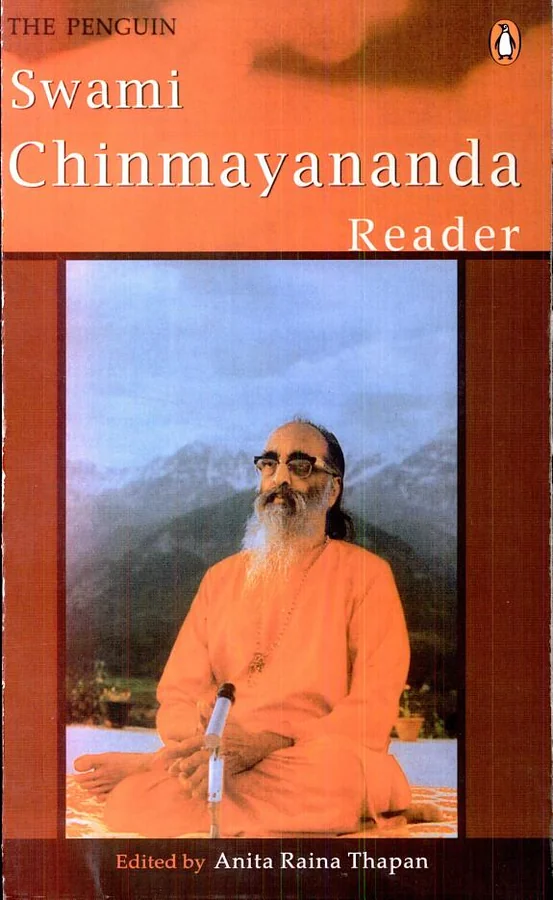
The Penguin Swami Chinmayananda Reader
 81
81

The Penguin Swami Chinmayananda Reader
Swami Chinmayananda’s capacity to make Vedanta accessible is undeniable, and this reader showcases that skill effectively. The collection presents a compelling argument for the practical integration of spiritual principles into everyday existence. A particular strength lies in Chinmayananda’s consistent emphasis on service (Seva) as a spiritual discipline, moving beyond mere intellectual understanding to embodied practice. The original blurb, though condensed, captures this essence well: "The Highest Prayer In This World Is Service; The Greatest Devotion Is Loving The People Around Us; And The Noblest Character Trait Is Divine Compassion For All Living Creatures." However, the reader sometimes feels like a sampler, offering glimpses into his extensive teachings without the deep dive some advanced students might seek. The limitation here is the inherent brevity of a reader format; it necessarily fragments the flow of his longer discourses. Despite this, the selection offers a coherent overview of his life's work, making it a valuable starting point for those unfamiliar with his influential interpretations of Advaita Vedanta.
📝 Description
81
Published in 2008, The Penguin Swami Chinmayananda Reader distills Vedanta for daily life.
This collection gathers teachings from Swami Chinmayananda, a major 20th-century interpreter of Vedanta. The book focuses on applying spiritual wisdom to everyday living, covering topics like meditation, service, and self-knowledge through the lens of Advaita Vedanta. It aims to make complex philosophical ideas accessible to a modern audience, serving as a gateway to Chinmayananda's wider work. The reader is for those interested in comparative philosophy, Indian spiritual traditions, and practical spirituality. It introduces the core ideas of Vedanta as presented by an influential guru. Those familiar with his teachings will find key reflections collected here. The book suits individuals who believe spiritual practice should align with social responsibility and personal ethics.
Chinmayananda (1916-1993) became a prominent figure in post-independence India. He established the Chinmaya Mission in 1953, which developed into a global organization. His teachings followed the Advaita Vedanta tradition, similar to Swami Vivekananda's popularization in the West. However, Chinmayananda placed a strong emphasis on social service and national renewal. His method differed from purely academic or ascetic interpretations of Vedanta, prioritizing the practical application of its principles.
Swami Chinmayananda's teachings are rooted in the Advaita Vedanta tradition, a school of Hindu philosophy that posits the non-duality of the self (Atman) and the ultimate reality (Brahman). While drawing from classical texts and commentaries, Chinmayananda adapted these ideas for contemporary relevance. He emphasized practical spiritual discipline and ethical conduct, moving beyond purely theoretical understanding. His approach sought to integrate spiritual realization with active participation in the world, a stance that distinguished him from more withdrawn or ascetic traditions within Hinduism.
💡 Why Read This Book?
• Gain practical Vedantic tools: Learn how Swami Chinmayananda applied the ancient philosophy of Advaita Vedanta to modern life, particularly through his emphasis on Karma Yoga and selfless service, as presented in his teachings originating from the mid-20th century. • Understand the role of devotion: Discover Chinmayananda's perspective on Bhakti Yoga, focusing on loving and serving those around you as a form of divine connection, a concept central to his mission founded in 1953. • Cultivate compassion through unity: Explore how recognizing the interconnectedness of all beings, a core tenet of Vedanta, can foster genuine compassion, a theme consistently highlighted in his interpretations of spiritual texts.
⭐ Reader Reviews
Honest opinions from readers who have explored this book.
❓ Frequently Asked Questions
Who was Swami Chinmayananda and why is he influential?
Swami Chinmayananda (1916-1993) was a renowned spiritual teacher from India, a disciple of Swami Sivananda. He became one of the most influential modern interpreters of Advaita Vedanta, founding the Chinmaya Mission in 1953 to spread his teachings globally.
What is Advaita Vedanta, as taught by Chinmayananda?
Advaita Vedanta is a school of Hindu philosophy that emphasizes the oneness of the individual soul (Atman) and the ultimate reality (Brahman). Chinmayananda's teachings focus on realizing this non-dual truth through knowledge, devotion, and selfless action.
What is Karma Yoga according to Swami Chinmayananda?
Karma Yoga, as explained by Chinmayananda, is the path of performing one's duties without attachment to the results. He taught that selfless service (Seva) is the highest form of prayer and devotion, integrating spiritual practice with social responsibility.
When was The Penguin Swami Chinmayananda Reader first published?
The Penguin Swami Chinmayananda Reader was first published in 2008, making it a relatively recent compilation of his extensive teachings.
What is the Chinmaya Mission?
The Chinmaya Mission is a global spiritual organization founded by Swami Chinmayananda in 1953. It is dedicated to providing knowledge of Vedanta and promoting spiritual, cultural, and ethical values through study groups, retreats, and public discourses.
Does this book cover specific practices like meditation?
Yes, the reader touches upon meditation and self-inquiry as integral parts of the path to self-knowledge within the Vedantic framework championed by Swami Chinmayananda.
🔮 Key Themes & Symbolism
Service as Highest Prayer
This theme underscores Chinmayananda's practical approach to spirituality, viewing selfless service (Seva) as the pinnacle of devotion. He argued that engaging in activities that benefit others, without expectation of reward, is the most potent form of worship. This aligns with the Karma Yoga philosophy, where actions performed with detachment and dedication lead to spiritual purification and self-realization. The reader presents this not as an optional adjunct to spiritual life but as its very core, transforming mundane tasks into sacred offerings and fostering a sense of unity with humanity.
Divine Compassion for All
Central to Chinmayananda's message is the cultivation of divine compassion, stemming from the Vedantic understanding of non-duality. When one recognizes the inherent unity of all existence – that the same divine consciousness (Brahman) pervades every being – compassion becomes a natural expression. The reader explores how this philosophical insight translates into ethical behavior, urging adherents to extend love and empathy to all living creatures. This perspective elevates compassion from a mere emotional response to a profound spiritual realization grounded in ontological truth.
The Path of Knowledge (Jnana Yoga)
While emphasizing action and devotion, the reader also highlights the importance of Jnana Yoga, the path of wisdom. Chinmayananda's interpretation focuses on the intellectual and discriminative aspect of Vedanta, encouraging self-inquiry to discern the real (Atman/Brahman) from the unreal (the phenomenal world). This involves practices like Shravana (listening to teachings), Manana (reflection), and Nididhyasana (meditation on the truth). The goal is to dismantle ignorance (avidya) and realize one's true nature as pure consciousness, thereby achieving liberation (moksha).
The Role of the Guru and Mission
The compilation implicitly and explicitly acknowledges the significance of the Guru-disciple relationship in spiritual unfoldment, a central to Indian traditions. Swami Chinmayananda himself served as a Guru, and the establishment of the Chinmaya Mission in 1953 institutionalized the transmission of his teachings. The reader reflects his role in guiding millions, emphasizing the importance of qualified guidance in working through the complexities of spiritual philosophy and practice, ensuring the integrity and continuity of the Vedantic lineage he represented.
💬 Memorable Quotes
Direct passages from the work, attributed to the author.
“Interpretation: Recognizing the unity of all existence naturally leads to compassion.”
— This concept highlights the philosophical underpinning of Chinmayananda's ethical framework. By understanding that the same divine essence permeates all beings, one transcends the illusion of separation, fostering an innate empathy and desire to alleviate suffering.
“Interpretation: Selfless action purifies the mind for spiritual knowledge.”
— This reflects the Karma Yoga principle. Chinmayananda taught that performing duties without attachment to outcomes cleanses the ego and prepares the intellect to grasp the subtler truths of Vedanta, paving the way for wisdom (Jnana).
“Interpretation: The goal is to realize one's true nature, beyond the physical and mental.”
— This points to the core Vedantic aim of self-realization (moksha). It emphasizes understanding the Self (Atman) as distinct from the body, mind, and intellect, ultimately recognizing its identity with the universal consciousness (Brahman).
“Interpretation: The Chinmaya Mission spreads the message of social and religious harmony.”
— This statement reflects the organizational legacy of Swami Chinmayananda. The mission, founded in 1953, actively promotes interfaith understanding and social upliftment, integrating spiritual teachings with practical community service.
💡 Key Ideas
Editorial paraphrase of the work's core concepts — not direct quotes.
The Highest Prayer In This World Is Service; The Greatest Devotion Is Loving The People Around Us; And The Noblest Character Trait Is Divine Compassion For All Living Creatures.
This quote captures Chinmayananda's synthesis of action (Karma Yoga), devotion (Bhakti Yoga), and ethical conduct. It posits that genuine spiritual practice is not solely internal but manifests externally through compassionate service to humanity, reflecting a unified view of existence.
🌙 Esoteric Significance
Tradition
Chinmayananda's work is firmly rooted in the Advaita Vedanta tradition of Hinduism, specifically the lineage stemming from Adi Shankaracharya. While Vedanta itself is a philosophical system rather than a strictly esoteric one, Chinmayananda's teachings often engage with the transformative potential of spiritual knowledge, aligning with esoteric goals of self-realization and liberation (moksha). His emphasis on the Guru, scriptural study, and the direct experience of non-duality positions his work within the broader spectrum of spiritual paths that seek to uncover hidden realities and achieve higher consciousness.
Symbolism
Key symbols in Chinmayananda's teachings include the Om symbol, representing the ultimate reality and the sound of creation, and the concept of the 'inner teacher' or Self (Atman). The analogy of the wave and the ocean is frequently used to illustrate the relationship between the individual soul and Brahman – the wave appears distinct but is ultimately nothing but ocean. Fire is often employed as a symbol of purity and transformation, representing the burning away of ignorance and ego through spiritual practice and knowledge.
Modern Relevance
The teachings of Swami Chinmayananda continue to influence contemporary spiritual seekers and thinkers. His practical approach to Vedanta, emphasizing selfless service (Karma Yoga) and compassion, speaks to modern concerns about social responsibility and ethical living. Organizations inspired by his work, like the Chinmaya Mission, remain active globally. His ability to articulate complex philosophical ideas in clear, accessible language makes his work relevant to contemporary mindfulness movements and secular ethics, offering a bridge between ancient wisdom and the challenges of modern life.
👥 Who Should Read This Book
• Aspiring practitioners of Vedanta: Individuals seeking a clear, practical introduction to the core principles of Advaita Vedanta, focusing on how to integrate spiritual wisdom into daily life through service and devotion. • Students of comparative religion: Researchers and enthusiasts interested in understanding influential modern interpretations of Indian spiritual traditions and their global impact since the mid-20th century. • Seekers of practical spirituality: Those looking for teachings that emphasize ethical conduct, compassion, and self-inquiry as pathways to personal growth and understanding, grounded in a well-established philosophical framework.
📜 Historical Context
Swami Chinmayananda rose to prominence in the mid-20th century, a period of significant cultural and spiritual reawakening in India following its independence in 1947. His teachings emerged within the broad context of Neo-Vedanta, a movement that sought to present Hindu philosophical traditions, particularly Advaita Vedanta, in a manner accessible to modern, educated audiences both in India and the West. He was a disciple of Swami Sivananda of Rishikesh, another key figure in this revival. Chinmayananda's approach, however, distinguished itself through its strong emphasis on practical application and social service, often contrasting with the more ascetic or purely academic interpretations of Vedanta. He founded the Chinmaya Mission in 1953, which rapidly grew into an international organization. While figures like Sarvepalli Radhakrishnan were exploring Vedanta through academic philosophy, Chinmayananda focused on disseminating its principles through dynamic public discourses (jñāna yajñas) and study groups, directly engaging millions and fostering a global community dedicated to spiritual and social upliftment.
📔 Journal Prompts
Selfless service as a spiritual practice: How can daily duties be reframed as opportunities for Karma Yoga?
The nature of compassion: Reflect on the connection between recognizing unity and extending empathy.
Discernment of the real: Explore the distinction between the transient self and the true Self (Atman).
The Guru's role: Consider the importance of guidance in one's spiritual journey.
Integrating Vedanta: How can the principles of Jnana Yoga be applied in everyday decision-making?
🗂️ Glossary
Advaita Vedanta
A major school of Hindu philosophy asserting the non-duality of the individual soul (Atman) and the ultimate reality (Brahman). It emphasizes that reality is one, indivisible consciousness.
Karma Yoga
The path of selfless action. It involves performing one's duties without attachment to the results, dedicating the actions to a higher purpose or the divine.
Bhakti Yoga
The path of devotion. It emphasizes love, surrender, and worship towards the divine as a means of spiritual realization and union.
Jnana Yoga
The path of knowledge or wisdom. It involves intellectual inquiry, self-reflection, and meditation to understand the true nature of reality and the Self.
Atman
The individual soul or self. In Advaita Vedanta, it is considered identical to Brahman, the ultimate reality.
Brahman
The ultimate, unchanging reality or Absolute Consciousness in Hinduism. It is the source and substratum of all existence.
Seva
Selfless service. An act performed out of compassion and duty, without expectation of personal gain, often considered a form of worship.
This book appears in 1 collection
🔮 Readers Also Liked
Browse all →









From the “Vedanta” Collection
View all →







More Free Sacred Texts & Gnosticism Books
View all →