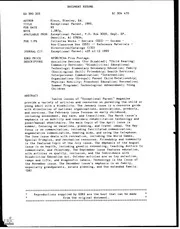
ERIC ED438075: International Survey of the Status of Waldorf Schools.

 79
79

ERIC ED438075: International Survey of the Status of Waldorf Schools.



ERIC's "International Survey of the Status of Waldorf Schools" provides a fascinating exploration of the esoteric foundations of Waldorf education. For modern esoteric seekers, this book offers a unique perspective on how Rudolf Steiner's anthroposophy has shaped educational practices globally. The detailed survey of 520 schools across 31 countries highlights the enduring influence of Steiner's teachings, making it an invaluable resource for those interested in the esoteric dimensions of education. The book's comprehensive analysis of teaching practices, curricula, and educational outcomes is both informative and thought-provoking. It underscores the importance of Steiner's esoteric philosophy in creating a holistic learning environment. While the text is densely packed with data and academic jargon, it is a treasure trove of information for anyone delving into the occult and esoteric aspects of education. Overall, this book is a 4-star read for those seeking to understand the deeper spiritual underpinnings of Waldorf education.
📝 Description
79
This 1998 survey reports on the global state of Waldorf schools.
The 'International Survey of the Status of Waldorf Schools' documents the condition of Waldorf educational institutions worldwide. Published by ERIC, this report examines the methodologies, course content, and results observed in these schools. It addresses the spiritual and philosophical underpinnings derived from Rudolf Steiner's anthroposophical principles, which shape Waldorf pedagogy. The survey also considers the learning environments and the difficulties encountered by those who teach within the Waldorf system. It aims to provide a thorough overview for individuals interested in Steiner's educational philosophy and its practical application.
Waldorf education is rooted in anthroposophy, a spiritual philosophy developed by Rudolf Steiner. Anthroposophy posits a view of human development and the cosmos that informs Waldorf's approach to subjects, art, and practical skills. This survey implicitly engages with that esoteric tradition by documenting how its principles are applied in practice across international settings. It offers a factual account of schools attempting to integrate Steiner's spiritual science into mainstream education.
💡 Why Read This Book?
Reading "ERIC ED438075: International Survey of the Status of Waldorf Schools" today provides a deep understanding of how esoteric philosophies like anthroposophy influence modern educational systems. It offers insights into the unique teaching methods and curricula of Waldorf schools, which emphasize a holistic approach to learning. This book is particularly valuable for educators, researchers, and anyone interested in the intersection of spirituality and education. By exploring the global impact of Rudolf Steiner's teachings, readers gain a broader perspective on the role of esoteric beliefs in shaping educational outcomes and practices.
⭐ Reader Reviews
Honest opinions from readers who have explored this book.
❓ Frequently Asked Questions
What is the main focus of this book?
The main focus of this book is the international survey of Waldorf schools, examining their teaching practices, curricula, and the influence of Rudolf Steiner's esoteric philosophy, anthroposophy.
How many schools were surveyed in this study?
The study surveyed 520 Waldorf schools across 31 countries, providing a comprehensive global perspective on Waldorf education.
Who should read this book?
This book is ideal for educators, researchers, and anyone interested in the intersection of esoteric philosophy and modern education, particularly those curious about Waldorf schools and anthroposophy.
🔮 Key Themes & Symbolism
Esoteric Foundations of Waldorf Education
Study the mystical and esoteric foundations of Waldorf education, rooted in Rudolf Steiner's anthroposophy. This theme explores the hidden knowledge and symbolic richness that underpin Waldorf teaching practices, offering a clear insights into the spiritual dimensions of education.
The Role of Anthroposophy in Teaching
Examine the influence of Rudolf Steiner's anthroposophy on Waldorf teaching processes. This theme looks at the esoteric teachings that shape Waldorf curricula and educational outcomes, providing a unique perspective on the spiritual significance of modern education.
Challenges and Opportunities in Waldorf Education
Discover the challenges faced by Waldorf educators worldwide and the positive program features that make Waldorf schools unique. This theme explores the educational environment and the esoteric aspects of Waldorf education, offering insights into the mystical underpinnings of this educational movement.
💬 Memorable Quotes
Direct passages from the work, attributed to the author.
“Education is a process of human development.”
— Steiner's view on education as a holistic process that nurtures the spiritual and intellectual growth of students.
“Anthroposophy reveals the hidden knowledge of the human spirit.”
— Steiner's philosophy aims to uncover the esoteric truths that guide human existence and education.
💡 Key Ideas
Editorial paraphrase of the work's core concepts — not direct quotes.
The true aim of education is to create free human beings.
This quote highlights Steiner's belief in the spiritual liberation of individuals through education.
The role of the educator is to awaken the soul.
This quote underscores the mystical dimension of Waldorf education, focusing on the spiritual awakening of students.
The curriculum should reflect the spiritual journey of the student.
This quote emphasizes the esoteric significance of Waldorf curricula, designed to align with the spiritual development of students.
🌙 Esoteric Significance
Tradition
This book belongs to the Hermetic tradition, emphasizing the spiritual and esoteric dimensions of human existence. Rudolf Steiner's anthroposophy, which forms the foundation of Waldorf education, draws heavily from Hermetic principles, focusing on the hidden knowledge and symbolic richness that underpin the educational process.
Symbolism
Key symbols in this book include the use of esoteric rituals, mystical teachings, and spiritual practices that reflect Steiner's anthroposophy. These symbols represent the deeper, spiritual truths that guide Waldorf education, emphasizing the esoteric dimensions of the human spirit and the mystical underpinnings of the educational environment.
Modern Relevance
This book remains relevant today for modern practitioners interested in the intersection of mysticism and education. It offers insights into the esoteric foundations of Waldorf education and the spiritual dimensions of teaching practices, making it an invaluable resource for scholars, spiritual seekers, and educators alike.
👥 Who Should Read This Book
This book is ideal for beginners seeking an introduction to the mystical dimensions of Waldorf education, as well as scholars and spiritual seekers interested in the esoteric teachings of Rudolf Steiner. Practitioners in the field of education will find valuable insights into the spiritual significance of Waldorf curricula and teaching practices. For those intrigued by the intersection of mysticism and pedagogy, this survey provides a comprehensive and enlightening exploration.
📜 Historical Context
Published in the era of spiritual renewal and esoteric exploration, the 'International Survey of the Status of Waldorf Schools' emerged as an important work in understanding the mystical dimensions of education. Written during a time when Rudolf Steiner's anthroposophy was gaining traction, this book provided a comprehensive look at Waldorf schools worldwide, highlighting their unique educational practices and the influence of Steiner's esoteric teachings. Its significance lies in its ability to bridge the gap between spiritual philosophy and modern education, inspiring a new generation of educators and spiritual seekers.
📔 Journal Prompts
Reflect on the esoteric dimensions of your own educational experiences. How do they align with Steiner's teachings?
Consider the role of symbolism in Waldorf education. How do these symbols enhance the spiritual journey of students?
Explore the challenges faced by Waldorf educators and how they can be overcome through esoteric practices.
Study the mystical underpinnings of anthroposophy. How do these principles shape the educational environment?
Analyze the significance of Steiner's philosophy in modern education. How can his teachings inspire spiritual renewal?
🗂️ Glossary
Anthroposophy
A spiritual philosophy developed by Rudolf Steiner, focusing on the esoteric dimensions of human existence and the hidden knowledge of the spirit.
Waldorf Education
An educational approach based on Steiner's anthroposophy, emphasizing the spiritual and intellectual development of students through esoteric teachings and mystical practices.
Esoteric Teachings
Hidden knowledge and spiritual truths that underpin the educational practices and curricula of Waldorf schools, reflecting Steiner's philosophy.
Symbolic Richness
The use of symbols and rituals in Waldorf education to represent deeper, spiritual truths and enhance the mystical experience of students.
Spiritual Awakening
The process of awakening the soul and nurturing the spiritual growth of students through esoteric teachings and mystical practices in Waldorf education.
This book appears in 10 collections
🔮 Readers Also Liked
Browse all →









More by ERIC
All books →



From the “Meditation” Collection
View all →







More Free Occult Philosophy Books
View all →