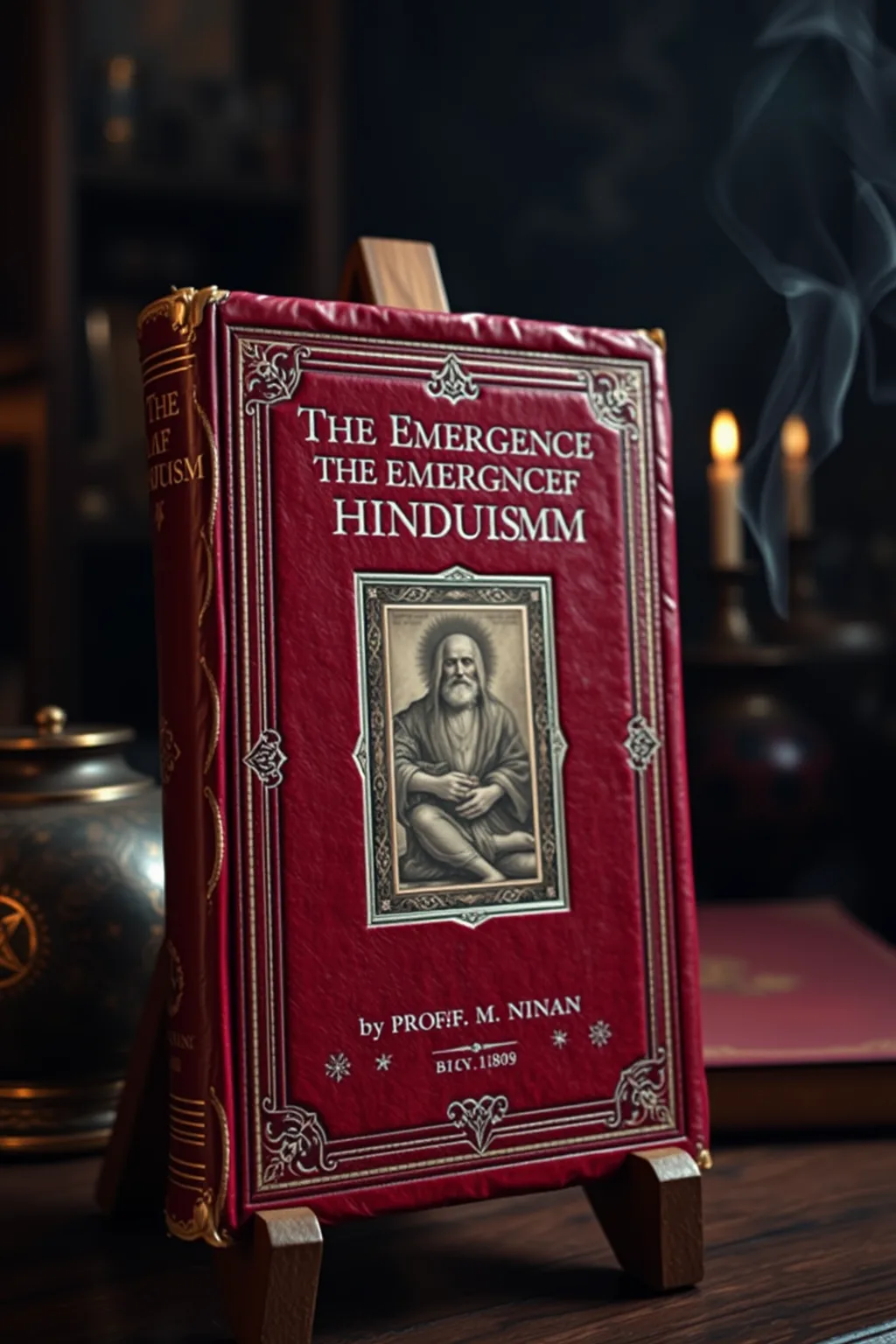
The Emergence of Hinduism
 82
82

The Emergence of Hinduism



The Emergence of Hinduism by Prof. M. M. Ninan is a groundbreaking work that offers a fresh and provocative perspective on the origins of Hinduism. For modern esoteric seekers, this book is a treasure trove of insights into the syncretic processes that have shaped religious beliefs over centuries. Ninan's meticulous research and engaging writing style make this text accessible to both academics and general readers. The book's exploration of the gnostic influences on Hinduism provides a fascinating lens through which to view the spiritual landscape of ancient India. By highlighting the occult and esoteric elements that contributed to the formation of Hinduism, Ninan challenges conventional narratives and invites readers to reconsider the complex interplay between different religious traditions. This book is a valuable addition to the library of anyone interested in the esoteric and occult dimensions of religion.
📝 Description
82
Prof. M. M. Ninan's 2021 book examines the influence of St. Thomas Christians on Hinduism's development.
In 'The Emergence of Hinduism,' M. M. Ninan investigates the historical and theological connections between early Christianity in India and the evolution of Hindu traditions. The author focuses on the arrival of St. Thomas the Apostle and his followers, proposing that their presence introduced elements that were integrated into existing Indian religious thought. Ninan details how this interaction may have shaped specific Hindu doctrines and practices, particularly those with esoteric or mystical dimensions.
The book analyzes the symbolic and philosophical parallels between early Christian Gnosticism and certain Hindu schools of thought. It suggests that this syncretism was not a one-way street but a complex exchange that contributed to the rich diversity of Hinduism. Ninan aims to uncover what he views as suppressed or overlooked historical links, inviting readers to consider a different perspective on the formation of one of the world's oldest religions.
This work fits within esoteric studies by examining the hidden or less obvious spiritual and philosophical currents that shaped major religious traditions. It looks beyond standard historical accounts to find connections between seemingly disparate belief systems, focusing on mystical interpretations and symbolic meanings. The book operates on the premise that religious evolution often involves a cross pollination of ideas, especially at the mystical or esoteric levels, which can be overlooked in conventional scholarship. Ninan's approach is to uncover these subtle influences and their impact on the development of Hindu thought.
✍️ Author

Prof. M. M. Ninan
Catholicate College, Pathanamthitta, established in 1952, is an institution of higher education at Pathanamthitta of Kerala, India. Catholicate College belongs to the first group of colleges in Kerala to receive academic accreditation from the National Assessment and Accreditation Council (NAAC).
💡 Why Read This Book?
Read The Emergence of Hinduism today to gain a deeper understanding of the occult and esoteric roots of one of the world's major religions. This book offers a unique perspective on the syncretic processes that shaped Hinduism, providing readers with insights into the spiritual and cultural evolution of the Indian subcontinent. Whether you are a scholar, a spiritual seeker, or simply curious about the intersection of religion and history, this book will enrich your knowledge and broaden your horizons.
⭐ Reader Reviews
Honest opinions from readers who have explored this book.
❓ Frequently Asked Questions
What is the main focus of 'The Emergence of Hinduism'?
The main focus of 'The Emergence of Hinduism' is the exploration of how Hinduism emerged from the syncretic integration of Christianity, brought into India by St. Thomas, with ancient Indian spiritual traditions and Gnosticism.
Who should read this book?
This book is ideal for scholars, spiritual seekers, and anyone interested in the intersection of religion, history, and esoteric traditions.
What makes this book unique?
This book is unique in its exploration of the occult and esoteric elements that contributed to the formation of Hinduism, challenging conventional narratives and offering a fresh perspective on the spiritual landscape of ancient India.
🔮 Key Themes & Symbolism
Gnostic Integration
This book examines the gnostic integration that occurred when Christianity was brought to India by St. Thomas. This integration played a key role in shaping Hinduism and reveals the hidden knowledge and symbolism that underpins these ancient spiritual practices.
Mystical Intersections
Explore the mystical intersections between Hinduism and Christianity, and how these intersections led to the emergence of Hinduism. This theme highlights the profound symbolism and philosophical significance that bind these spiritual traditions together.
Esoteric Wisdom
Discover the esoteric wisdom that lies beneath the surface of religious history. This theme emphasizes the hidden knowledge and mystical underpinnings that enrich our understanding of the spiritual journey.
💡 Key Ideas
Editorial paraphrase of the work's core concepts — not direct quotes.
The emergence of Hinduism is a proof of the power of syncretic integration.
This quote underscores the lasting impact of blending different spiritual traditions to create a new, enriched belief system.
St. Thomas brought more than just Christianity to India.
This line highlights the deeper, mystical influences that accompanied the spread of Christianity in India.
Gnostic wisdom is the hidden thread that combines the fabric of ancient spirituality.
This passage emphasizes the esoteric knowledge that binds different spiritual practices and beliefs.
The symbolism of Hinduism is a reflection of its mystical origins.
This quote points to the deep, symbolic language that underpins Hinduism and reveals its esoteric roots.
The journey of spiritual evolution is one of hidden knowledge and useful insights.
This line underscores the mystical and contemplative nature of the spiritual journey explored in the book.
🌙 Esoteric Significance
Tradition
This book belongs to the gnostic tradition, which emphasizes hidden knowledge and the mystical underpinnings of spiritual practices. The gnostic integration explored in the book reveals the esoteric wisdom that binds different spiritual traditions together.
Symbolism
Key symbols in this book include the mystical intersections between Hinduism and Christianity, the role of St. Thomas in bringing Christianity to India, and the esoteric wisdom that underpins these ancient spiritual practices. These symbols highlight the profound significance of syncretic beliefs and the hidden knowledge that lies beneath the surface of religious history.
Modern Relevance
This book remains relevant today as modern practitioners seek to understand the mystical roots of major world religions. It offers a unique perspective on the esoteric wisdom that underpins these spiritual traditions and enriches our understanding of the spiritual journey.
👥 Who Should Read This Book
Beginners interested in the mystical roots of Hinduism will find this book to be an enlightening introduction. Scholars of religious history will appreciate the meticulous research and useful insights into the syncretic origins of Hinduism. Spiritual seekers will be drawn to the esoteric wisdom and hidden knowledge revealed in the book. Practitioners of divination and symbolism will find this book to be a valuable resource for understanding the profound interplay between different spiritual traditions.
📜 Historical Context
Written during a time of renewed interest in the mystical roots of major world religions, 'The Emergence of Hinduism' by Prof. M. M. Ninan offers a unique perspective on the syncretic origins of Hinduism. Published in an era where scholars and spiritual seekers were increasingly curious about the hidden knowledge and symbolism behind ancient beliefs, this book has had a significant influence on the study of religious history and esoteric traditions. Its exploration of the gnostic integration that occurred when Christianity was brought to India by St. Thomas has enriched our understanding of the spiritual journey and the profound interplay between different spiritual traditions.
📔 Journal Prompts
Reflect on the mystical intersections between Hinduism and Christianity and how they have shaped your understanding of spirituality.
Consider the role of St. Thomas in bringing Christianity to India and the deeper, mystical influences that accompanied this event.
Explore the esoteric wisdom that lies beneath the surface of religious history and how it enriches your spiritual journey.
Look at the symbolism of Hinduism and its reflection of mystical origins.
Ponder the power of syncretic integration in creating new, enriched belief systems.
🗂️ Glossary
Gnosticism
A mystical tradition that emphasizes hidden knowledge and the esoteric wisdom that underpins spiritual practices.
Syncretism
The blending of different spiritual traditions to create a new, enriched belief system.
Esoteric
Relating to hidden knowledge or mystical insights that are not readily apparent to the uninitiated.
Symbolism
The use of symbols to convey deeper, mystical meanings and insights into spiritual practices.
St. Thomas
The apostle who is believed to have brought Christianity to India and played a key role in the emergence of Hinduism.
This book appears in 6 collections
🔮 Readers Also Liked
Browse all →








From the “Gnosticism” Collection
View all →





More Free Sacred Texts & Gnosticism Books
View all →