Dark Night of the Soul

 72
72

Dark Night of the Soul
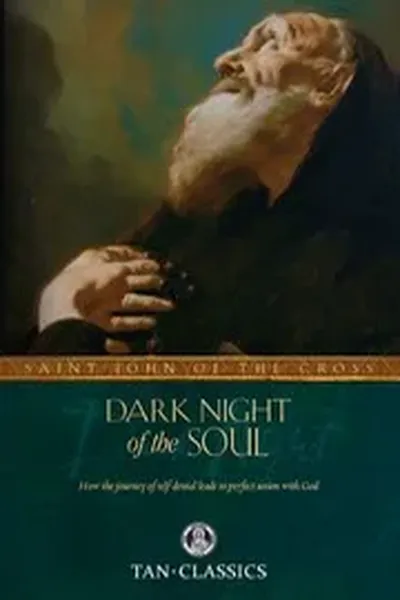
Peers' 1953 rendition of St. John of the Cross's "Dark Night of the Soul" remains a sturdy, if somewhat academic, gateway to one of Christian mysticism's most challenging yet rewarding texts. The strength lies in Peers' meticulous scholarship, grounding the spiritual narrative in historical context and textual fidelity. However, the translation, while accurate, can occasionally feel dense, lacking the raw, immediate quality one might find in contemporary renderings or the original Spanish. A particularly striking passage is the analysis of how God "touches" the soul, creating a "new science" that the intellect cannot grasp but the spirit intimately knows—a profound articulation of mystical epistemology. While its value as a scholarly resource is undeniable, readers seeking a more visceral devotional experience might find it requires significant effort. It is a vital text for understanding the ascetic path, but one that demands patience.
📝 Description
72
St. John of the Cross wrote 'Dark Night of the Soul' in the late 16th century.
This edition presents E. Allison Peers' 1953 translation of St. John of the Cross's "Dark Night of the Soul." Peers based his work on P. Silverio de Santa Teresa's 1935 critical edition of the original Spanish. The book is more than a devotional text; it is a theological and psychological analysis of spiritual growth. It addresses individuals experiencing periods of spiritual difficulty, viewing these times not as divine absence but as purification. St. John of the Cross, a Spanish mystic and Carmelite friar, composed this treatise during Spain's Counter-Reformation. His writings emphasized direct spiritual experience, differing from more academic theological methods. He worked alongside Teresa of Ávila in Carmelite reforms.
The core idea is the 'dark night,' a metaphor for the soul's difficult but essential progression through spiritual emptiness toward union with God. This involves clearing away sensory and spiritual flaws to achieve deeper, unified love. The text also discusses theological virtues, the nature of prayer, and how divine action influences the soul's path.
Written during the Counter-Reformation, St. John of the Cross's "Dark Night of the Soul" is a key text in Christian mysticism. It emerged from the Carmelite reform movement, which sought a more direct and experiential relationship with the divine. The book describes the soul's arduous path toward divine union, a concept central to many contemplative traditions. It details the stages of spiritual growth, emphasizing detachment and inner transformation. This work stands as a significant expression of the Western esoteric tradition's focus on interior spiritual development and mystical experience.
💡 Why Read This Book?
• Gain a structured understanding of the "purgative way" as detailed by St. John of the Cross, learning how sensory and spiritual "nights" serve to purify the soul towards divine union. • Explore the theological underpinnings of spiritual dryness, moving beyond feelings of abandonment to recognize it as a divinely guided process, as articulated in the text's commentary on divine action. • Appreciate the historical milieu of 16th-century Spanish mysticism through E. Allison Peers' scholarly introduction and notes, contextualizing the work within the Counter-Reformation and Carmelite reforms.
⭐ Reader Reviews
Honest opinions from readers who have explored this book.
❓ Frequently Asked Questions
What is the "Dark Night of the Soul" by St. John of the Cross about?
It's a spiritual treatise describing the soul's difficult but purifying journey toward union with God, often characterized by feelings of spiritual desolation and dryness, which the author interprets as a sign of divine purification.
Who translated this specific edition of "Dark Night of the Soul"?
This edition features the translation and editing by E. Allison Peers, based on a 1935 critical edition by P. Silverio de Santa Teresa, originally published in 1953.
Is "Dark Night of the Soul" a literal description of a period of depression?
While it describes periods of spiritual suffering that can feel like depression, the "dark night" is specifically a theological concept within Christian mysticism, referring to a phase of spiritual purification guided by God, not clinical depression.
What are the main stages of spiritual growth discussed by St. John of the Cross?
The work primarily focuses on the "night of the senses" and the "night of the spirit," which are stages of purification designed to detach the soul from worldly attachments and imperfections, leading to deeper union with God.
What is the significance of St. John of the Cross in Christian literature?
He is considered one of the most important Spanish mystics and poets, a Doctor of the Church, whose writings profoundly influenced Christian spirituality and the understanding of mystical theology.
Can "Dark Night of the Soul" be read by non-Christians?
Yes, while rooted in Christian theology, its exploration of spiritual struggle, purification, and the search for ultimate reality offers profound insights relevant to individuals on any spiritual path seeking deeper self-understanding and connection.
🔮 Key Themes & Symbolism
The Purgative Way
The "dark night" is central to the concept of the purgative way, a process of spiritual cleansing. St. John of the Cross meticulously details how both the senses and the spirit must undergo periods of desolation and detachment. This isn't passive suffering but an active, albeit painful, stripping away of imperfections, vices, and even spiritual consolations that can become hindrances to direct union with God. The work provides a theological framework for understanding these arduous phases as divinely ordained steps toward spiritual maturity and deeper faith.
Divine Union and Love
The ultimate aim of the "dark night" is the soul's transformation into a state of profound union with the divine. This union is characterized by an all-consuming, transformative love that transcends intellectual understanding. The text describes how, after the purification of the dark night, the soul is enabled to receive the "infusion" of divine love, leading to a contemplative state where God's presence is intimately known and experienced directly, far beyond sensory or intellectual apprehension.
Spiritual Theology and Psychology
St. John of the Cross offers a sophisticated blend of spiritual theology and early psychological observation. He analyzes the soul's resistances, attachments, and the subtle ways pride and other imperfections manifest, even in spiritual practices. The "dark night" can be seen as a divinely orchestrated confrontation with the ego and its limitations, pushing the individual towards humility and surrender. This dual focus makes the work relevant to both theological study and the practicalities of inner spiritual work.
The Role of Faith and Hope
During the "dark night," traditional spiritual supports often vanish, leaving the soul reliant on pure faith and hope. St. John of the Cross emphasizes that these theological virtues become paramount when sensory and intellectual consolations cease. The text guides the reader to persevere through this spiritual desert, trusting in God's hidden presence and ultimate benevolent purpose. It is a proof of the strength found in unwavering belief even amidst profound doubt and emptiness.
💬 Memorable Quotes
Direct passages from the work, attributed to the author.
“To come to the enjoyment of the knowledge of all creatures, go forward in the enjoyment of knowing nothing of them.”
— This paradoxical statement highlights the ascetical principle of detachment from sensory and intellectual knowledge of the created world as a prerequisite for truly knowing and experiencing God, the ultimate reality.
“In the evening of life, you will be examined in love.”
— A concise statement emphasizing that the ultimate measure of one's spiritual journey and life's work, regardless of other achievements, will be the depth and authenticity of their love for God and neighbor.
“The soul that is attached to anything, however much it perceives that God is telling it to leave the creature, will not be detached from it.”
— This highlights the pervasive nature of attachment and the difficulty of spiritual liberation. It suggests that even with divine prompting, the soul must actively and decisively sever ties with worldly dependencies to progress.
“This active night is a putting off of vices and a knowing of them.”
— This defines the initial phase of the dark night as a conscious process of recognizing and actively purging sinful habits and imperfections that hinder spiritual growth.
“The soul must be emptied of all things, both light and dark, good and evil, in order to be able to rest in God.”
— This emphasizes the radical nature of divine union, suggesting that complete surrender and detachment from all dualities, including spiritual experiences, is necessary to achieve true repose in the divine essence.
🌙 Esoteric Significance
Tradition
While firmly rooted in Catholic mysticism, St. John of the Cross's "Dark Night of the Soul" holds significant resonance within Western esoteric traditions, particularly those focused on inner transformation and gnosis. Esoteric practitioners often interpret his "dark night" as a symbolic process of ego dissolution and spiritual purification, aligning with alchemical concepts of separation and conjunction, or the Gnostic path of illumination through inner knowledge and detachment from the material world.
Symbolism
The "dark night" itself is the paramount symbol, representing a void or absence that paradoxically leads to divine presence. Other motifs include light (divine knowledge), darkness (spiritual ignorance or purification), the wounded soul (suffering lover), and the journey or path (the soul's progression). These symbols function as archetypal representations of the soul's arduous yet ultimately rewarding quest for ultimate reality and union.
Modern Relevance
Contemporary seekers in various spiritual disciplines, including Jungian psychology (archetypes of the shadow and individuation), mindfulness practices (cultivating awareness of inner states), and even certain schools of Western esotericism, draw upon the "Dark Night" framework. Its exploration of spiritual desolation as a catalyst for growth offers a valuable lens for understanding periods of crisis and transformation in personal spiritual development.
👥 Who Should Read This Book
• Students of Christian Mysticism: Those studying figures like Teresa of Ávila, Meister Eckhart, or Bernard of Clairvaux will find this work foundational for understanding the apex of Spanish mysticism. • Practitioners of Inner Work: Individuals engaged in contemplative prayer, meditation, or psychological self-exploration seeking to understand periods of spiritual dryness or inner turmoil. • Scholars of Religious History: Researchers interested in the Counter-Reformation, the history of monasticism, or the development of spiritual literature in the 16th century.
📜 Historical Context
St. John of the Cross penned his spiritual masterpieces, including "Dark Night of the Soul," in late 16th-century Spain, a period marked by the Counter-Reformation and intense spiritual exploration. His work emerged from the Carmelite reform movement, which he co-founded with Teresa of Ávila. This era saw a flourishing of mystical literature, often in vernacular Spanish, contrasting with the more scholastic theological traditions. His writings were revolutionary in their focus on direct, experiential union with God, often expressed through profound poetry. While celebrated by many mystics, his radical ideas and writings also led to scrutiny and even imprisonment by ecclesiastical authorities, highlighting the tensions between mystical experience and institutional dogma. His contemporaries included figures like Luis de Granada and Francisco de Osuna, other prominent spiritual writers of the Spanish Golden Age.
📔 Journal Prompts
The soul's detachment from sensory experience during the "night of the senses."
The nature of divine "infusion" beyond intellectual grasp.
The paradox of finding God in absence during the "dark night."
Recognizing "pride" as a subtle impediment even in spiritual pursuits.
The transformative power of pure "faith" when consolations cease.
🗂️ Glossary
Dark Night of the Soul
A spiritual process described by St. John of the Cross, involving periods of dryness and desolation that purify the soul, enabling deeper union with God. It comprises the 'night of the senses' and the 'night of the spirit'.
Night of the Senses
The initial stage of purification where the soul detaches from sensory pleasures and consolations derived from worldly experiences and even from certain spiritual practices.
Night of the Spirit
A deeper, more profound stage of purification where the soul is detached from spiritual desires and intellectual concepts, leading to a more direct and unitive experience of God.
Spiritual Desolation
A state of dryness, emptiness, or lack of spiritual feeling, interpreted not as divine abandonment but as a necessary phase of purification and detachment.
Union with God
The ultimate goal of the spiritual journey, a state of profound communion and conformity of the soul's will with God's will, achieved after the soul has been purified.
Contemplation
A passive reception of divine knowledge and love, often described as a "gift of God," which follows the purification experienced in the dark nights.
Virtues (Theological)
Faith, hope, and charity (love). St. John of the Cross emphasizes their crucial role, especially faith and hope, during the dark night when sensory and intellectual supports are withdrawn.
This book appears in 1 collection
🔮 Readers Also Liked
Browse all →








From the “Dark Night of the Soul” Collection
View all →






More Free Sacred Texts & Gnosticism Books
View all →