Forbidden faith
 77
77

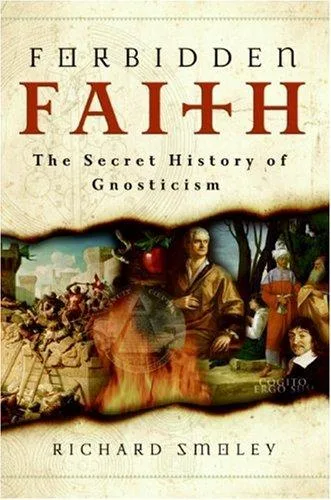
Forbidden faith
Smoley's "Forbidden Faith" offers a compelling re-evaluation of Gnosticism, moving beyond the simplistic 'heresy' label. His strength lies in the meticulous dissection of primary Gnostic texts, revealing their sophisticated philosophical arguments. A particular passage analyzing the Valentinian cosmology, with its intricate aeons and emanations, showcases this analytical prowess. However, the work occasionally leans towards a sympathetic interpretation that might overlook the more problematic aspects of certain Gnostic doctrines, such as extreme asceticism or antinomianism. While Smoley is careful to present a nuanced view, a more critical engagement with the social implications of these beliefs would have strengthened the analysis. Ultimately, "Forbidden Faith" serves as an essential corrective to outdated scholarship, urging a deeper appreciation for Gnosticism's intellectual heritage.
📝 Description
77
Richard Smoley's 2006 book examines the historical suppression of Gnostic beliefs.
Richard Smoley's "Forbidden Faith" investigates the historical suppression and esoteric interpretations of Gnostic beliefs. The book scrutinizes how early Christian authorities, such as Irenaeus of Lyons in the 2nd century CE, worked to marginalize spiritual viewpoints that challenged emerging orthodoxies. Smoley analyzes surviving Gnostic texts and fragments, presenting them as complex philosophical systems with distinct cosmologies and soteriological goals, rather than simple heresies.
This work is for readers seriously interested in early Christian history, comparative religion, and the philosophical aspects of esoteric traditions. It appeals to those who question established narratives and want to understand the range of ancient spiritual thought. Students of Gnosticism, Hermeticism, and similar mystical paths will find the detailed textual analysis especially useful. It requires engagement with complex theological and philosophical ideas, not a casual introduction.
Published in 2006, "Forbidden Faith" appeared during a time of renewed academic and popular interest in Gnosticism, partly due to discoveries like the Nag Hammadi library. This allowed Smoley to interact with many translated Gnostic texts and current scholarship. The book offers a counter-narrative to traditional historical accounts that dismissed Gnostic writings, emphasizing the intellectual rigor and spiritual depth of these faiths. It situates Gnosticism as an important early development within Hellenistic religion and philosophy.
This book engages directly with Gnosticism, a complex religious and philosophical movement prominent in the early centuries CE. Gnosticism generally posits a radical dualism, viewing the material world as flawed or evil, created by a lesser deity (the Demiurge), and emphasizing salvation through direct, intuitive knowledge (gnosis) of the divine. "Forbidden Faith" examines how these ideas, often transmitted through coded texts and secret traditions, were systematically opposed by emerging orthodox Christianity, leading to their marginalization in mainstream historical accounts.
💡 Why Read This Book?
• Understand the Gnostic concept of the Demiurge, a lesser creator god often seen as responsible for the flawed material world, providing a unique cosmological perspective distinct from Abrahamic creation stories. • Grasp the significance of the Nag Hammadi library discovery in 1945, which dramatically reshaped scholarly understanding of Gnostic texts and their philosophical depth. • Explore the Gnostic path of gnosis, a direct, intuitive knowledge of the divine, offering an alternative to faith-based or ritualistic spiritual practices.
⭐ Reader Reviews
Honest opinions from readers who have explored this book.
❓ Frequently Asked Questions
What is the primary argument of Richard Smoley's 'Forbidden Faith' regarding Gnosticism?
Smoley argues that Gnosticism was not simply a heresy but a complex spiritual and philosophical system with profound insights into the human condition and the nature of reality, which was systematically suppressed by emerging orthodox Christianity.
When was 'Forbidden Faith' first published, and what historical context informed its writing?
The book was first published in 2006. This period followed the significant 1945 discovery of the Nag Hammadi library, which provided scholars with extensive Gnostic texts, allowing for a more direct engagement with Gnostic thought than previously possible.
What role does Irenaeus of Lyons play in Smoley's analysis?
Irenaeus, a prominent 2nd-century bishop, is presented as a key figure who actively polemicized against Gnostic teachings. Smoley analyzes Irenaeus's critiques to understand how early Christian authorities attempted to define and marginalize Gnosticism.
What are some key Gnostic concepts explored in the book?
The book delves into concepts such as the Demiurge, the divine spark within humanity, the path of gnosis, the dualistic worldview, and the figure of Sophia (Wisdom) as central to Gnostic cosmology and salvation.
Is 'Forbidden Faith' suitable for beginners in esoteric studies?
While accessible, the book requires a serious interest in historical and philosophical inquiry. It is more suited for those willing to engage with complex theological arguments and textual analysis rather than a basic introduction to esoteric topics.
How does Smoley's work relate to other esoteric traditions?
Smoley positions Gnosticism within the broader context of Hellenistic philosophy and religion. His work highlights the shared concerns and divergent paths between Gnosticism and other esoteric systems like Hermeticism.
🔮 Key Themes & Symbolism
Suppression of Gnostic Texts
Smoley details the historical campaigns by early Church fathers, such as Irenaeus in the 2nd century CE, to discredit and eliminate Gnostic writings. The work examines how these texts, often preserved in secret or fragmented forms, represented a significant challenge to the developing Christian orthodoxy. The narrative explores the motivations behind this suppression, focusing on the perceived threat Gnosticism posed to the emerging hierarchical structures and theological doctrines of mainstream Christianity.
The Gnostic Cosmology
Central to 'Forbidden Faith' is the exploration of Gnostic cosmologies, particularly the concept of a flawed material universe created by a lesser deity, the Demiurge. Smoley unpacks the intricate systems involving aeons, emanations, and the fall of Sophia (Wisdom), contrasting this with traditional creation narratives. The work highlights the Gnostic emphasis on a transcendent, unknowable God beyond the material realm and the inherent divinity within select individuals.
Gnosis as Liberation
The book elucidates the Gnostic path to salvation through gnosis – direct, intuitive spiritual knowledge. This contrasts sharply with salvation through faith or works emphasized in orthodox Christianity. Smoley analyzes how Gnostics believed this inner knowledge allowed the divine spark within humans to awaken and return to its true spiritual home, transcending the limitations imposed by the material world and its ruler, the Demiurge.
Dualism and Materiality
A recurring theme is the pronounced dualism found in many Gnostic systems, positing a fundamental opposition between the spiritual, true God and the material, corrupt world. 'Forbidden Faith' examines how this perspective led to varied attitudes towards the body and the material realm, ranging from ascetic renunciation to a more libertine approach, all aimed at disentangling the spirit from material bondage.
💬 Memorable Quotes
Direct passages from the work, attributed to the author.
“The orthodox critics of Gnosticism, like Irenaeus, were not merely theologians but also political actors within the early Church.”
— This interpretation highlights that the condemnation of Gnosticism was not solely a matter of theological disagreement but also involved power struggles and the consolidation of authority within the nascent Christian hierarchy during the 2nd century CE.
“Salvation in Gnosticism is fundamentally an awakening of innate divine knowledge.”
— This interpretation emphasizes that, for Gnostics, liberation comes not from external grace or adherence to dogma, but from an internal realization and recovery of forgotten spiritual wisdom—the Gnosis itself.
“The suppression of Gnostic texts served to solidify the canon and authority of the emerging orthodox Church.”
— This signifies that the active marginalization and destruction of Gnostic writings by figures like Irenaeus were instrumental in defining what constituted acceptable Christian doctrine and establishing the institutional power of the orthodox leadership.
“Sophia's fall is a key moment in the Gnostic creation myth, explaining the origin of the material world.”
— This interpretation points to the Gnostic narrative where the figure of Wisdom (Sophia) experiences a transgression or error, leading to her descent and the subsequent creation of the flawed material cosmos by the Demiurge.
💡 Key Ideas
Editorial paraphrase of the work's core concepts — not direct quotes.
The concept of the Demiurge reflects a profound disillusionment with the perceived imperfections of the material world.
This paraphrased concept suggests that the Gnostic idea of a flawed creator god stems from a deep dissatisfaction with the suffering, evil, and limitations evident in the physical universe, attributing these flaws to an inferior divine agency.
🌙 Esoteric Significance
Tradition
Smoley's work is firmly rooted within the Gnostic tradition, a complex and diverse set of religious and philosophical movements flourishing in the early centuries CE. While often categorized separately, Gnosticism shares thematic resonances with Hermeticism and Neoplatonism, particularly in its emphasis on a transcendent divine source and the pursuit of spiritual knowledge. "Forbidden Faith" seeks to reintegrate Gnostic thought into the broader history of Western esotericism, presenting it as a vital, albeit suppressed, lineage that informed later mystical and philosophical currents.
Symbolism
Key symbols in "Forbidden Faith" include the Demiurge, representing the flawed creator of the material world and a central figure in Gnostic dualism; the divine spark or pneuma, symbolizing the trapped fragment of the divine within the human soul, awaiting liberation; and the figure of Sophia (Wisdom), whose fall often initiates the Gnostic creation narrative and explains the presence of imperfection in the cosmos.
Modern Relevance
Contemporary esoteric practitioners and scholars continue to draw inspiration from Gnostic ideas explored in "Forbidden Faith." Movements interested in consciousness studies, radical spirituality, and critiques of materialism often find resonance in the Gnostic emphasis on inner knowledge (gnosis) and the illusory nature of the material world. Thinkers exploring archetypal psychology and the shadow self also engage with Gnostic mythologies as frameworks for understanding psychological integration and the transcendent potential within the human psyche.
👥 Who Should Read This Book
• Students of early Christianity and comparative religion seeking nuanced perspectives beyond orthodox historical accounts. • Practitioners of Western esoteric traditions, such as Hermeticism and Kabbalah, interested in understanding a foundational, often suppressed, lineage. • Philosophically inclined readers questioning the nature of reality, the origins of consciousness, and the relationship between the material and spiritual realms.
📜 Historical Context
Richard Smoley's "Forbidden Faith," published in 2006, arrived at a time of significant re-evaluation of Gnosticism, largely spurred by the 1945 discovery of the Nag Hammadi library. This exceptional cache of Gnostic texts allowed scholars to move beyond reliance on the polemics of Church Fathers like Irenaeus of Lyons and Epiphanius of Salamis, who had previously been the primary sources for understanding these movements. Smoley's work engages directly with this expanded textual corpus, positioning Gnosticism not as a mere fringe heresy but as a complex philosophical and spiritual current within Hellenistic religion. It emerged in dialogue with scholars such as Elaine Pagels, whose work "The Gnostic Gospels" (1979) had already popularized a more sympathetic view of Gnostic traditions and their potential challenge to patriarchal structures within early Christianity. The book implicitly counters the rigid dogmatism that dominated much 20th-century religious scholarship, advocating for a deeper appreciation of the intellectual diversity present in the first few centuries CE.
📔 Journal Prompts
Reflect on the Gnostic concept of the Demiurge in relation to perceived imperfections in the modern world.
Consider the Gnostic path of gnosis as an alternative to external religious authority.
Analyze the symbolic role of Sophia in the Gnostic creation myth and its implications for understanding divine feminine principles.
Compare the Gnostic view of the material world with contemporary philosophical materialism.
Explore the historical motivations behind the suppression of Gnostic texts, considering both theological and power dynamics.
🗂️ Glossary
Demiurge
In Gnosticism, a lesser, often flawed creator deity responsible for the material universe, distinct from the supreme, transcendent God. Figures like Yaldabaoth are often identified as the Demiurge.
Gnosis
Direct, intuitive spiritual knowledge or insight, considered the primary means of salvation and liberation in Gnostic systems. It is a knowing that transcends intellectual understanding.
Aeons
Emanations or divine powers of the supreme God in Gnostic cosmology. These beings form a divine hierarchy, and their interactions, including fallings or transgressions, often lead to the creation of the material world.
Sophia
A central female figure in many Gnostic systems, often representing Wisdom. Her desire or fall from the divine pleroma (fullness) is frequently depicted as the catalyst for the creation of the material world and the Demiurge.
Pleroma
The spiritual realm or fullness of the supreme God in Gnostic cosmology, inhabited by Aeons. The material world is seen as a corruption or lesser imitation of the Pleroma.
Archons
Rulers or intermediaries in Gnostic cosmology, often depicted as servants of the Demiurge who maintain control over the material world and obstruct the souls' ascent to the Pleroma.
Barbelo
In some Gnostic systems, the first emanation of the supreme God, often considered a divine Mother figure or the highest Aeon, from whom other divine beings proceed.
🔮 Readers Also Liked
Browse all →





More by Richard Smoley
All books →





More Free Sacred Texts & Gnosticism Books
View all →