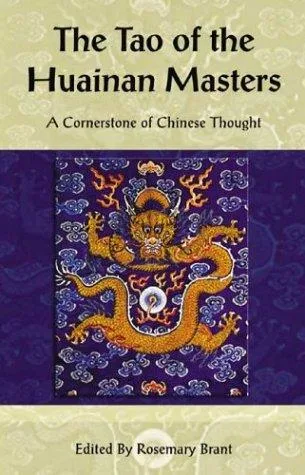
The Tao of the Huainan Masters
 61
61

The Tao of the Huainan Masters


Review by Silas Hawthorne (Hermetic Studies Editor) — 'The Tao of the Huainan Masters' is an indispensable compendium, a true testament to the intellectual and spiritual vibrancy of ancient China. Its enigmatic authorship only enhances its mystique, inviting readers to engage directly with the profound insights offered. The work masterfully weaves together cosmology, natural philosophy, and nascent forms of alchemy, presenting a holistic vision of the cosmos and humanity's place within it. Its strength lies in its profound symbolism and its ability to connect the macrocosm with the microcosm, offering practical wisdom for spiritual cultivation. This text is essential for anyone seeking to understand the roots of Taoist thought and its enduring influence on esoteric traditions.
📝 Description
61
Compiled around 139 BCE, the Huainanzi synthesizes Taoism with early Chinese science and philosophy.
The Huainanzi, likely completed around 139 BCE under Prince Liu An, collects the knowledge of scholars at the Huainan Academy. It presents a unified cosmology, blending Taoist principles with observations of the natural world and philosophical arguments. The text examines the structure of the universe, from the movements of stars to the nature of the Tao, and its influence on human life. It discusses concepts such as yin and yang, the five elements, and the cyclical patterns of time. The work also touches upon governance, ethics, and the cultivation of personal harmony within the cosmic order. Its aim is to provide a comprehensive understanding of existence, connecting the celestial, terrestrial, and human spheres.
This compilation stands as a significant example of Han Dynasty intellectual synthesis. It seeks to explain the underlying principles that govern reality, offering insights into the human place within the vastness of the cosmos. The text's approach is encyclopedic, encompassing a wide range of subjects to build a coherent worldview. It illustrates how diverse fields of knowledge were integrated to form a holistic understanding of the Tao.
The Huainanzi is a key text in the development of Taoist thought, bridging early philosophical Taoism with later religious and alchemical traditions. It reflects a period where cosmology, divination, and methods for achieving longevity were intertwined with philosophical inquiry. The book's synthesis of diverse knowledge streams, including cosmology and early scientific observation, situates it within a broader esoteric framework that sought to understand and harmonize with the fundamental forces of the universe. Its influence can be seen in later developments of Taoist practice and thought.
💡 Why Read This Book?
Uncover the lost wisdom of ancient Chinese mystics and philosophers. 'The Tao of the Huainan Masters' offers a unique synthesis of cosmology, spirituality, and early scientific thought, revealing the interconnectedness of the universe. Ideal for seekers of Eastern philosophy, scholars of ancient texts, and practitioners of Taoist arts who wish to deepen their understanding of the Tao and its profound influence on existence.
⭐ Reader Reviews
Honest opinions from readers who have explored this book.
❓ Frequently Asked Questions
Who were the Huainan Masters?
The Huainan Masters were a collective of scholars and thinkers convened by Prince Liu An of Huainan during the Han Dynasty. They compiled a vast encyclopedic work exploring philosophy, cosmology, and natural sciences.
What is the central philosophy presented?
The central philosophy is deeply rooted in Taoism, emphasizing harmony with the natural order (the Tao), the cyclical nature of existence, and the interconnectedness of all phenomena, from the celestial bodies to human affairs.
Is this book suitable for beginners?
While dense with ancient wisdom, the book's comprehensive nature makes it accessible to diligent beginners willing to engage with complex ideas. Its rich symbolism can offer profound insights even without prior extensive study.
What makes this text 'esoteric'?
Its esoteric nature lies in its subtle layers of meaning, its use of potent symbolism, and its exploration of hidden correspondences between the celestial, terrestrial, and human realms, often requiring contemplation to fully grasp.
How does this text relate to astrology?
The text extensively details celestial phenomena and their perceived influence on earthly events and human destiny, forming a foundational element of early Chinese cosmology and astrological thought.
🔮 Key Themes & Symbolism
Cosmic Harmony and the Tao
This theme explores the fundamental concept of the Tao as the ineffable, primordial force that governs the universe. The text meticulously outlines how celestial movements, natural phenomena, and human actions are all intricately linked within this grand cosmic order. It posits that true enlightenment and well-being are achieved by aligning oneself with the natural flow of the Tao, understanding its cycles, and acting in accordance with its principles. This involves recognizing the inherent balance and interconnectedness of all things, from the smallest particle to the vast expanse of the cosmos.
The Great Chain of Being and Correspondences
A central to the Huainan Masters' philosophy is the intricate web of correspondences that binds the universe together. This theme explores the idea of a Great Chain of Being, where the macrocosm (the universe) is reflected in the microcosm (humanity and the Earth). The text illustrates how celestial bodies, elements, seasons, human organs, and emotions are all interconnected through symbolic relationships. Understanding these correspondences provides a framework for interpreting omens, understanding human nature, and reading through the complexities of life through a lens of universal interconnectedness.
Spiritual Cultivation and Longevity
Beyond mere philosophical discourse, 'The Tao of the Huainan Masters' offers practical guidance for spiritual cultivation and the pursuit of longevity. This theme examines ancient techniques for harmonizing the body, mind, and spirit, often drawing parallels with natural processes. It touches upon principles related to diet, breathing exercises, meditation, and the cultivation of inner energy (Qi). The ultimate aim is to achieve a state of profound balance, vitality, and a deeper connection with the Tao, leading not only to spiritual fulfillment but also to a more robust and enduring physical existence.
💬 Memorable Quotes
Direct passages from the work, attributed to the author.
“The Way is the mother of all things.”
— This foundational statement captures the Taoist belief that the Tao is the ultimate origin and principle from which all existence arises and is sustained.
“When the stars align, the destinies are written.”
— This highlights the belief in celestial influence, suggesting that cosmic patterns and astronomical configurations hold sway over earthly events and individual fates.
“The universe breathes in and out, as does man.”
— This evocative metaphor emphasizes the profound interconnectedness between the cosmic cycles and the human physiological and spiritual rhythm.
“To know the self is to know the Way.”
— This emphasizes introspection and self-awareness as crucial pathways to understanding the universal principles of the Tao and one's place within it.
“The smallest seed holds the promise of the greatest tree.”
— This proverb illustrates the principle of potentiality within the Tao, where even the most humble beginnings contain the seeds of immense growth and transformation.
🌙 Esoteric Significance
Tradition
This text is deeply embedded within the Taoist tradition, serving as a foundational pillar of its cosmological and philosophical interpretations. It draws heavily on concepts like the Tao, Yin and Yang, the Five Elements, and the Qi (vital energy). Its esoteric nature lies in its intricate symbolic language, its exploration of hidden correspondences between different domains of existence, and its implicit guidance towards spiritual transformation and alignment with the natural order.
Symbolism
The work is rich with potent symbolism drawn from nature, astronomy, and human physiology. Celestial bodies, the changing seasons, the five elements, and the functioning of the human body are all employed as symbolic representations of universal principles. For instance, the waxing and waning of the moon might symbolize cyclical change, while the relationship between Yin and Yang illustrates balance and complementarity. Decoding these symbols is key to unlocking the deeper, esoteric meanings within the text.
Modern Relevance
In our modern era, 'The Tao of the Huainan Masters' offers useful insights into interconnectedness, environmental harmony, and the search for balance in a chaotic world. Its emphasis on aligning with natural cycles provides a counterpoint to our often disconnected, fast-paced lives. The text's exploration of inner cultivation and holistic well-being remains relevant for those seeking spiritual growth, stress reduction, and a deeper understanding of themselves and their place in the cosmos.
👥 Who Should Read This Book
This text is a valuable collection for a diverse audience. **Scholars** of Eastern philosophy and history will find it an invaluable primary source, offering useful insights into Han Dynasty thought and the evolution of Taoism. **Spiritual seekers** and **practitioners of contemplative arts** will discover profound wisdom for self-understanding, inner harmony, and alignment with the natural world. **New Age enthusiasts** will appreciate its comprehensive worldview, its connection between the macrocosm and microcosm, and its holistic approach to well-being. Even **curious beginners** with an appetite for ancient wisdom will find much to ponder and explore within its rich pages.
📜 Historical Context
Emerging from the intellectual ferment of the Han Dynasty (206 BCE – 220 CE) in China, 'The Tao of the Huainan Masters' represents a remarkable synthesis of pre-existing philosophical traditions, early scientific observations, and nascent mystical thought. Created under the patronage of Prince Liu An, a grandson of the founding emperor, this encyclopedic work aimed to consolidate and expand upon the knowledge of the era. It reflects a period of great intellectual curiosity and a desire to understand the universe's workings, from the celestial sphere to the human body. The text bridges the gap between classical Taoism, Confucianism, and the emerging interest in natural sciences and divination. Its compilation signifies a sophisticated attempt to create a comprehensive worldview, influencing later developments in Chinese philosophy, cosmology, medicine, and esoteric practices.
📔 Journal Prompts
Reflect on a time you felt most in sync with the natural world. What elements contributed to this feeling of harmony?
Consider the cyclical patterns in your own life (e.g., seasons, daily routines, emotional phases). How do these cycles reflect larger cosmic rhythms?
Identify a symbol from nature that appeals to you. What deeper meaning or principle does it represent in your life?
Explore a belief or practice from 'The Tao of the Huainan Masters' that you could integrate into your daily life to foster greater balance.
How does the concept of 'correspondences' between the inner and outer world manifest in your personal experiences?
🗂️ Glossary
Tao (Dao)
The fundamental, ineffable principle and source of all existence in Taoism; the natural order of the universe.
Yin and Yang
Two complementary and interdependent forces that make up all phenomena in the universe, representing qualities like passive/active, dark/light, feminine/masculine.
Qi (Chi)
The vital life force or energy that permeates all things, essential for health, vitality, and spiritual cultivation.
Five Elements (Wu Xing)
Wood, Fire, Earth, Metal, and Water; a philosophical concept used to explain interactions and relationships between phenomena, including celestial bodies and human physiology.
Cosmology
The study of the origin, evolution, and structure of the universe, particularly as understood through ancient philosophical and scientific frameworks.
This book appears in 2 collections
🔮 Readers Also Liked
Browse all →







From the “Astrology” Collection
View all →







More Free Astrology & Cosmology Books
View all →