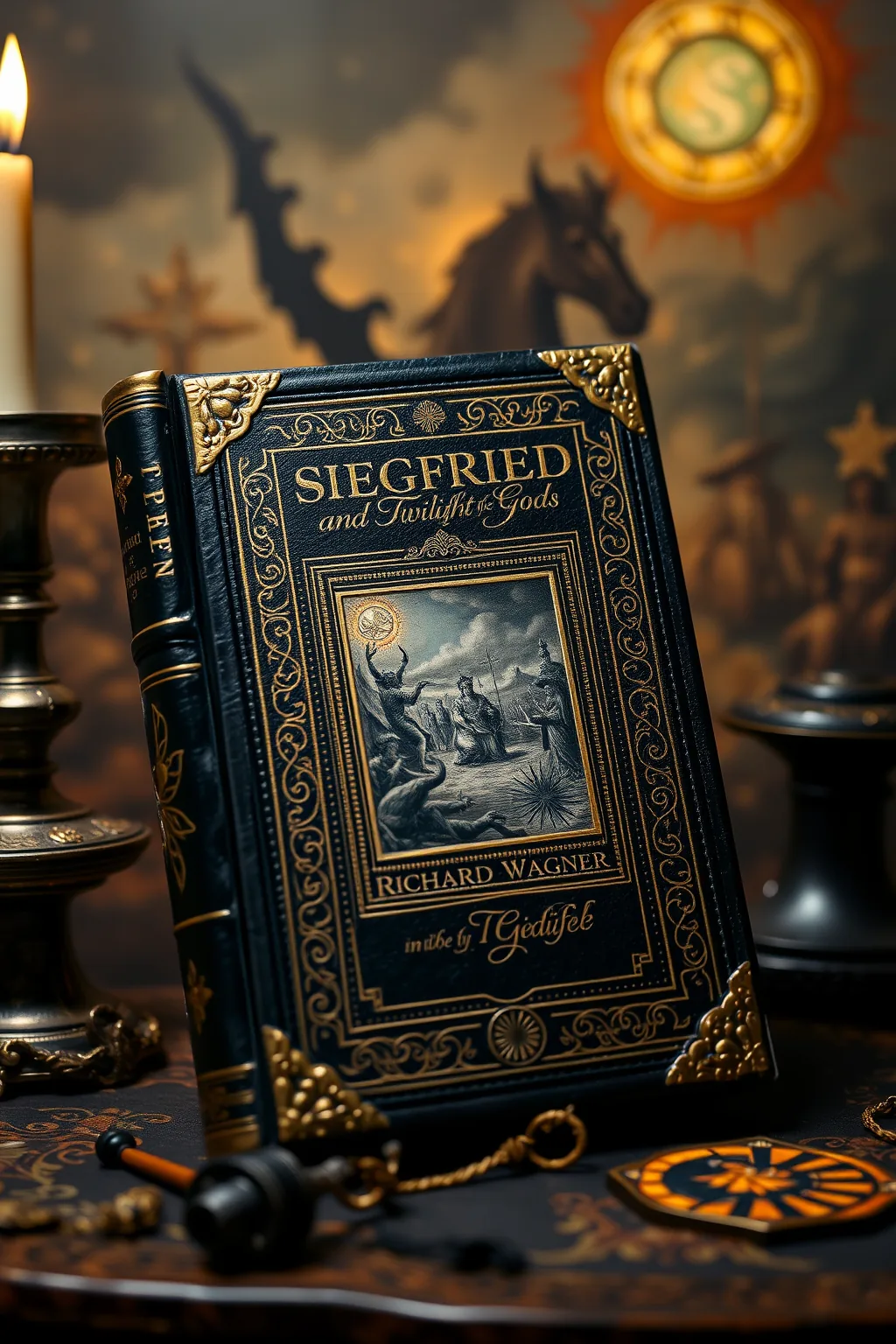
Siegfried and The Twilight of the Gods
 71
71

Siegfried and The Twilight of the Gods


Lorelei Sage, Contemplative Literature Editor: Wagner's 'Siegfried and The Twilight of the Gods' stands as a monumental testament to the enduring power of myth. Armour's translation masterfully captures the poetic resonance and esoteric depth of Wagner's libretti, illuminating the profound philosophical underpinnings of the Ring Cycle. This edition offers a compelling gateway into the archetypal struggles for power, love, and redemption that echo through the ages. It is an essential read for anyone drawn to the intersection of mythology, psychology, and the occult, providing rich fodder for contemplation on fate, free will, and the cyclical nature of existence.
📝 Description
71
Richard Wagner's 'Siegfried and The Twilight of the Gods' concludes the epic Ring Cycle in 1876.
This volume contains the librettos for the final two operas of Richard Wagner's monumental *Der Ring des Nibelungen*. Margaret Armour's English translation renders the complex German text, detailing the life and death of the hero Siegfried. The opera follows his fearless rise, his slaying of the dragon Fafnir, and his eventual betrayal and demise. This leads directly into the cataclysmic events of 'Twilight of the Gods,' where the old order collapses and the world is consumed by fire.
Wagner's work adapts Germanic and Norse myths to examine themes of corrupted power, fate, and the cyclical nature of destruction and renewal. It presents a grand narrative, a powerful operatic retelling of ancient legends. The text invites contemplation on the archetypes of heroism, divine authority, and the forces that shape existence for both gods and mortals. The overall mood is one of mythic scale, impending doom, and the raw elemental powers at play.
Wagner's Ring Cycle is often interpreted through an esoteric lens, drawing on Arthur Schopenhauer's philosophy and theories of will. It engages with concepts of ancient mythic consciousness and the archetypal patterns described by Carl Jung. The narrative can be seen as an exploration of humanity's relationship with fate, the divine, and the elemental forces that govern the universe. It reflects a late 19th century interest in national myths and their deeper, universal psychological and spiritual underpinnings.
✍️ Author
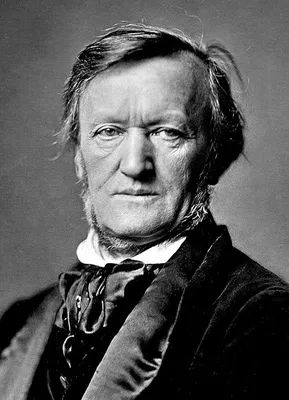
Richard Wagner
Wilhelm Richard Wagner ( VAHG-nər; German: [ˈvɪlˌhɛlm ˈʁɪçaʁt ˈvaːɡnɐ] ; 22 May 1813 – 13 February 1883) was a German composer, theatre director, essayist, and conductor, best known for his operas, although his mature works are often referred to as music dr…
💡 Why Read This Book?
Unravel the deepest mysteries of power, fate, and cosmic order within the culminating chapters of Wagner's Ring Cycle. Ideal for seekers of esoteric wisdom, scholars of comparative mythology, and practitioners exploring archetypal narratives of destruction and renewal. Experience the potent symbolism and profound philosophical dialogues that have shaped Western thought.
⭐ Reader Reviews
Honest opinions from readers who have explored this book.
❓ Frequently Asked Questions
What is the significance of the Ring Cycle in esoteric traditions?
The Ring Cycle is viewed as a profound allegorical exploration of universal themes like the corrupting nature of power, the struggle between divine and human will, and the cyclical nature of creation and destruction, resonating deeply with Gnostic and Hermetic philosophies.
Who is Siegfried and what does he represent?
Siegfried is the archetypal hero, embodying primal courage, untamed will, and the pursuit of freedom. His journey explores the potential for pure heroism to be both a force for good and a catalyst for unintended consequences.
What is the role of the Rhinemaidens and the cursed ring?
The Rhinemaidens guard the primal power of nature, represented by the gold from which the ring is forged. The ring itself symbolizes absolute power, but its acquisition and possession bring inevitable doom and moral corruption.
How does 'Twilight of the Gods' signify the end of an era?
This section depicts the ultimate downfall of the gods, signifying the end of an age dominated by flawed divine authority and the ushering in of a new order, often interpreted as a cleansing fire or a transition to human consciousness.
What makes Margaret Armour's translation noteworthy for esoteric study?
Armour's translation is celebrated for its fidelity to the original German while imbuing the text with an elegant, poetic flow, making the complex mythological and philosophical layers more accessible to English-speaking readers interested in deeper interpretation.
🔮 Key Themes & Symbolism
The Corrupting Nature of Absolute Power
The central narrative revolves around the cursed Ring of the Nibelung, a potent symbol of unchecked power. Its acquisition and the subsequent struggles for its possession illustrate how even the most noble intentions can be twisted by greed and the desire for dominion. This theme studies the psychological and spiritual degradation that power inflicts, a timeless cautionary tale resonating with esoteric teachings on detachment and the perils of worldly ambition.
Fate, Free Will, and Divine Inevitability
Wagner masterfully combines a narrative where destiny feels both predetermined and shaped by individual choices. The gods, despite their omnipotence, are bound by ancient laws and prophecies, while mortal heroes like Siegfried grapple with their own agency against a backdrop of cosmic inevitability. This exploration touches upon Gnostic concepts of fate and the inherent limitations of even divine consciousness when confronted by primal cosmic forces.
The Cycle of Creation, Destruction, and Rebirth
The 'Twilight of the Gods' is not merely an ending but a cataclysmic transformation. The destruction of the old order is presented as a necessary prelude to a new beginning, a concept deeply rooted in cyclical cosmologies found in various mystical traditions. This theme speaks to the alchemical process of dissolution and reintegration, suggesting that true renewal often emerges from profound upheaval and the purging of corruption.
💬 Memorable Quotes
Direct passages from the work, attributed to the author.
“The world must be made new!”
— This utterance expresses the revolutionary spirit of the Ring Cycle's conclusion, signifying the necessary destruction of a corrupt old order to pave the way for a transformed, perhaps more enlightened, future.
“Love, I have learned, is not the highest good.”
— A profound statement challenging conventional romantic ideals, suggesting that in the grand cosmic drama, love can be superseded by the demands of fate, power, or the greater cosmic balance.
“What was, will be no more.”
— A declaration of finality and transformation, marking the irreversible end of the established divine order and the dawn of an unpredictable new era.
“He who fears the end of the world, will never live.”
— An exhortation to embrace life fully, even in the face of inevitable change and potential cataclysm, advocating for courage and resilience in the face of existential transformation.
💡 Key Ideas
Editorial paraphrase of the work's core concepts — not direct quotes.
Gold is but a fleeting gleam.
This quote highlights the ephemeral nature of material wealth and power, contrasting it with the enduring forces of myth, fate, and the spiritual realm.
🌙 Esoteric Significance
Tradition
The Ring Cycle draws heavily from the wide range of Northern European mythology, particularly Norse sagas and Germanic folklore. Esoterically, it can be viewed through the lens of Hermeticism, Gnosticism, and Jungian archetypal psychology. It explores themes of the primordial forces, the corrupting influence of material power (akin to alchemical lead), the struggle against fate, and the potential for spiritual transformation through destruction and rebirth.
Symbolism
Key symbols abound: the Ring represents absolute, corrupting power; the Dragon embodies primal, untamed forces and the guardian of hidden treasures; the Tarnhelm signifies illusion and the ability to shape perception. Valhalla represents the flawed domain of divine authority, while the Wälsungs embody heroic struggle and the tragic interplay of fate and free will. The entire cycle functions as a vast symbolic field of cosmic forces and human consciousness.
Modern Relevance
The themes of power, corruption, environmental degradation (as symbolized by the misuse of the Rhine's gold), and societal collapse remain acutely relevant. Wagner's exploration of archetypal figures and the cyclical nature of history offers a framework for understanding contemporary challenges. The Ring Cycle continues to inspire artists, thinkers, and spiritual seekers grappling with questions of destiny, human nature, and the search for meaning in a complex world.
👥 Who Should Read This Book
This edition is essential for serious students of mythology, comparative religion, and esoteric philosophy seeking to understand the archetypal underpinnings of Western culture. Scholars will find value in its detailed exploration of Germanic myths and Wagner's unique interpretation. Seekers of spiritual wisdom will discover clear insights into the nature of power, fate, and cosmic cycles. Practitioners of esoteric arts may find inspiration in the symbolic language and the exploration of transformative processes, offering a rich text for contemplation and personal growth.
📜 Historical Context
Richard Wagner composed the 'Ring Cycle' during a period of intense intellectual and artistic ferment in 19th-century Europe. The era was marked by a resurgence of interest in Germanic mythology and folklore, fueled by Romantic nationalism and a desire to reconnect with ancient cultural roots. Simultaneously, philosophical currents like those of Schopenhauer, with his emphasis on the will and the suffering inherent in existence, deeply influenced Wagner's worldview. The scientific advancements of the time also prompted a re-examination of creation narratives and the nature of reality. Wagner's work synthesized these influences, creating a grand operatic drama that not only drew from ancient myths but also grappled with contemporary philosophical anxieties, offering a sweeping, often dark, vision of human and divine destiny.
📔 Journal Prompts
Reflect on a time when the pursuit of power led to unintended negative consequences in your own life or in observed history.
How does the concept of fate, as depicted in the Ring Cycle, resonate with your personal beliefs about destiny and free will?
Imagine a modern-day 'Twilight of the Gods.' What societal structures or belief systems would be overthrown, and what might emerge from the ashes?
Consider the symbolism of the Ring. What 'rings' of power or attachment do you currently hold, and how do they influence your actions?
Explore the idea of 'cleansing fire' or necessary destruction for renewal. Where in your life or the world do you see this principle at play?
🗂️ Glossary
Nibelungen
A race of subterranean dwarves or goblins in Germanic mythology, known for their skill in metalworking and their creation of the cursed Ring and other treasures.
Valhalla
In Norse mythology, the great hall presided over by Odin, where slain heroes who die bravely in battle are brought to feast and prepare for Ragnarök.
Tarnhelm
A magical helmet worn by Alberich and Siegfried, which grants the wearer the ability to change shape or become invisible.
Wälsungs
A legendary heroic lineage in Germanic mythology, including figures like Siegmund and his son Siegfried, known for their strength and tragic destinies.
Ragnarök
The prophesied end of the world in Norse mythology, a great battle between the gods and giants that results in the destruction of the cosmos, followed by its rebirth.
This book appears in 1 collection
🔮 Readers Also Liked
Browse all →









From the “Transcendental Meditation” Collection
View all →






More Free Esoteric History & Biography Books
View all →