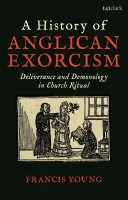
A History of Anglican Exorcism
 79
79

A History of Anglican Exorcism
Francis Young’s *A History of Anglican Exorcism* offers a sober, scholarly examination of a practice often sensationalized. The strength of the work lies in its rigorous archival research, meticulously detailing how the Church of England has grappled with exorcism from the Elizabethan era to the present day. Young wisely avoids sensationalism, focusing instead on the institutional responses and the theological rationales, however strained they may seem to modern ears. A particular strength is the exploration of the Émile de Girardin, a figure whose influence on the discourse around deliverance is often overlooked. The limitation, perhaps inherent in the subject matter, is that the narrative can occasionally feel dry, prioritizing institutional history over the visceral experiences of those undergoing or performing these rites. Yet, this scholarly distance is also its virtue, providing a much-needed corrective to popular misconceptions. Young’s work serves as an indispensable resource for understanding a persistent, if often hidden, facet of Anglican pastoral care.
📝 Description
79
Francis Young's 2023 book traces the history of exorcism within the Church of England.
A History of Anglican Exorcism chronicles the evolution of demonic expulsion rituals within the Church of England. The book details how exorcism, often called 'deliverance ministry,' continues and changes in contemporary Anglicanism.
Young examines both official and unofficial practices, the theological basis for them, and the pastoral difficulties clergy face when addressing spiritual afflictions. This work is for anyone interested in how religious belief is applied to confront perceived spiritual malevolence. It is relevant to scholars of religious history, sociology of religion, and contemporary spirituality. Clergy, theologians, and others curious about the Church of England's role in deliverance ministries will also find it of interest, regardless of their own beliefs.
The book places Anglican exorcism in the wider context of Christian history, from medieval times to its specific forms in the Church of England. It focuses on the post-Reformation era, figures like Émile de Girardin, and the continuing discussions about the legitimacy and effectiveness of these rituals. Young contrasts Anglican methods with those of other denominations and secular psychological views, revealing a complex and often disputed field.
This study sits within the broader tradition of Christian demonology and ritual practice, examining how a specific Protestant denomination, Anglicanism, has historically engaged with and adapted beliefs and practices concerning spiritual warfare and the expulsion of malevolent entities. It considers the historical trajectory from medieval Catholic rites to distinct Protestant formulations, including the impact of figures who shaped theological and practical approaches. The work also touches upon the intersection of religious belief with psychological understanding, a common point of inquiry in esoteric studies when examining phenomena traditionally attributed to supernatural causes.
💡 Why Read This Book?
• Gain a nuanced understanding of 'deliverance ministry' within the Church of England, moving beyond sensationalism to grasp its historical and theological roots, as detailed in the work's exploration of post-Reformation practices. • Discover the surprising persistence of exorcism in contemporary Anglicanism, learning how dioceses officially designate clergy for this role, a fact highlighted by the book's discussion of modern practices. • Understand the legal and ethical debates surrounding exorcism, examining how societal attitudes and theological interpretations, particularly concerning figures like the Émile de Girardin, have shaped official Church responses over centuries.
⭐ Reader Reviews
Honest opinions from readers who have explored this book.
❓ Frequently Asked Questions
Is Anglican exorcism still practiced today?
Yes, Anglican exorcism, often referred to as 'deliverance ministry,' is still practiced. The book notes that every Church of England diocese now designates clergy to advise on and conduct such rituals, demonstrating its continued, albeit sometimes discreet, presence.
What is the difference between Anglican exorcism and Catholic exorcism?
While both traditions address spiritual affliction, Anglican exorcism, or 'deliverance ministry,' is often less formalized and more integrated into general pastoral care. The work highlights how Anglican practices have evolved differently from the more codified Roman Catholic rites.
Who was Francis Young in relation to Anglican Exorcism?
Francis Young is the author of *A History of Anglican Exorcism*. His work meticulously researches and presents the historical development and contemporary practice of exorcism within the Church of England, drawing on extensive archival sources.
When was A History of Anglican Exorcism first published?
The book *A History of Anglican Exorcism* by Francis Young was first published on June 30, 2018. This date situates it within contemporary scholarship on religious practices.
Does the book discuss the role of the Émile de Girardin?
Yes, the work explores the influence of figures like the Émile de Girardin on the discourse and practice of exorcism within the Anglican tradition, examining their theological contributions and impact on deliverance ministry.
Are there specific rituals described in the book?
The book describes the evolution of rituals associated with Anglican exorcism, detailing how practices have adapted over centuries. It examines the theological frameworks and pastoral approaches used in these deliverance ministries.
🔮 Key Themes & Symbolism
Deliverance Ministry's Evolution
The work meticulously traces the trajectory of 'deliverance ministry' within Anglicanism, demonstrating its transition from historical ritual to contemporary pastoral practice. It highlights how the Church of England, despite not being the primary provider of exorcisms today, officially sanctions clergy to engage in this specialized form of spiritual healing, addressing the persistent need for such interventions across dioceses.
Theological Justifications
Young examines the theological underpinnings that have historically justified exorcism within Anglicanism. This includes exploring scriptural interpretations, the influence of figures like the Émile de Girardin, and the evolving doctrines that permit or guide clergy in confronting perceived demonic influence, differentiating these justifications from purely psychological explanations.
Institutional Adaptation
A central theme is the Church of England's institutional response to exorcism. The book details how the Church has adapted its structures and policies, from post-Reformation adjustments to modern designations of clergy advisors. This adaptation reflects a continuous effort to engage with spiritual distress within its pastoral mandate, even as external practices shift.
Societal Perceptions
The historical and contemporary societal views on exorcism are explored, contrasting the Church's official stance with popular perceptions and the practices of independent churches. Young analyzes how public fascination and skepticism have shaped the context in which Anglican deliverance ministry operates, influencing its visibility and acceptance.
💬 Memorable Quotes
Direct passages from the work, attributed to the author.
“Every one of the Church of England dioceses in the country now designates at least one member of its clergy to advise on casting out demons.”
— This statement underscores the contemporary relevance of Anglican exorcism, revealing its formal, albeit often discreet, integration into the Church's structure, moving it from historical curiosity to present-day pastoral concern.
“Such `deliverance ministry' is in theory made available to all those parishioners who desire it.”
— This highlights the principle of pastoral accessibility within Anglicanism regarding spiritual afflictions. It frames deliverance ministry not as an obscure rite but as a potential resource for congregants seeking spiritual aid, albeit within theoretical bounds.
“Exorcism is more widespread in contemporary England than perhaps at any other time in history.”
— This assertion challenges common assumptions about exorcism being a solely historical phenomenon, placing its modern prevalence, particularly outside formal church structures, as a significant contemporary issue worthy of scholarly attention.
“The Anglican Church is by no means the main provider of this ritual, which predominantly takes place in independent churches.”
— This observation points to a complex field of spiritual practice, where official church structures may not always align with the primary locus of activity, indicating a decentralization or diversification of exorcistic practices in modern England.
“The work explores the influence of figures like the Émile de Girardin on the discourse and practice of exorcism.”
— This signifies the book's engagement with key theological and historical influencers who have shaped the understanding and execution of deliverance rituals within the Anglican tradition, adding depth to the historical analysis.
🌙 Esoteric Significance
Tradition
While primarily a historical and sociological study of a specific Christian denomination, *A History of Anglican Exorcism* touches upon broader Western esoteric traditions by examining the persistent human engagement with perceived spiritual forces. It explores how institutionalized religion, like Anglicanism, grapples with phenomena often relegated to folk magic or occultism, demonstrating how esoteric concepts of spiritual warfare and possession find expression even within orthodox structures.
Symbolism
The work implicitly engages with symbols of spiritual conflict, such as the figure of the demon or the possessed individual, which are archetypal in many esoteric systems. The ritualistic actions described, though framed within Anglican theology, echo symbolic gestures of purification, binding, and casting out found in grimoires and magical texts, representing the struggle between divine and adversarial spiritual influences.
Modern Relevance
Contemporary interest in deliverance ministry, often found in Pentecostal and Charismatic circles, draws parallels with the historical practices detailed in Young's work. Thinkers and practitioners exploring the boundaries between psychology, theology, and the supernatural continue to reference historical models of spiritual warfare. The book provides essential context for understanding the roots of modern spiritual healing and deliverance practices, informing discussions on faith, mental health, and the paranormal.
👥 Who Should Read This Book
['• Scholars of Religious History: Researchers studying the evolution of Christian practices, particularly within the Church of England, will find detailed archival research on exorcism and deliverance ministry.', "• Students of Sociology of Religion: Individuals interested in how religious institutions adapt to and address social and spiritual phenomena will gain insight into the Church of England's approach to possession.", '• Practitioners of Esoteric Studies: Those exploring the intersection of institutional religion and occult phenomena will find context for how exorcistic practices have been historically managed within a major denomination.']
📜 Historical Context
Published in 2018, Francis Young's *A History of Anglican Exorcism* arrived at a moment when interest in the occult and paranormal was experiencing a resurgence in popular culture, often divorced from scholarly analysis. The book situates itself within the academic study of religion, particularly within the field of British religious history and the sociology of belief. It engages with a long tradition of scholarship on witchcraft, demonology, and religious healing, offering a specific focus on the Church of England's often ambivalent relationship with exorcism. The work implicitly contrasts with more sensationalist accounts prevalent in popular media and acknowledges the shift from medieval Catholic practices to the distinct theological and practical developments within Anglicanism following the Reformation. While not directly engaging in polemics with specific contemporary authors, its detailed archival research serves as a corrective to anecdotal or less rigorous studies, providing a solid historical foundation for understanding a persistent aspect of religious life.
📔 Journal Prompts
The designation of clergy for 'deliverance ministry' within Church of England dioceses.
The historical theological justifications for Anglican exorcism.
The contrast between Anglican deliverance ministry and practices in independent churches.
The influence of figures like the Émile de Girardin on exorcism discourse.
The modern persistence of exorcism rituals across England.
🗂️ Glossary
Deliverance Ministry
A term commonly used within Christian contexts, particularly evangelical and Pentecostal traditions, to describe the practice of freeing individuals from demonic influence or possession through prayer and spiritual rituals.
Possession
In a religious or spiritual context, the state of being controlled or inhabited by a supernatural entity, typically a demon or evil spirit, believed to influence or dominate the individual's thoughts and actions.
Diocese
A district under the pastoral care of a bishop in the Christian Church. In the Church of England, each diocese is a territorial administrative unit overseen by a bishop.
Post-Reformation
Referring to the period in European history following the Protestant Reformation, generally considered to begin in the 16th century, during which significant changes occurred in religious doctrine and practice, particularly within Protestant denominations.
Clergy
The body of ordained ministers in a religion, regarded collectively. In the Church of England, this includes bishops, priests, and deacons.
Émile de Girardin
A notable figure whose theological work and writings influenced the discourse surrounding spiritual warfare and deliverance within Christian traditions, including Anglicanism.
Spiritual Warfare
A concept found in many religions, particularly Christianity, referring to the belief that Christians are engaged in a struggle against evil spiritual forces, often involving prayer, fasting, and other spiritual disciplines.