Wisdom's Children
 71
71

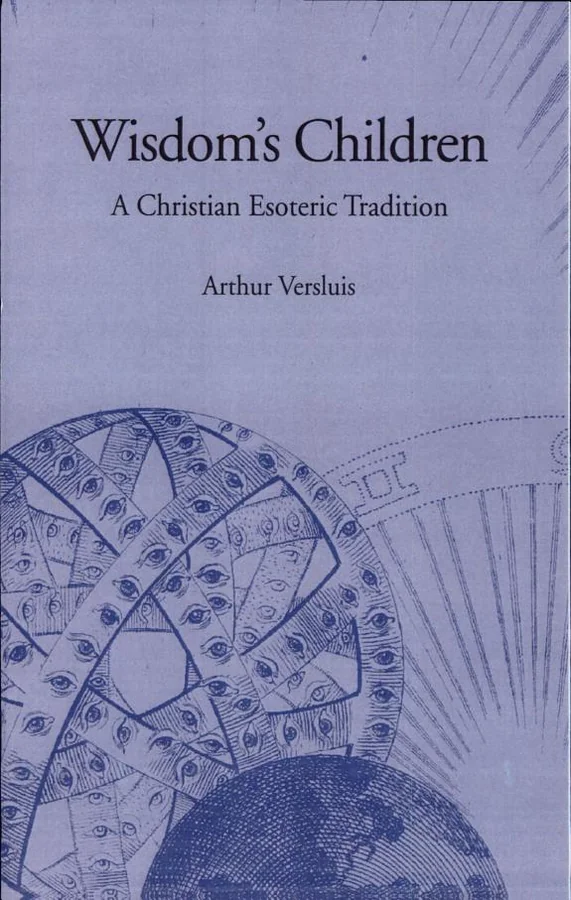
Wisdom's Children
Arthur Versluis's *Wisdom's Children* provides a much-needed survey of a specific, often marginalized, branch of Christian mysticism. The book's strength lies in its clear exposition of the theosophical tradition stemming from Jacob Boehme, presenting it not as a mere historical curiosity but as a vibrant, experiential spiritual path. Versluis skillfully draws parallels between this Christian current and more widely recognized esoteric systems like Kabbalah and Sufism, effectively illustrating its unique position. The work could benefit from a more explicit engagement with the reception of these ideas by contemporary religious authorities or mainstream theological discourse of Boehme's era, providing a fuller picture of the intellectual friction such thought generated. However, the detailed breakdown of Boehme's concept of the 'divine silica' and its implications for spiritual transformation offers a concrete anchor for understanding the tradition's core tenets. It is a valuable, if somewhat academic, introduction to a profound spiritual lineage.
📝 Description
71
Arthur Versluis's 1999 book, Wisdom's Children, examines Christian theosophy.
Arthur Versluis's Wisdom's Children, published in 1999, examines the Christian theosophic tradition. This spiritual lineage begins with the German mystic Jacob Boehme and continues through thinkers who pursued a direct, inner path to the divine while remaining within Christianity. Versluis outlines a spiritual path often overlooked, offering a substantial alternative to standard theology. The book emphasizes Christian spirituality focused on inner experience and the direct apprehension of divine truth. This focus mirrors the devotional intensity and contemplative depth found in traditions like Sufism and Kabbalism.
This work is for serious students of esoteric Christianity, particularly those interested in Western mysticism beyond common figures. Readers wanting to grasp the origins of Christian experiential spirituality, especially its links to Boehme and the theosophical movement, will find this text valuable. It also suits individuals comparing esoteric traditions and understanding how mystical impulses appear within nominally orthodox religious contexts. Those who value detailed historical and philosophical analysis of spiritual traditions will find ample material.
Wisdom's Children situates Christian theosophy within the broader history of Western esotericism. This tradition, often distinct from mainstream Christian theology, emphasizes direct knowledge of the divine through inner experience. It draws on figures like Jacob Boehme, whose complex mystical philosophy offered an alternative to scholasticism. The book connects this stream of thought to other esoteric traditions, noting shared contemplative aims and experiential approaches, while asserting its unique Christian character. It highlights a continuous thread of mystical seeking within Christianity that prioritizes inner transformation over external dogma.
💡 Why Read This Book?
• Understand the core tenets of Christian theosophy, tracing its lineage directly from Jacob Boehme's complex mystical cosmology, which offers a distinct path to divine knowledge. • Gain insight into how Christian mysticism functions as an experiential equivalent to traditions like Kabbalah and Sufism, highlighting the universal nature of spiritual seeking. • Explore the concept of the 'divine silica' as presented by Boehme, a symbolic key to understanding the soul's potential for direct apprehension of the divine.
⭐ Reader Reviews
Honest opinions from readers who have explored this book.
❓ Frequently Asked Questions
What is the primary focus of Arthur Versluis's *Wisdom's Children*?
The book offers an in-depth introduction to the Christian theosophic tradition, originating with Jacob Boehme. It highlights Christian experiential spirituality as a parallel to Sufism and Kabbalism.
Who was Jacob Boehme and why is he central to this book?
Jacob Boehme (1575-1624) was a German mystic whose profound theological and philosophical writings laid the foundation for Christian theosophy. Versluis examines his influence on later generations.
How does *Wisdom's Children* relate Christian theosophy to other esoteric traditions?
Versluis presents Christian theosophy as the Christian equivalent of Kabbalah and Sufism, emphasizing shared goals of direct spiritual experience and apprehension of divine wisdom.
What does the book mean by 'experiential spirituality'?
It refers to a form of religious practice focused on direct, personal encounter with the divine, often through contemplation, inner vision, and symbolic understanding, rather than solely through dogma or ritual.
When was *Wisdom's Children* first published?
The book was first published on October 14, 1999.
What kind of reader would most appreciate *Wisdom's Children*?
Students of Western esotericism, Christian mysticism, and comparative spirituality, particularly those interested in Jacob Boehme and theosophical thought.
🔮 Key Themes & Symbolism
Christian Theosophy
This theme explores a specific lineage within Christianity that seeks direct knowledge of God through contemplation and symbolic understanding, diverging from strict dogmatic adherence. Arthur Versluis positions this tradition, beginning with Jacob Boehme, as the Christian counterpart to established esoteric systems like Kabbalah and Sufism. It focuses on the inner spiritual journey and the apprehension of divine truths directly by the soul, emphasizing an 'experiential spirituality' that prioritizes inner revelation over external authority.
Jacob Boehme's Mystical Cosmology
Central to the book is the intricate cosmology developed by Jacob Boehme, a 17th-century German mystic. His work, characterized by unique symbolic language and philosophical depth, describes the nature of God, creation, and the human soul's relationship to the divine. Versluis unpacks Boehme's concepts, such as the 'divine silica,' illustrating how these ideas form the bedrock of Christian theosophy and offer a framework for understanding spiritual realities.
The Divine Spark
The concept of an inherent divine element or 'spark' within the human soul is a recurring motif. This theme underscores the potential for direct communion with the divine, suggesting that the capacity for spiritual apprehension is an intrinsic part of human nature. Versluis highlights how this idea fuels the experiential approach, asserting that spiritual wisdom is not merely learned but is awakened from within, connecting the individual directly to the source of all wisdom.
Esoteric Christianity
This theme examines a less visible current within Christianity that emphasizes inner transformation and esoteric knowledge. Unlike mainstream Christianity, this tradition seeks a deeper, more mystical understanding of faith, often through the study of symbolic texts and the practice of contemplative prayer. The book argues for the significance of this stream, presenting it as a vital, albeit often overlooked, dimension of Christian spiritual history.
💬 Memorable Quotes
Direct passages from the work, attributed to the author.
“The Christian theosophic tradition began with Jacob Boehme.”
— This statement anchors the entire tradition discussed in the book, identifying Boehme as the foundational figure whose unique insights birthed this specific path of Christian mysticism.
“Christian experiential spirituality is the Christian equivalent of Sufism and Kabbalism.”
— This highlights the book's central argument: that a profound, direct spiritual path exists within Christianity, comparable in its depth and experiential nature to well-known esoteric traditions from other faiths.
“The book brings us into a startling new world of Christian experiential spirituality.”
— This suggests that the content of Versluis's work reveals a spiritual dimension of Christianity that is often unknown or surprising to the reader, opening up new perspectives on faith and practice.
“It provides an in-depth introduction to the Christian theosophic tradition.”
— This clearly states the book's purpose: to offer a thorough and detailed exploration of a specific spiritual and philosophical system within Christianity, rooted in theosophical thought.
“The work explores the nature of divine manifestation through symbolic language.”
— This points to a key method within the tradition discussed, indicating that understanding God and creation involves interpreting symbolic expressions and inner spiritual experiences.
🌙 Esoteric Significance
Tradition
This work firmly belongs to the Western Esoteric Tradition, specifically focusing on Christian Theosophy. This lineage, ignited by the radical theological visions of Jacob Boehme in the early 17th century, seeks direct, intuitive knowledge of God through a symbolic and contemplative interpretation of Christian doctrine. It departs from orthodox theology by prioritizing inner experience and gnosis, positioning itself as a distinct, mystical path within Christianity, analogous to the contemplative depth found in Sufism or Kabbalah.
Symbolism
A key symbol explored is the 'divine silica' (or 'light-essence'), a concept from Boehme representing the fundamental, luminous principle within all creation and the human soul, capable of apprehending the divine. Another motif is the 'Ungrund,' or primal abyss, representing the hidden, unmanifest Godhead from which all existence emerges. These symbols function not merely as metaphors but as conceptual keys to understanding the mechanics of creation and the potential for spiritual return to the divine source.
Modern Relevance
Contemporary thinkers and practitioners interested in embodied spirituality, consciousness studies, and alternative theological frameworks often draw upon the ideas presented in *Wisdom's Children*. The emphasis on direct experience and symbolic interpretation speaks to modern movements seeking deeper spiritual meaning outside institutionalized religion. The work's exploration of Boehme's ideas finds echoes in contemporary discussions of panentheism and the integration of mystical experience with psychological understanding.
👥 Who Should Read This Book
• Students of Western Esotericism: Those seeking to understand the unique contributions of Christian mysticism and theosophy to the broader esoteric landscape will find this a foundational text. • Researchers of Jacob Boehme: Scholars and practitioners interested in the life and work of Jacob Boehme will gain a structured overview of his influence and the tradition he inspired. • Comparative Spirituality Enthusiasts: Individuals interested in how mystical paths in different religions manifest similar goals of direct divine experience will appreciate the parallels drawn with Sufism and Kabbalism.
📜 Historical Context
Published in 1999, *Wisdom's Children* emerged during a period of increasing academic and popular interest in Western esotericism. The late 20th century saw a revitalization of studies on figures like Jacob Boehme (1575-1624), whose complex theological and philosophical works had previously been accessible primarily to dedicated scholars or small esoteric circles. Versluis's book aimed to synthesize and present this rich tradition, placing it within the broader range of Christian mysticism. It implicitly engaged with the ongoing scholarly discourse on theosophy and comparative mysticism, which had been shaped by figures like Gershom Scholem's work on Kabbalah and subsequent analyses of Hermeticism and other esoteric currents. The book's focus on experiential spirituality offered a counterpoint to purely historical or philosophical treatments of mysticism, emphasizing the living practice of these ideas.
📔 Journal Prompts
The Ungrund as a concept for divine potential.
Boehme's 'divine silica' and its reflection in personal experience.
The parallels between Christian theosophy and other esoteric traditions.
Interpreting Christian scripture through a symbolic, experiential lens.
The nature of direct apprehension of divine truth.
🗂️ Glossary
Christian Theosophy
A spiritual and philosophical tradition within Christianity that seeks direct knowledge of God through contemplation, symbolic interpretation, and inner experience, often diverging from strict dogma. Jacob Boehme is its foundational figure.
Jacob Boehme
A 17th-century German mystic and theologian whose complex writings laid the groundwork for Christian theosophy, exploring divine nature, creation, and the human soul through unique symbolic language.
Experiential Spirituality
A form of religious or spiritual practice focused on direct, personal encounter with the divine or ultimate reality, emphasizing inner experience over external authority or dogma.
Ungrund
A term used by Jacob Boehme to describe the hidden, unmanifest Godhead or primal abyss from which all existence originates; the source of divine potential before any distinction.
Divine Silica
A concept from Boehme's writings referring to a luminous, essential element or 'spark' within creation and the human soul, enabling direct perception of the divine.
Symbolic Cosmology
A framework for understanding the universe and divine reality through symbolic language and interpretation, often employed in esoteric traditions to convey profound spiritual truths.
Kabbalah
A system of Jewish mysticism that explores the nature of God and the universe through symbolic interpretation of the Torah, often involving mystical practices and divine emanations.
This book appears in 1 collection
🔮 Readers Also Liked
Browse all →








From the “Gnosticism” Collection
View all →
More Free Sacred Texts & Gnosticism Books
View all →