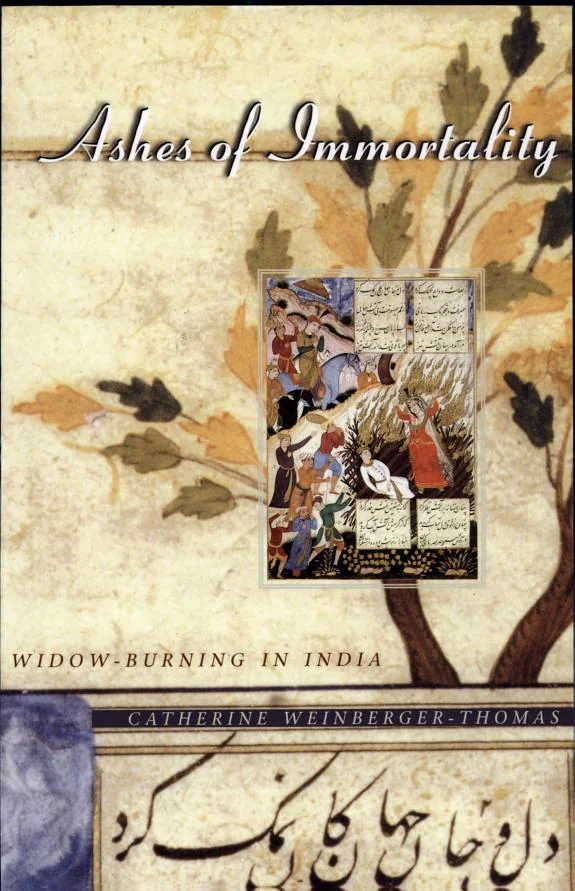
Ashes of Immortality
 83
83

Ashes of Immortality
Weinberger-Thomas's "Ashes of Immortality" offers a much-needed corrective to the often lurid and simplistic European accounts of Sati. The initial horror evoked by descriptions like Pierre Dubois's 1829 report serves as a starting point, but the book quickly moves into more challenging territory. Its strength lies in its refusal to accept easy answers, delving into the intricate web of religious belief, social obligation, and personal conviction that surrounded the practice. The analysis of the sati as a figure imbued with sacred power, capable of bestowing blessings and ensuring family prosperity, is particularly illuminating. However, the work could benefit from a more extensive engagement with the voices of those who actively opposed Sati from within Indian intellectual circles prior to the 1829 prohibition, offering a richer internal debate. Nevertheless, the meticulous unpicking of the cultural logic behind Sati makes "Ashes of Immortality" a crucial text for understanding this contentious aspect of South Asian history.
📝 Description
83
Catherine Weinberger-Thomas's 2019 book examines Sati, the historical Indian practice of widow immolation.
Catherine Weinberger-Thomas's "Ashes of Immortality" analyzes the historical Indian practice of Sati, widow immolation. The book moves beyond sensationalized European accounts, such as Pierre Dubois's from 1829, to understand the socio-religious and psychological factors behind the custom from within the Hindu tradition. Weinberger-Thomas contrasts colonial-era European reactions with indigenous interpretations, noting the 19th century's increased British scrutiny and the eventual prohibition of Sati in 1829. This historical context highlights the tension between external pressure and deeply held local traditions.
The work probes concepts like dharma and karma, and the spiritual significance some attributed to the sati, viewing her as a divine figure, lineage protector, and ultimate symbol of wifely devotion. It also considers varying degrees of coercion and counter-narratives surrounding the practice. The book is suited for readers interested in the intersection of religion, gender studies, and cultural history, particularly those studying South Asia, comparative religion, or anthropology. It appeals to those seeking historical context for ritualistic practices and evolving societal views on death rituals and female agency.
While not strictly an esoteric text, "Ashes of Immortality" engages with the spiritual dimensions of ritual death within Hinduism, particularly the concept of the sati as a figure transcending ordinary existence. It examines how certain spiritual interpretations elevated the practice beyond a mere social custom to a state of divine embodiment and lineage salvation. The book situates these beliefs within a complex interplay of religious doctrine, societal expectations, and individual agency, touching upon how certain traditions imbue ritual acts with cosmic significance.
💡 Why Read This Book?
• Gain a nuanced understanding of Sati beyond sensationalist accounts, exploring its spiritual and social dimensions as presented in the book's analysis of Hindu traditions. • Comprehend the historical friction between European colonial perspectives and indigenous practices, particularly as detailed in the context of the 1829 British prohibition. • Examine the symbolic roles of the sati, such as protector of lineage and embodiment of devotion, as explored through the book's dissection of key concepts like dharma.
⭐ Reader Reviews
Honest opinions from readers who have explored this book.
❓ Frequently Asked Questions
When was Catherine Weinberger-Thomas's 'Ashes of Immortality' first published?
The original publication of 'Ashes of Immortality' by Catherine Weinberger-Thomas was in 1999. This edition provides scholarly analysis of the historical practice of Sati.
What is Sati, as discussed in 'Ashes of Immortality'?
Sati refers to the historical Hindu practice where a widow immolates herself on her deceased husband's funeral pyre. The book explores its complex socio-religious context and interpretations.
How did Europeans typically react to Sati, according to the book?
European reactions, exemplified by accounts like Pierre Dubois's from 1829, were generally characterized by horror and revulsion, often failing to grasp the indigenous spiritual significance.
What historical event is mentioned in relation to the prohibition of Sati?
The book references the British Raj's legislative prohibition of Sati in 1829, highlighting a significant moment of cultural and political intervention.
Does 'Ashes of Immortality' focus only on the negative aspects of Sati?
No, the work aims for a balanced perspective, examining the motivations, spiritual interpretations, and societal roles assigned to the sati, moving beyond simple condemnation.
What kind of academic fields would find this book valuable?
Scholars and students in South Asian studies, comparative religion, anthropology, gender studies, and cultural history would find the book's detailed analysis particularly relevant.
🔮 Key Themes & Symbolism
Sati Beyond Revulsion
This theme challenges the common European perspective of Sati as solely an act of barbarity, exemplified by 19th-century accounts. Weinberger-Thomas meticulously reconstructs the internal logic of the practice, examining how it was understood within certain Hindu traditions as an act of profound devotion, spiritual power, and even transcendence. The book moves beyond the shock value to explore the cultural and religious frameworks that gave meaning to these widow immolations, presenting a more complex picture than mere horror.
The Sati as Sacred Figure
The work looks at the elevated status attributed to women who performed Sati. Rather than simply victims, they were often venerated as divine beings, protectors of their families, and symbols of ultimate marital fidelity. This section explores the concepts of dharma and spiritual merit associated with the act, analyzing how this deification served to legitimize and sanctify the practice within its socio-religious context, a stark contrast to external condemnations.
Colonial Gaze vs. Indigenous Interpretation
A central theme is the clash between external, particularly European colonial, viewpoints and internal, indigenous interpretations of Sati. The book contrasts the revulsion and justification for intervention found in colonial discourse, citing the 1829 prohibition by the British Raj, with the varied understandings and acceptance within Indian society. It highlights how differing cultural lenses shaped perceptions of ritual, agency, and religious practice, underscoring the limitations of imposing one cultural framework onto another.
Agency and Coercion
Weinberger-Thomas grapples with the nuanced question of agency in Sati. While often portrayed as a willing act of devotion, the book acknowledges the societal pressures and potential coercion that women may have faced. It explores the spectrum of participation, from genuine spiritual conviction to socially mandated obligation, offering a critical examination of individual choice within a rigid patriarchal and religious system.
💬 Memorable Quotes
Direct passages from the work, attributed to the author.
“European response to Sati was usually horror and revulsion.”
— This concise statement captures the dominant external reaction to the practice of Sati, serving as a crucial counterpoint to the book's deeper exploration of indigenous motivations and interpretations.
“The sati falls straight downward, suspended for a moment in the air before being devoured by the burning pit.”
— This vivid, albeit grim, description from Pierre Dubois illustrates the sensationalist and dramatic framing often employed in early European accounts of Sati, highlighting the visual shock.
“To those of the Hindu faith, not least the satis themselves, this act was significant.”
— This phrase signals the book's intention to explore the internal meaning and spiritual significance attributed to Sati by practitioners and believers, moving beyond external judgment.
“The work examines the socio-religious and psychological underpinnings of widow immolation.”
— This statement outlines the analytical approach of the book, indicating a multi-faceted investigation into the complex factors that contributed to the practice of Sati.
“The 1829 British prohibition marked a significant intervention.”
— This highlights a key historical event and its implications, positioning the book within the broader narrative of colonial impact and the transformation of Indian social customs.
🌙 Esoteric Significance
Tradition
While not strictly adhering to a single Western esoteric lineage, "Ashes of Immortality" engages with themes relevant to comparative religion and the study of ritualistic practices found in various spiritual traditions. It touches upon concepts of spiritual sacrifice, transcendence, and the deification of the self, which resonate with Gnostic ideas of spiritual liberation or certain Tantric concepts of transformative ritual. The work examines how a specific cultural practice was interpreted through a lens of spiritual merit and cosmic order.
Symbolism
The central symbol is the funeral pyre itself, representing not just death but a transformative passage – a purification and ascension. The act of immolation can be seen as a symbolic union with the divine or the deceased husband on a cosmic level. The sati, in her role as a protector of lineage and bestower of blessings, embodies a powerful feminine divine archetype, transcending mortal limitations through her ultimate sacrifice.
Modern Relevance
Contemporary discussions on ritual violence, gender roles in religion, and the ethics of cultural preservation often draw upon historical case studies like Sati. Scholars examining the evolution of Hindu reform movements, feminist theology, and post-colonial critiques of Western historical narratives find value in Weinberger-Thomas's nuanced approach. The book contributes to ongoing debates about agency, religious freedom, and the interpretation of sacred texts and practices in a globalized world.
👥 Who Should Read This Book
• Students of South Asian history and religious studies seeking a scholarly examination of Sati beyond sensationalism. • Anthropologists and sociologists interested in comparative ritual practices and the intersection of gender, religion, and social control. • Readers of cultural history and comparative religion exploring the complex interactions between indigenous traditions and colonial powers, particularly concerning the period around 1829.
📜 Historical Context
Published in 1999, "Ashes of Immortality" engages with the historical discourse surrounding Sati, a practice that drew significant attention during the British colonial era in India. The early 19th century witnessed escalating European condemnation, culminating in the British government's official prohibition of Sati in 1829 under Governor-General Lord William Bentinck. This legislative act represented a major intervention into indigenous religious customs, sparking debate about colonial authority and cultural interference. Contemporaries like Raja Ram Mohan Roy, an Indian social reformer, also actively campaigned against Sati, advocating for its abolition on humanitarian and religious grounds, presenting a more complex internal opposition to the practice than often acknowledged. Weinberger-Thomas's work revisits this period, analyzing the motivations and interpretations from both the indigenous and colonial perspectives, challenging simplistic narratives of either barbaric ritual or enlightened intervention.
📔 Journal Prompts
The Sati's descent into the burning pit: reflecting on symbolic death and transformation.
European revulsion versus Hindu interpretation: analyzing differing cultural lenses on Sati.
The sati as a sacred figure: contemplating feminine archetypes in ritual practice.
The 1829 prohibition: assessing external intervention in religious customs.
Dharma and devotion: exploring the conceptual framework for Sati within the text.
🗂️ Glossary
Sati
A historical Hindu practice where a widow immolates herself on her deceased husband's funeral pyre. The term also refers to the woman who performs this act.
Immolation
The act of sacrificing something by burning it, specifically in this context, the voluntary burning of a widow on her husband's funeral pyre.
Dharma
In Hinduism, a complex concept referring to cosmic order, righteousness, duty, and one's place in the social and moral fabric of the universe.
Funeral Pyre
A structure made of combustible materials, used for burning a corpse as part of a funeral rite. In the context of Sati, it becomes a site of ritual sacrifice.
British Raj
The period of British rule in India, from 1757 to 1947. The book references the colonial administration's actions during this era.
Pierre Dubois
An individual whose 1829 account of Sati is cited in the book, representing a typical European perspective of horror and revulsion towards the practice.
Widow Immolation
A more descriptive term for Sati, emphasizing the specific context of a widow's self-sacrifice through burning.
This book appears in 1 collection
🔮 Readers Also Liked
Browse all →








From the “Hinduism” Collection
View all →







More Free Occult Philosophy Books
View all →