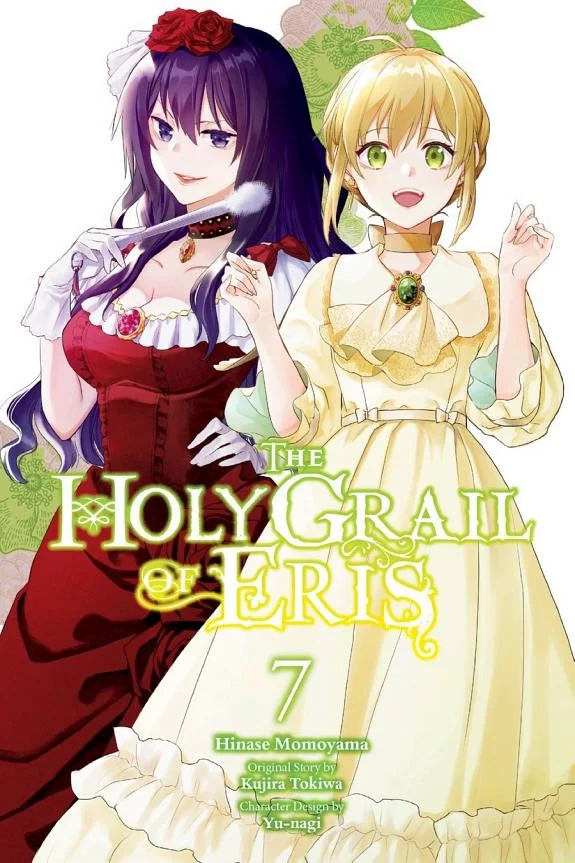
The Holy Grail of Eris, Vol. 7 (manga)
 75
75

The Holy Grail of Eris, Vol. 7 (manga)
Kujira Tokiwa’s "The Holy Grail of Eris, Vol. 7" intensifies the serialized quest for vengeance by excavating the decade-old plot against Scarlett. The introduction of Abigail O’Brian as a conduit to the enigmatic Aisha Huxley effectively raises the stakes, promising revelations about Scarlett’s execution and the notorious "Jackal’s Paradise" drug. Tokiwa masterfully interlaces Scarlett’s personal vendetta with a wider, sinister conspiracy, making the connections between Daeg Gallus and the drug’s proliferation feel organic and ominous. The primary limitation lies in the inherent pacing of a serialized manga; while this volume propels the plot forward, some narrative threads feel deliberately stretched to maintain suspense across future installments. A particularly strong passage details Scarlett’s fragmented recollections, hinting at a deeper psychological manipulation rather than mere circumstance. This installment solidifies the series’ commitment to a dark, intricate narrative where past sins cast long shadows.
Verdict: A compelling, if deliberately paced, chapter that deepens the central mystery and character motivations.
📝 Description
75
The Holy Grail of Eris, Vol. 7 (2024) continues Scarlett's decade-old quest for retribution.
This installment of Kujira Tokiwa's manga series deepens Scarlett's pursuit of justice, centering on the conspiracy that led to her framing. The plot emphasizes identifying Aisha Huxley, a figure believed to possess critical information about the past events. Readers familiar with the "Holy Grail of Eris" saga will find this volume a natural continuation, while newcomers drawn to dark revenge narratives and occult themes will also be engaged.
The narrative is character-driven, building a mysterious atmosphere as it focuses on uncovering hidden truths. The volume appeals to those who enjoy unraveling complex conspiracies and exploring the consequences of long-held secrets. It examines the fictional drug "Jackal's Paradise" and its ties to organized crime, reflecting current societal anxieties.
Kujira Tokiwa's work builds on manga traditions that explore supernatural elements and moral complexities. This volume, published in 2024, arrives in a media environment rich with fantasy and occult narratives. It engages with themes of occultism and organized crime, presenting a modern stylistic approach to supernatural storytelling. The narrative examines how past actions continue to influence the present, and how secrets protect those in power.
💡 Why Read This Book?
• Gain insight into the machinations behind Scarlett’s framing, understanding how the drug "Jackal’s Paradise" and figures like Daeg Gallus were instrumental, as detailed in this 2024 installment. • Experience the narrative tension as Connie and Scarlett pursue Aisha Huxley, a key figure from ten years prior, revealing the intricate plotting required for long-term revenge. • Explore the psychological impact of past trauma and conspiracy, as the uncovering of secrets directly influences Scarlett's drive for justice and her understanding of her own history.
⭐ Reader Reviews
Honest opinions from readers who have explored this book.
❓ Frequently Asked Questions
When was "The Holy Grail of Eris, Vol. 7" first published?
"The Holy Grail of Eris, Vol. 7" was first published on May 21, 2024, continuing Kujira Tokiwa's ongoing manga series.
What is the main plot focus of Vol. 7?
Volume 7 focuses on Scarlett's pursuit of revenge by investigating the decade-old conspiracy behind her framing, seeking out figures like Aisha Huxley for information.
Who are the key new characters introduced or focused on in Vol. 7?
While building on existing characters, Volume 7 heavily features Scarlett and Connie's efforts to connect with Abigail O’Brian to reach Aisha Huxley, a crucial figure from the past.
What dangerous drug is mentioned in relation to the conspiracy?
The dangerous drug mentioned is "Jackal’s Paradise," which becomes increasingly relevant as the ties between Scarlett’s execution and the conspiracy are explored.
Does Vol. 7 reveal who framed Scarlett?
Volume 7 moves significantly towards uncovering the perpetrator by digging up past events and identifying key players, but the full revelation is likely reserved for future installments.
What is the relationship between Scarlett, Daeg Gallus, and Jackal's Paradise?
The narrative in Vol. 7 increasingly highlights the connections between Scarlett's execution, the entity known as Daeg Gallus, and the illicit drug 'Jackal’s Paradise,' suggesting a deep conspiracy.
🔮 Key Themes & Symbolism
The Long Shadow of Conspiracy
This volume meticulously details how past machinations continue to dictate present circumstances. The decade-long conspiracy surrounding Scarlett's execution is not a closed chapter but an active force, perpetuated by secrets and the involvement of figures like Aisha Huxley. The narrative emphasizes how uncovering these buried truths is essential for any hope of resolution or retribution, revealing the persistent and often destructive influence of long-held plots.
Justice Delayed, Not Denied
Scarlett's relentless pursuit of vengeance serves as the engine for the plot. Volume 7 frames her quest not merely as personal revenge but as a critical effort to expose a profound injustice. The narrative explores the psychological toll of waiting for justice and the strategic planning required to dismantle a powerful, hidden network. The focus on finding key witnesses and piecing together fragmented events underscores the difficulty and necessity of achieving closure.
The Corrosive Influence of Illicit Substances
The fictional drug 'Jackal’s Paradise' functions as more than just a plot device; it represents a tangible element of the corruption and decay underlying the conspiracy. Its connection to Scarlett's downfall and the broader criminal enterprise highlights how addiction and the trade of harmful substances can be intertwined with severe acts of betrayal and exploitation. The work suggests that such elements are often central to the mechanisms of those who seek to control or harm others.
Fragmented Memory and Truth
The narrative grapples with the unreliability of memory and the deliberate distortion of facts. As Scarlett and Connie attempt to reconstruct the events of ten years prior, they encounter incomplete recollections and potentially manipulated testimonies. This theme underscores the challenge of discerning objective truth when confronted with personal trauma and calculated deception, suggesting that uncovering the past requires more than just remembering; it requires critical analysis and the pursuit of corroborating evidence.
💬 Memorable Quotes
Direct passages from the work, attributed to the author.
“Connie sets up a meeting with Abigail O’Brian in the hope of speaking with a key figure from ten years ago—Aisha Huxley.”
— This highlights the investigative aspect of the plot, showing the protagonists actively seeking out information from potentially reluctant or dangerous sources tied to past events.
“If Scarlett wishes to find the one who framed her, she and Connie must get to the bottom of a sinister plot that’s been”
— This sentence fragment implies a deep, ongoing conspiracy that requires significant effort and investigation to unravel, framing the narrative as a complex mystery.
“As the events of the past are dug back up, the ties... become ever more apparent.”
— This emphasizes the narrative's reliance on uncovering historical details to understand present conflicts, suggesting that the past holds the keys to current challenges.
💡 Key Ideas
Editorial paraphrase of the work's core concepts — not direct quotes.
Scarlett’s itching to get back on track with her revenge.
This line succinctly captures Scarlett's driving motivation and the urgent, almost physical, need for retribution that propels her actions throughout the series, especially after setbacks.
the ties between Scarlett’s execution, Daeg Gallus, and the dangerous drug Jackal’s Paradise become ever more apparent.
This paraphrased concept points to the central thesis of Volume 7: the interconnectedness of seemingly disparate elements in a vast conspiracy, linking personal tragedy to organized crime.
🌙 Esoteric Significance
Tradition
While not explicitly tied to a single esoteric lineage, "The Holy Grail of Eris" series, and Volume 7 specifically, draws upon archetypal themes found in Gnostic and Hermetic traditions. The pursuit of hidden knowledge, the unveiling of a corrupt system (the 'sinister plot'), and the protagonist's quest for liberation from a false reality (being framed) echo Gnostic ideas of escaping a flawed demiurge's creation. The emphasis on uncovering truth through investigation and understanding past events aligns with Hermetic principles of correspondence and the idea that understanding the macrocosm (the conspiracy) reveals the microcosm (Scarlett's fate).
Symbolism
The "Holy Grail" itself, while a title, suggests a quest for ultimate truth or salvation, a common motif in Western esotericism. The drug "Jackal’s Paradise" can be interpreted as a symbol of artificial enlightenment or escape, a false grail that leads to destruction rather than liberation. Daeg Gallus, as an entity or organization, likely represents a force of shadow or corruption, embodying the hidden powers that manipulate reality and obstruct spiritual progress. The act of "framing" signifies a manipulation of perception and destiny, a binding force that must be understood and broken.
Modern Relevance
Contemporary thinkers and practitioners exploring themes of psychological manipulation, systemic corruption, and the quest for authentic truth in a postmodern world may find resonance in "The Holy Grail of Eris." The series' focus on uncovering hidden conspiracies and reclaiming agency in the face of overwhelming odds speaks to current anxieties surrounding information control and societal control mechanisms. Readers and creators interested in blending occult symbolism with grounded, albeit fictionalized, criminal investigation and revenge narratives find inspiration in Tokiwa's approach.
👥 Who Should Read This Book
• Fans of serialized manga seeking intricate revenge plots with supernatural and occult undertones will appreciate the narrative depth and character focus in Vol. 7. • Readers interested in exploring themes of conspiracy, hidden truths, and the long-term consequences of past actions will find the unraveling plot compelling. • Enthusiasts of dark fantasy and mystery genres who enjoy complex world-building and morally ambiguous characters will be drawn to Scarlett's quest.
📜 Historical Context
Published in 2024, Kujira Tokiwa’s "The Holy Grail of Eris, Vol. 7" arrives in a contemporary manga landscape where intricate plots and dark fantasy elements are popular. The series builds upon a legacy of manga that explore complex moral ambiguities and supernatural phenomena, a trend that gained significant traction in the late 20th and early 21st centuries. While direct engagement with specific literary movements is not evident, the narrative’s focus on uncovering a decade-old conspiracy and the societal commentary on drug culture reflects concerns prevalent in recent decades. The series likely finds resonance among readers who appreciate narrative depth akin to works that debuted around the turn of the millennium, offering a modern take on serialized storytelling. Unlike more overtly philosophical manga that engage directly with existentialism or Gnosticism, Tokiwa's work prioritizes plot progression and character-driven intrigue, positioning it within a more accessible, yet still thematically rich, segment of the market.
📔 Journal Prompts
Scarlett's pursuit of Aisha Huxley, a figure from ten years ago.
The connection between Daeg Gallus and the drug Jackal’s Paradise.
The process of uncovering a decade-old sinister plot.
Connie's role in facilitating Scarlett's investigation.
The significance of Scarlett's execution as an important past event.
🗂️ Glossary
Jackal’s Paradise
A dangerous and illicit drug featured in the series, central to the conspiracy that led to Scarlett's framing and execution.
Daeg Gallus
An entity or organization implicated in the conspiracy surrounding Scarlett's execution and the distribution of 'Jackal's Paradise'.
Aisha Huxley
A key figure from ten years prior whose knowledge is sought by Scarlett and Connie in Volume 7 to uncover the truth about Scarlett's past.
Abigail O’Brian
A character who facilitates the meeting between Connie and Aisha Huxley, acting as a bridge to critical information from the past.
Framing
The act of falsely implicating someone in a crime, a central element of the conspiracy against Scarlett that she seeks to expose.
Revenge Plot
The overarching narrative driving Scarlett's actions, focused on seeking retribution against those responsible for her downfall.
Ten Years Ago
Refers to the timeframe of the original conspiracy and execution that Scarlett is trying to unravel in Volume 7.
This book appears in 1 collection
🔮 Readers Also Liked
Browse all →








From the “Holy Grail” Collection
View all →




![EBOOK COLLECTION ( PART 8) [ CSI][h 33t]](/img/thumb/ebook-collection-part-8-csi-h-33t.webp)

More Free Occult Philosophy Books
View all →