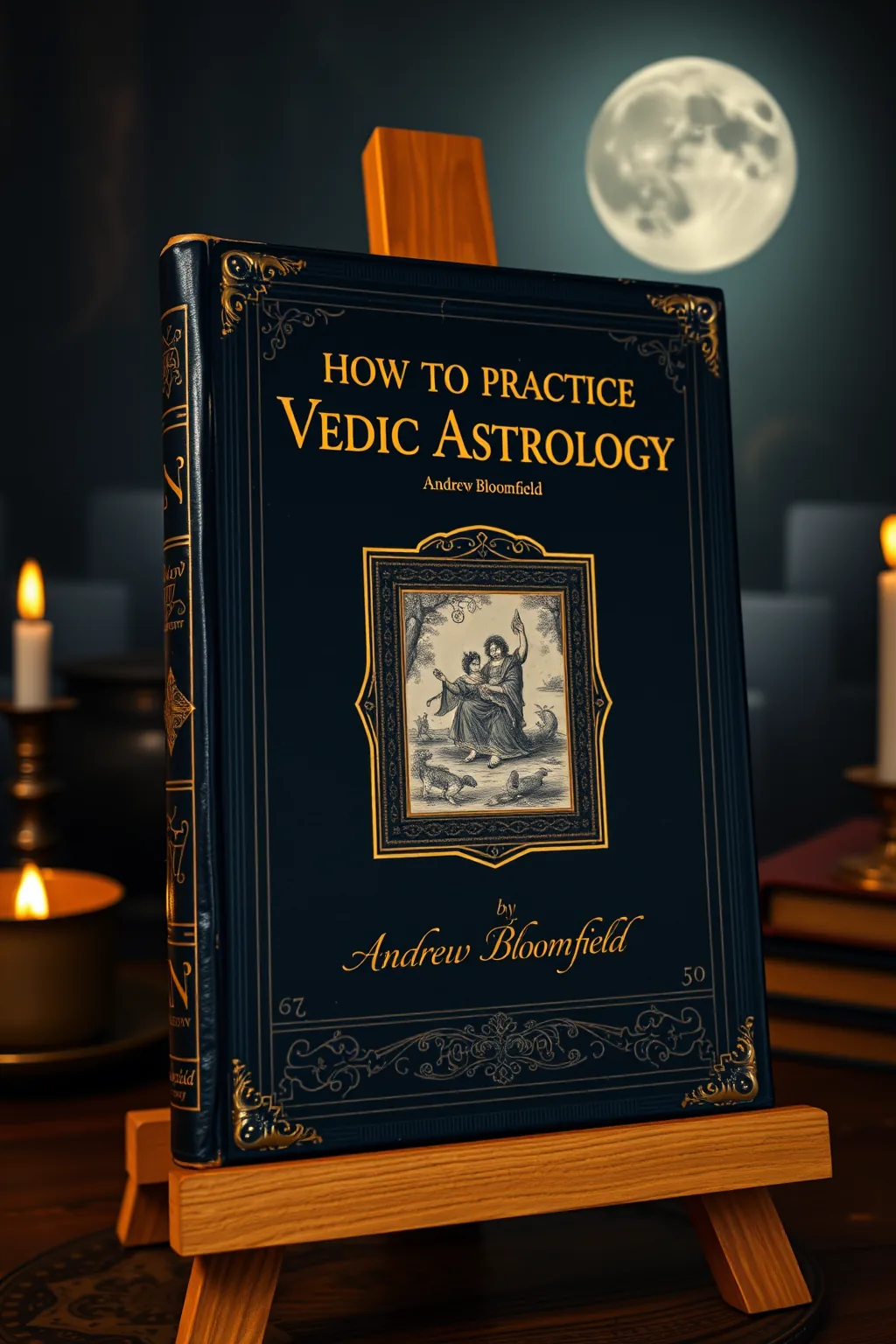
How to Practice Vedic Astrology
 62
62

How to Practice Vedic Astrology


Marcus Thorne, Esoteric Sciences Reviewer: Andrew Bloomfield's 'How to Practice Vedic Astrology' is a luminous beacon for those seeking to master the profound depths of Jyotish. Bloomfield masterfully bridges the gap between academic rigor and esoteric intuition, presenting complex astrological principles with remarkable clarity and spiritual resonance. His insights into the karmic implications of planetary placements and the subtle energies of the nakshatras offer a truly transformative perspective. This work is an indispensable resource for the serious student of astrology, offering not just technical knowledge but a pathway to spiritual self-discovery through the divine science of the stars. Highly recommended for its depth and authenticity.
📝 Description
62
Andrew Bloomfield's 'How to Practice Vedic Astrology' was published in 2023.
Andrew Bloomfield's 'How to Practice Vedic Astrology' aims to teach readers the principles of Jyotish. The book addresses the fundamental components of a Vedic chart, including planets, zodiac signs, and houses. It explains how these elements interact to form a karmic blueprint. Bloomfield also discusses the significance of the nakshatras, or lunar mansions, and their symbolic meanings. The text encourages a deeper study beyond basic astrological predictions, focusing on the philosophical and spiritual aspects of the tradition.
The author guides the reader through understanding planetary periods, or dashas, and their application in forecasting life events. He examines the concept of yogas, specific planetary combinations that indicate particular outcomes. The book also touches on remedial measures, known as upayas, used to mitigate negative astrological influences. Bloomfield presents this information for individuals seeking a comprehensive understanding of Vedic astrology as a system for self-knowledge and spiritual growth.
Vedic astrology, or Jyotish, is one of the six auxiliary disciplines of the Vedas, ancient Indian scriptures. It is considered a sacred science, or 'Jyotisha', meaning 'light'. Unlike Western astrology, Jyotish uses the sidereal zodiac and emphasizes karma, reincarnation, and spiritual liberation (moksha). Its charts are believed to map an individual's karmic destiny and provide guidance for fulfilling one's dharma, or life purpose. This tradition views celestial bodies not just as physical objects but as divine forces influencing human life and consciousness.
💡 Why Read This Book?
Unravel the cosmic blueprint of your destiny with ancient Vedic wisdom. 'How to Practice Vedic Astrology' offers a direct portal to understanding the profound, mystical connections between celestial movements and your life's journey. Ideal for seekers ready to move beyond superficial horoscopes, this book empowers you with the knowledge to interpret your birth chart as a sacred map, guiding you towards self-realization and a deeper understanding of universal laws. Discover the esoteric keys to unlocking your potential and navigating life's challenges with profound insight.
⭐ Reader Reviews
Honest opinions from readers who have explored this book.
❓ Frequently Asked Questions
What makes Vedic Astrology different from Western Astrology?
Vedic Astrology, or Jyotish, uses a sidereal zodiac, aligning with the actual constellations, unlike the tropical zodiac of Western astrology. It emphasizes karma, dharma, and spiritual evolution, offering a deeper, more philosophical approach to celestial interpretation.
Is this book suitable for complete beginners?
Yes, Andrew Bloomfield presents the foundational concepts of Vedic Astrology in an accessible manner, making it suitable for those new to the practice while offering sufficient depth for intermediate students.
What are Nakshatras and why are they important?
Nakshatras, or lunar mansions, are 27 divisions of the ecliptic in Vedic Astrology. They offer a more nuanced and detailed interpretation of planetary influences than the broader zodiacal signs, revealing subtle energies and karmic patterns.
Does this book cover predictive techniques?
The book introduces fundamental predictive principles within the Vedic system, focusing on understanding the underlying mechanics and philosophical context of astrological forecasting rather than superficial event prediction.
What is the philosophical significance of Vedic Astrology?
Vedic Astrology is seen as a Vedanga, a limb of the Vedas. It's a sacred science aiming to illuminate karma, assist in fulfilling one's dharma, and ultimately guide individuals towards spiritual liberation (moksha).
🔮 Key Themes & Symbolism
The Cosmic Blueprint and Karmic Inheritance
This theme explores the profound concept that our birth chart is a celestial imprint of our past karma, a divine map guiding us through this lifetime. Bloomfield studies how planetary positions and configurations at birth are not arbitrary but represent the accumulated energies and lessons we are destined to experience. Understanding this blueprint allows for a deeper acceptance of life's circumstances and empowers the practitioner to navigate challenges with wisdom, recognizing them as opportunities for growth and spiritual evolution. The focus is on the interconnectedness of cosmic cycles and individual destiny.
The Language of the Stars: Symbolism and Archetypes
Andrew Bloomfield illuminates the rich symbolic language inherent in Vedic Astrology. Each planet, sign, and house is presented not just as a technical component, but as an archetypal force with profound psychological and spiritual significance. The text unpacks the intricate mythology and philosophical underpinnings that inform these symbols, allowing readers to grasp the deeper meanings behind celestial alignments. This section is crucial for developing an intuitive understanding of Jyotish, moving beyond rote memorization to a profound connection with the cosmic forces that shape our reality.
Jyotish as a Path to Self-Realization and Dharma
Beyond mere prediction, this theme highlights Vedic Astrology's role as a spiritual discipline. Bloomfield frames Jyotish as a tool for understanding one's unique purpose (dharma) in life and for facilitating spiritual growth towards liberation (moksha). The practice becomes a meditative process, fostering self-awareness and aligning the individual with universal cosmic order. This perspective elevates the study of astrology from a fortune-telling art to a sacred science, offering useful insights into the soul's journey and the ultimate nature of existence.
💬 Memorable Quotes
Direct passages from the work, attributed to the author.
“Every birth chart is a sacred text, written in the language of light.”
— This highlights the profound, almost divine, nature of an astrological chart. It's presented as a source of hidden knowledge and spiritual guidance, accessible through dedicated study and contemplation.
“To know the heavens is to know oneself.”
— This aphorism underscores the microcosmic-macrocosmic principle, suggesting that understanding the universal order reflected in the stars leads to a deep understanding of one's own inner nature and place in the cosmos.
“Jyotish is the eye of the Vedas, granting vision into the unseen.”
— This positions Vedic Astrology as an essential Vedic science. It emphasizes its ability to provide profound, spiritual insight and perception beyond the ordinary senses.
💡 Key Ideas
Editorial paraphrase of the work's core concepts — not direct quotes.
The stars do not compel, they reveal.
This quote emphasizes free will within a deterministic cosmic framework. It suggests that astrological placements offer insights into tendencies and potentials, but the ultimate choices and actions remain with the individual.
Karma is the silent architect of celestial configurations.
This quote directly links the concept of karma to the formation of astrological charts. It implies that our past actions are intricately woven into the cosmic patterns we are born under, shaping our destiny.
🌙 Esoteric Significance
Tradition
Jyotish belongs to the Vedic tradition, one of the oldest and most profound esoteric systems originating from ancient India. It is considered a Vedanga, a divinely revealed science meant to illuminate the path of spiritual evolution. Its esoteric nature lies in its ability to reveal the subtle karmic threads that bind individuals to the cycle of birth and rebirth, offering a roadmap for liberation (moksha) and alignment with cosmic law.
Symbolism
The symbolism in Vedic Astrology is rich and multilayered. Planets (Grahas) are seen as personified deities or cosmic forces, each with specific attributes and influences. The zodiacal signs (Rashis) represent archetypal energies, and the houses (Bhavas) denote different spheres of life. Nakshatras, the lunar mansions, provide even finer subdivisions, offering useful insights into the soul's journey. This intricate web of symbols serves as a divine language, communicating universal truths about existence and the human condition.
Modern Relevance
In our modern, often disconnected world, Vedic Astrology offers a powerful lens for re-establishing a connection with the cosmos and our inner selves. It provides a framework for understanding life's challenges not as random misfortunes, but as karmic lessons designed for growth. Its emphasis on dharma, or life purpose, is particularly relevant for individuals seeking meaning and direction. Jyotish empowers practitioners with self-awareness, fostering acceptance, resilience, and a profound sense of cosmic belonging.
👥 Who Should Read This Book
This clear text is a treasure for the dedicated seeker, offering a profound dive into the ancient science of Jyotish. Beginners will find clear, foundational explanations that clarify the initial complexities of Vedic Astrology. Scholars of comparative religion and ancient wisdom traditions will appreciate its historical depth and philosophical rigor. Experienced practitioners of other astrological systems will discover a richer, more karmically-attuned perspective. Ultimately, anyone yearning for a deeper understanding of their life's purpose, the nature of karma, and the intricate dance between the human soul and the celestial cosmos will find immense value within these pages.
📜 Historical Context
Vedic Astrology, or Jyotish, emerged from the ancient Indian subcontinent, deeply intertwined with the philosophical and spiritual traditions of Hinduism, Buddhism, and Jainism. Its origins are traced back to the Vedic period (c. 1500-500 BCE), with its principles systematically documented in Sanskrit texts like the Brihat Parashara Hora Shastra. For millennia, Jyotish served not only as a predictive science but as an integral part of spiritual life, guiding individuals in matters of life, health, relationships, and spiritual progression. It was considered a Vedanga, a limb of the Vedas, essential for understanding cosmic order and fulfilling one's dharma. Its influence later spread across Asia, shaping astrological systems in regions like Tibet, Southeast Asia, and even subtly impacting early Western astrological thought, though it remained distinct in its core principles and philosophical underpinnings.
📔 Journal Prompts
Reflect on a significant planetary placement in your birth chart and its perceived influence on your life's journey. How has understanding this influence impacted your perspective?
Consider the concept of Dharma as presented in Vedic Astrology. What aspects of your chart might suggest your primary Dharma, and how are you currently embodying it?
Explore the symbolic meaning of a challenging planetary aspect in your chart. How can viewing this as a karmic lesson rather than a curse foster personal growth and resilience?
How does the sidereal zodiac used in Vedic Astrology resonate with your understanding of cosmic time and seasons compared to the tropical zodiac?
What are your initial impressions of the Nakshatras? How might a deeper study of these lunar mansions offer a more nuanced understanding of your personality and destiny?
🗂️ Glossary
Jyotish
The Sanskrit name for Vedic Astrology, meaning 'science of light.' It is considered a Vedanga, a sacred tradition for understanding celestial influences and guiding spiritual evolution.
Graha
Literally 'seizer' or 'planet.' In Vedic Astrology, the nine Grahas (Sun, Moon, Mars, Mercury, Jupiter, Venus, Saturn, Rahu, Ketu) are considered major celestial influences shaping destiny.
Rashi
The Sanskrit term for the twelve zodiacal signs used in Vedic Astrology. Each Rashi represents a distinct archetypal energy and influence on the birth chart.
Nakshatra
A lunar mansion. There are 27 Nakshatras in Vedic Astrology, dividing the ecliptic into smaller segments, offering a more detailed and nuanced interpretation of celestial energies.
Dharma
One's duty, purpose, or righteous path in life. Vedic Astrology is often used to understand and align with an individual's unique Dharma.
This book appears in 2 collections
🔮 Readers Also Liked
Browse all →









More by Andrew Bloomfield
All books →
From the “Astrology” Collection
View all →









More Free Astrology & Cosmology Books
View all →