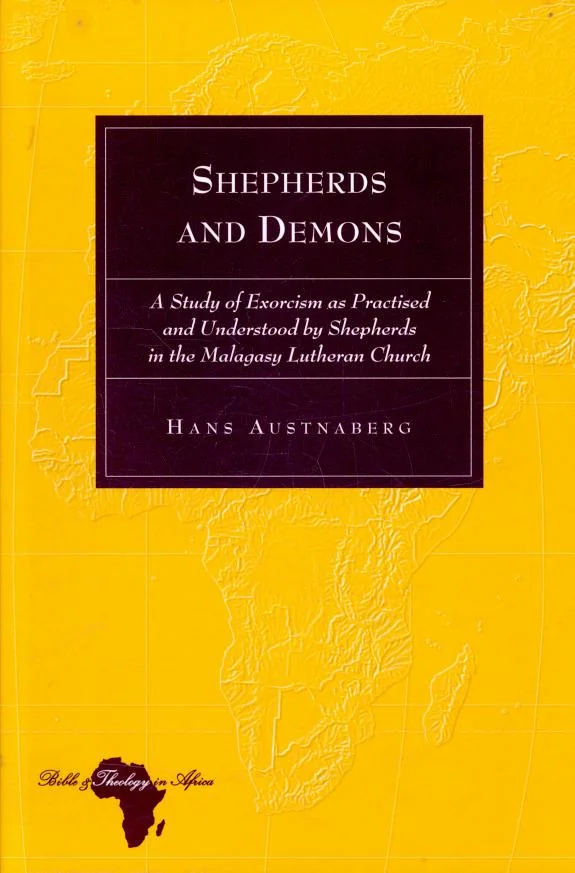
Shepherds and Demons
 71
71

Shepherds and Demons
Austnaberg's "Shepherds and Demons" offers a focused examination of a fascinating spiritual phenomenon: exorcism as practiced by the Malagasy 'shepherds.' The strength of the book lies in its detailed ethnographic approach, grounding the complex theological and practical aspects of demon expulsion within the specific context of the 1894 Malagasy revival movement. Particularly illuminating is the definition of exorcism as not merely expulsion, but prayer with the laying on of hands, underscoring a pastoral dimension often overlooked in Western analyses. A limitation, however, is the dense academic prose, which, while precise, may present a barrier to readers unfamiliar with anthropological and theological jargon. The central argument that Malagasy exorcism constitutes a synthesis of belief systems is compelling, though the extent of this synthesis could benefit from further comparative analysis with other revival movements. This study provides valuable, specific insight into a particular form of spiritual warfare and healing.
📝 Description
71
Hans Austnaberg's 2006 study examines exorcism within Madagascar's Protestant revival movement.
Hans Austnaberg's "Shepherds and Demons" examines the Malagasy revival movement, a significant force in Protestant church life since 1894. The study focuses on how lay church workers, known as 'shepherds,' understand and practice exorcism. Within this context, exorcism is defined as the expulsion of demons, accompanied by prayer and the laying on of hands.
Austnaberg situates his research within the historical context of the Malagasy revival, which began in 1894 and represents a wave of spiritual renewal in Madagascar. He investigates the convergence of traditional practices and Christian theology in the concept and execution of exorcism. This background is important for understanding the role of the 'shepherds,' who are consecrated, lay figures.
The book details the specific Malagasy understanding of exorcism as a spiritual act involving demon expulsion and prayer. It highlights the central role of the 'shepherds' in this practice. Austnaberg argues that the Malagasy approach to exorcism represents a synthesis of spiritual and theological elements, reflecting a syncretic tradition.
This book enters a conversation about lived religious experience, particularly within Pentecostal and neo-Pentecostal traditions where spiritual warfare and the discernment of spirits are active concerns. It situates the Malagasy practice of 'shepherding' and exorcism within a broader global phenomenon of charismatic renewal. The work acknowledges how local interpretations and practices, like those in Madagascar, interact with and sometimes reshape universal Christian theological frameworks concerning demonic influence and spiritual authority.
💡 Why Read This Book?
• Gain a precise understanding of 'exorcism' as practiced by Malagasy 'shepherds,' moving beyond generic interpretations to grasp its specific application involving demon expulsion and prayer, as detailed in the study. • Explore the unique socio-religious role of unsalaried, consecrated church workers ('shepherds') within the 1894 Malagasy revival movement, a specific historical phenomenon not widely covered elsewhere. • Analyze the argument that Malagasy exorcism represents a distinct synthesis of spiritual traditions, offering a concrete case study for comparative religious scholarship.
⭐ Reader Reviews
Honest opinions from readers who have explored this book.
❓ Frequently Asked Questions
What is the primary focus of Hans Austnaberg's "Shepherds and Demons"?
The book primarily focuses on the Malagasy revival movement, which began in 1894, and specifically examines the practice and understanding of exorcism by lay church workers known as 'shepherds' within this context.
Who are the "shepherds" mentioned in the book?
The 'shepherds' are described as lay, unsalaried, and consecrated church workers within the Malagasy revival movement who are central to the practice of exorcism.
When did the Malagasy revival movement begin?
The Malagasy revival movement, which is central to Austnaberg's study, commenced in 1894.
How does the book define "exorcism" in the Malagasy context?
In the Malagasy context studied, 'exorcism' is defined as the expulsion of demons coupled with prayer and the laying on of hands, highlighting a dual spiritual action.
What is the author's main argument regarding Malagasy exorcism?
Austnaberg argues that exorcism as practiced in Madagascar constitutes a synthesis, blending various spiritual and theological elements within the framework of the historical churches.
What is the historical significance of the Malagasy revival movement?
The movement, starting in 1894, has had a profound and lasting impact on Protestant church life in Madagascar, influencing its spiritual practices and structures.
🔮 Key Themes & Symbolism
Malagasy Revival Movement
The work meticulously documents the enduring influence of the Malagasy revival movement, which began in 1894. This phenomenon reshaped Protestant church life in Madagascar, fostering unique spiritual expressions. Austnaberg situates the practice of exorcism firmly within this context, demonstrating how it became an integral part of contemporary church activities and spiritual understanding, rather than a relic of the past.
The Role of 'Shepherds'
Central to the study are the 'shepherds,' defined as lay, unsalaried, and consecrated church workers. Their specific function in performing exorcisms is explored in depth. This highlights a distinct model of spiritual leadership and ministry, emphasizing community involvement and spiritual authority derived from consecration rather than formal clerical status, a key element of the revival's structure.
Defining Exorcism
Austnaberg provides a precise definition of exorcism as understood and practiced by the Malagasy shepherds: the expulsion of demons combined with prayer and the laying on of hands. This definition emphasizes a holistic approach, encompassing both confrontational spiritual warfare and pastoral care, distinguishing it from purely ritualistic or academic interpretations of the practice.
Spiritual Synthesis
The book posits that Malagasy exorcism represents a significant synthesis of various spiritual, cultural, and theological elements. This integration allows for an examination of how indigenous beliefs and Christian doctrine interact and coalesce within a specific religious movement, creating a unique form of spiritual practice and belief system.
💬 Memorable Quotes
Direct passages from the work, attributed to the author.
“Exorcism is the expulsion of demons and prayer with the laying on of hands.”
— This concise definition frames exorcism not just as a forceful removal of malevolent entities, but as an integrated act of spiritual warfare and pastoral care, emphasizing the role of prayer and physical blessing.
“The Malagasy revival movement... continues to have a lasting impact on Protestant church life.”
— This statement underscores the ongoing vitality and relevance of the revival movement initiated in 1894, positioning the study of its practices, like exorcism, as pertinent to contemporary religious scholarship.
“Shepherds (lay, unsalaried, consecrated church workers)”
— This parenthetical definition is crucial, immediately establishing the distinct identity and role of the 'shepherds' as key practitioners, differentiating them from ordained clergy and highlighting their consecrated status.
“Exorcism constitutes a synthesis between...”
— This incomplete quote from the original blurb points to the book's central thesis: that Malagasy exorcism is not a singular doctrine but a fusion of diverse spiritual and theological influences, inviting deeper analysis of its components.
“Malagasy actors at its centre”
— This phrase emphasizes the ethnographic and insider perspective of the study, focusing on the lived experiences and understandings of the Malagasy individuals who practice and are affected by exorcism.
🌙 Esoteric Significance
Tradition
While not strictly adhering to a single Western esoteric lineage like Hermeticism or Gnosticism, "Shepherds and Demons" engages with universal themes found across many esoteric traditions: the nature of spiritual warfare, the existence and expulsion of entities, and the power of consecrated prayer. It fits within a broader 'esotericism of practice' that emphasizes direct spiritual experience and intervention, often operating parallel to or within established religious structures, akin to folk magic or certain branches of Christian esotericism.
Symbolism
The 'shepherds' themselves can be seen as symbolic figures, representing guidance and protection against spiritual dangers, akin to pastoral archetypes. The act of 'laying on of hands' is a potent symbol of spiritual transmission, healing, and empowerment, common across various mystical traditions. The 'expulsion of demons' symbolizes the confrontation and overcoming of negative forces, both internal and external, a core theme in many spiritual paths seeking purity and liberation.
Modern Relevance
Contemporary thinkers and practitioners interested in comparative demonology, the psychology of belief, and the efficacy of spiritual healing find relevance in Austnaberg's work. It informs discussions on the intersection of traditional healing, modern psychiatry, and religious practice. Scholars of global Pentecostalism and African indigenous religions continue to cite this study for its detailed ethnographic account of a specific, localized spiritual movement and its unique practices.
👥 Who Should Read This Book
• Students of comparative religion and anthropology focusing on African spiritual traditions and revival movements. • Theologians and religious scholars interested in the specific practices of exorcism and spiritual warfare within Protestant contexts. • Researchers investigating the dynamics of lay ministry, consecration, and spiritual authority in non-Western church structures.
📜 Historical Context
Hans Austnaberg's "Shepherds and Demons" emerged in 2008, examining a phenomenon rooted in the 1894 Malagasy revival. This movement significantly reshaped Protestant church life in Madagascar, fostering a unique spiritual landscape. The work situates itself within ongoing scholarship on African Pentecostalism and indigenous religious practices, though its focus on 'shepherds' and their specific understanding of exorcism offers a distinct contribution. At the time of its initial publication, comparative studies of exorcism often focused on Western traditions or broader Pentecostalism, making Austnaberg's deep dive into this specific Malagasy context particularly valuable. While the book doesn't detail specific reception events like censorship or prizes, its detailed ethnographic approach implicitly engages with anthropological and theological debates concerning syncretism and the role of the laity in spiritual ministries, standing as a significant case study for understanding localized expressions of Christian faith.
📔 Journal Prompts
The definition of exorcism as expulsion and prayer.
The role and consecration of Malagasy 'shepherds'.
The concept of spiritual synthesis in Malagasy practice.
The impact of the 1894 Malagasy revival movement.
The practice of laying on of hands in exorcism.
🗂️ Glossary
Malagasy revival movement
A significant spiritual renewal movement within Protestant churches in Madagascar, originating in 1894 and continuing to influence church life and practices.
Shepherds
Lay, unsalaried, consecrated church workers in the Malagasy context who are central figures in the practice of exorcism.
Exorcism (Malagasy context)
Defined in the book as the expulsion of demons combined with prayer and the laying on of hands, as practiced by Malagasy shepherds.
Consecrated
Set apart for a sacred purpose; dedicated to religious service, often involving specific rituals or vows, as applied to the 'shepherds'.
Laying on of hands
A ritual gesture involving placing hands on a person's head or body, symbolizing the impartation of spiritual power, blessing, healing, or authority.
Synthesis
The combination or blending of different elements, ideas, or beliefs to form a new, coherent whole, as argued to be present in Malagasy exorcism.
Protestant church life
The religious activities, structures, doctrines, and community practices associated with Protestant denominations, particularly as influenced by the Malagasy revival.
This book appears in 1 collection
🔮 Readers Also Liked
Browse all →








From the “Exorcism” Collection
View all →







More Free Occult Philosophy Books
View all →